Tinder-Like Dating App Development Cost: Features & Budget Breakdown
Modern technologies have not only expanded the relationship between humans and machines but have also developed the “love at first sight” concept. By enabling users to discover love with the simple stroke of a finger, dating applications such as Tinder have amassed significant popularity.
Although dating applications provide users with the opportunity to form romantic relationships, they also provide parent companies with a direct path to profit and an increased growth rate. This is the reason why the global market for dating applications is expanding at an unprecedented rate, and an increasing number of companies are making substantial investments in the development of dating applications.
In this article, we will look at the most frequently asked question, “How much does Tinder-like dating app development cost?” as well as walk you through the entire dating mobile app development process. Furthermore, we will discuss various revenue techniques for the Tinder-like app business.
So, without further ado, let’s start with a basic Tinder app development cost estimate.
Amazing Tinder App Development Market Statistics That’ll Amaze You
- Tinder has 630M+ downloads globally, proving massive demand for swipe-based dating apps.
- Tinder has generated 100+ billion matches, showing extremely high user engagement and strong matching algorithms.
- Tinder attracts around 50 million monthly users, making it one of the world’s biggest dating platforms.
- Tinder earned $1.9 billion direct revenue in 2024, showing that dating apps can generate huge profits through subscriptions and in-app purchases.
- Tinder is available in 190 countries and 45+ languages, proving that dating apps have strong global scalability.
An Overview of Average Dating App Development Cost Ranges
The cost of developing a dating app varies greatly depending on its complexity, functionality, and technology choices. In 2026, the average dating app development cost will be between $20,000 and $200,000, depending on the scale and customizations required.
The following is a general cost comparison of the three most popular types of dating apps:
| Type of Dating App | Description | Estimated Cost Range (USD) | Development Time |
|---|---|---|---|
| Basic Dating App (MVP) | Essential features like profile setup, matching, and chat. Ideal for startups testing market potential. | $20,000 – $40,000 | 2–3 months |
| Feature-Rich Dating App | Includes advanced algorithms, real-time notifications, premium subscriptions, and moderation tools. | $50,000 – $100,000 | 4–6 months |
| AI-Powered or Custom Enterprise App | Uses AI/ML matchmaking, video chat, gamification, and location-based services. Built for scalability and innovation. | $120,000 – $200,000+ | 6–10 months |
AI Integration Costs in Dating App Development
In 2026, AI will be one of the most significant cost drivers in dating app development.
Integrating artificial intelligence improves user experience, engagement, and personalization, but it also complicates your technology stack and costs.
Here’s a quick overview of the average AI-related expense breakdown:
| AI Feature | Purpose | Estimated Cost (USD) | Development Time |
|---|---|---|---|
| AI Matchmaking Algorithm | Suggests potential matches based on user behavior and preferences. | $6,000 – $15,000 | 3–6 weeks |
| Chatbot for User Engagement | Automates conversations and onboarding via NLP models. | $3,000 – $10,000 | 2–4 weeks |
| Predictive Analytics & Behavior Tracking | Analyzes data to predict compatibility and improve retention. | $5,000 – $12,000 | 3–5 weeks |
| AI-Powered Content Moderation | Detects fake profiles and inappropriate content. | $4,000 – $8,000 | 2–3 weeks |
How much does Tinder-like dating app development cost?
To give you a general estimate, the development cost for an app like Tinder can range from $25,000 to $120,000. The overall cost of a dating app varies depending on factors such as the app’s complexity, feature list, the hourly rate of the developers, the location of a dating mobile app development company, and so on.
Summarizing the Tinder-Like Dating App Development Cost.
| App Type | Estimated Cost | Time Frame |
|---|---|---|
| Simple | $25,000 to $80,000 | 3 Months |
| Medium Complex | $80,000 to $100,000 | 3 to 6 Months |
| Most Complex | $120,000+ | 6+ Months |
However, this is an extremely rough estimate. To determine how much it costs to establish a dating app like Tinder, first consider the components that influence the overall cost. Looking into their logistics can assist you make better financial judgments, resulting in a definite ROI.
Must Read: The Cost of Building an OTT App
Why to Invest in Dating App Development?
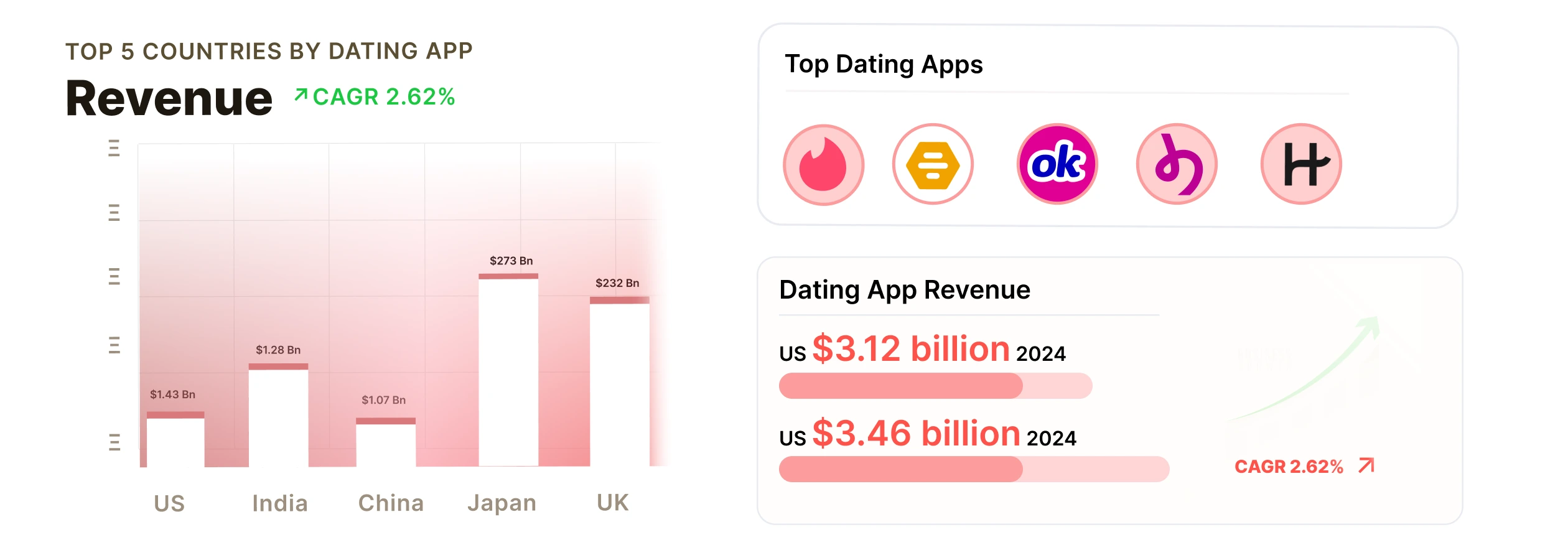
The online dating sector is experiencing substantial growth, making this an excellent moment to invest. According to Statista, revenue in the global online dating industry is predicted to reach $3.17 billion in 2025, with an expected annual growth rate (CAGR) of 2.14% between 2025 and 2029. That isn’t just growth; it’s a thriving business potential. So why should you care?
People are searching for more than simply love; they want convenient, technologically advanced experiences. From Generation Z to millennials and even older users, there is a growing demand for smarter, safer, and more niche-focused dating services. Users like apps that feel personalized, whether it’s AI-powered matchmaking, video profiles, or hyper-local connections. This is precisely when dating app development becomes a wise choice.
However, before you get started, you should understand how much it will cost to construct a dating app in 2026. The cost of developing a dating app is not fixed. It all relies on the size of your idea. A basic MVP might start at $20,000, and a high-end, feature-rich app with AI and multimedia features could cost more than $120,000.
However, the return on investment is enormous if handled well. The market is hot. The demand is increasing. If you’ve been thinking about developing a dating app, now is the moment to make a good investment and confidently enter the market.
Entrepreneurs Love Investing Developing a Tinder like Apps
Factors that Affect Tinder-Like Dating App Costs – Features, Tech Stack & More
When it comes to establishing a dating app in 2026, one thing is certain: the overall development cost will not be fixed.
The cost of developing a dating application is determined by a number of crucial factors, including the amount of time, effort, and experience invested in the final product. Every decision you make, from the features you choose to the technological stack, has an impact on your overall investment.
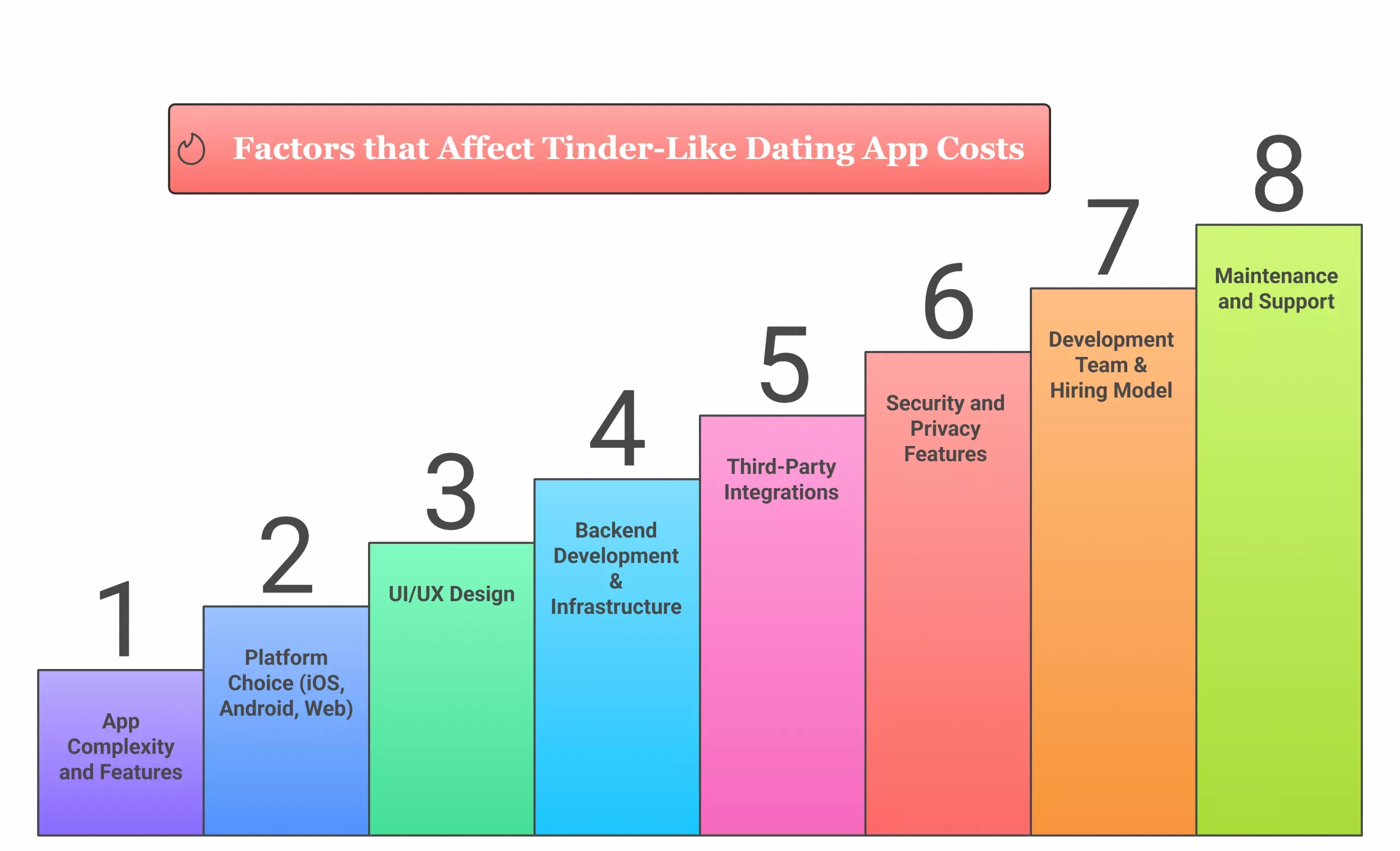
Let’s look at each cost-driving aspect in depth.
1) App Complexity and Features
The cost of your software is primarily determined by its complexity. A simple dating app with basic swiping and chat features is a fantastic place to start.
However, if your app contains features such as AI-based matchmaking, video chat, in-app subscriptions, gamification, or real-time notifications, the development process becomes more time- and cost-intensive. The more extensive the feature set, the longer the build time—and the greater the cost.
| Complexity Level | Features Included | Approx. Cost Estimate (USD) |
|---|---|---|
| Basic Dating App | Sign-up, profile creation, basic swiping and messaging | $20,000 – $40,000 |
| Medium Dating App | Filters, geolocation, profile preferences, push notifications | $40,000 – $70,000 |
| Advanced Dating App | AI matchmaking, video calls, content moderation, premium subscriptions | $70,000 – $120,000+ |
2) Platform Choice (iOS, Android, Web)
Both cost and reach are influenced by the availability of your application. Development hours will be influenced by the decision to select either iOS, Android, or both. Some businesses choose cross-platform tools such as Flutter or React Native, which can reduce time but occasionally compromise performance. The results are superior, but the cost is higher when native applications are developed for each platform.
| Platform Choice | Pros | Approx. Cost Estimate (USD) |
|---|---|---|
| Single Platform | Faster development, lower initial investment | $5,000 – $15,000 |
| Cross-Platform | Code reusability, quicker launch | $15,000 – $25,000 |
| Native (iOS + Android) | Full native performance and deeper feature access | $25,000 – $40,000 |
3) UI/UX Design
The success of your application can be determined by the design of the user interface (UI) and user experience (UX). A visually enticing interface fosters engagement and trust, while a seamless, intuitive design facilitates user navigation.
Although pre-built templates may be cost-effective, the majority of the most successful dating applications invest in custom UI/UX design, which includes visual branding, user-centric layouts, and seamless transitions. This not only distinguishes your application in a competitive market but also improves the user experience.
| Design Type | Details | Approx. Cost Estimate (USD) |
|---|---|---|
| Basic UI | Template-based, minimal customization | $3,000 – $5,000 |
| Standard Custom UI | Branded, responsive layout for multiple device sizes | $5,000 – $12,000 |
| Advanced UI/UX | High-fidelity mockups, animations, custom illustrations | $12,000 – $20,000 |
4) Backend Development & Infrastructure
The infrastructure serves as the bedrock of your dating application. It facilitates matchmaking, manages messaging functions, stores user data, and guarantees optimal performance. The more intricate your logic (e.g., AI-based match scoring or real-time messaging), the more robust and scalable your infrastructure must be. Your technology expenditure is also influenced by the utilization of cloud services such as Azure, Firebase, or AWS.
| Backend Complexity | Details | Approx. Cost Estimate (USD) |
|---|---|---|
| Basic | Simple user data storage, basic logic | $5,000 – $10,000 |
| Moderate | Matchmaking logic, real-time notifications | $10,000 – $18,000 |
| Complex | AI/ML processing, media handling, scalability, real-time chat | $18,000 – $25,000 |
5) Third-Party Integrations
API integration is a critical component of contemporary dating applications, as it enables the provision of sophisticated features, reduces development effort, and saves time. These integrations enable your application to effectively communicate with external services, including Google Maps, messaging APIs (e.g., Sendbird, Twilio), payment gateways (e.g., Stripe), and social login tools (e.g., Facebook, Google).
Although they expedite development and guarantee dependability, they also incur one-time setup and recurring usage expenses that should be accounted for in your budget.
| Integration Type | Examples | Approx. Cost Estimate (USD) |
|---|---|---|
| Basic APIs | Social login (Facebook/Google), image upload | $2,000 – $4,000 |
| Mid-level Integrations | Google Maps, Stripe, chat messaging APIs | $4,000 – $8,000 |
| Advanced AI Integrations | Video calling, AI moderation, analytics | $8,000 – $15,000 |
6) Security and Privacy Features
Trust is an important part in the success of any dating app. Users are sharing personal information, photos, and real-time location data, making data security and platform safety critical. Implementing security methods like HTTPS, end-to-end encryption, two-factor authentication, and GDPR compliance will help protect sensitive data and maintain consumer confidence.
For more advanced apps, technologies such as AI-based content moderation and profile verification provide additional layers of security and significantly reduce abuse and bogus profiles.
| Security Level | Features Included | Approx. Cost Estimate (USD) |
|---|---|---|
| Basic | HTTPS encryption, simple user verification | $3,000 – $5,000 |
| Standard | End-to-end encryption, basic content moderation, GDPR compliance | $5,000 – $10,000 |
| Advanced | AI moderation, multi-factor authentication, global compliance tools | $10,000 – $15,000 |
7) Development Team & Hiring Model
The cost of developing a dating mobile app is significantly influenced by where and how you hire your crew. Agencies and developers in the United States and Western Europe charge more, whereas teams in Asia and Eastern Europe can produce high-quality work at lower costs. You’ll also have to determine whether to hire freelancers, build an in-house team, or outsource to a full-stack firm.
| Team Model | Region | Avg Hourly Rate | Cost Range Impact |
|---|---|---|---|
| Freelancers | Global | $25 – $100/hr | Low to Medium |
| In-House Team | US/EU | $80 – $150/hr | High |
| Outsourced Team | Asia/Eastern EU | $25 – $60/hr | Low to Medium |
8) Maintenance and Support
Launching your dating app is only the beginning. To maintain a pleasant user experience and long-term success, you’ll need constant post-launch care, which includes bug repairs, performance monitoring, feature upgrades, and security patches.
While many people focus on the upfront costs of launching a dating app, continuing upkeep is equally crucial. Regular updates keep your software effective, secure, and competitive in a fast-paced market. Most development teams provide tiered maintenance services based on your app’s size, user base, and feature complexity.
| Maintenance Type | Services Included | Approx. Monthly Cost (USD) |
|---|---|---|
| Basic Support | Minor bug fixes, uptime monitoring | $1,000 – $2,000 |
| Standard Maintenance | Routine updates, crash fixes, security patching | $2,000 – $3,500 |
| Ongoing Development | Continuous feature additions, optimization, scaling | $3,500 – $5,000+ |
Tech-Stack Used to Create a Tinder-Like App
The tech stack employed by app developers can also influence the overall cost of the service. A comprehensive dating app capable of supporting a larger user base while providing a fluid communication mode costs more than a simple app with a standard layout. Here’s the technology stack used to create a Tinder-like app.
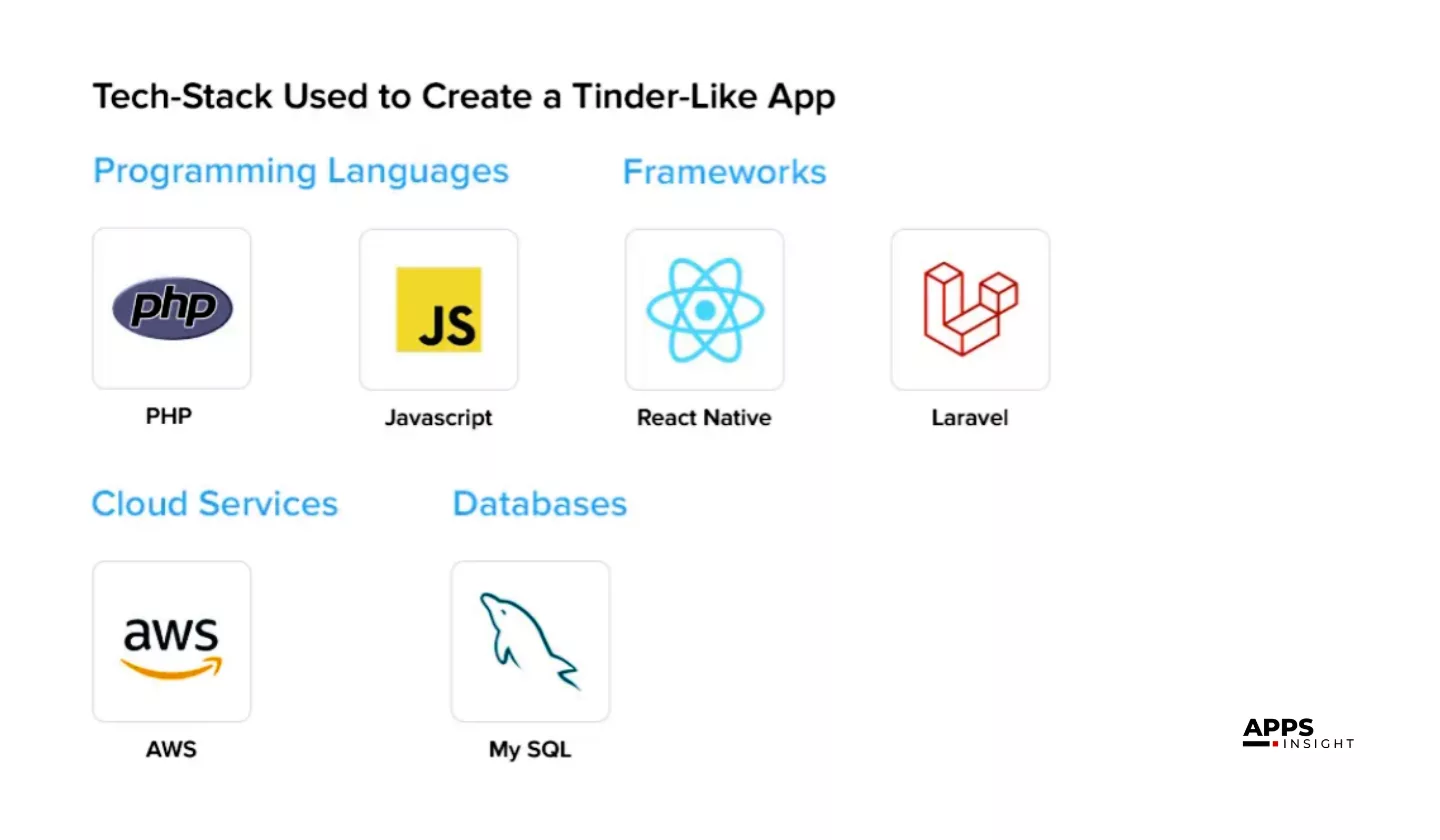
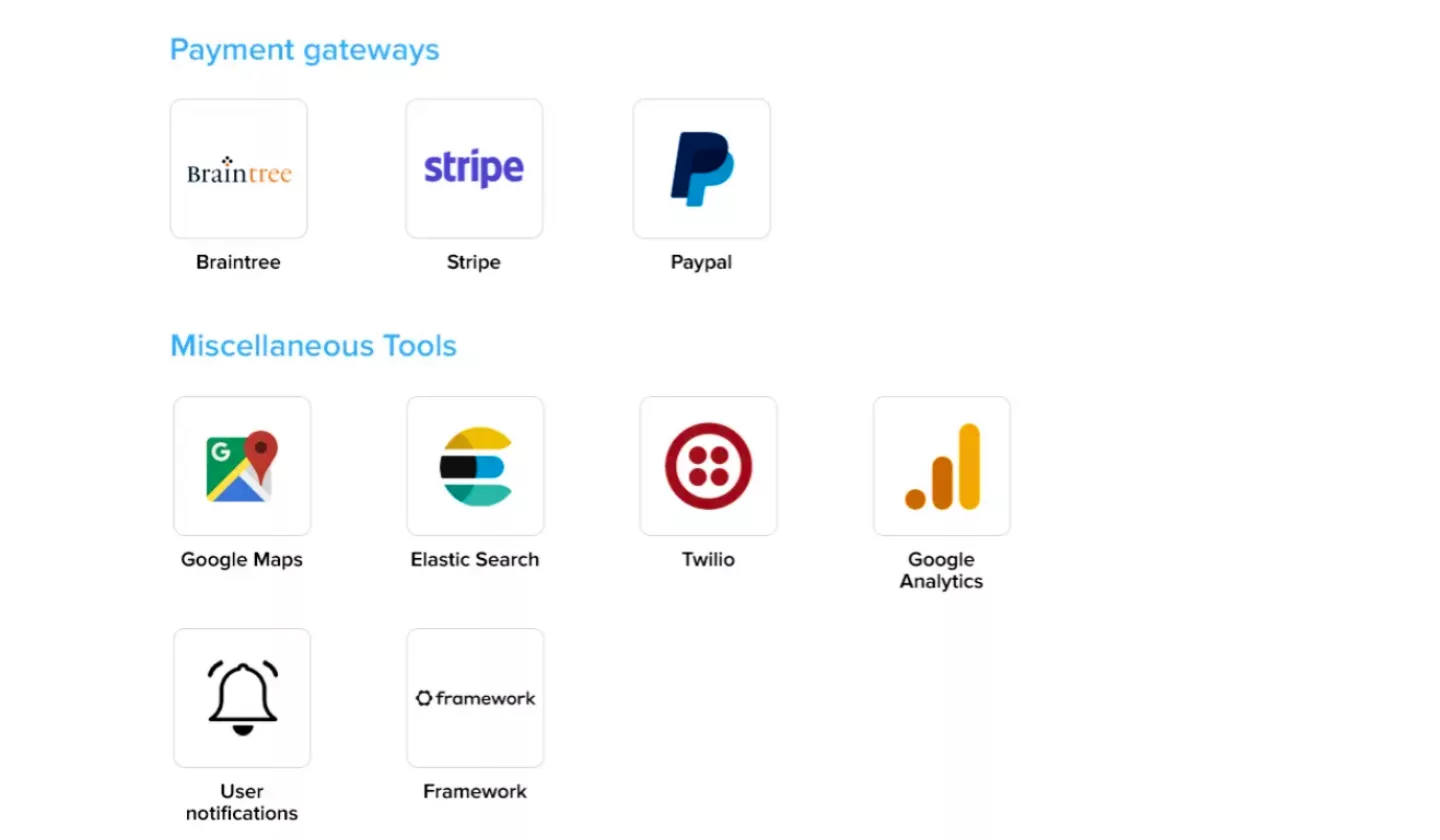
Tinder app developers can use the previously mentioned tech stack to build a unique dating app that fits the needs of their clients. While the tech stack described above is unique to Tinder, it is not necessarily required.
How to Create a Dating App Like Tinder?
Step 1: Find Your Niche.
There are numerous dating apps on the market, but choosing a distinct niche will help you stand out from the crowd. For example, you can create an app for people who share similar cuisine interests, singles who love pets, or members of the same community.
Step 2: Selecting a Business Model
The next step in creating a Tinder-like dating app is deciding on an appropriate business plan. Your business plan, whether premium or offering in-app purchases and other advertising options, will help you properly monetize the dating app.
Step 3: Selecting the Right Tech-Stack
If you’re wondering how to develop a Tinder-like app, the next step is to select the appropriate tech stack. One of the most important phases in getting started in the online dating app industry is selecting the correct software stack. The app requires a technology stack capable of handling a growing database while providing optimal performance.
Step 4: Choosing the Right App Development Team
An excellent app development team is the most important component in determining the success of your app. It is recommended that you select the best app development business with an extensive portfolio of social networking apps. It is also important to understand that the hourly rate of the organization’s developers varies depending on where the company is located.
Step 5: Building and launching the MVP
The final step in developing an AI-powered dating app like Tinder is to turn the breakthrough idea into an MVP, which will assist establish the product’s commercial potential.
This stage comprises refining project requirements through scoping sessions, focusing on important features, and developing a workable product prototype. Incorporating AI at this point can provide insights into user preferences and habits, allowing for more exact targeting and customisation right from the MVP phase.
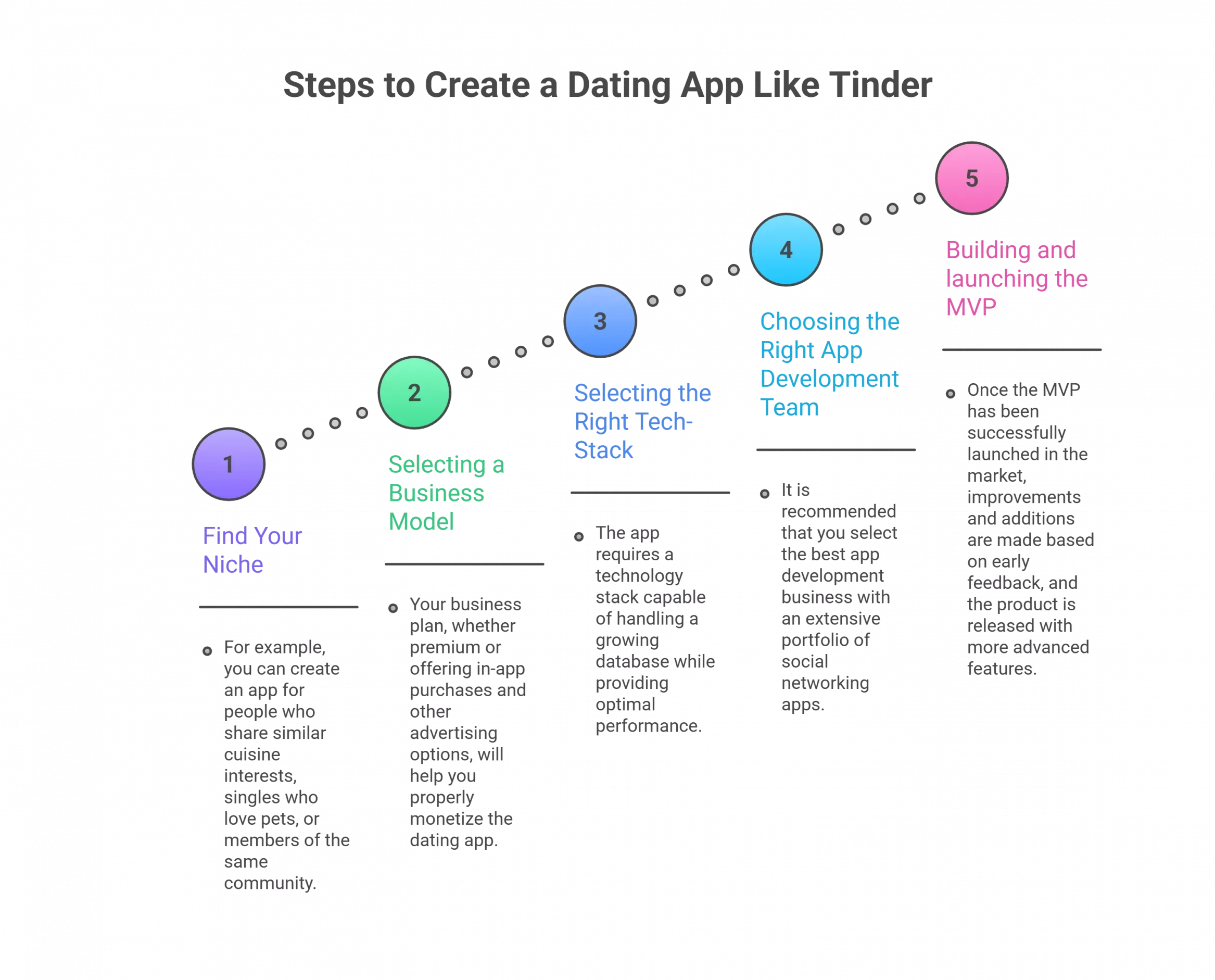
Once the MVP has been successfully launched in the market, improvements and additions are made based on early feedback, and the product is released with more advanced features.
How do you monetize Tinder-like app development?
Dating app profitability is dependent on a variety of things, including affiliate marketing, sponsored profiles, in-app purchases, and adverts. Advertising is one of the most prevalent ways to monetize a dating app. Most online dating apps allow native adverts, video commercials, and banners to boost app engagement.

Subscription:
Some apps offer users a free trial time to use the app, after which a subscription cost is required to continue using the service. This is one of the most prevalent strategies to generate income. The monthly subscription charge for individuals under 30 is $19, while those over 30 pay $29 per month.
Ads:
Ads are places for third-party businesses. Advertisers must pay a reasonable fee for advertising on applications like Tinder, which have a large audience. Although Tinder has not officially announced the fees it charges for displaying adverts on its interface, they are likely to be extremely high.
In-app purchases:
Users can use the in-app payment integration to gain access to special features like emojis and icons. This is a way to make money if you create an app like Tinder.
Premium Plans:
When firms create an app like Tinder, they limit its distinctive characteristics. These features can only be accessed by paying a certain amount. Tinder Plus Gold and Tinder Platinum are premium programs that contain sponsored profiles.
Others:
Dating applications also provide other functions. For example, in the Bumble dating app, female users can only see their matches for 24 hours before they disappear. So, if male customers want ladies to see their requests for a longer period of time, they must purchase a 24-hour extension.

Top 5 Examples of dating app development costs (case studies)
Real-world examples make it easier to understand the expense of developing a dating app. Below are five prominent dating apps, what distinguishes them, and how much it would cost to establish similar platforms in 2026.
1) Tinder: The Swipe Pioneer
Tinder is famous for its characteristic swipe function and its global user base. It has real-time geolocation, pairing algorithms, chat, Tinder Gold/Plus subscriptions, and AI-powered recommendations. It also includes advanced features such as super likes, boosts, and video chat.
Estimated development costs: $100,000 – $150,000+.
2) Bumble: Best Women First, Features Next
Bumble adds a distinct twist by only allowing women to initiate conversations. The app offers several modes (dating, networking, and friendship), in-app phone and video conversations, AI-powered content filtering, and premium membership tiers.
Estimated development costs: $90,000 – $140,000+.
3) Hinge: Best Dating App
Hinge focuses on deeper relationships, using features such as interactive prompts, user feedback on dates, and machine learning algorithms to recommend better matches over time. It includes premium features, video material, and profile customization options.
Estimated development costs: $80,000 – $120,000+.
4) Grindr: Location-Based Matchmaking for LGBTQ+
Grindr caters to the LGBTQ+ community by focusing on location-based discovery, real-time chat, profile filtering, block/report capabilities, and privacy settings. It’s fast, secure, and personalized to a specific audience.
Estimated development costs: $70,000 – $100,000+.
5) Coffee Meets Bagel: Quality Over Quantity
CMB focuses on selected matches and offers a limited number of daily suggestions. It has clever algorithms, icebreaker features, photo protection tools, and a simple, minimalist style that focuses on genuine interactions.
Estimated development costs: $60,000 – $90,000+.
Looking for? Church Management Software Development Cost
How to Optimize Dating App Development Cost Without Compromising Quality?
Managing your app development budget effectively is crucial, especially when developing a complex app like Tinder. Understanding the cost to develop an app in the USA is an essential part of this process. Here are strategies to ensure you get the most out of every dollar spent:
1) Begin with a Minimum Viable Product (MVP)
Instead of developing every feature from the start, focus on introducing a lean version of your app that includes only the most important features such as sign-up, profiles, matching, and chat. This allows you to immediately validate your idea in the market and cuts down on initial development time. You may then utilize genuine user input to direct future upgrades, saving money while delivering useful additions.
As a result, the initial cost is lower, the time to market is faster, and there is less risk.
2) Use Cross-Platform Development Tools
Developers can write code once and deploy it on both iOS and Android platforms using frameworks such as React Native or Flutter. This minimizes the time and expense associated with the creation of two distinct native applications. It is an effective solution for businesses and MVPs that wish to expand their audience without resorting to a doubled budget.
Result: Reduces development time and cost by 30–40%.
3) Emphasize Essential Features Over Desirable Features
Stay away from the urge to introduce every feature that could possibly be considered. Begin with the fundamental components that establish the purpose of your application and set it apart from others in the market. In future phases, advanced features such as AI matchmaking, voice/video conversations, or gamification may be implemented in response to feedback and performance assessment.
Result: Maintains the efficiency and cost-effectiveness of development.
4) Utilize Smart Outsourcing
Hiring in-house developers in North America or Western Europe can be expensive, particularly for early-stage businesses. Alternatively, you may wish to collaborate with seasoned development teams in regions such as India, Southeast Asia, or Eastern Europe. Despite the fact that numerous offshore agencies provide top-tier talent at substantially lower hourly rates, they maintain the same level of quality.
Result: High-quality output at a reduced hourly rate ($25–$60/hr compared to $100+/hr in the United States).
5) Utilize pre-built modules and APIs
It is unnecessary to construct each component from the ground up. The development time can be significantly reduced by utilizing third-party APIs for services such as messaging (e.g., Twilio, Sendbird), payments (Stripe), and maps (Google Maps). These tools have been tested in real-world environments and are scalable and reliable.
Result: Significantly reduces the workload associated with custom development.
6) Early on, establish a plan for scalability, but construct it in phases.
Although you do not require a substantial infrastructure on the first day, your application should be developed with the intention of expanding. Utilize cloud platforms that are scalable, such as AWS or Firebase, but initially activate only the necessary features. This approach ensures that you are adequately equipped to accommodate user expansion without incurring upfront expenditures for resources that are not utilized.
Result: You are prepared for expansion without incurring excessive expenses at the outset.
7) Continue to conduct consistent, lean testing.
It may be possible to save money temporarily by skipping testing; however, this may result in costly repairs in the future. Utilize tools such as BrowserStack or Firebase Test Lab to conduct continuous testing during development, utilizing agile QA cycles. Regular testing prevents costly overhauls post-launch, ensures smoother performance, and discovers bugs early.
Result: Accelerates the time-to-release and decreases the cost of problem fixes.
8) When feasible, implement open-source frameworks
Numerous high-quality open-source libraries are accessible for a variety of purposes, including animations, push notifications, chat interfaces, and login routines. These tools are frequently well-maintained by large communities, which not only expedites development but also guarantees stability and security.
Result: Decreases cost and frees up developer hours.
You can maintain control over the cost of developing a dating app while maintaining quality, performance, and scalability by making deliberate decisions regarding tools, timelines, and teams.
We have listed! Top OnlyFans Alternatives
Final Say
I trust that you have gained a comprehensive comprehension of the cost of developing a dating app in 2026 and the numerous factors that contribute to it. It is crucial to carefully plan your budget, as it can have a significant impact on everything from essential features and platform selection to hidden expenses and post-launch maintenance.
Having the appropriate development collaborator is essential, regardless of whether you are developing a niche dating platform or attempting to compete with industry giants such as Tinder or Bumble. A reputable dating app development company in the United States can assist you in the development of a dating app that is innovative, scalable, and cost-effective, while maintaining the highest quality.
FAQs
What is the cost of developing a courting application in 2026?
The cost is contingent upon the platform, design, and features selected. The cost of a rudimentary MVP may be approximately $25,000, while a feature-rich app with AI capabilities can exceed $120,000.
How long does it take to develop a courting application?
Timelines for development are contingent upon the level of complexity. A straightforward application may necessitate 3–4 months, while a comprehensive platform with sophisticated capabilities may necessitate 6–12 months.
How to develop a Tinder-like application on a limited budget?
Utilize cross-platform frameworks such as Flutter to reduce development costs by 30 to 40%. Outsource to regions such as Eastern Europe or Latin America to obtain reduced hourly rates. Focus on a single city initially to minimize marketing expenses. Refrain from implementing intricate AI features until you have a paying user base that can provide the necessary funding.
What are the fundamental attributes of a courting application?
User profiles, push notifications, messaging functionality, and matching algorithms comprise the primary features. Additional features that may be integrated into advanced applications include video calling and AI-driven recommendations.
In what ways does artificial intelligence improve the efficacy of dating applications?
By assessing user behavior and preferences, AI can enhance the accuracy of matches, resulting in more pertinent connections. Additionally, it facilitates personalized user experiences and content moderation.
Is it possible to generate revenue from my courting application?
Subscription models, advertising, and in-app purchases are all common monetization strategies. Additionally, revenue can be generated by providing premium features.
Is it more advantageous to develop for iOS, Android, or both?
Maximizing reach necessitates developing for both platforms. While maintaining quality, the utilization of cross-platform frameworks such as Flutter can reduce development time and costs.