Cost to Develop a Social Media App Like Facebook
The Cost to develop a Social Media App Like Facebook in 2026 typically ranges from $250,000 to over $2 million, depending on feature complexity, infrastructure scale, and development location. This wide range exists because Facebook is not just a mobile app, it is a large, distributed system handling user data, content delivery, real-time interactions, and continuous moderation at scale.
This article explains how those costs are formed, what technical and operational decisions influence them, and what founders, startups, and product managers should realistically expect when planning a similar platform. The goal is not to promote development services, but to help readers understand the mechanics behind the numbers so they can make informed decisions.
Understanding What “Facebook-Like” Actually Means
When people refer to building an app “like Facebook,” they often mean different things. Some imagine a basic social feed and profiles. Others expect messaging, groups, video, and recommendations. Facebook itself evolved over more than a decade, adding layers of functionality, infrastructure, and governance.
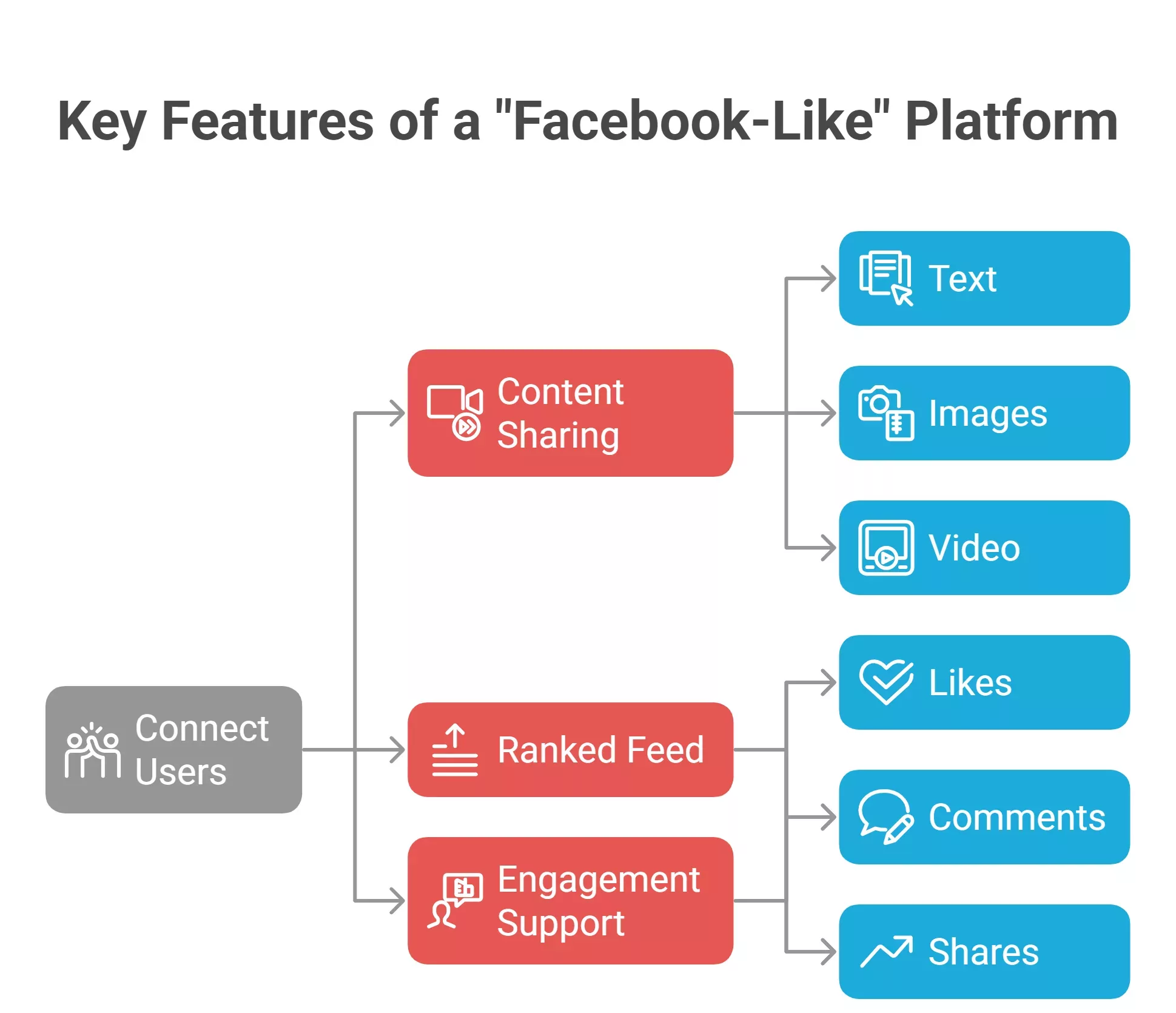
At its core, a Facebook-like app is designed to:
- Connect users through profiles and relationships
- Allow content sharing (text, images, video)
- Display a ranked feed
- Support engagement (likes, comments, shares)
The broader the scope, the higher the development and long-term operating costs. This distinction matters because many early-stage products fail by attempting to copy a mature platform too quickly instead of validating a smaller use case first.
Want to know? Cost To Make An App Like Instagram
Factors That Affect the Cost to Develop a Social Media App Like Facebook
The cost of building a Facebook-like social media application does not come from a single decision. It is influenced by multiple technical, operational, and business factors. Understanding these factors helps founders and product teams estimate budgets more accurately and avoid unexpected expenses later.
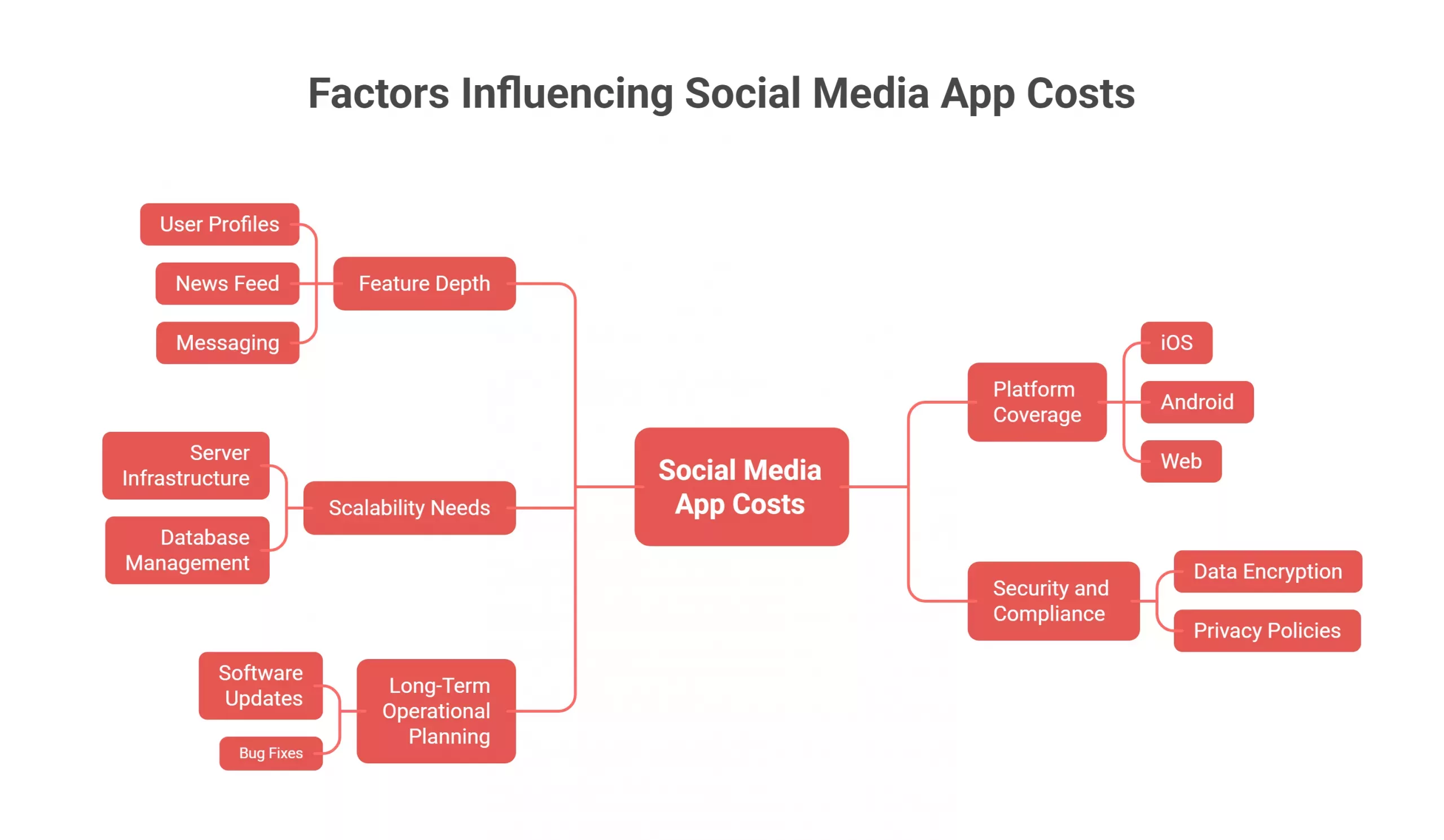
Below are the most important cost-driving factors explained in practical terms.
1. Feature Scope and Functional Complexity
The number and depth of features directly affect development cost.
A basic social app may include:
- User profiles
- Friend connections
- A simple news feed
- Likes and comments
A more complex version may add:
- Video uploads and live streaming
- Groups and pages
- Recommendation algorithms
- Advanced privacy controls
Each additional feature increases:
- Development time
- Testing requirements
- Backend processing
- Ongoing maintenance
What this means for founders: Starting with fewer features reduces upfront cost and allows validation before investing more resources.
2. Platform Choice (iOS, Android, Web)
The platforms you choose to support significantly affect cost.
- Single platform (Android or iOS): Lower initial cost
- Cross-platform mobile app: Medium cost, shared codebase
- Mobile + web application: Higher cost due to separate interfaces
Each platform requires:
- UI adjustments
- Testing across devices
- Ongoing updates
Practical impact: Launching on one platform first can reduce early expenses and speed up time to market.
Want to know? OTT App Development With Estimated Cost
3. UI/UX Design Requirements
Design affects both usability and cost.
Simple designs with standard components cost less to build. Custom animations, complex layouts, and accessibility features increase design and development effort.
Good UX design reduces:
- User confusion
- Drop-off rates
- Support requests
However, it adds upfront cost due to:
- Research
- Prototyping
- Usability testing
Investing in clear, functional design early often reduces long-term costs caused by redesigns.
4. Backend Architecture and Scalability
Social media apps must handle:
- Large volumes of user data
- Real-time interactions
- Rapid growth in traffic
A scalable backend requires:
- Load balancing
- Distributed databases
- Caching systems
Building for scale from day one costs more than a simple backend but prevents system failures as users grow.
For startups: Over-engineering too early increases cost, while under-engineering leads to expensive fixes later. A balanced approach is essential.
5. Content Storage and Media Handling
Photos and videos consume significant storage and bandwidth.
Cost increases with:
- High-resolution uploads
- Video streaming
- Backup systems
Media-heavy apps also require:
- Content delivery networks (CDNs)
- Compression and optimization tools
Why this matters: Even with moderate user growth, media storage costs can become one of the largest ongoing expenses.
6. Security and Privacy Requirements
Social apps store sensitive personal data. Security is not optional.
Security-related costs include:
- Encrypted data storage
- Secure authentication systems
- Protection against hacking and data leaks
Compliance with privacy laws adds further requirements such as:
- User consent management
- Data deletion tools
Security issues cost far more to fix after launch than to prevent during development.
7. Content Moderation Systems
Moderation is essential to maintain platform quality and legal compliance.
Costs depend on:
- Manual moderation teams
- Automated filtering tools
- Reporting and appeal workflows
As user numbers grow, moderation expenses grow as well.
What founders should know: Ignoring moderation planning often leads to reputational damage and regulatory problems.
8. Development Team Location and Structure
Development costs vary by region due to salary differences.
Factors include:
- Hourly rates
- Team size
- Communication efficiency
In-house teams usually cost more but offer tighter control. Outsourced or remote teams reduce cost but require strong project management.
Practical consideration: Lower hourly rates do not always mean lower total cost if delays or quality issues occur.
9. Third-Party Services and Integrations
Most social apps rely on external tools such as:
- Push notification services
- Analytics platforms
- Cloud hosting providers
These services charge monthly or usage-based fees that increase with scale.
Why it matters: Third-party costs are recurring and should be included in long-term financial planning.
10. Maintenance, Updates, and Long-Term Support
After launch, costs continue.
Ongoing expenses include:
- Bug fixes
- Performance optimization
- OS compatibility updates
- Feature improvements
Many platforms spend 15–25% of the initial development cost annually on maintenance.
For businesses: A realistic budget always includes post-launch costs, not just development.
Understanding these factors helps founders make informed decisions, prioritize features, and align budgets with real business goals rather than assumptions.
Core Functional Components of a Social Media App
Every social networking platform relies on a shared set of building blocks. These components explain why development is complex and resource-intensive.
User Accounts and Profiles
This includes registration, login, password recovery, and profile customization. While this sounds simple, it requires secure authentication systems, data validation, and privacy controls.
Social Connections
Friend requests, followers, or mutual connections define how users interact. This logic determines who sees what content and drives feed personalization.
Content Feed
The feed is not just a list of posts. It requires sorting, filtering, caching, and ranking content based on relevance and freshness.
Content Sharing and Engagement
Users expect to post images, videos, and text, and interact through reactions and comments. Each action generates data that must be stored, processed, and reflected in real time.
Messaging
Private and group messaging introduces real-time communication, which increases backend complexity and server costs.
Notifications
Push and in-app notifications keep users engaged but require event-driven systems that track user actions continuously.
Moderation and Reporting
To remain compliant and usable, platforms need tools for reporting abuse, managing content, and enforcing community standards.
These elements collectively define the Features of a Facebook-like app, and each one adds measurable cost during both development and maintenance.

Advanced Features That Increase the Cost of Social Media App Development
Once the core system is functional, many platforms add features that significantly increase development effort.
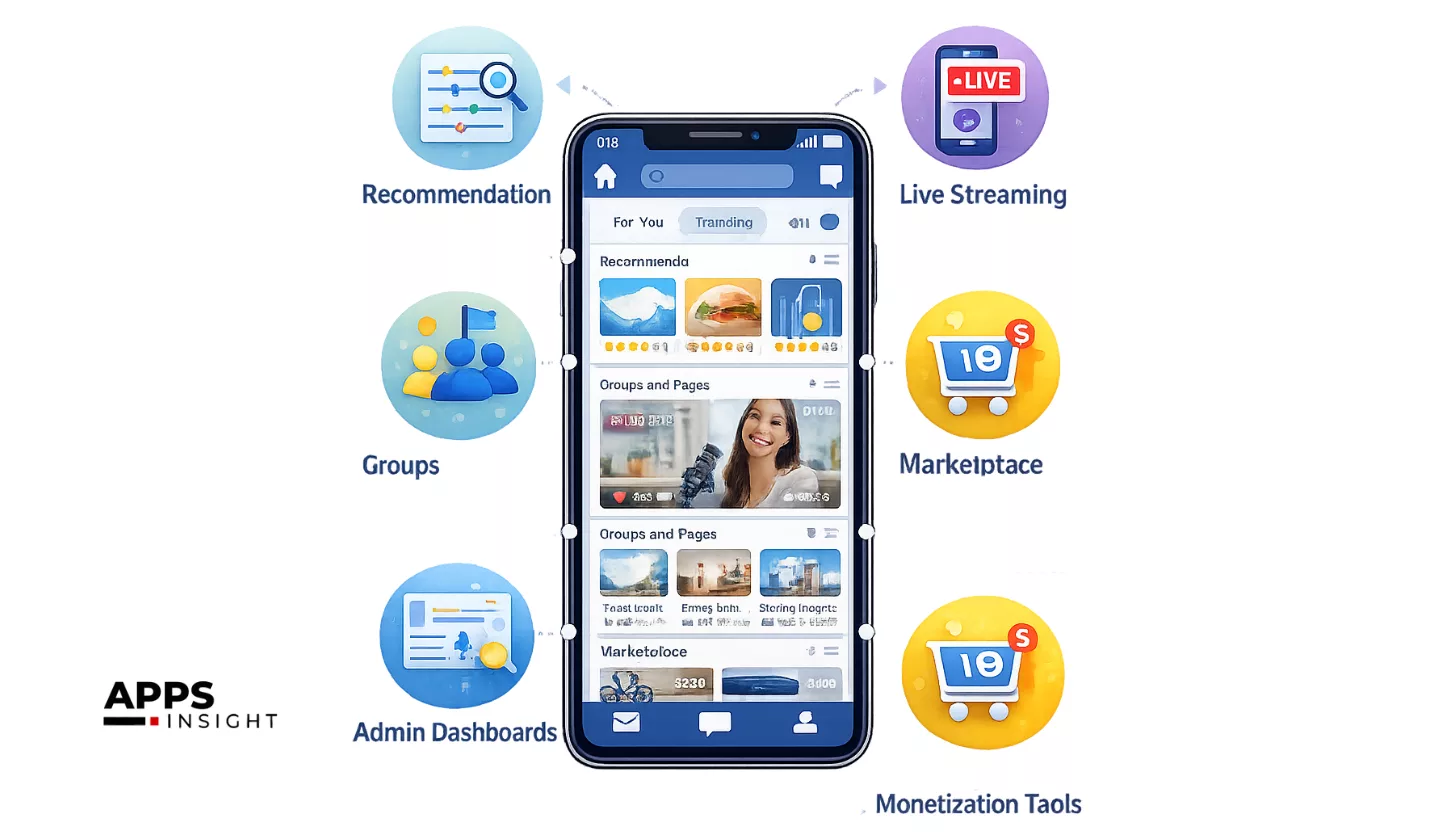
Recommendation Systems
Algorithms suggest friends, groups, or content. These systems rely on user behavior data and machine learning models, increasing infrastructure and engineering costs.
Live Streaming
Live video requires low-latency streaming, content delivery networks (CDNs), and moderation workflows.
Groups and Pages
These introduce role management, visibility controls, and analytics for group administrators.
Marketplace and Monetization Tools
Buying and selling features require payment gateways, fraud detection, and dispute resolution mechanisms.
Admin Dashboards
Internal tools for monitoring usage, reports, and system health are necessary but often overlooked during planning.
Each added feature not only costs more to build but also increases long-term operational expenses.
Technology Stack Used in Facebook-Like Apps
The technology stack determines performance, scalability, and development speed.
Frontend
Most social apps use modern JavaScript frameworks for responsiveness and cross-platform compatibility.
Backend
Backend systems handle authentication, feeds, messaging, and business logic. They are often built using scalable server frameworks and microservices.
Databases
Social apps use a mix of relational and non-relational databases to manage user data, posts, and activity logs efficiently.
APIs and Integrations
Third-party services are commonly used for analytics, notifications, media storage, and authentication.
The choice of stack influences hiring costs and long-term flexibility, which directly impacts the cost of social media applications over time.
Development Phases and How Costs Accumulate
Understanding the development lifecycle helps explain where budgets go.
Discovery and Planning
This phase defines requirements, user flows, and technical architecture. Skipping it often leads to higher costs later due to rework.
UI/UX Design
Designers create wireframes and prototypes to ensure usability. Clear design reduces development time and user friction.
Frontend and Backend Development
This is the most expensive phase, involving multiple engineers working over several months.
Testing and Quality Assurance
Social apps require extensive testing to handle edge cases, security issues, and performance under load.
Deployment
Launching involves configuring servers, app store compliance, and monitoring tools.
Cost Breakdown by Development Stage (2026 Estimates)
For a medium-scale Facebook-like app:
- Planning and design: $30,000–$60,000
- Frontend development: $70,000–$150,000
- Backend development: $100,000–$300,000
- Testing and deployment: $20,000–$50,000
This puts the Cost to develop a Social Media App Like Facebook in the range most founders underestimate when budgeting only for visible features.
Infrastructure, Hosting, and Scaling Costs
Unlike static apps, social platforms grow unpredictably.
- Cloud hosting scales with user activity
- Media storage grows rapidly with photos and videos
- Bandwidth costs increase as engagement rises
Early-stage apps may spend $2,000–$5,000 per month, while larger platforms can exceed $50,000 monthly.
Maintenance, Security, and Compliance Costs
After launch, development does not stop.
- Regular updates fix bugs and add features
- Security audits protect user data
- Compliance with data protection laws adds legal and technical overhead
These ongoing costs often match or exceed initial development costs within the first two years.
Comparing with Existing Platforms
Facebook’s development is often compared with smaller platforms like MeWe. Public estimates suggest the Mewe app development cost was significantly lower initially because it focused on privacy and limited features rather than broad monetization tools.
This comparison shows that narrowing the scope reduces early costs but also limits functionality.
Regional Development Cost Considerations
Development costs vary by region due to labor rates and expertise availability. Some startups work with Mobile App Development Companies in Brazil for cost-effective engineering, while others prefer ReactJS Development Firms in the USA for closer collaboration and regulatory familiarity.
Each option has trade-offs in cost, communication, and time zones.
Hidden Costs Often Missed by Founders
Commonly overlooked expenses include:
- Legal consultation for privacy laws
- App store fees and compliance
- Customer support staffing
These hidden costs often surface only after launch.
What This Means for Startups and Businesses
For founders, the Cost to create a Facebook-like app is not just a development expense. It is a long-term operational commitment. Many successful platforms start as focused friendship apps, validate engagement, and expand gradually.
This approach reduces risk and aligns spending with actual user demand.

Sum
The Cost to develop a Social Media App Like Facebook reflects technical complexity, scale requirements, and ongoing operational needs. A realistic budget accounts for infrastructure, maintenance, and compliance, not just initial coding.
For more related insights, practical breakdowns, and comparisons, platforms like AppsInsight publish detailed research that can help teams plan responsibly.
Understanding these factors allows decision-makers to build social platforms that are technically sound, financially sustainable, and aligned with real user needs rather than assumptions.