

Finding Skilled app developers in 2026 is a practical challenge for every company that builds digital products. Demand is high across mobile, AI, automation, and cloud based software. The supply of experienced developers has improved, but true expertise remains limited in niche areas such as on device AI, advanced security, and complex user experience workflows. Your hiring approach shapes your results.
This guide gives you a clear, direct roadmap so you know where to search, how to evaluate talent, and what tools help you hire fast without lowering quality.
The goal is to show you where to look, what steps matter, and how to avoid common hiring mistakes. You will learn how the market works in 2026, what skills separate strong developers from average ones, and how top hiring platforms compare. Each section uses simple language and focuses on practical details you can apply to your next search.
What Makes a Skilled App Developer in 2026
The mobile ecosystem in 2026 expects developers to work across multiple layers of a product. Strong developers know both front end and back end concepts. They handle cloud integration, security, modern frameworks, and automated testing. Raw coding skill is not enough. Real value shows up in project ownership, clear communication, and problem solving.
Core skills in 2026
• Strong command of at least one mobile framework such as Swift for iOS, Kotlin for Android, Flutter, or React Native.
• Experience building stable APIs and backend logic using Node, Go, Python, or similar languages.
• Solid knowledge of authentication, data encryption, and secure data flow.
• Understanding of CI and CD pipelines and automated mobile testing.
• Ability to optimize performance and battery usage.
Many apps in 2026 include AI features, so developers need the ability to work with on device inference tools, mobile machine learning libraries, and cloud AI APIs. This adds new layers of complexity.
New skills for 2026
• Integrating AI chat systems into mobile interfaces.
• Using AI or ML models on device for faster response times.
• Managing local data privacy rules.
• Working with cross-platform tools that target mobile, web, and wearable devices.
Best App Developers also need the ability to work in distributed teams. Remote work is standard. You must judge not only skill, but also how well someone communicates and meets timelines. Weak communication slows delivery.
How do you judge real ability?
Portfolios and live examples matter more than long resumes. You learn more by asking a developer to walk you through a past project. Ask them why they made certain choices. Skilled developers give clear explanations. They show structured thinking.
Short test assignments also help. Give a clear prompt such as building a simple login flow with offline storage. Review code clarity, folder structure, naming, and testing approach. Skip trick questions. Focus on practical work.
How App Developers’ Hiring Process Works in 2026
Hiring workflows look different from a few years ago. More companies hire remotely. Screening is faster because platforms handle pre vetting. You need a simple approach. Start with role clarity. Then pick the right platform. Then test real skills.
Hiring patterns
• Remote first hiring is common.
• Most developers prefer contract or hybrid work.
• Companies use standardized tests to check skill.
• Video interviews focus on communication and clarity.
Swiss Developers who work across time zones need to document their work in a clear and simple way. You should check how comfortable they are with writing clean tickets and communicating blockers early.
Screening steps used in 2026
• Short technical quiz to test core knowledge.
• Live coding or take home test.
• Portfolio review.
• A short video call to check communication.
• A test week for real projects if budget allows.
Cost factors
Rates depend on region, skill depth, and project type. Advanced iOS and Android developers charge more than cross-platform developers. AI driven apps usually cost more because they require deeper knowledge and more testing.
Approximate rate ranges in 2026:
• Eastern Europe: 30 to 70 dollars per hour.
• India: 20 to 60 dollars per hour.
• Latin America: 35 to 80 dollars per hour.
• United States: 70 to 160 dollars per hour.
Complex apps with large backend systems take more time. Simple apps with limited screens cost less.
Best Platforms and Places to Find Developers in 2026
You have many hiring options. Each platform works for different goals. Your project size, timeline, and budget shape your best choice. You will see how each platform helps you find Skilled app developers in 2026. Some platforms serve short projects. Others work better for long term teams.
Below are the major platforms in detail.
1) AppsInsight — Best for Finding Verified App Experts

AppsInsight is designed for companies that want verified specialists. Each developer listed has completed a skill check, completed project reviews, and passed identity verification. You know you are meeting real experts.
What type of developers you find
You will find mobile developers who work with iOS, Android, Flutter, and cross platform tools. AppsInsight filters talent based on real work experience. Profiles include clear project details and sample code.
Strengths
• Verified engineer profiles.
• Strong portfolio checks.
• Clear hourly rate ranges.
• Easy to compare multiple developers.
Limitations
AppsInsight focuses on mobile developers. You must hire backend or design roles from a different source if your app requires a larger team.
Ideal use cases
• You need a developer fast.
• You want verified specialists without a long search process.
• You have a mid sized project with clear requirements.
2) Upwork: Best for Hiring Freelance App Developers

Upwork gives access to a wide range of freelancers. You post a job and receive proposals from developers worldwide. You review profiles, ratings, portfolios, and past client feedback.
What type of developers you find
You will find every type of mobile developer. The range is wide, from beginner level to senior engineers with years of experience. Rates vary.
Strengths
• Large global talent pool.
• Easy to start small projects.
• Strong review system.
• Flexible hourly and fixed price options.
Limitations
Quality varies. You must screen developers carefully. Top developers receive many offers so you need fast communication.
Ideal use cases
• Small to medium projects.
• Ongoing updates for existing apps.
• Prototyping and testing new ideas.
3) Toptal: Best for Elite, Pre Vetted Developers

Toptal focuses on top tier engineers. They use a strict screening process that checks coding skill, problem solving, and communication. They reject most applicants.
What type of developers you find
You find senior level engineers who have shipped real products. Many have experience with complex apps, enterprise systems, and large codebases.
Strengths
• Strong screening.
• Reliable communication quality.
• Good for important long term projects.
Limitations
Rates are higher. You must plan a clear budget before starting.
Ideal use cases
• High risk projects where quality matters.
• Complex mobile features.
• Executive or enterprise work.
4) Fiverr Pro: Best for Quick and Affordable App Development

Fiverr Pro helps you find screened developers through a simple listing format. You browse predefined services and timelines.
What type of developers you find
Developers who offer packaged services such as building login screens, UI screens, or small app modules.
Strengths
• Fast hiring.
• Clear pricing.
• Good for small tasks.
Limitations
Large projects are harder to manage. You should avoid using Fiverr Pro for long term work.
Ideal use cases
• Small fixes.
• Feature updates.
• Short enhancements.
5) Clutch: Best for Researching Top App Development Agencies
Clutch helps you compare agencies through detailed reviews. You see real project summaries, client ratings, budgets, and timelines. This gives you a clear picture of how an agency works before you message them.
What type of developers you find
You find full service teams. These teams include mobile developers, backend developers, QA testers, and designers. Agencies listed here often work with mid size and enterprise clients.
Strengths
• Transparent reviews.
• Clear project examples.
• Reliable list of established agencies.
• Useful filters for tech stack and price.
Limitations
Some agencies have long onboarding timelines. Smaller budgets receive less priority.
Ideal use cases
• Large apps with multiple features.
• Multi platform projects.
• Work that needs design, backend, and mobile in one place.
6) GoodFirms: Best for Comparing Trusted App Companies

GoodFirms is a research platform. It lists verified companies with ratings from clients. You use it to compare technical focus areas, pricing structures, and leadership backgrounds.
What type of developers you find
You find organized teams that cover mobile, backend, and integration work. Many companies listed have strong experience with cross platform frameworks.
Strengths
• Simple comparison tools.
• Verified company data.
• Useful for quick shortlists.
Limitations
Smaller firms may have limited availability. You need to confirm delivery timelines directly.
Ideal use cases
• When you want to compare agencies in one place.
• When you want structured, documented reviews.
• When you need a balanced view of experience and pricing.
7) LinkedIn: Best for Recruiting Experienced App Developers

LinkedIn remains a strong source for hiring individual developers. The platform is filled with mid level and senior mobile engineers. You can filter by location, skill, and past work history. The platform helps you contact developers directly.
What type of developers you find
You find full time developers, contractors, and consultants. You also find senior leads who manage entire mobile teams.
Strengths
• Real profiles with work history.
• Easy to verify past roles.
• Simple communication.
• Good for long term hires.
Limitations
Response times vary. Skilled developers receive many messages. You need a clear pitch to attract attention.
Ideal use cases
• Full time hiring.
• Building long term internal teams.
• Replacing or expanding important roles.
8) Guru: Best for Flexible Hiring and Long Term Collaboration

Guru works well for companies that want stability. Developers on Guru often stay with clients for long periods. The workroom system makes task tracking simple.
What type of developers you find
You find independent developers and small teams. Many have long records of completing mobile projects for repeat clients.
Strengths
• Good for stable, long running work.
• Clear task tracking.
• Reliable profile history.
Limitations
The talent pool is smaller than Upwork. You must review profiles carefully.
Ideal use cases
• Long term maintenance.
• Feature updates.
• Continuous improvement cycles.
9) Indeed: Best for Hiring Full Time App Developers

Indeed helps you find local or remote developers for full time roles. You post a job and receive direct applications. Many companies use this method when they want stable, long term internal talent.
What type of developers you find
You find mid level and senior developers with experience in structured teams. Many applicants work or worked in established companies.
Strengths
• Strong pool of full time candidates.
• Resume based filtering.
• Clear job posting tools.
Limitations
Screening takes time. You manage all interviews and tests yourself.
Ideal use cases
• Permanent roles.
• Companies with internal teams.
• Projects that need deep domain knowledge.
10) Dribbble: Best for Finding UI and UX Designers for Mobile Apps
Dribbble helps you find designers with strong visual portfolios. You browse sample screens, product flows, and animation demos. This helps you judge style fit before you contact a designer.
What type of talent you find
You find UI and UX designers who create mobile layouts, user flows, and brand integrated visuals. Many designers also handle prototyping tools.
Strengths
• Strong visual portfolios.
• Easy to compare styles.
• Reliable for design heavy projects.
Limitations
Not all designers handle production ready assets. You need to confirm tool knowledge.
Ideal use cases
• New app designs.
• Redesigning outdated apps.
• Improving usability.

Best Platform Hiring Developers: Direct Hiring vs Freelancers vs Agencies
You have three main hiring paths. Each path works for different goals.
Full time developers
These hires join your internal team. They work on long range goals, product planning, and stable development cycles.
Pros
• Strong commitment.
• Deep product knowledge.
• Better long term design and architecture decisions.
Limitations
Hiring takes time. Costs are higher. Salaries and benefits bring long term financial responsibility.
Best for
• Core product teams.
• Companies with steady workloads.
• Apps that need constant updates.
Freelancers
Freelancers help you finish short or mid term tasks. They work on features, bug fixes, or specific modules. They offer flexible rates.
Pros
• Flexible schedules.
• Easy to hire.
• Good for small or medium tasks.
Limitations
You need to manage the work. Communication depends on the individual.
Best for
• Feature builds.
• MVPs.
• Experiments and prototypes.
Agencies
Agencies give you full teams. They handle design, development, testing, and deployment. They help you launch complex apps on clear timelines.
Pros
• Full service support.
• Clear delivery plans.
• Strong quality control.
Limitations
Higher cost. Less control than direct teams.
Best for
• Large projects.
• Multi platform apps.
• Work with strict deadlines.
| Category | Direct Hiring | Freelancers | Agencies |
|---|---|---|---|
| Best for | Long term product teams | Short and mid range tasks | Large or complex projects |
| Commitment | Full time | Flexible | Contract based |
| Cost | Highest long term cost | Lower to mid cost | Highest upfront cost |
| Speed of hiring | Slow | Fast | Medium |
| Skill range | Steady skill depth | Wide range, mixed levels | Broad team skill sets |
| Management needs | High, you manage daily work | Medium, you guide tasks | Low, agency manages |
| Quality control | You own quality checks | Depends on freelancer | Agency provides testing |
| Communication | Strong alignment | Varies by person | Structured and organized |
| Best use cases | Core features, long term roadmap | MVPs, prototypes, feature updates | Multi platform apps, full builds |
| Scalability | Slow to scale | Easy to scale | Scales fast through team size |
| Hiring risk | Medium | Medium to high | Low to medium |
| Onboarding time | Long | Short | Medium |
| Support after delivery | Strong if full time | Limited unless extended | Strong if contract includes support |
How to Evaluate Skilled App Developers Before Hiring
You reduce risk through structured evaluation. Skilled app developers in 2026 respond well to clear tests and questions. Weak developers avoid specifics. Use these steps to find strong talent.
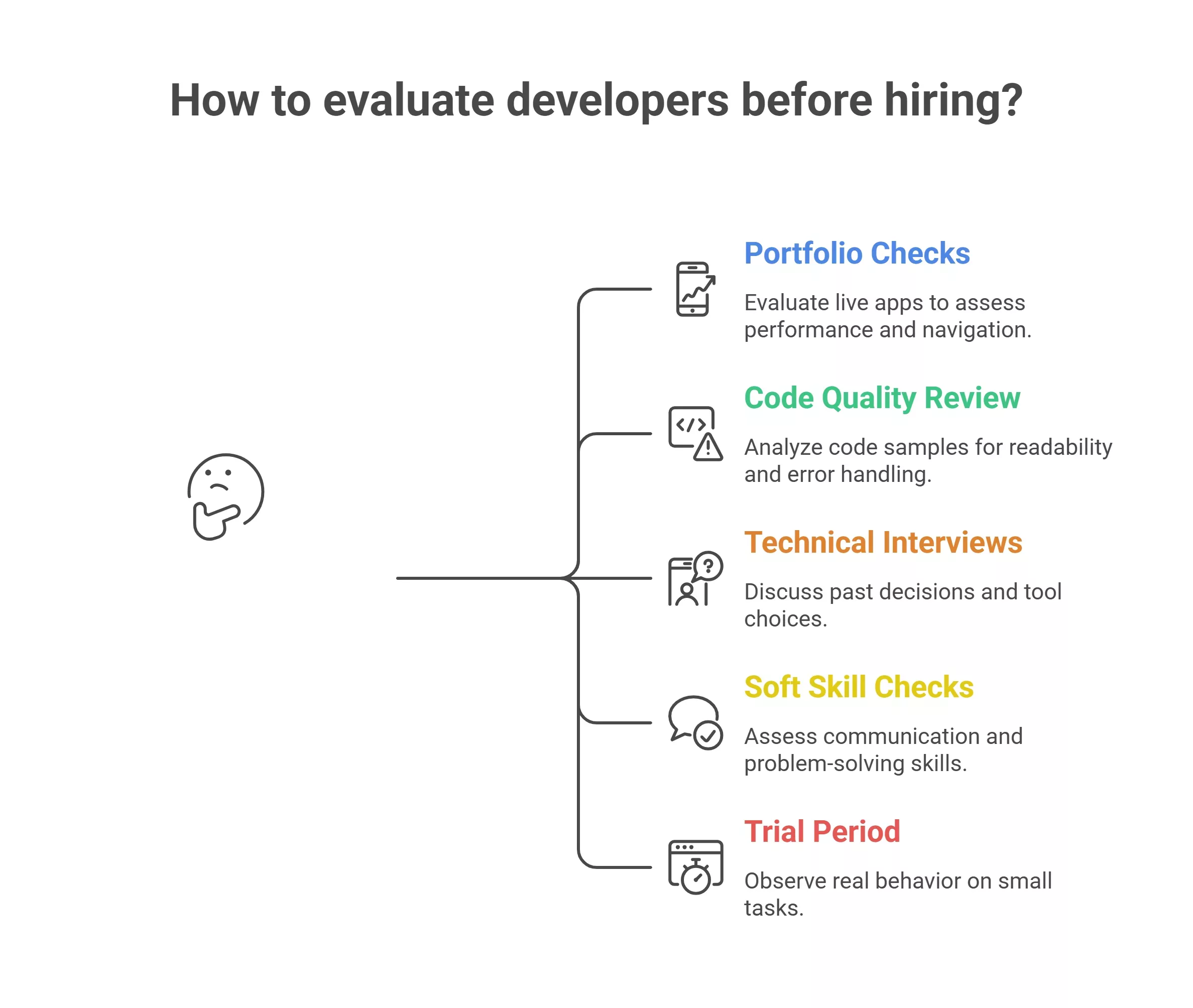
Portfolio checks
Look for live apps. Install them. Test loading times, navigation, and performance. You learn a lot by using a developer’s real work.
Code quality review
Ask for a small code sample or a test assignment. Check naming, structure, readability, and error handling. Simple checks show true skill.
Technical interviews
Ask developers to explain past decisions. Ask why they chose certain tools and what problems they solved. Avoid trick questions. Focus on real work.
Soft skill checks
Check communication by asking clear questions. Skilled developers give short, simple answers. They break problems into small steps. They respond with structure.
Trial period
Short trials help you see real behavior. A one week trial on small tasks shows speed, thinking, and discipline.
Red flags
• Vague answers.
• Weak documentation.
• Incomplete test assignments.
• Poor communication.
Budget and Cost Guide for Hiring Developers in 2026
Your budget shapes your hiring plan. Prices shift based on skill depth, region, and project scope. In 2026 the market is busy, and competition for skilled workers remains strong. Clear planning helps you avoid delays and cost overruns. You should expect a wide price range because developers work with different tools, experience levels, and delivery speeds.
Rate ranges by skill level
Rates follow predictable patterns. Senior developers cost more, but they finish tasks faster and make fewer errors. Junior developers cost less, but they need guidance.
• Entry level mobile developers: 20 to 40 dollars per hour.
• Mid level mobile developers: 40 to 80 dollars per hour.
• Senior developers: 80 to 160 dollars per hour.
• AI enhanced developers: 90 to 170 dollars per hour.
Developers with niche skills such as advanced animations, high level security, or on device AI are priced at the top of the range.
Rate ranges by region
Location continues to influence pricing. Rates here reflect 2026 survey averages from industry reports.
• United States: 70 to 160 dollars per hour.
• Canada: 55 to 130 dollars per hour.
• Eastern Europe: 30 to 70 dollars per hour.
• Latin America: 35 to 80 dollars per hour.
• India: 20 to 60 dollars per hour.
The gap between regions is smaller than it was a few years ago. Remote collaboration improved. Demand is global. Good developers receive offers from many countries.
Cost by project type
Simple apps with basic screens and limited backend cost less. Complex apps that include real time data, advanced design, or AI features cost more.
• Simple apps: 8,000 to 30,000 dollars.
• Medium apps: 30,000 to 120,000 dollars.
• Complex apps: 120,000 dollars or more.
If you work with agencies the cost moves higher because they include design, testing, planning, and deployment. If you hire individuals you save money, but you take full responsibility for management.
When to pay hourly or fixed price
Hourly gives you flexibility. Fixed price works for small tasks with clear requirements. Many teams pick a mix. They use hourly for development and fixed price for defined design deliverables.
Use fixed price for tasks such as:
• UI layout updates.
• Small bug fixes.
• Limited feature upgrades.
Use hourly for:
• Full apps.
• Long term builds.
• Tasks with unclear scope.
How to avoid overpaying
You reduce cost by rewriting unclear requirements. Vague tasks slow developers. You also reduce cost by using a short paid test task before giving large assignments. This helps you confirm skill and speed before you commit.
Steps to Hire App Developers: Checklist
Your hiring steps must stay simple. Clear steps protect your budget and timeline. This checklist helps you find Skilled app developers in 2026 without confusion.
Define your project
• Write your core features.
• Write your screens.
• List the platforms you need.
• Write your deadline and target budget.
Clarity improves response quality on any hiring platform.
Select your hiring path
• Full time for long term work.
• Freelancers for mid range tasks.
• Agencies for complex builds.
Choose the path that fits your timeline and depth of work.
Review portfolios
Check real apps. Install them. Try onboarding. Check loading times. Check animations. Check error handling. Strong developers show project discipline.
Give a short test
Send a small task. For example, ask for a login flow with local storage. Check clarity and stability. Check how they document the work.
Run a short interview
Ask simple questions. Ask them to explain a past project. Ask why they chose certain tools. Skilled developers answer clearly without long stories.
Verify communication
Good developers send short progress updates. They flag issues early. They explain blockers. Weak communication creates delays.
Confirm availability
Ask for weekly hours. Ask for time zone. Ask for backup coverage during travel or holidays.
Review contracts
Write deliverables in clear bullet points. Add milestone dates. Add payment schedule. Add handover terms.

Key Trends Shaping the App Development Market in 2026
You must understand trends because they affect hiring patterns. Many apps now include AI features. Many companies use multi device workflows. Privacy rules are tighter. These changes shape the skills developers need.
AI driven features
Many apps use AI for text generation, search, assistance, and prediction. Developers must know how to integrate on device models and cloud models. This increases demand for developers who understand AI operations.
Privacy rules
Cities and countries set strict privacy laws. Developers must handle user data locally when possible. They must encrypt data and manage safe permissions. App stores reject apps with weak privacy systems.
On device AI
Phones run models offline. Developers must know how to optimize models for performance and battery life. This skill is new and rare.
Low code and automation tools
Low code platforms reduce development time for simple apps. Developers still handle core logic, integrations, and custom features. You must judge if your app needs full custom code or a mix.
Multi platform builds
Apps now run on phones, tablets, watches, and smart displays. Developers must think about layout systems, input methods, and device constraints.
Why trends affect hiring
Trends raise the bar. You need developers who follow new standards. Old skill sets are not enough for many products. Developers must handle new data rules, new AI tools, and new device types.
We have listed! Top Mobile App Development Trends To Watch In 2026
Your App Developers Hiring Strategy for 2026
Your strategy must remain simple and structured. Start with clear requirements. Pick the best search platform. Use a small test. Check communication. Then hire. This process protects your time.
Focus on long term value. A strong developer reduces bugs, reduces rework, and shortens your release cycle. A weak developer increases cost. Time spent in early screening saves money later.
If you want to Find mobile app developers 2026 you must prepare your job description carefully. Clear tasks attract strong developers. Unclear tasks attract the wrong crowd.
App Developers want clarity. They also want stable communication. They select clients who give detailed tasks and fair timelines. You attract better talent when your job post shows structure.
Stay patient. Many companies compete for the same talent. You gain an edge by responding fast, using small paid tests, and showing clear project plans.
Read once! How Custom Software in Business Drives Innovation and Growth
Why Your Platform Choice Matters
You find Skilled app developers in 2026 in many places. Each platform serves a different goal. The wrong choice slows your project. The right choice speeds up delivery.
• Use AppsInsight if you want verified specialists.
• Use Upwork if you want wide access to freelancers.
• Use Toptal for senior engineers.
• Use Fiverr Pro for small work.
• Use Clutch for agencies.
• Use GoodFirms for comparisons.
• Use LinkedIn for professional hiring.
• Use Guru for long term contract work.
• Use Indeed for full time hiring.
• Use Dribbble for design talent.
Your platform choice depends on your timeline, budget, and project size. Think about your risk level. Senior talent removes risk in complex apps.
We have written What is the Best Way to Hire App Developers in 2026?
How to Build a Strong Long-Term App Team in 2026
Strong app development teams use stable processes. You protect your product’s future by building predictable workflows. Teams deliver faster when they follow simple rules and clear roles. You should create a structure that works even when team members change.
Define responsibilities
You need clarity across all roles.
• Mobile developer handles features and logic.
• Backend developer handles APIs and data systems.
• Designer handles layouts and flows.
• QA tester handles final checks.
• Project manager tracks tasks and blockers.
Clear responsibility reduces confusion. Developers focus on code. Designers focus on visuals. QA testers focus on quality.
Standardize communication
Use simple tools.
• One task tool.
• One code repository.
• One communication channel.
• One documentation source.
Avoid mixing tools. Mixed tools slow teams. You must keep updates simple. Daily or twice weekly check ins work well for remote teams.
Document everything
Developers deliver faster when you give clear context. Document your feature list, design assets, API endpoints, and acceptance criteria. You reduce back and forth. You also reduce errors.
Plan reliable releases
Short release cycles work better than long projects without checkpoints. Weekly or biweekly releases help you catch issues early. You avoid late surprises. You also give your users steady progress.
How to Keep Developers Motivated
Strong developers stay when work is clear and predictable. They value steady progress and clear expectations. You improve motivation through structure.
Give clear milestones
Developers want to know when work ends. Give simple timelines. Never hide deadlines. Clear goals reduce stress.
Respect schedules
Developers work best with stable routines. Allow uninterrupted work blocks. Avoid sudden task changes unless needed.
Share project purpose
Developers work harder when they know why the product matters. Share your goals. Share your metrics. Share your target audience.
Provide fair compensation
Strong developers know their value. Pay market rates. Pay on time. Pay fairly. You avoid turnover.
How to Reduce Hiring Risks in 2026
Hiring always includes risk. You reduce risk with careful steps. You avoid surprises by using short tests, structured interviews, and clear contract terms.
Start with a test task
A small paid task shows technical skill and work habits. It also reveals how someone communicates. Strong developers deliver clear and complete work. Weak developers miss details.
Use short contracts
Start with a short two week contract. Extend only if work quality is stable. Short contracts give you flexibility.
Check references
Ask for two client contacts. Ask simple questions. Was the developer reliable. Did they communicate clearly. Did they deliver on time. Two short calls can prevent large losses.
Protect your code
Use a private repository. Give access only to the people working. Remove access when work ends. Clear rules protect your product.
How Your Hiring Approach Impacts Quality
Quality depends on early choices. Your platform, your interviews, your tests, and your contract structure shape your results. You must follow a repeatable method. Random hiring creates random outcomes.
Strong hiring has four steps.
• Clear job description.
• Careful screening.
• Short test task.
• Trial period.
Developers who pass all four steps produce strong work. Developers who fail one or more steps usually create delays or bugs.
Where Skilled Developers Usually Gather in 2026
Developers in 2026 prefer platforms that offer steady work and clear communication. You find the best results on platforms that filter talent and offer transparent profiles. This is why places like AppsInsight, Toptal, Upwork, LinkedIn, and Clutch remain strong options.
These platforms remove friction. They show work history. They show ratings. They show past projects. You learn enough before you contact anyone. This saves time.
If you want to know Where to find app developers you should focus on platforms that match your project size. Agencies for large builds. Freelancers for small tasks. Full time channels for long term work.
Your success depends on picking the right place at the right time.
Choosing the Best Region for Your Budget
Each region offers different strengths.
United States
Strong for full time senior talent. Higher cost. Good for enterprise apps or security heavy projects.
Eastern Europe
Reliable engineering culture. Balanced pricing. Good English skills. Strong for mobile and backend work.
Latin America
Close time zones for US teams. Good communication. Solid cross platform experience.
India
Large talent pool. Broad range of rates. Strong for delivery focused work and large teams.
You should match region to project. If you need tight collaboration, time zone alignment matters. If you have a limited budget, lower cost regions help you start faster. If you build a complex product, senior engineers from structured environments offer stability.
Final Guidance
Your mission is to find Skilled app developers in 2026 who fit your goals. You must stay focused on quality. You must avoid rushed decisions. You must create a process that protects your budget.
Your workflow should be simple.
• Define your requirements.
• Choose the right platform.
• Review real work.
• Run a test task.
• Start with a short contract.
• Scale based on results.
This system works across all platforms and all regions. You gain predictable outcomes. You avoid waste. You attract strong talent.
If you want the Best places to hire developers 2026, you should focus on platforms like AppsInsight with strong reviews, verified profiles, and transparent pricing. These platforms reduce risk. They help you find developers who deliver stable, consistent work.
Skilled app developers in 2026 expect structure. They expect clear direction. They expect professional communication. When you follow a disciplined hiring method you attract stronger candidates, complete projects faster, and release higher quality apps.