
How Digital Pharmacies Are Outpacing Traditional Chains Across the Globe
People today expect healthcare services to be faster, easier, and more accessible. That is one of the main reasons digital pharmacies are growing quickly across the world. Online pharmacy platforms allow users to upload prescriptions, compare medicine prices, order healthcare products, and receive deliveries at home without visiting a physical store. This convenience, combined with better technology and wider internet access, is helping digital pharmacies grow faster than many traditional pharmacy chains.
In many countries, customers are now comfortable managing healthcare needs through mobile apps and websites. From ordering medicines for chronic conditions to scheduling repeat prescriptions, digital systems have simplified many everyday healthcare tasks. As a result, pharmacies that rely heavily on physical locations are facing increasing competition from online platforms that operate with lower overhead costs and wider reach.
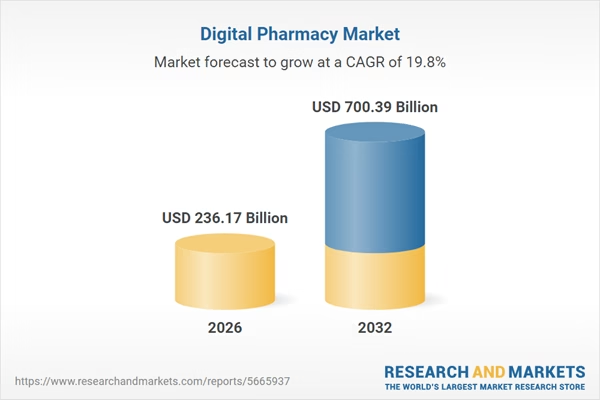
The Digital Pharmacy Market grew from USD 197.35 billion in 2025 to USD 236.17 billion in 2026. It is expected to continue expanding at a CAGR of 19.83%, reaching USD 700.39 billion by 2032.
This expansion reflects the pharmacy industry’s growing reliance on and promise for digital technologies
Digital pharmacies are not replacing traditional pharmacies completely, but they are changing how healthcare services are delivered. Their growth is closely linked to technology adoption, changing customer behavior, and improvements in healthcare infrastructure.
Understanding Digital Pharmacies
A digital pharmacy, often called an online pharmacy, is a platform where people can purchase medicines and healthcare products using a website or mobile application. Customers usually upload a prescription, select medicines, make payments online, and receive deliveries at their location.
Traditional pharmacies depend on physical stores and in-person visits. Digital pharmacies remove many of these steps by allowing remote access to services. Some online pharmacies also provide additional features such as teleconsultation, medicine reminders, automatic refill subscriptions, and digital health records.
Large healthcare providers and startups are both entering this market because the demand for online healthcare services continues to increase. In countries with large rural populations, digital pharmacies are also helping people access medicines where physical pharmacy networks are limited.
Why Consumers Are Choosing Digital Pharmacies
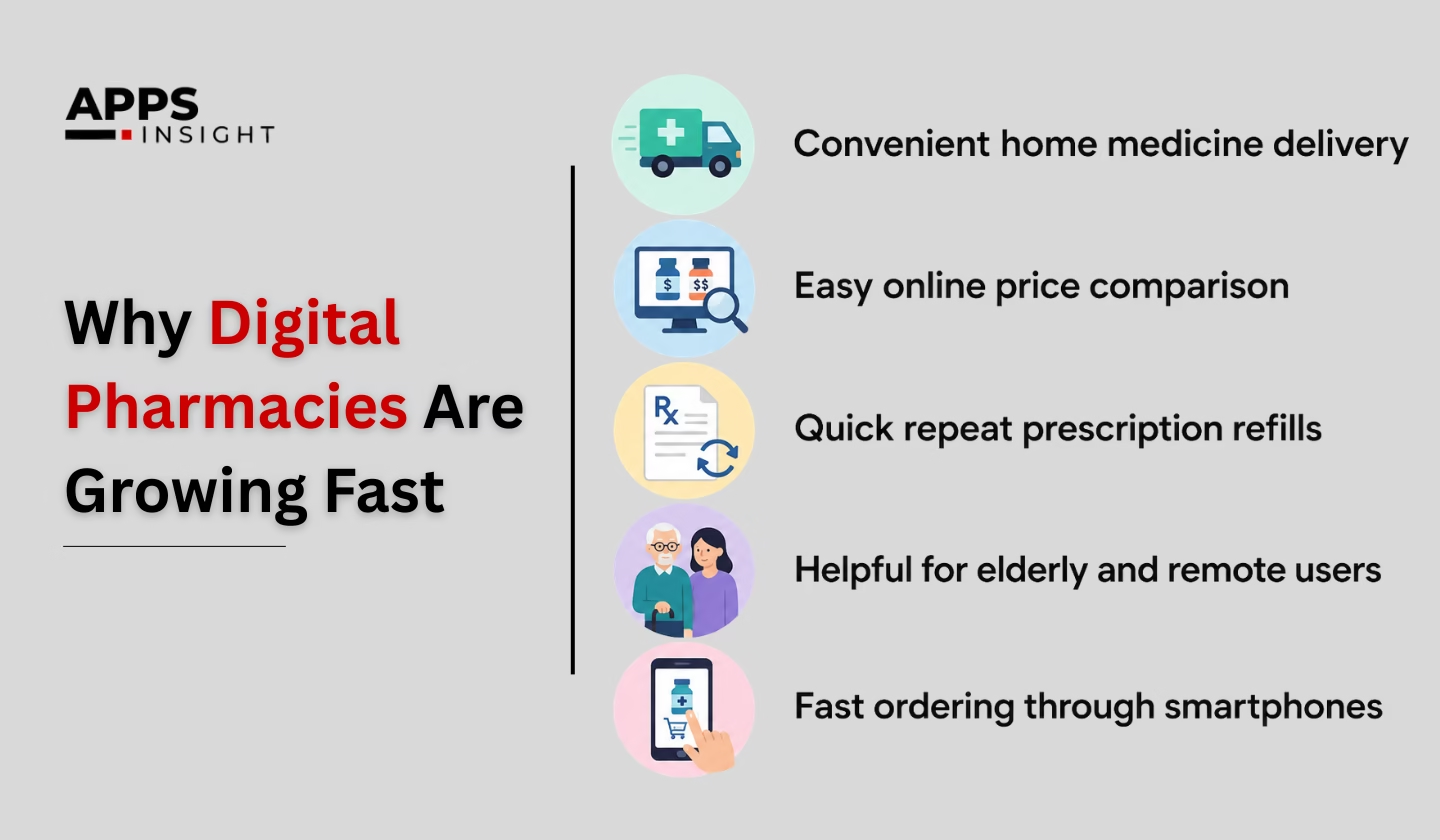
One major reason people prefer digital pharmacies is convenience. Customers no longer need to travel, wait in line, or search across multiple stores to find medicines. With a few clicks, they can place orders anytime during the day.
Price transparency is another important factor. Online platforms often allow users to compare medicine prices and discounts more easily than physical stores. This helps customers make informed decisions, especially in markets where medicine costs vary between providers.
Digital pharmacies are also useful for patients with long-term conditions such as diabetes, hypertension, or asthma. These patients regularly require repeat medications. Online platforms simplify the refill process and reduce the risk of missing medicines.
For elderly individuals and people with mobility issues, home delivery services offer practical support. In remote areas, online systems can connect users with healthcare providers and medicine suppliers that may not exist locally.
The rise in smartphone use has also contributed to this shift. Many healthcare services are now optimized for mobile devices, making medicine ordering as simple as using other online shopping applications.
The Role of Technology in Online Pharmacy Growth
Technology is the foundation of digital pharmacy operations. Without reliable software systems, managing prescriptions, inventory, deliveries, and patient records would be difficult.
Modern pharmacies rely on online pharmacy software development to build secure and efficient systems that support daily operations. These platforms handle prescription uploads, payment processing, stock management, and customer communication in one place.
Cloud computing has also improved scalability. Pharmacies can manage thousands of orders across multiple locations while keeping records updated in real time. Automated inventory systems reduce the chances of medicine shortages and help businesses track expiry dates more effectively.
Many platforms use digital verification tools to confirm prescriptions and reduce errors. Customers can also receive automatic notifications about order updates, medicine schedules, and refill reminders.
Mobile application development has become especially important because most users access pharmacy services through smartphones. A simple and secure interface improves customer trust and encourages repeat usage.
Healthcare organizations investing in digital systems often work with healthcare developers to create platforms that meet industry standards and local regulations.
How Digital Pharmacies Improve Customer Experience
Digital pharmacies focus heavily on simplifying the customer journey. Traditional pharmacy visits can take time, especially during busy hours or in urban areas with traffic congestion. Online systems reduce this effort significantly.
The ordering process is usually straightforward. Users search for medicines, upload prescriptions if needed, select delivery options, and complete payments online. This process can often be completed within minutes.
Many digital pharmacies also offer medicine subscription plans for regular users. Patients receiving treatment for chronic illnesses can schedule recurring deliveries automatically. This reduces missed doses and improves treatment consistency.
Customer support has improved through chat systems and digital consultation services. Some pharmacies integrate healthcare professionals directly into their platforms, allowing users to ask basic medical questions before purchasing products.
Another advantage is round-the-clock accessibility. Unlike physical stores with limited operating hours, digital pharmacies are available at any time. This is particularly useful during emergencies or late-night medicine needs.
As online healthcare services expand, companies are investing more in online pharmacy software development to improve user experience, delivery speed, and operational efficiency.
Want to know? How much does it Cost to Develop a Telemedicine App?
Global Trends Driving Digital Pharmacy Expansion
Several global trends are supporting the rapid growth of digital pharmacies.
First, internet access continues to improve worldwide. More people now use smartphones and digital payment systems, making online healthcare services more accessible.
Second, the COVID-19 pandemic significantly accelerated digital healthcare adoption. During lockdowns, many consumers turned to online medicine delivery services because physical movement was restricted. Even after restrictions ended, many customers continued using these services because of convenience.
Third, aging populations are increasing healthcare demand in many countries. Older adults often require regular medications and healthcare monitoring. Digital pharmacy systems simplify medicine management for both patients and caregivers.
Telemedicine growth is another contributing factor. Many healthcare providers now offer virtual consultations, and prescriptions generated online can be sent directly to digital pharmacies for fulfillment.
Governments and healthcare organizations are also encouraging digital healthcare adoption in some regions to improve healthcare access and reduce pressure on hospitals and clinics.
Some businesses combine pharmacy operations with broader digital healthcare systems such as Hospital Management Software, to connect pharmacies, clinics, and healthcare providers through centralized platforms.
Challenges Digital Pharmacies Still Face
Despite rapid growth, digital pharmacies also face several challenges.
Regulatory compliance remains one of the biggest concerns. Different countries have different laws regarding online medicine sales, prescription verification, and cross-border delivery. Companies must follow strict healthcare regulations to operate legally.
Counterfeit medicines are another issue in some markets. Customers may worry about medicine authenticity when purchasing online. To address this, licensed digital pharmacies invest in verification systems and secure supply chains.
Cybersecurity is also critical because healthcare platforms manage sensitive personal and medical information. Data breaches can damage trust and create legal risks. Secure encryption, authentication systems, and compliance frameworks are essential.
Delivery logistics can also be difficult, especially in rural or remote areas. Temperature-sensitive medicines require proper transportation conditions, and delays can affect medicine quality.
To solve these operational issues, many organizations rely on online pharmacy software development for inventory monitoring, delivery tracking, and secure customer data management.
Read once! Benefits of Custom Healthcare Software Development
How Traditional Pharmacy Chains Are Responding
Traditional pharmacy chains are adapting to digital competition instead of ignoring it. Many established pharmacy brands now offer mobile applications, online ordering, and home delivery services.
Some chains are developing hybrid models that combine physical stores with digital platforms. Customers can order online and collect medicines in-store or receive deliveries directly at home.
Partnerships between pharmacies and technology providers are also increasing. Retail pharmacy chains often collaborate with custom software development companies to modernize operations and improve digital services.
Physical stores still provide important benefits, especially for urgent medicine needs, pharmacist consultations, and customer trust. However, many consumers now expect both physical and digital options from healthcare providers.
Traditional pharmacies that fail to invest in technology may struggle to compete with faster and more flexible online systems.
The Importance of Software Development in Digital Pharmacies
Software systems are central to modern pharmacy operations. Digital pharmacies handle large amounts of patient information, prescriptions, product inventories, and payment transactions every day.
Effective online pharmacy software development helps businesses automate these processes while reducing operational errors. Automated systems can track medicine availability, manage prescriptions, process payments, and generate reports more efficiently than manual workflows.
Data analytics also plays an important role. Pharmacies can study customer behavior, forecast medicine demand, and optimize supply chain operations using digital tools.
Some organizations are also integrating Healthcare AI solutions into pharmacy systems. AI tools can assist with inventory forecasting, customer support automation, and prescription validation processes.
In recent years, discussions around Agentic AI in healthcare have increased as companies explore systems capable of handling more autonomous healthcare workflows. While still developing, these technologies may support pharmacy automation and patient assistance in the future.
Healthcare providers often evaluate different technology systems to identify the best healthcare software for improving operational efficiency and patient services.
The Future of Digital Pharmacies
Digital pharmacies are expected to continue expanding over the next decade. Consumer demand for convenient healthcare services is unlikely to decrease, especially as digital healthcare becomes more common.
Artificial intelligence, automation, and data analytics will likely improve pharmacy operations further. Personalized medicine recommendations, automated refill management, and predictive inventory systems may become more widely used.
Rural healthcare access could also improve through digital pharmacy expansion. In regions where physical healthcare infrastructure is limited, online systems may help connect patients with medicines and healthcare professionals more effectively.
Integration between pharmacies, hospitals, insurance providers, and telemedicine platforms is also expected to grow. Connected healthcare systems can improve coordination between healthcare providers and simplify patient experiences.
At the same time, regulations and cybersecurity standards will continue evolving to protect consumers and ensure safe healthcare practices.
Businesses investing in online pharmacy software development will likely focus on balancing convenience, compliance, and data security while improving healthcare accessibility.
Looking for? Telemedicine Software Development Companies
Sum up
Digital pharmacies are growing rapidly because they offer practical solutions for modern healthcare needs. They simplify medicine ordering, improve accessibility, support chronic disease management, and reduce the time required for routine pharmacy visits.
Technology plays a major role in this transformation. Secure software systems, mobile applications, cloud infrastructure, and automation tools help pharmacies manage operations more efficiently while improving customer experience.
Traditional pharmacy chains still remain important, especially for direct consultations and urgent healthcare needs. However, many are now adopting digital models to remain competitive in a changing market.
As healthcare systems continue becoming more connected, digital pharmacies will likely become a standard part of healthcare delivery across many countries. Their success will depend not only on convenience but also on trust, compliance, secure technology, and reliable patient care.
For more related insights on healthcare technology, digital systems, and software trends, readers can explore AppsInsight.