Top 10 Features Every Supply Chain Management Software Should Have
The most important Supply Chain Management Software Features help businesses track inventory, manage suppliers, monitor shipments, reduce delays, and improve decision-making from a single platform. Whether a company manufactures products, distributes goods, or manages retail operations, the right software can help organize daily supply chain activities and improve operational efficiency.
Modern supply chains involve many moving parts. Products move through suppliers, warehouses, transportation networks, and customers. Without proper systems in place, businesses may face stock shortages, delivery delays, excess inventory, or communication gaps. This is why organizations increasingly rely on digital tools to manage supply chain processes.
In this article, we will explore the top features every supply chain management platform should include and explain how these capabilities support better planning, visibility, and control.
Why Features Matter in Supply Chain Software
Supply chain operations generate large amounts of data every day. Companies need software that can convert this data into useful information. The right features help teams monitor inventory levels, coordinate with suppliers, manage transportation, and respond quickly to changes in demand.
When evaluating solutions, businesses often compare the best supply chain software features to ensure they select a system that supports both current and future operational requirements.
A well-designed platform helps reduce manual work, improve accuracy, and support informed decision-making throughout the supply chain.
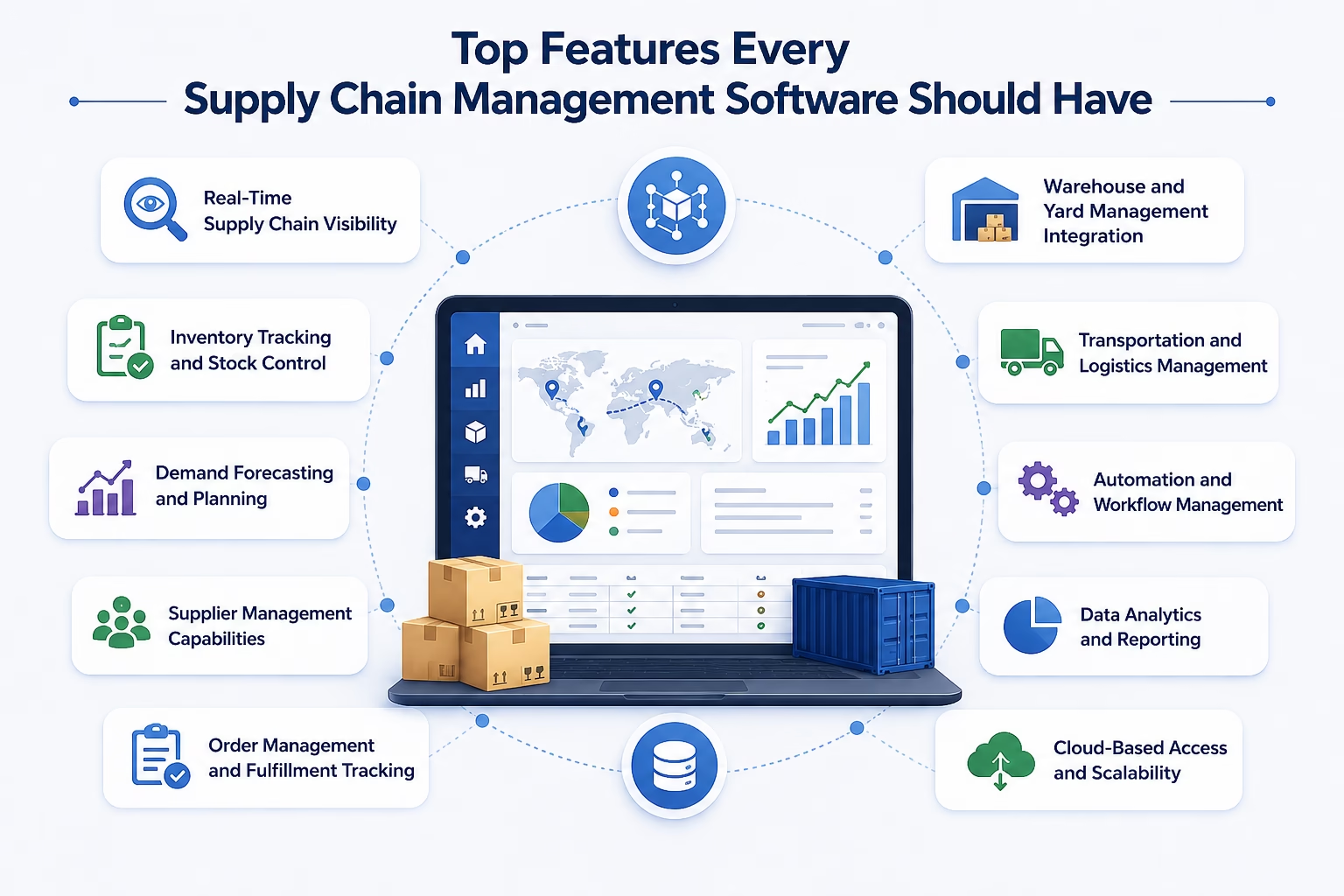
1. Real-Time Supply Chain Visibility
One of the most valuable capabilities in modern supply chain systems is real-time visibility.
Businesses need to know where products are, what inventory is available, and whether shipments are moving according to schedule. Real-time visibility provides access to current information across suppliers, warehouses, transportation providers, and distribution centers.
For example, if a shipment is delayed due to weather conditions, managers can identify the issue early and communicate updated delivery expectations to customers.
Visibility also helps businesses:
- Monitor inventory movement
- Track orders in transit
- Identify bottlenecks
- Improve customer communication
- Reduce unexpected disruptions
This feature forms the foundation for effective supply chain management.
2. Inventory Tracking and Stock Control
Inventory is one of the largest investments for many organizations. Maintaining the right balance between excess stock and stock shortages is critical.
Strong inventory management capabilities allow businesses to:
- Monitor stock levels in real time
- Track inventory across multiple locations
- Set reorder points
- Reduce overstock situations
- Prevent stockouts
Many organizations use dedicated Inventory Management Software functions within larger supply chain systems to improve stock accuracy and visibility.
For example, a retailer can automatically receive notifications when inventory reaches a predefined threshold, allowing replenishment before products run out.
Effective inventory control also supports better customer satisfaction because products are available when needed.
Read once! Tips to Optimize Delivery Route Planning
3. Demand Forecasting and Planning
Demand forecasting helps businesses predict future product requirements using historical data, market trends, and customer purchasing patterns.
Accurate forecasting helps organizations:
- Reduce excess inventory
- Improve purchasing decisions
- Plan production schedules
- Optimize warehouse space
- Lower carrying costs
For example, a seasonal products company can analyze previous years’ sales data to estimate future demand and prepare inventory accordingly.
Forecasting capabilities are among the most important Supply Chain Management Software Features because they help businesses make proactive rather than reactive decisions.
4. Supplier Management Capabilities
Suppliers play a major role in supply chain performance. Delays, quality issues, or communication problems can affect the entire operation.
Supplier management features help businesses:
- Store supplier information
- Track supplier performance
- Monitor delivery timelines
- Evaluate quality metrics
- Improve collaboration
A centralized supplier management system provides a clear overview of vendor relationships and performance history.
For example, procurement teams can compare supplier delivery records and identify vendors that consistently meet deadlines.
Better supplier management often leads to improved reliability and reduced operational risk.
5. Order Management and Fulfillment Tracking
Order management is essential for ensuring products move smoothly from order placement to delivery.
This feature helps businesses:
- Process customer orders
- Track fulfillment status
- Manage returns
- Monitor shipping progress
- Improve order accuracy
When all order information is stored in a single platform, teams can quickly identify issues and respond to customer inquiries.
For example, customer service representatives can immediately view shipment status without contacting multiple departments.
Order tracking also improves transparency and customer confidence.
6. Warehouse and Yard Management Integration
Warehouses are key operational centers within the supply chain. Efficient warehouse management helps improve storage, picking, packing, and shipping processes.
Some businesses also require yard management capabilities to coordinate incoming and outgoing vehicles.
Organizations often explore Free Yard Management Software Solutions when looking to improve vehicle scheduling and yard operations before investing in advanced systems.
Warehouse-related features may include:
- Location tracking
- Barcode scanning
- Picking optimization
- Receiving management
- Space utilization monitoring
Integrated warehouse and yard management help reduce delays and improve operational efficiency.
7. Transportation and Logistics Management
Transportation costs can significantly affect profitability. Effective transportation management tools help businesses optimize routes, monitor deliveries, and control shipping expenses.
Many organizations use Logistics Management Software functions to improve transportation planning and execution.
Important capabilities include:
- Route optimization
- Carrier management
- Shipment tracking
- Freight cost analysis
- Delivery scheduling
Businesses can also benefit from Delivery Management Software Solutions that provide detailed tracking information and improve last-mile delivery visibility.
Transportation management contributes directly to service quality and cost control.
8. Automation and Workflow Management
Manual processes often create delays and increase the likelihood of errors.
Automation features help streamline routine tasks such as:
- Purchase order generation
- Inventory updates
- Supplier notifications
- Shipment tracking
- Approval workflows
Many businesses work with Logistics Automation Companies to identify opportunities for automating repetitive supply chain activities.
For example, software can automatically create purchase orders when inventory falls below predefined levels.
Automation reduces administrative effort and allows employees to focus on higher-value tasks.
Want to know? Smart Strategies to Reduce Transportation Costs
9. Data Analytics and Reporting
Data-driven decision-making is becoming increasingly important in supply chain operations.
Reporting and analytics features help businesses understand performance trends and identify improvement opportunities.
Useful reporting capabilities include:
- Inventory performance reports
- Supplier scorecards
- Delivery performance metrics
- Cost analysis reports
- Demand forecasting dashboards
For example, managers can analyze delivery performance data to identify recurring transportation issues.
Strong analytics help organizations measure results and continuously improve operational performance.
10. Cloud-Based Access and Scalability
Many organizations are moving toward cloud-based supply chain software because it offers flexibility and easier access to information.
Cloud solutions typically provide:
- Remote accessibility
- Faster updates
- Lower infrastructure requirements
- Improved collaboration
- Scalability for business growth
Companies evaluating the best SaaS Supply Chain Management Software often prioritize cloud deployment because it supports multiple users and locations without requiring extensive hardware investments.
As businesses expand, cloud platforms can scale to support additional operations, suppliers, warehouses, and customers.
The Growing Role of Artificial Intelligence
Artificial intelligence is becoming an important part of modern supply chain operations.
Many companies now use AI-powered supply chain software to improve forecasting accuracy, automate decision-making, and identify potential disruptions before they occur.
AI can support:
- Demand prediction
- Inventory optimization
- Risk detection
- Route planning
- Supplier analysis
As part of broader Technology in Supply Chain Management, AI helps businesses process large volumes of data more efficiently than traditional manual methods.
While AI is not a replacement for human expertise, it can provide valuable insights that support better decisions.
Integration with Business Systems
Supply chain software should not operate in isolation.
Effective platforms integrate with:
- Enterprise Resource Planning (ERP) systems
- Accounting software
- Customer Relationship Management (CRM) platforms
- Warehouse systems
- Transportation systems
Integration reduces duplicate data entry and improves information accuracy across departments.
Organizations often work with experienced Supply Chain Software Development Companies to build customized integrations that support unique operational requirements.
Connected systems create a more complete view of business operations and improve collaboration across teams.
We have listed! Location Tracking Apps
How These Features Help Reduce Supply Chain Costs
Businesses are constantly searching for Tips to Reduce Your Supply Chain Costs. The right software features can contribute significantly to cost reduction.
Examples include:
- Better inventory control reduces excess stock.
- Accurate forecasting lowers waste.
- Transportation optimization decreases shipping expenses.
- Automation reduces manual labor costs.
- Supplier performance tracking improves procurement decisions.
- Real-time visibility minimizes disruptions.
When combined, these features help organizations improve efficiency while maintaining service quality.
Choosing the Right Solution
When evaluating supply chain platforms, businesses should focus on their operational needs rather than selecting software based solely on popularity.
Consider factors such as:
- Business size
- Industry requirements
- Number of locations
- Integration needs
- Scalability requirements
- Reporting capabilities
- User accessibility
The top features every supply chain management software should have should align with operational goals and support long-term growth.
A solution that works well for a small distributor may not be suitable for a large manufacturing organization, so feature evaluation should always be tied to business requirements.
Sum up
The most effective supply chain platforms combine visibility, inventory control, forecasting, supplier management, transportation oversight, automation, analytics, cloud accessibility, AI capabilities, and system integration in a single environment.
These Supply Chain Management Software Features help businesses improve efficiency, reduce operational risks, and make informed decisions across the supply chain. As supply chains become more complex, organizations need software that provides accurate information and supports collaboration between suppliers, warehouses, logistics providers, and customers.
Whether your goal is improving inventory accuracy, reducing transportation costs, or increasing visibility, selecting a solution with these capabilities can help support better operational performance and long-term business growth.
For more insights on supply chain technologies, software trends, and business solutions, explore related resources on AppsInsight.
FAQs
What are the key features of supply chain management software?
Key features include real-time visibility, inventory tracking, demand forecasting, supplier management, order management, transportation management, automation, analytics, cloud access, and AI-driven insights.
Why is supply chain visibility important?
Supply chain visibility helps businesses monitor inventory, shipments, supplier performance, and operational activities in real time. This allows faster responses to disruptions and improves decision-making.
What features should businesses look for in supply chain software?
Businesses should look for inventory management, forecasting, supplier collaboration, transportation tracking, reporting tools, automation capabilities, cloud accessibility, and integration with existing business systems.
How does AI improve supply chain management software?
AI helps analyze large datasets, predict demand, identify risks, optimize inventory levels, and improve route planning. These capabilities support more accurate and timely business decisions.
What is the most important feature in supply chain SaaS?
Real-time visibility is often considered one of the most important features because it provides accurate information about inventory, shipments, suppliers, and operations across the entire supply chain.