
What Entrepreneurs Should Know Before Launching a Digital Pharmacy App
A Digital Pharmacy App helps users order medicines online, upload prescriptions, manage refills, and receive healthcare support from their phones. Before launching one, entrepreneurs need to understand healthcare regulations, patient data protection, medicine delivery systems, and technology requirements. A pharmacy app is not only an eCommerce platform. It also handles sensitive medical information and must follow strict healthcare standards.
The healthcare industry has changed significantly in recent years. Many patients now prefer online healthcare services because they save time and improve access to medicines. People living in smaller towns, elderly patients, and users with chronic conditions often rely on digital platforms for regular medicine delivery and health support.
For entrepreneurs, this creates a business opportunity. However, entering the healthcare sector requires careful planning. Unlike many other mobile applications, pharmacy platforms involve legal compliance, medical accuracy, secure transactions, and patient trust.
This article explains the most important things entrepreneurs should know before building and launching a pharmacy application.
Understanding How Digital Pharmacy Apps Work
Before starting development, it is important to understand how these platforms operate. Most pharmacy apps connect four major groups:
- Patients or customers
- Licensed pharmacies
- Doctors or prescription providers
- Delivery services
A user typically searches for medicines, uploads a prescription if required, places an order, makes a payment, and tracks delivery. Behind the scenes, the system verifies prescriptions, checks medicine availability, updates inventory, and manages logistics.
This process may appear simple from the customer side, but it involves multiple technical and operational systems working together.
Many entrepreneurs begin by researching Understanding Digital Pharmacies because the business model combines healthcare operations with software systems and supply chain management.
Why Demand for Online Pharmacy Services Is Growing

Several factors are increasing the demand for pharmacy applications.
1) Convenience
Users can order medicines without visiting physical stores. This is especially useful for elderly patients and people with mobility issues.
2) Chronic Disease Management
Patients with diabetes, blood pressure problems, asthma, and other long-term conditions need regular medicine refills. Apps simplify repeat purchases and reminders.
3) Telemedicine Growth
Online doctor consultations have increased significantly. After virtual consultations, patients often prefer digital prescription fulfillment through connected pharmacy platforms.
4) Smartphone Usage
More people now use mobile apps for banking, shopping, food delivery, and healthcare services. Healthcare platforms are becoming part of daily digital habits.
5) Rural Healthcare Access
In some areas, medical stores are limited. Online pharmacy services can improve medicine access in smaller towns and remote locations.
These factors make pharmacy apps a practical business idea, but success depends on execution, compliance, and reliability.
Key Features Every Digital Pharmacy App Needs
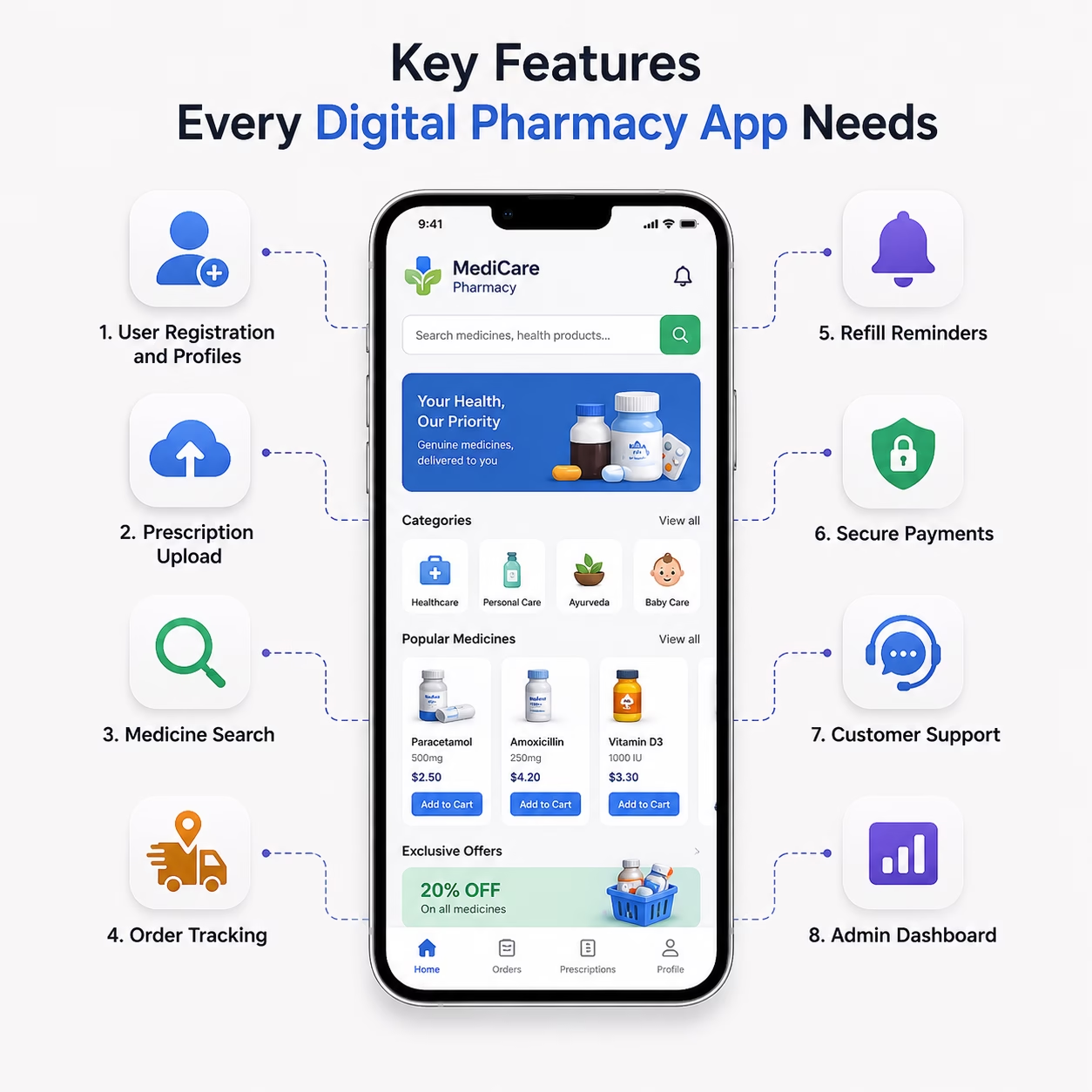
Entrepreneurs should focus on useful and practical features instead of adding unnecessary complexity.
1) User Registration and Profiles
Customers should be able to create accounts, manage addresses, upload prescriptions, and track order history.
2) Prescription Upload
This is one of the most important features. Users must be able to upload clear prescription images securely.
3) Medicine Search
Search functions should support medicine names, categories, symptoms, and generic alternatives.
4) Order Tracking
Real-time delivery tracking improves transparency and customer confidence.
5) Refill Reminders
Medication reminders help users maintain treatment schedules.
6) Secure Payments
The app should support trusted payment gateways and multiple payment methods.
7) Customer Support
Healthcare-related services often require quick support. Live chat, call support, or ticket systems are useful.
8) Admin Dashboard
Business owners need dashboards for order management, inventory tracking, reporting, and pharmacy coordination.
The final feature list should depend on the business model and target audience.

Legal and Compliance Requirements for Online Pharmacy Software
Healthcare is a regulated industry. Entrepreneurs cannot treat pharmacy applications like regular retail apps. Each country has specific healthcare and pharmacy regulations. In many regions, businesses need:
- Pharmacy licenses
- Registered pharmacists
- Prescription validation systems
- Secure medical record handling
- Drug sales permissions
Selling prescription medicines without proper verification may lead to legal issues.
Entrepreneurs should work with healthcare legal experts before launching operations. Regulations may also differ between states or regions.
Another important area is age-restricted medicines. Some products require additional verification before purchase.
Ignoring compliance requirements can create operational risks and damage customer trust.
Data Privacy and Security Responsibilities in Digital Pharmacy App
Healthcare data is highly sensitive. Pharmacy applications store personal information, addresses, prescriptions, payment details, and medical histories.
A security failure can expose patient information and create legal consequences.
Important security practices include:
- Data encryption
- Secure login systems
- Two-factor authentication
- Protected cloud storage
- Role-based access controls
- Regular security testing
Many healthcare platforms also follow healthcare data protection standards such as HIPAA or GDPR, depending on the region.
Entrepreneurs should prioritize security during the early development stage instead of adding it later.
Payment Systems and Prescription Verification in Digital Pharmacy App
Pharmacy apps require strong verification systems because medicines directly affect patient health.
Prescription verification often involves:
- Uploading the prescription
- Reviewing it by licensed pharmacists
- Checking medicine availability
- Confirming dosage and quantity
- Approving the order
This process reduces medication errors and improves compliance.
Payment systems also require careful planning. Failed transactions or refund delays can affect customer trust quickly.
Popular payment options include:
- Credit and debit cards
- UPI and digital wallets
- Net banking
- Cash on delivery in selected areas
Some platforms also support insurance claim integration.
Delivery and Inventory Management Challenges in Digital Pharmacy Software
Medicine delivery involves more complexity than standard eCommerce shipping.
Certain medicines require:
- Temperature-controlled packaging
- Fast delivery timelines
- Special handling instructions
- Expiry tracking
Inventory management is another major challenge. Pharmacies must track:
- Stock availability
- Batch numbers
- Expiry dates
- Supplier information
- Medicine recalls
Poor inventory management can result in delayed orders or expired products.
Some businesses integrate their pharmacy platform with warehouse systems and supplier networks for better stock management.
This is where Hospital Management Software integrations can also support operational coordination between healthcare providers and pharmacy systems.
The Role of AI and Automation in AI Pharmacy Apps
Artificial intelligence is becoming more common in healthcare software systems.
AI tools can help pharmacy platforms improve efficiency in several ways.
1) Smart Medicine Search
AI systems can recognize spelling mistakes and suggest correct medicines.
2) Prescription Reading
Image recognition tools can assist pharmacists by reading handwritten prescriptions more accurately.
3) Personalized Recommendations
Apps can remind users about refills or suggest healthcare products based on order history.
4) Fraud Detection
AI systems can identify suspicious transactions or repeated prescription misuse.
5) Chatbots and Support
Automated assistants can answer basic customer questions and reduce support workload.
Some companies are also exploring Healthcare AI solutions to improve medicine recommendations, operational planning, and customer service workflows.
More advanced systems now use Agentic AI in healthcare for automated decision support and workflow management, although human supervision remains essential in healthcare environments.
Choosing the Right Technology Stack for a Digital Pharmacy App
Technology decisions affect app performance, scalability, and long-term maintenance.
Entrepreneurs usually need:
- Mobile applications for Android and iOS
- Backend infrastructure
- Secure databases
- Cloud hosting
- API integrations
- Admin dashboards
Scalability is important because healthcare apps may experience rapid user growth. A pharmacy app should also maintain high uptime because customers may need medicines urgently. Top AI App Development teams often use cloud services for storage, backup, and system monitoring.
Choosing reliable technology reduces future maintenance costs and improves stability.
Digital Pharmacy App Development Options for Entrepreneurs
There are several ways to build a pharmacy application.
1) In-House Development
This approach gives more control but requires hiring developers, designers, testers, and project managers.
2) Outsourcing
Many startups work with external software agencies to reduce development time.
3) Hybrid Models
Some companies use internal teams for strategy and outsource technical execution.
Entrepreneurs should evaluate technical expertise, budget, timeline, and long-term maintenance requirements before choosing a development model.
Businesses often compare multiple custom software development companies before selecting a technology partner.
Some startups also work with experienced healthcare developers because healthcare projects involve industry-specific technical and compliance requirements.
If the project includes medicine inventory systems, telemedicine integration, or prescription management tools, experience in online pharmacy software development becomes especially important.
User Experience and Customer Trust for Digital Pharmacy App
Trust is one of the most important factors in healthcare applications.
Users expect:
- Accurate medicine information
- Reliable deliveries
- Secure payments
- Fast support
- Prescription safety
A confusing interface can reduce customer confidence.
Good user experience includes:
- Simple navigation
- Clear medicine categories
- Easy prescription uploads
- Readable order details
- Transparent pricing
Users should also receive order confirmations and delivery notifications.
Trust-building features may include:
- Verified pharmacist support
- Pharmacy certifications
- Genuine medicine guarantees
- Customer reviews
- Secure payment badges
Healthcare customers often stay loyal to platforms that provide reliability and consistency.
Common Mistakes to Avoid when Developing a Digital Pharmacy App
Many entrepreneurs focus heavily on app design while ignoring healthcare operations.
Here are some common mistakes:
1) Ignoring Compliance
Healthcare regulations should be planned from the beginning.
2) Weak Security Systems
Poor security can lead to legal and reputational problems.
3) Poor Delivery Planning
Late medicine deliveries can affect customer health directly.
4) Overcomplicated Features
Too many unnecessary features may confuse users.
5) Lack of Pharmacist Involvement
Medical professionals should be involved in prescription workflows and compliance reviews.
6) Underestimating Customer Support
Healthcare users often need urgent assistance.
Avoiding these issues can improve operational stability and user trust.
Pharmacy App: Cost Factors and Business Planning
Building a pharmacy platform involves both development and operational costs.
Major cost areas include:
- App development
- UI/UX design
- Security systems
- Cloud hosting
- Compliance support
- Pharmacy partnerships
- Delivery infrastructure
- Marketing
- Maintenance and updates
Costs vary depending on features and business scale.
For example, a basic startup platform may focus only on medicine ordering and prescription uploads, while larger systems may include telemedicine, analytics, insurance support, and AI tools.
Entrepreneurs should also prepare for ongoing operational costs after launch.
A successful Digital Pharmacy App requires continuous monitoring, customer support, software updates, and compliance management.
Also Read: AI-Powered App Features Every Business Will Use
Future Trends in Digital Pharmacy Platforms
Digital healthcare services are continuing to evolve. Several trends are expected to influence pharmacy applications in the coming years.
1) Telemedicine Integration
More platforms are combining doctor consultations with medicine ordering.
2) Subscription Models
Patients with chronic illnesses may subscribe to monthly medicine delivery plans.
3) AI-Based Automation
Automation tools may improve customer support and prescription management.
4) Wearable Device Integration
Apps may connect with health tracking devices for medication reminders and health monitoring.
5) Faster Deliveries
Urban healthcare markets are increasing demand for same-day medicine delivery services.
6) Digital Health Ecosystems
Healthcare companies are gradually connecting pharmacies, clinics, insurance providers, and diagnostic services into single digital systems.
As healthcare technology grows, businesses that focus on reliability, compliance, and patient support are more likely to build sustainable services.

Sum up
Launching a Digital Pharmacy App requires more than mobile app development skills. Entrepreneurs must understand healthcare regulations, prescription handling, data privacy, medicine delivery systems, and customer trust.
A successful pharmacy platform combines technology with responsible healthcare operations. Users expect secure systems, genuine medicines, reliable deliveries, and simple experiences.
Before starting development, entrepreneurs should carefully plan compliance strategies, technology infrastructure, pharmacy partnerships, and operational workflows. Long-term success depends on consistent service quality rather than rapid expansion alone.
Healthcare technology continues to grow steadily, creating opportunities for businesses that solve real user problems in practical ways. Entrepreneurs who focus on patient safety, transparency, and operational efficiency can build reliable digital healthcare services over time.
For more related insights on healthcare technology, app development, and software trends, readers can explore AppsInsight.
We have listed! Top Web and Mobile App Ideas for Entrepreneurs