Why Crypto Users Are Choosing No-KYC Exchanges in 2026
Privacy has become one of the biggest concerns for crypto users in 2026. Many traders want a faster and simpler way to buy, sell, and manage digital assets without sharing large amounts of personal information. At the same time, concerns about data leaks, identity theft, and lengthy verification processes continue to push users toward more privacy-focused platforms. This shift is changing how people interact with cryptocurrency exchanges and what they expect from modern trading platforms.
We are seeing a major change in the crypto market. Users are no longer choosing exchanges based only on trading fees or the number of supported coins. They are paying closer attention to privacy, security, account access, and control over their personal information. As governments introduce stricter regulations and centralized platforms collect more user data, many traders are exploring alternatives that offer a more private experience.
This growing interest has placed No-KYC Crypto Exchanges at the center of discussions across the cryptocurrency industry. As privacy concerns continue to rise, platforms like Godex exchange are attracting users who want a simpler way to trade digital assets without going through lengthy verification procedures. These exchanges allow traders to access crypto markets while maintaining greater control over their personal information. For many users, this approach offers the right balance of convenience, speed, security, and privacy.
Here, we will explore the seven biggest reasons why more crypto users are moving toward privacy-focused exchanges in 2026. We will also look at the trends driving this shift and what it could mean for the future of cryptocurrency trading.
What Are No-KYC Exchanges?
Before we discuss why these platforms are becoming more popular, it is important to understand what they actually are.
KYC stands for “Know Your Customer.” It is a verification process that requires users to submit personal information before they can access trading services. Most traditional exchanges ask for documents such as a passport, driver’s license, national ID card, proof of address, and sometimes even a selfie for identity verification.
The purpose of KYC is to help exchanges comply with regulations and reduce illegal activities. While this process has become common across the crypto industry, many users believe it comes at the cost of privacy and convenience.
This is where No-KYC Cryptocurrency Exchanges are gaining attention. These platforms allow users to buy, sell, and trade cryptocurrencies without going through extensive identity verification procedures. In many cases, users can create an account and begin trading within minutes. Instead of waiting hours or days for approval, they can access the market almost immediately.
The appeal is simple. Crypto was originally created to give people more control over their money and financial activities. Many users feel that sharing sensitive personal documents with multiple platforms goes against that principle. As a result, they are actively seeking exchanges that collect less personal information while still providing a secure trading environment.
However, not all privacy-focused exchanges operate in the same way. Some require basic account registration but no identity verification. Others allow trading directly through decentralized systems where users keep control of their assets throughout the transaction process. The level of privacy, security, and functionality can vary from one platform to another.
The growing popularity of these exchanges is not only about avoiding paperwork. It reflects a larger demand for financial privacy, faster access to markets, reduced exposure to data breaches, and greater control over personal information.
As we move through 2026, more traders are realizing that convenience and privacy can exist together. This is one of the main reasons why privacy-focused exchanges are attracting users from every part of the cryptocurrency market, from beginners making their first trade to experienced investors managing large digital asset portfolios.
Now let’s look at the key reasons driving this shift and why more crypto users are choosing these platforms than ever before.
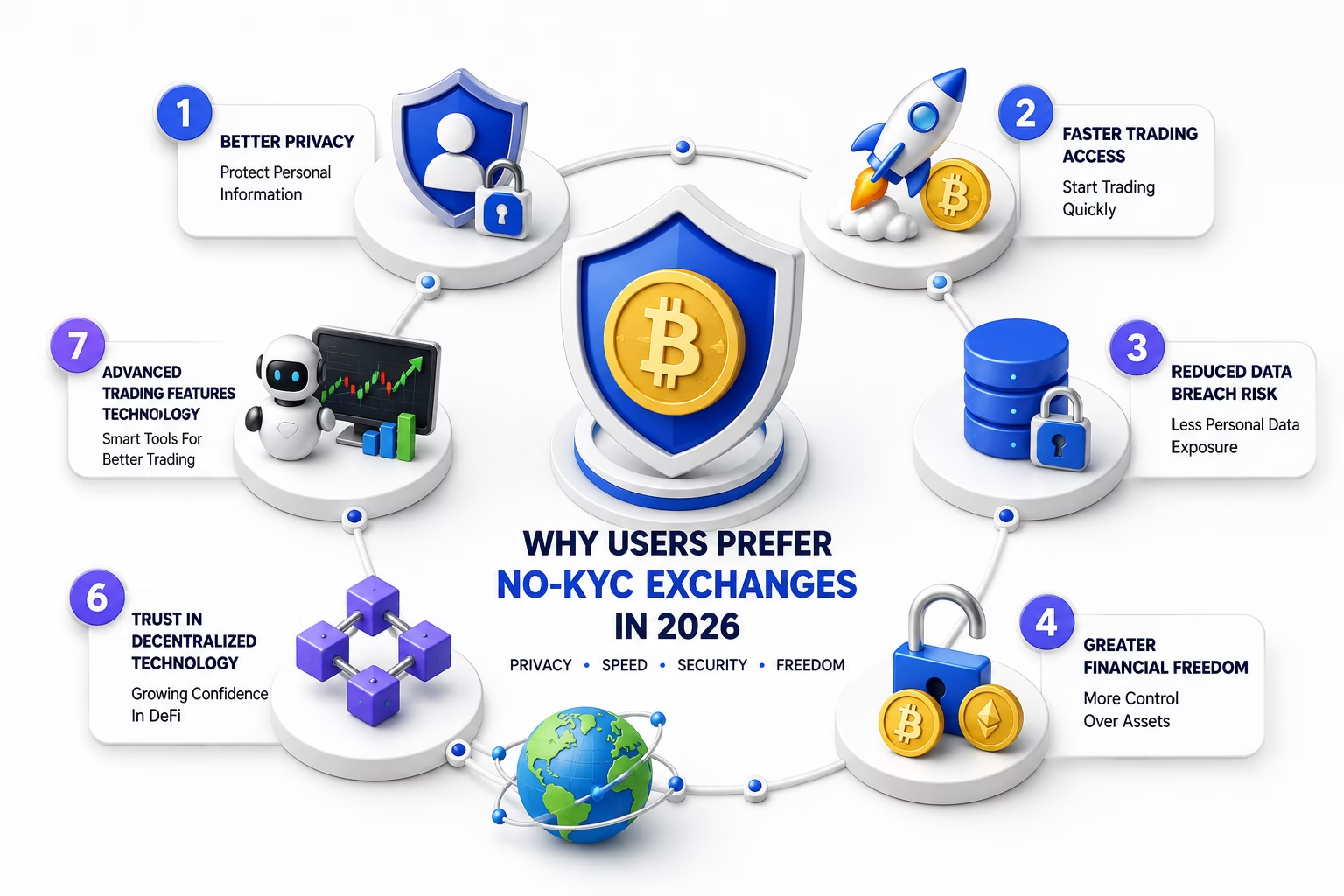
1. Better Privacy and Control Over Personal Information
Privacy is the biggest reason many crypto users are moving toward no-verification platforms in 2026.
Over the last few years, people have become much more aware of how valuable their personal information is. Every time a user uploads a passport, driver’s license, proof of address, or other sensitive documents to an exchange, that information becomes part of a database. While many exchanges invest heavily in security, no system is completely protected from cyberattacks, data leaks, or unauthorized access.
For many traders, the question is simple: why share personal information if it is not absolutely necessary?
This mindset is driving the growth of privacy-focused crypto platforms around the world. Users want greater control over who can access their personal data and how that data is stored. Instead of uploading multiple documents and waiting for verification, they prefer platforms that allow them to trade while keeping their private information private.
Another important factor is identity theft. When sensitive documents fall into the wrong hands, the consequences can be serious. Criminals can use stolen information to open accounts, commit fraud, or gain access to financial services. As stories about major data breaches continue to appear across different industries, many crypto traders are becoming more cautious about where they share their information.
Privacy is also closely connected to the original purpose of cryptocurrency. Bitcoin and other digital assets were introduced as a way to give people more control over their finances. Many users believe that maintaining a certain level of anonymity aligns with the principles that helped make cryptocurrency popular in the first place.
This does not mean that users are trying to hide illegal activities. Most people simply want the freedom to manage their assets without providing more personal information than necessary. They see privacy as a basic right rather than a special feature.
A 2024 Cisco Consumer Privacy Survey found that 75% of consumers would not purchase from organizations they do not trust with their personal data. The report highlights the growing importance of privacy and data protection across digital platforms.
The growing demand for privacy is influencing nearly every part of the cryptocurrency industry. From wallets and decentralized applications to trading platforms, users are actively looking for solutions that reduce unnecessary data collection.
As a result, many traders now view privacy as a key factor when choosing an exchange. A platform that respects user data and minimizes personal information requirements often has a clear advantage over one that requires extensive verification before users can access basic services.
This shift in user behavior is expected to continue throughout 2026 as more people prioritize security, privacy, and control over their digital identity.
2. Faster Account Creation and Instant Trading Access
Speed matters in cryptocurrency trading.
The crypto market operates 24 hours a day, seven days a week. Prices can rise or fall significantly within a few hours, and sometimes within a few minutes. Because of this, traders want immediate access to the market whenever an opportunity appears.
Traditional exchanges often require users to complete several verification steps before they can start trading. This process may involve uploading identification documents, submitting proof of address, taking verification selfies, and waiting for manual approval. Depending on the platform and user location, verification can take hours or even several days.
For many traders, this waiting period can be frustrating.
Imagine discovering a promising investment opportunity, creating an account, and then realizing you must wait for approval before making your first trade. During that time, market conditions can change completely. The price may rise sharply, reducing potential profits, or the opportunity may disappear altogether.
Privacy-focused exchanges solve this problem by simplifying the onboarding process. Instead of dealing with lengthy verification procedures, users can often create an account and start trading almost immediately. This faster access allows traders to react quickly to market movements and make decisions when timing matters most.
This advantage is especially valuable during periods of high market volatility. When major news affects cryptocurrency prices, traders need the ability to enter or exit positions without unnecessary delays. Fast account setup gives users greater flexibility and control over their trading strategies.
Another reason speed is important is the growing number of new investors entering the market. Many beginners find traditional verification requirements confusing and time-consuming. A simpler registration process removes barriers and creates a more user-friendly experience.
As competition increases among cryptocurrency platforms, user experience has become a major factor in attracting and retaining traders. Exchanges that offer quick access and simple registration often appeal to users who value convenience alongside privacy.
According to Chainalysis, cryptocurrency adoption has expanded significantly across multiple regions, with millions of new users entering the market each year. As adoption grows, demand for faster and easier access to trading platforms continues to increase.
Fast onboarding also benefits experienced traders who regularly move between different platforms. Instead of spending time repeating verification procedures on every exchange, they can quickly access new markets and trading opportunities when needed.
This growing preference for convenience is one of the strongest factors behind the rise of privacy-focused exchanges. Users want trading platforms that respect their time, reduce unnecessary steps, and allow them to participate in the market without delays.
In 2026, speed is no longer just a nice feature. For many crypto traders, it has become an essential part of the overall trading experience.
3. Reduced Risk of Data Breaches
One of the biggest concerns among crypto users today is the risk of personal data being exposed.
Over the years, several companies across different industries have experienced data breaches that exposed customer information. When large databases containing personal details are targeted by hackers, the consequences can be serious for users. Names, email addresses, phone numbers, home addresses, identity documents, and financial information can all become valuable targets for cybercriminals.
This concern has become even more important in the cryptocurrency industry.
Traditional exchanges that require extensive identity verification often store large amounts of user information. While many of these platforms invest heavily in cybersecurity, they still remain attractive targets because of the amount of sensitive data they hold. The larger the database, the more valuable it becomes to attackers.
Many crypto users are asking a simple question: if an exchange does not collect unnecessary personal information, what information can be stolen?
This is one of the reasons privacy-focused exchanges continue to gain popularity. Since these platforms generally collect less user data, they naturally reduce the amount of sensitive information that could be exposed in the event of a security incident.
For users, this creates an additional layer of protection. Instead of worrying about copies of passports, government IDs, or proof-of-address documents being stored online, they can trade with greater confidence knowing that less personal information is tied to their accounts.
Data privacy has become a major topic across the digital world. People are becoming more selective about which companies they trust with their personal information. This shift is not limited to cryptocurrency. It can be seen in social media, online banking, e-commerce, and many other industries where users are demanding stronger privacy protections.
The crypto industry is simply following the same trend.
According to the Identity Theft Resource Center (ITRC), data breaches continue to affect millions of individuals every year, highlighting the growing importance of minimizing personal data exposure whenever possible.
For experienced crypto traders, reducing exposure to potential data leaks is often viewed as a risk management strategy. Just as they protect their assets with secure wallets and strong passwords, they also look for ways to reduce the amount of personal information stored online.
Security-conscious users understand that every document uploaded to a platform creates another piece of sensitive information that must be protected. By choosing platforms that require less personal data, they reduce one of the risks associated with online financial services.
This does not mean users should ignore security when selecting an exchange. Strong platform security, reliable infrastructure, and a positive reputation remain essential factors. However, many traders now see minimal data collection as an important security benefit rather than simply a privacy feature.
As cyber threats continue to evolve in 2026, more users are prioritizing exchanges that help them reduce their digital footprint. This growing focus on personal data protection is one of the strongest reasons behind the rising popularity of privacy-focused crypto trading platforms.
4. Greater Financial Freedom
Financial freedom has always been one of the main reasons people became interested in cryptocurrency.
When Bitcoin was introduced, it offered something different from traditional financial systems. It gave people the ability to send, receive, and store value without depending entirely on banks or other centralized institutions. Over time, this idea expanded across the cryptocurrency industry and became one of the core principles behind digital assets.
In 2026, many users still value that freedom.
They want more control over how they manage their funds, where they trade, and how much personal information they must provide to access financial services. For these users, privacy-focused exchanges represent an important step toward maintaining that independence.
Many traders feel that extensive verification requirements create unnecessary barriers between users and their assets. They prefer platforms that allow them to access markets quickly and manage their funds with fewer restrictions. This preference is helping drive the growth of Anonymous Crypto Exchanges across different regions of the world.
Financial freedom is not only about privacy. It is also about accessibility.
Millions of people live in regions where traditional banking services are limited, expensive, or difficult to access. In some cases, opening a bank account can involve lengthy procedures and strict documentation requirements. Cryptocurrency offers an alternative financial system that can be accessed through an internet connection and a digital wallet.
Privacy-focused exchanges help support this accessibility by reducing some of the barriers that users may face when entering the crypto market. This makes it easier for individuals from different backgrounds to participate in the digital economy.
Another factor contributing to this trend is the growing interest in self-custody. More users are taking responsibility for managing their own digital assets rather than relying entirely on centralized platforms. They want direct control over their funds and greater flexibility in how they interact with blockchain networks.
This shift reflects a broader movement within the crypto community. Users are becoming more educated, more security-conscious, and more interested in maintaining ownership of their financial activities.
According to Triple-A, global cryptocurrency ownership has reached hundreds of millions of users worldwide, showing how digital assets are becoming a mainstream part of the global financial system.
As cryptocurrency adoption expands, users are looking for solutions that align with the original values of the industry. Privacy, accessibility, independence, and control continue to influence how traders choose their preferred platforms.
For many people, privacy-focused exchanges offer a practical way to maintain those values while still benefiting from modern trading features and market access. They provide a level of flexibility that many users find attractive in an increasingly regulated digital environment.
This desire for greater financial freedom is expected to remain a major driver behind the continued growth of privacy-focused crypto platforms throughout 2026 and beyond.
5. Easier Access for Global Users
Cryptocurrency is a global market, but access to financial services is not the same everywhere.
While some countries have advanced banking systems and easy access to investment opportunities, millions of people around the world still face challenges when trying to access traditional financial services. Complex regulations, limited banking infrastructure, strict documentation requirements, and geographic restrictions can make it difficult for many individuals to participate in the global economy.
This is where privacy-focused exchanges are making a difference.
These platforms often provide a simpler path for users who want to enter the cryptocurrency market without dealing with lengthy approval processes. Instead of facing multiple verification requirements before they can start trading, users can often access digital assets more quickly and with fewer barriers.
For people living in regions with limited banking options, this accessibility can be especially valuable. Cryptocurrency allows users to participate in a global financial network regardless of their location. As long as they have internet access and a secure wallet, they can buy, sell, and transfer digital assets across borders.
Another important factor is flexibility.
Traditional financial systems are often tied to specific countries, institutions, and operating hours. Cryptocurrency markets operate continuously, giving users the freedom to trade whenever they choose. Privacy-focused exchanges help support this flexibility by making market access easier for a wider range of users.
The growing popularity of remote work and digital businesses has also contributed to this trend. Freelancers, online entrepreneurs, content creators, and international service providers increasingly use cryptocurrency for payments and asset management. Many of these users prefer platforms that allow quick access without excessive paperwork.
Global crypto adoption is creating a more connected financial environment where users from different countries can participate on equal terms. This accessibility is one of the reasons why privacy-focused exchanges continue to attract attention from both new and experienced traders.
As more people enter the cryptocurrency market, ease of access is becoming a major competitive advantage. Users want platforms that remove unnecessary obstacles while still providing a reliable trading experience.
The demand for simple and accessible crypto services is expected to increase throughout 2026. As a result, exchanges that focus on reducing entry barriers and improving user convenience are likely to play an even larger role in the future of digital asset trading.
For many users, the appeal is straightforward. They want a platform that allows them to access opportunities quickly, manage their assets efficiently, and participate in the crypto economy without facing unnecessary complications.
This growing focus on accessibility is another major reason why privacy-focused exchanges are seeing strong adoption across global markets.
6. Growing Trust in Decentralized Technologies
The cryptocurrency industry has changed significantly over the past few years.
In the early days, many users were cautious about decentralized platforms because the technology was still developing. Security concerns, limited functionality, and a lack of user-friendly tools made some people hesitant to move away from traditional exchanges.
That situation looks very different in 2026.
Blockchain technology has matured, decentralized applications have become easier to use, and users have gained a much better understanding of how digital assets work. As a result, confidence in decentralized technologies continues to grow across the crypto community.
One of the biggest changes has been the rise of self-custody solutions. Instead of leaving assets on centralized platforms, many users now prefer to store and manage their cryptocurrencies using personal wallets. This approach gives them direct control over their funds and reduces dependence on third-party services.
As the NFT and digital asset market continues to expand, users are also paying closer attention to wallet security. Choosing the Best Crypto Wallet For NFT Storage has become an important consideration for investors who want to protect valuable digital collectibles while maintaining full ownership of their assets.
Decentralized finance, commonly known as DeFi, has also contributed to this growing trust. Users can now lend, borrow, trade, and earn rewards through blockchain-based platforms without relying entirely on traditional financial intermediaries. These innovations have shown that decentralized systems can offer practical alternatives for a wide range of financial activities.
The success of these technologies has encouraged more users to explore privacy-focused exchanges. Since many of these platforms align with the principles of decentralization, they appeal to traders who value independence and greater control over their financial activities.
According to DefiLlama, decentralized finance platforms continue to hold billions of dollars in total value locked (TVL), demonstrating strong user confidence in decentralized financial systems.
Another reason trust is increasing is the improvement in blockchain security. Modern networks benefit from years of development, testing, and real-world usage. While risks still exist, many decentralized systems have proven their ability to operate securely at a global scale.
Educational resources have also played a major role. Today’s crypto users have access to far more information than they did a few years ago. Tutorials, community forums, research reports, and industry publications help people understand how decentralized technologies work and how to use them safely.
As knowledge grows, confidence grows as well.
Users are becoming more comfortable managing their own assets, securing their wallets, and interacting directly with blockchain networks. This shift is reducing reliance on traditional intermediaries and encouraging wider adoption of privacy-focused trading platforms.
The growing trust in decentralized technologies is not simply a short-term trend. It reflects a larger transformation in how people think about financial ownership, digital assets, and personal control.
As blockchain innovation continues to advance, more users are likely to choose platforms that support these values while providing a secure and efficient trading experience.
7. Advanced Trading Features Without Traditional Barriers
A common misconception is that privacy-focused exchanges offer fewer features than traditional trading platforms.
That may have been true several years ago, but the situation has changed dramatically. Modern crypto traders expect more than basic buying and selling tools. They want advanced charting, real-time market data, automated strategies, portfolio management tools, and seamless access to multiple digital assets.
To meet this demand, many privacy-focused exchanges have significantly improved their platforms.
Today, users can access professional-grade trading tools without sacrificing convenience or privacy. This combination is one of the biggest reasons these platforms continue to attract new traders in 2026.
Automation is a perfect example.
Many traders use AI Crypto Trading Bots for Better Profits to help analyze market trends, identify opportunities, and execute trades more efficiently. These tools have become increasingly popular because they can monitor markets around the clock and react to changing conditions much faster than manual trading.
The integration of automation technologies has helped privacy-focused exchanges compete with some of the largest platforms in the industry. Users no longer need to choose between advanced functionality and a streamlined onboarding experience. They can access sophisticated tools while still maintaining greater control over their personal information.
Another important improvement is user experience.
Early crypto platforms were often designed for technical users who already understood blockchain technology. Modern exchanges focus on simplicity, making it easier for beginners and experienced traders alike to navigate the platform, manage assets, and execute trades confidently.
Liquidity has also improved across many privacy-focused platforms. Better liquidity means users can often buy and sell assets more efficiently with reduced price differences between buyers and sellers. This creates a smoother trading experience and increases confidence among market participants.
Mobile accessibility is another major factor.
Many traders manage their portfolios directly from smartphones and tablets. Privacy-focused exchanges have responded by offering mobile-friendly platforms that provide access to trading tools, account management features, and market updates from virtually anywhere.
The availability of these advanced features demonstrates how much the industry has evolved. Users are no longer attracted to privacy-focused exchanges solely because of reduced verification requirements. They are choosing these platforms because they offer a complete trading experience.
From automated strategies and market analytics to fast execution and improved accessibility, modern privacy-focused exchanges are delivering many of the features traders expect from leading cryptocurrency platforms.
As competition within the crypto industry continues to increase, exchanges that combine privacy, performance, and innovation are likely to gain even more users. Traders want platforms that help them move quickly, manage risk effectively, and take advantage of market opportunities without unnecessary barriers.
This combination of convenience and advanced functionality is one of the strongest reasons why privacy-focused exchanges continue to gain momentum in 2026.
The Business Opportunity Behind Privacy-Focused Exchanges
The growing popularity of privacy-focused exchanges is not only attracting traders. It is also creating significant opportunities for businesses, startups, and entrepreneurs looking to enter the cryptocurrency market.
As user demand continues to rise, companies are recognizing the potential of launching platforms that prioritize speed, security, privacy, and user control. The success of many modern exchanges shows that there is a strong market for services that reduce friction while still delivering a reliable trading experience.
This demand has sparked interest among investors and technology companies that want to build the next generation of cryptocurrency platforms.
One of the first questions business owners ask is about the cost to build a cryptocurrency exchange app. The answer depends on several factors, including platform features, security requirements, supported cryptocurrencies, liquidity integration, wallet functionality, compliance requirements, and overall project complexity.
A basic exchange may require a smaller investment, while a large-scale platform with advanced trading tools, multi-currency support, high-performance infrastructure, and enterprise-level security can require significantly more resources. Development costs also vary depending on the technology stack and the expertise of the development team.
Security remains one of the most important areas of investment. Users expect exchanges to provide secure wallets, account protection measures, transaction monitoring, and strong infrastructure capable of handling large trading volumes. Businesses that fail to prioritize security often struggle to build long-term user trust.
Wallet integration is another critical component. Many platforms work closely with specialized Crypto Wallet Development Companies to create secure storage solutions that support a wide range of digital assets. Reliable wallet infrastructure helps users manage funds safely while improving the overall platform experience.
The increasing adoption of cryptocurrency is creating opportunities beyond trading alone. Companies are developing wallets, payment systems, blockchain applications, asset management solutions, and decentralized finance products to serve a rapidly growing market.
Another important trend is the rise of institutional interest in digital assets. As more organizations explore blockchain technology, the demand for secure and scalable crypto platforms continues to increase. This creates additional opportunities for businesses that can provide innovative solutions while meeting user expectations.
Entrepreneurs entering this market should focus on several key factors:
- User security and asset protection
- Platform reliability and performance
- Easy onboarding and navigation
- Strong liquidity and trading capabilities
- Ongoing technology upgrades
- Customer support and trust building
The exchanges that succeed in the coming years will be the ones that understand what users value most. Privacy, convenience, speed, security, and accessibility are becoming major decision-making factors for modern crypto traders.
As the cryptocurrency industry continues to mature, businesses that align their products with these expectations will be better positioned to capture market share and build long-term growth.
The continued rise of privacy-focused exchanges demonstrates that user preferences are evolving. For entrepreneurs and investors, this shift represents a valuable opportunity to build solutions that address the changing needs of the global crypto community.
Things Users Should Consider Before Choosing a Privacy-Focused Exchange
While privacy-focused exchanges offer many advantages, choosing the right platform still requires careful research. Not every exchange provides the same level of security, reliability, or trading experience.
Before creating an account or transferring funds, users should evaluate several important factors to ensure they are using a trustworthy platform.
1) Security Should Always Come First
Privacy is important, but security is even more important.
A platform should have strong security measures in place to protect user funds and account information. Features such as two-factor authentication (2FA), cold wallet storage, withdrawal protection, and regular security audits can help reduce risks.
Before using any exchange, it is worth reviewing its security history and checking whether it has experienced major incidents in the past.
2) Check the Platform’s Reputation
A good reputation often reflects years of reliable service and positive user experiences.
Reading user reviews, community discussions, and independent evaluations can provide valuable insights into how an exchange operates. If a platform consistently receives complaints about withdrawals, customer support, or account issues, it may be a warning sign.
Trust takes time to build, and reputable exchanges usually have a proven track record within the crypto community.
3) Evaluate Liquidity Levels
Liquidity plays a major role in the trading experience.
Higher liquidity generally means users can buy and sell assets more easily without significant price fluctuations. Low-liquidity exchanges may create challenges when executing larger trades or during periods of high market activity.
Checking daily trading volume and supported markets can help users understand whether a platform has sufficient liquidity for their needs.
4) Review Supported Cryptocurrencies
Different exchanges support different digital assets.
Some platforms focus only on major cryptocurrencies such as Bitcoin and Ethereum, while others offer access to hundreds of coins and tokens. Users should confirm that the assets they want to trade are available before choosing an exchange.
A broader selection of cryptocurrencies can also provide more investment opportunities and portfolio diversification options.
5) Consider Wallet Compatibility
Managing digital assets safely requires a reliable wallet strategy.
Users should verify whether an exchange works smoothly with their preferred wallets and storage solutions. Easy transfers between exchanges and personal wallets can improve convenience while helping users maintain greater control over their funds.
Many experienced traders prefer keeping a large portion of their assets in private wallets rather than leaving them on exchanges for extended periods.
6) Understand Risk Management Practices
Every form of investing involves risk, including cryptocurrency trading.
Users should evaluate how an exchange handles security incidents, system maintenance, customer support requests, and operational transparency. A platform that communicates clearly and responds quickly to issues often provides a better overall experience.
Risk management also includes personal responsibility. Strong passwords, secure devices, and safe wallet practices remain essential regardless of which platform is used.
7) Look Beyond Privacy Alone
Privacy may be the reason many users explore these exchanges, but it should not be the only factor influencing a decision.
The best platforms combine privacy with security, reliability, strong trading infrastructure, responsive support, and a positive user experience. Focusing on all of these elements helps users make informed decisions and reduce potential risks.
As privacy-focused exchanges continue to grow in popularity, taking the time to compare options carefully can help users find a platform that aligns with their trading goals and security expectations.
Making a well-informed choice today can lead to a safer and more efficient trading experience in the future.
Sum up
The growing popularity of privacy-focused exchanges is not happening by chance. Crypto users are becoming more aware of the importance of protecting personal information, reducing exposure to data breaches, and maintaining greater control over their financial activities.
As the cryptocurrency industry continues to evolve, user expectations are changing as well. Traders no longer focus only on transaction fees or the number of supported assets. They also want convenience, security, flexibility, and a smoother overall experience.
This shift is creating strong momentum for Crypto Exchanges Without KYC, especially among users who value privacy and want quicker access to digital asset markets. At the same time, exchanges are improving their technology, security infrastructure, and trading capabilities to meet growing demand.
Looking ahead, privacy-focused platforms are likely to remain an important part of the cryptocurrency ecosystem. As blockchain adoption expands and more people enter the market, the demand for secure, accessible, and user-friendly trading solutions is expected to continue growing.
For users, the key is to choose platforms carefully, prioritize security, and stay informed about industry developments. The crypto market moves quickly, and understanding emerging trends can help traders make smarter decisions and take advantage of new opportunities as they arise.
One trend is already clear: privacy, control, and convenience are becoming increasingly important, and they will continue to shape the future of cryptocurrency trading for years to come.