


Learning Apps in Modern Education are changing how students learn and how teachers teach.
A few years ago, learning meant fixed classrooms, heavy books, and limited access to knowledge. Now, everything has shifted. Students open an app and start learning within seconds. They watch lessons, solve problems, and even test their skills in real time. This shift is not small—it is redefining the entire education system.
You can see this change everywhere. Schools are adopting digital tools. Parents are encouraging app-based learning. Even professionals are using learning apps to upgrade their skills faster. This growing adoption clearly shows that traditional methods alone are no longer enough.
What makes this transformation powerful is the combination of technology and convenience. Learning apps bring flexibility, personalization, and engagement together in one place. As a result, students stay more involved and teachers deliver better outcomes.
This evolution is shaping a smarter and more accessible education system for everyone.
Real Impact of Learning Apps Backed by Data
The growth of learning apps is supported by strong global trends:
- Over 70% of students now use mobile devices for learning
- The global edtech market is expected to reach $400+ billion by 2026
- More than 60% of teachers use digital tools in classrooms
- Around 80% of learners say apps improve their understanding
- Online learning increases retention rates by up to 25–60%
These numbers clearly show how powerful learning apps have become in shaping modern education.
What Are Learning Apps in Modern Education
Learning Apps in Modern Education are digital tools that deliver education in a smarter and more flexible way. These apps allow students to access lessons, practice skills, and track progress without being limited to a classroom. Instead of depending only on books or fixed schedules, learners now have the freedom to study anytime that fits their routine.
These apps come in many forms. Some focus on school subjects, while others help users learn new skills like coding, languages, or business concepts. There are also apps designed for exam preparation and professional growth. This wide variety makes them useful for students of all ages and learning goals.
The way these apps work is simple yet powerful. Students can watch video lessons, attempt quizzes, and get instant feedback on their performance. Many apps also use smart systems to understand user behavior and suggest better content. This makes learning more personalized and effective.

These apps have become a strong part of digital education systems. Schools and institutions are now using them to support classroom teaching and improve student outcomes. Teachers also benefit because they can track student performance and adjust their teaching methods accordingly.
For students, these apps are no longer optional tools. They have become an essential part of how modern education works. They provide speed, convenience, and a better way to understand complex topics, which makes learning more practical and engaging.
We have listed! Best AI Tools | Marketing, Writing, Design, CRM,
Why Learning Apps Are Gaining Popularity
The rapid growth of digital learning is not accidental. Learning apps are becoming a preferred choice because they solve real problems that students and educators face every day. They offer speed, flexibility, and a better learning experience compared to traditional methods.
One of the biggest reasons behind this growth is easy access. Students can start learning with just a mobile device and an internet connection. This removes barriers like location and time. Whether someone is in a small town or a big city, learning opportunities are now equal for everyone.

Flexibility also plays a major role. Students are no longer tied to fixed schedules. They can learn at their own pace, repeat lessons, and focus more on areas where they need improvement. This level of control makes learning more effective and less stressful.
Cost is another important factor. Many learning apps are affordable or even free. Compared to traditional coaching or training programs, they provide a budget-friendly option for quality education. This is one reason why students are shifting towards platforms similar to Online Websites Like Cool Math Games, where learning feels simple and interactive.
The increase in smartphone usage has also pushed this growth. With more people using mobile devices daily, learning apps have become a natural extension of their routine. Students already spend time on their phones, so learning through apps feels convenient.
Another strong reason is the demand for skill-based learning. Students and professionals now want practical knowledge that helps them in real life. Learning apps focus on skills like coding, communication, and business, which are highly valuable today.
All these factors together are making learning apps more popular than ever. They are not just supporting education—they are reshaping how people think about learning.
Key Benefits of Learning Apps for Students and Teachers
Learning apps are not just digital tools. They are powerful systems that improve how students learn and how teachers deliver knowledge. Their benefits go beyond convenience and directly impact performance and understanding.
One of the biggest advantages is personalized learning. Every student learns at a different pace. Learning apps adjust content based on performance and behavior. This helps students focus on weak areas and improve faster. Many platforms now use AI tools for students to recommend lessons and practice exercises based on individual progress.
Engagement is another major benefit. Traditional methods often struggle to keep students interested. Learning apps use videos, quizzes, and gamified elements to make lessons interactive. This keeps students involved and motivated to continue learning without feeling bored.
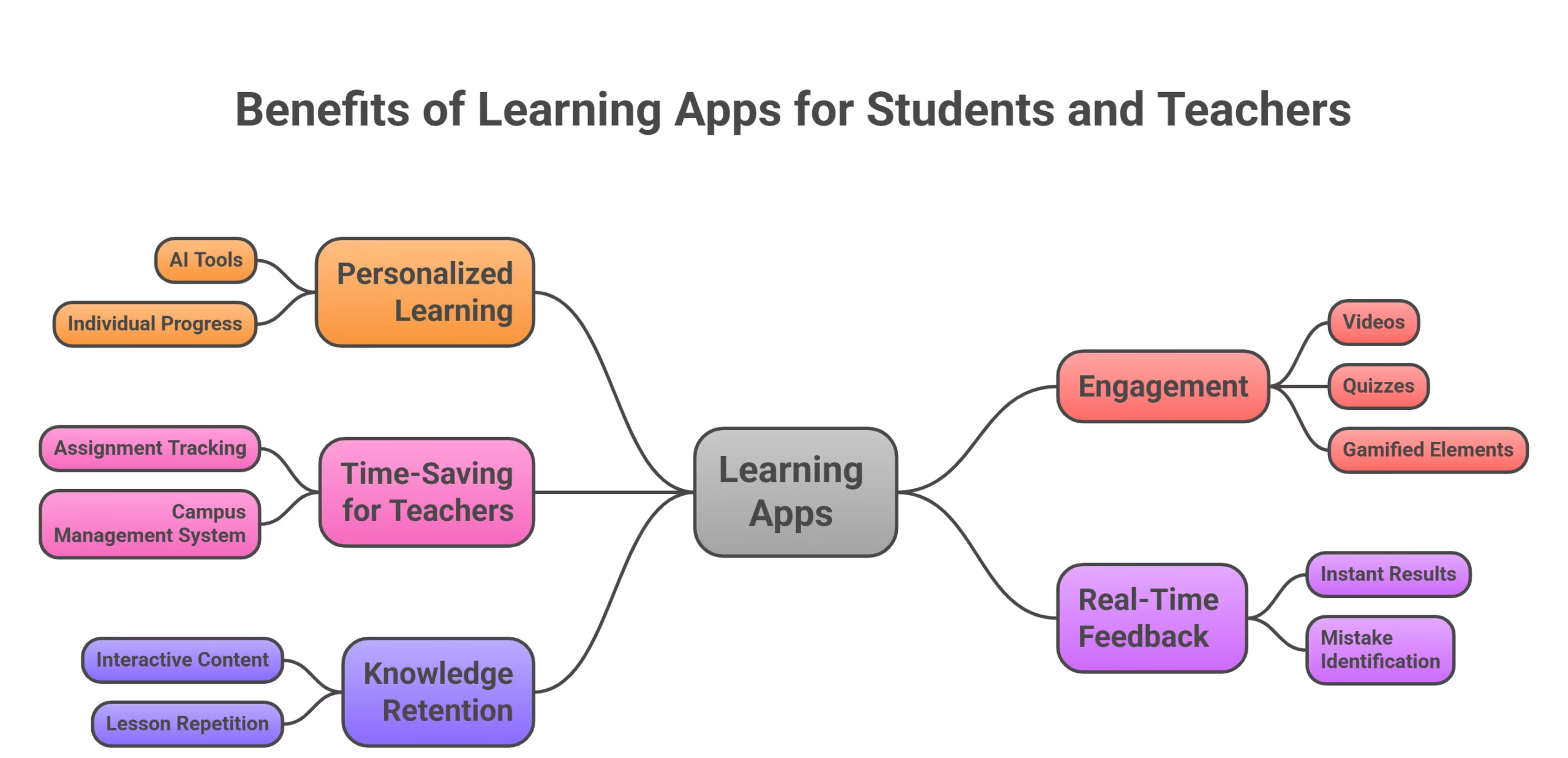
These apps also save time for teachers. Instead of manually checking assignments, teachers can use built-in tools to track student performance instantly. This allows them to focus more on teaching and less on administrative work. Many institutions combine these apps with a Compus management system to manage classes, attendance, and results more efficiently.
Real-time feedback is another powerful feature. Students do not have to wait for results. They get instant feedback on quizzes and assignments, which helps them understand mistakes and improve quickly.
Learning apps also improve knowledge retention. When students learn through interactive content and repeat lessons when needed, they remember concepts better. This leads to stronger understanding and long-term learning.
These benefits clearly show why learning apps are becoming essential in modern education. They support both students and teachers in achieving better results with less effort.

How Learning Apps Are Changing Traditional Classrooms
Traditional classrooms are no longer limited to blackboards and textbooks. Learning apps have introduced a new way of teaching and learning that is more flexible, interactive, and result-driven.
One major change is the shift from offline learning to digital support. Classrooms are now using apps to share notes, assignments, and recorded lectures. This allows students to revise topics anytime, which improves understanding. It also ensures that no student falls behind due to missed classes.
Another big transformation is the rise of hybrid learning. Schools and institutions are combining classroom teaching with digital tools. Students attend classes but also use apps for practice and revision. This mix creates a more balanced learning experience and improves overall performance.
The role of teachers is also evolving. Instead of only delivering lectures, teachers now guide students and help them use digital tools effectively. They focus more on problem-solving and concept clarity while apps handle repetitive tasks like quizzes and assessments.
Student participation has improved as well. Learning apps encourage active involvement through quizzes, discussions, and interactive content. Students are no longer passive listeners. They take part in the learning process, which increases engagement and confidence.
Another important change is the use of advanced technologies. Many apps are built using trending App Development Technologies, which make them faster, more interactive, and user-friendly. This improves the overall learning experience and keeps students interested.
These changes clearly show that classrooms are evolving. Learning is no longer restricted to a single place. It is becoming a continuous process supported by smart digital tools.
Role of AI and Smart Technologies in Learning Apps
Technology is not just supporting education anymore. It is actively shaping how students learn and how content is delivered. The integration of AI and smart systems has made learning apps more intelligent, responsive, and highly effective.
One of the biggest advantages is personalization. Learning apps now understand how a student learns. They track behavior, performance, and preferences to adjust content automatically. This is where Learning Apps in Modern Education become truly effective, because every user gets a customized learning path instead of a fixed structure.

AI also improves decision-making within apps. Based on student performance, the system can suggest what to study next, which topic needs more practice, and how to improve faster. Many platforms are now exploring advanced concepts like Agentic AI In Education, where systems can act independently to guide students without constant human input.
Automation is another major benefit. Tasks like grading, assessments, and progress tracking are handled instantly. This reduces workload for teachers and gives students faster results. It also ensures accuracy and consistency in evaluation.
Virtual assistance is becoming common as well. Smart chatbots and assistants help students solve doubts in real time. Instead of waiting for help, students can get instant answers, which keeps the learning flow uninterrupted.
Another important development is the rise of intelligent platforms built by top Edtech App developers. These platforms focus on performance, user experience, and scalability. They are designed to handle large numbers of users while still delivering a smooth and personalized experience.
All these advancements show that AI is not just an add-on feature. It is becoming the core of modern learning systems. As technology continues to evolve, learning apps will become even smarter, making education more efficient and accessible.
Important Features of Successful Learning Apps
Not all learning apps succeed. The ones that stand out are built with the right features that focus on user experience, engagement, and performance. These features play a key role in making learning effective and enjoyable.
A simple and clean interface is the first requirement. Students prefer apps that are easy to use and quick to navigate. If an app feels complicated, users lose interest quickly. That is why many Education app development companies focus heavily on user-friendly design.

Interactive content is another essential feature. Learning becomes more effective when students actively participate. Videos, quizzes, and real-time exercises keep users engaged and help them understand concepts better.
Gamification is also a powerful feature. Elements like rewards, badges, and levels make learning fun and motivating. Students feel encouraged to complete tasks and improve their performance. This approach is widely used in apps similar to Online Websites Like Cool Math Games, where learning feels like playing.
Progress tracking is equally important. Students should be able to see their improvement over time. Dashboards, performance reports, and achievement tracking help users stay motivated and focused on their goals.
Security and data protection cannot be ignored. Learning apps handle user data, performance records, and personal information. Strong security systems ensure that this data stays safe and builds trust among users.
Many of these features are developed with the help of experienced Custom Software Development Companies that understand both technology and user needs. They ensure that the app performs smoothly and delivers a high-quality experience.
These features clearly define what makes a learning app successful. When combined properly, they create a powerful platform that supports effective learning.
Challenges in Learning App Development
Building a successful learning app requires more than just a good idea. It involves technical expertise, strategic planning, and continuous improvement. Even though Learning Apps in Modern Education are growing fast, developers still face several challenges that can impact performance and success.
High Development Cost
Creating a learning app with advanced features requires a significant investment. Costs include UI/UX design, backend development, testing, and ongoing maintenance. If the app includes features like live classes, AI-based recommendations, or real-time analytics, the cost increases even more.
Businesses often partner with professional teams to handle these complexities. Working with experienced developers ensures better quality and scalability, but it also adds to the budget. Long-term success depends on balancing cost with value.
Data Privacy and Security Risks
Learning apps collect sensitive user data such as personal details, learning behavior, and performance records. Protecting this data is not optional—it is essential.
Developers must implement strong security measures like encryption, secure authentication, and regular updates. Any data breach can damage trust and affect the platform’s reputation. Compliance with data protection regulations is also necessary to avoid legal issues.
User Engagement and Retention
Getting users to download an app is easy. Keeping them active is the real challenge. Many users lose interest if the content becomes repetitive or the app lacks interaction.
To solve this, developers must focus on continuous content updates, gamification, and personalized learning paths. Engaging features like quizzes, rewards, and progress tracking help maintain user interest over time.
Technical Performance and Scalability
Learning apps need to handle large numbers of users at the same time. This requires a strong backend system and optimized performance.
Slow loading times, app crashes, or lag can frustrate users and lead to drop-offs. Developers must ensure smooth performance across different devices and network conditions. Scalability is also important as the user base grows.
Intense Market Competition
The edtech market is highly competitive. New apps are launched frequently, each offering unique features and better user experiences. Standing out in this crowded space is a major challenge.
To succeed, businesses need innovation, strong branding, and user-focused design. Offering unique value, better features, and consistent updates can help an app stay ahead of competitors.
Content Quality and Relevance
Content is the core of any learning app. If the content is outdated or not aligned with user needs, the app will not perform well.
Developers and educators must work together to create high-quality, relevant, and engaging content. Regular updates and improvements are necessary to keep the learning experience effective.
These challenges highlight that building a successful learning app is a continuous process. It requires the right combination of technology, strategy, and user understanding to create a platform that truly delivers value.
Future Trends in Learning Apps
Learning apps are evolving fast, and the next phase will be even more advanced. New technologies and user expectations are shaping how these platforms will grow in the coming years. The future of Learning Apps in Modern Education will focus on smarter systems, deeper personalization, and immersive experiences.
Rise of AI-Powered Learning Systems
Artificial intelligence will continue to play a major role in shaping learning apps. Future platforms will not just recommend content but will fully guide students through their learning journey.
AI systems will analyze performance, predict learning gaps, and provide solutions before problems grow. This level of intelligence will make learning more efficient and result-driven.
Growth of Immersive Learning Technologies
Technologies like augmented reality and virtual reality are slowly entering the education space. These tools will allow students to experience concepts instead of just reading about them.
For example, students can explore historical places virtually or perform science experiments in a simulated environment. This makes learning more engaging and easier to understand.
Increased Focus on Mobile Learning
Mobile learning will continue to dominate. Students prefer learning on devices they already use daily. Apps will become more optimized for mobile experiences with faster loading and smoother navigation.
This trend will also increase accessibility, especially in areas where desktops or traditional classrooms are not easily available.
Demand for Personalized Learning Experiences
Personalization will become even more advanced. Learning apps will create unique paths for every user based on their behavior, goals, and performance.
Instead of following a fixed syllabus, students will get customized learning journeys. This will improve outcomes and make learning more efficient.
Integration with Advanced Systems
Future learning apps will integrate with larger educational ecosystems. Schools and institutions will connect apps with their internal systems to manage data, performance, and communication more effectively.
This integration will create a seamless learning experience for both students and educators.
Expansion of Global Learning Communities
Learning apps will connect users from different parts of the world. Students will be able to collaborate, share ideas, and learn together regardless of location.
This global approach will improve knowledge sharing and create more diverse learning opportunities.
These trends clearly show that learning apps are moving towards a smarter and more connected future. The focus will be on delivering better results through technology while making learning more accessible and engaging for everyone.

Impact of Learning Apps on Global Education System
Learning apps are not just improving individual learning experiences. They are transforming the entire global education system. Their impact can be seen across accessibility, affordability, and the way knowledge is shared worldwide.
Improved Access to Education
Learning apps have made education accessible to people in remote and underserved areas. Students who once had limited resources can now access high-quality content through mobile devices.
This has reduced the gap between urban and rural education. Anyone with an internet connection can now learn from top educators and platforms without physical limitations.
Affordable Learning Opportunities
Traditional education often comes with high costs. Learning apps provide a more affordable alternative without compromising quality.
Many platforms offer free or low-cost courses, which makes education available to a larger audience. This has opened doors for students who could not afford expensive coaching or training programs.
Global Knowledge Sharing
Learning apps connect students and educators from different parts of the world. This creates a global learning environment where ideas and knowledge are shared freely.
Students can learn from international experts, join global communities, and gain exposure to different perspectives. This improves overall learning quality and broadens understanding.
Shift Toward Skill-Based Education
The focus of education is changing. Instead of only theoretical knowledge, there is a growing demand for practical skills.
Learning apps are supporting this shift by offering courses in coding, communication, business, and other real-world skills. This helps students become more job-ready and competitive.
Support for Lifelong Learning
Education is no longer limited to schools and colleges. Learning apps support continuous learning for people at all stages of life.
Professionals use these apps to upgrade their skills, switch careers, or stay updated with industry trends. This creates a culture of lifelong learning that is essential in a fast-changing world.
Want to know? How Agentic AI Is Transforming Online Education
FAQs
What are Learning Apps in Modern Education?
Learning Apps in Modern Education are digital platforms that help students learn through mobile or web-based tools. They offer interactive lessons, quizzes, and personalized learning experiences that improve understanding and engagement.
How Do Learning Apps Improve Education?
Learning apps improve education by offering personalized learning, instant feedback, and flexible access. They help students learn at their own pace while increasing engagement through interactive content.
Top Benefits of Learning Apps in Modern Education
- Personalized learning experience
- Flexible study schedule
- Better engagement through interactive content
- Instant performance tracking
- Cost-effective learning solutions
What are the top Key Features of Learning Apps?
- User-friendly interface
- Interactive lessons and quizzes
- Progress tracking dashboard
- Gamification elements
- Secure data management
How Much Does It Cost To Develop a Learning App?
The cost to develop a learning app ranges from $15,000 to $100,000+ depending on features, design, and complexity. Apps with AI features, live classes, and real-time tracking cost more than basic apps.
Are Learning Apps the Future of Education?
Yes, learning apps are shaping the future of education by making learning more accessible, personalized, and technology-driven. They support both students and teachers in achieving better results.
Are learning apps better than traditional education methods?
Learning apps do not replace traditional education but enhance it. They offer flexibility, better engagement, and access to a wide range of resources, making learning more effective when combined with classroom teaching.
What technologies are used in modern learning apps?
Modern learning apps use advanced technologies like artificial intelligence, data analytics, and cloud systems. These technologies help in personalization, performance tracking, and delivering a smooth user experience.
How can businesses build a successful learning app?
To build a successful learning app, businesses need a clear strategy, user-friendly design, and strong technology. Working with experienced developers and focusing on user needs is essential for long-term success.

Wrap up
Learning apps have completely reshaped how education works across the world.
They have made learning more flexible, accessible, and engaging for students at every level. First, they allow personalized learning experiences that improve understanding and performance. Second, they bring advanced technologies like AI into education, making learning smarter and more efficient. Third, they open global opportunities by connecting learners and educators beyond physical boundaries.
The growth of Learning Apps in Modern Education clearly shows that digital learning is not a temporary shift. It is becoming the standard way people gain knowledge and develop skills.
For businesses and institutions, this is also a major opportunity. Building high-quality learning platforms requires the right strategy and expert support. Platforms like AppsInsight help identify the best solutions and connect with reliable service providers for long-term success.
If you want to go deeper, you can explore how much a scalable learning app costs with the right technology and features. This will help you turn ideas into powerful digital education solutions.