
From automating everyday administrative work to tailoring learning experiences for individual students, AI agents are transforming education both behind the scenes and inside the classroom. These intelligent, autonomous systems can interpret context, make informed decisions, and take action to support students, educators, and institutions in real time.
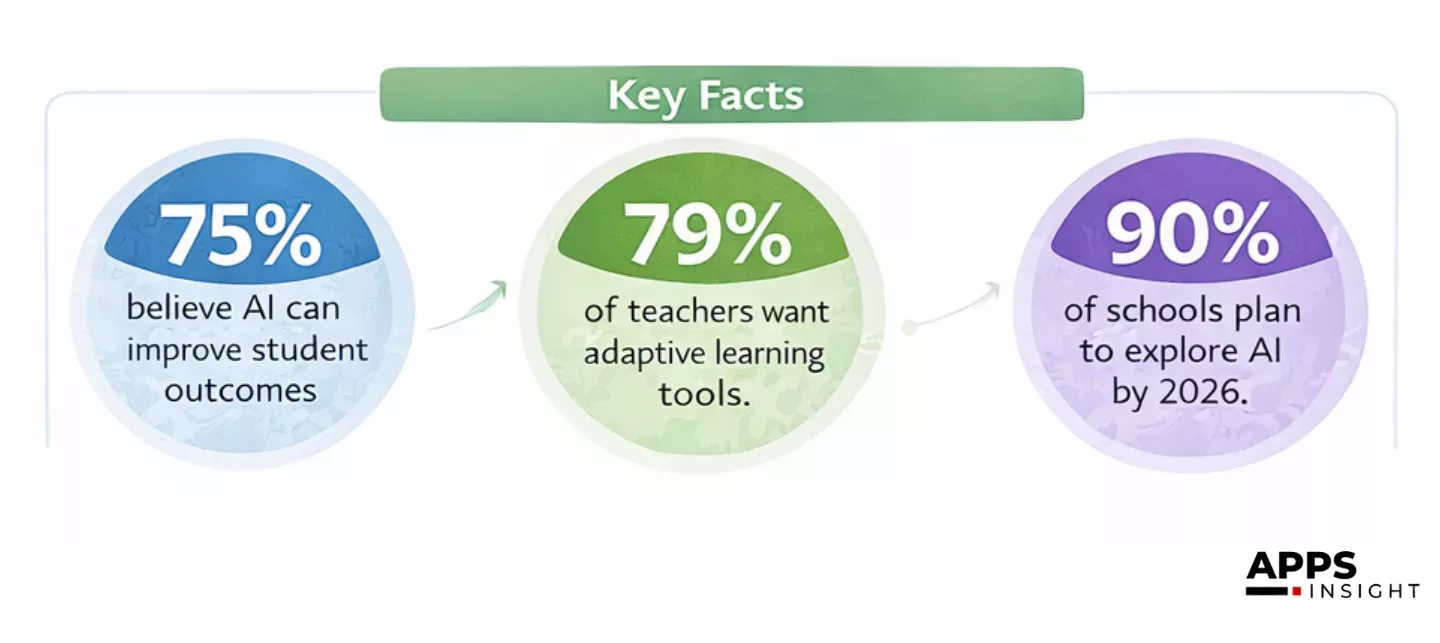
As schools and universities search for smarter ways to improve student engagement while easing workload pressure on staff, agentic AI is emerging as a powerful solution. By combining real-time data with scalable, personalized assistance, AI agents are helping create learning environments that are more responsive, efficient, and student-centered.
In this guide, we’ll dive into what AI agents in education really are, how they’re already being used today, and the best ways institutions can adopt them to enhance both teaching and learning outcomes.
Looking for? Best Agentic AI Integration Partners
What Is Agentic AI in Education, and Why Is It Gaining Momentum Now?
An agentic AI solution refers to intelligent systems, often known as AI agents, that can work independently to observe situations, make decisions, and take action to achieve specific objectives. Unlike traditional educational tools that simply follow programmed instructions or respond to user input, agentic AI actively adapts to changing conditions.
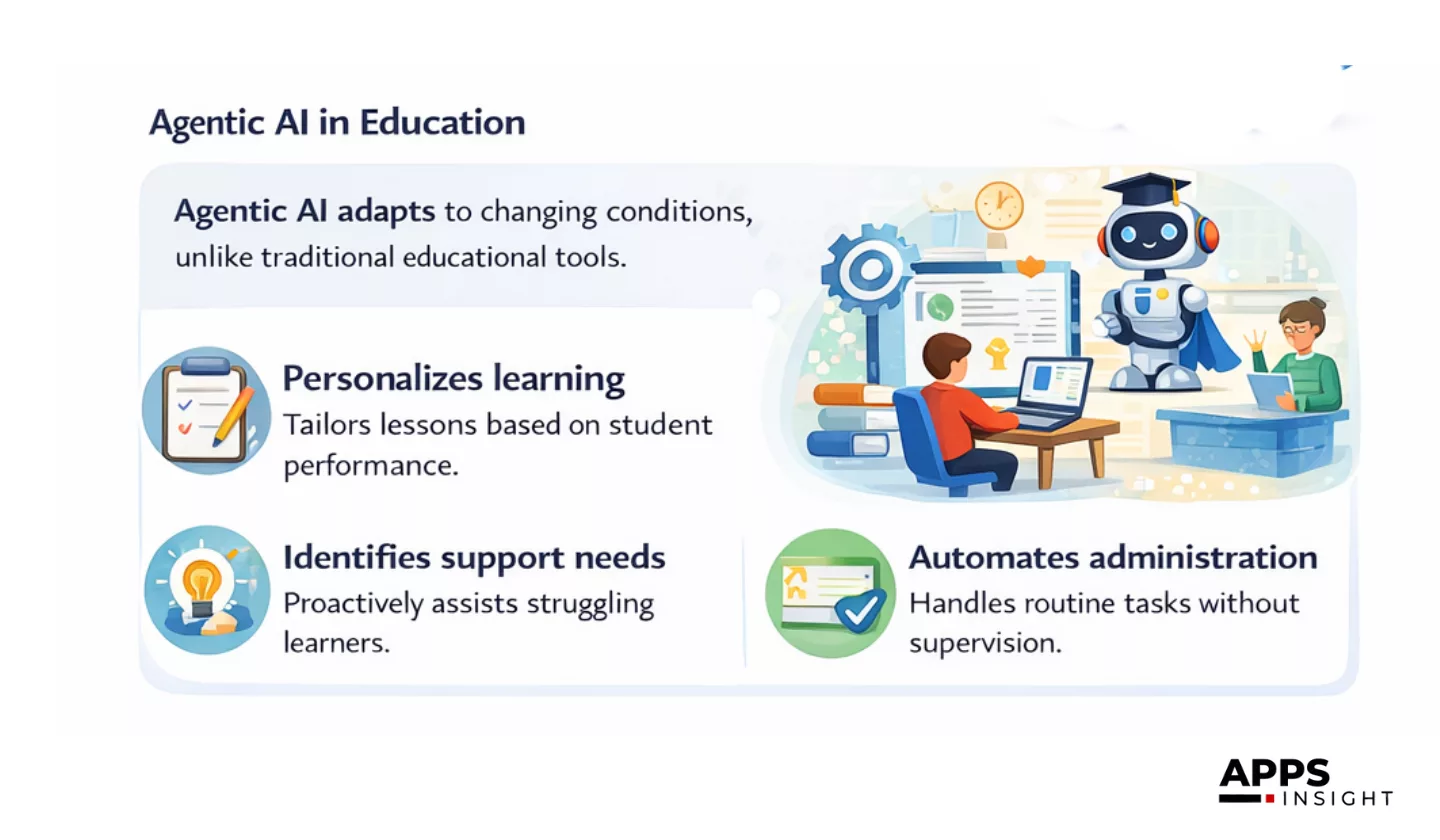
In an educational setting, an agentic AI service could automatically personalize lesson plans based on student performance, identify learners who need extra support and reach out proactively, or manage routine administrative tasks without constant human supervision.
What sets agentic AI apart is its ability to learn and evolve over time. Powered by advanced technologies such as large language models, these systems continuously improve their responses and strategies, making them especially effective in fast-moving, diverse learning environments.
As education increasingly demands personalized experiences, real-time support, and efficient operations, agentic AI is emerging at the right moment to meet these growing needs.
Read once! How to Choose the Right Agentic AI Solution
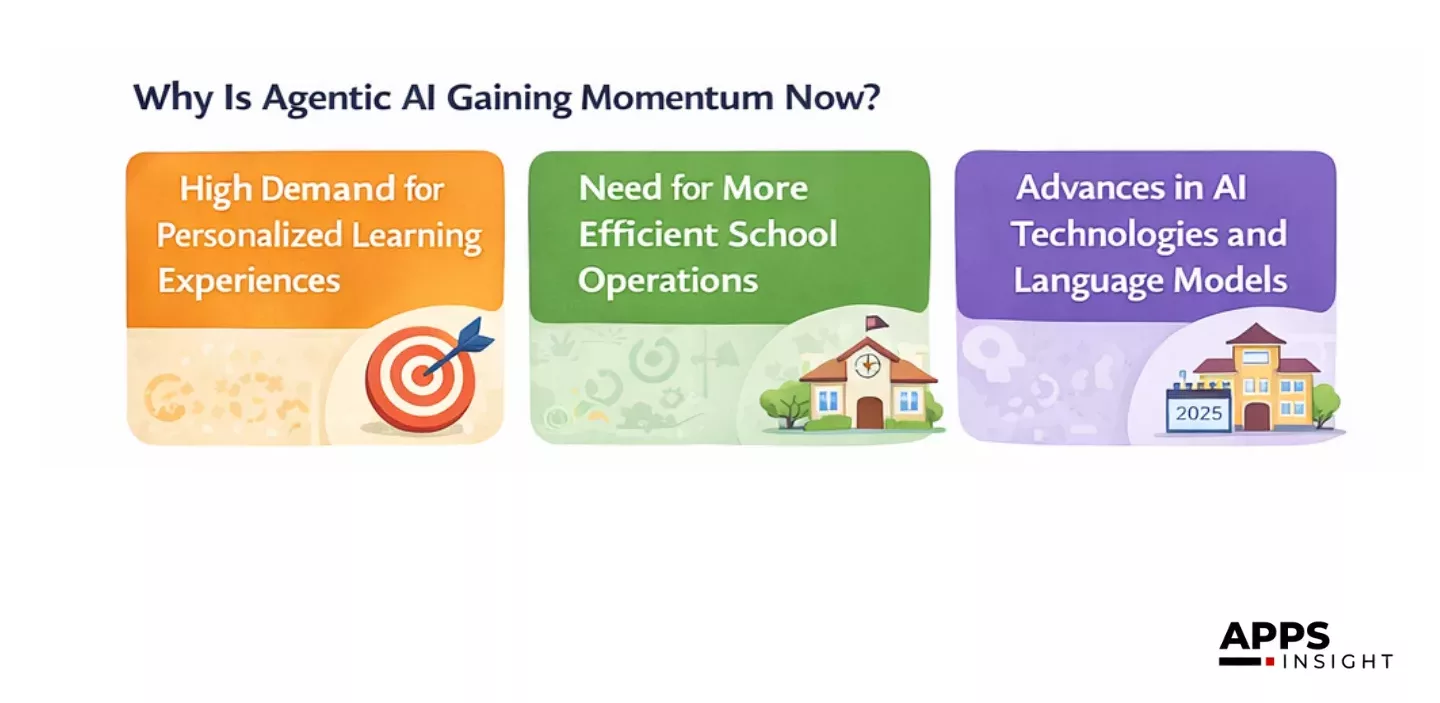
Why is agentic AI in education emerging now? Several factors have converged:
Agentic AI is emerging rapidly in education due to a powerful combination of technological progress, shifting learning environments, and growing market expectations. Several key forces are driving this transformation:
Breakthroughs in Generative AI
Recent advancements in generative and conversational AI have significantly enhanced the capabilities of intelligent systems. Today’s AI agents can understand context, reason through complex problems, generate personalized content, and interact naturally with users. This level of sophistication enables AI to function autonomously as tutors, graders, learning assistants, and student support tools, bringing true “agency” into educational environments.
The Post-Pandemic Digital Acceleration
The global shift toward online and hybrid learning dramatically increased the adoption of digital education platforms such as learning management systems (LMS), virtual classrooms, and student data ecosystems. This digital infrastructure now provides the perfect foundation for agentic AI integration. At the same time, educational institutions are under pressure to improve efficiency while managing limited resources, making AI-driven automation an appealing solution for reducing faculty workload and enhancing student support.
Rising Student and Market Expectations
AI adoption among students has become widespread, with a large majority already using AI tools for coursework and learning assistance. Learners increasingly expect personalized, intelligent educational experiences. Meanwhile, employers are seeking graduates who are proficient in AI-related skills, yet many students feel underprepared for real-world AI applications. This skills gap is pushing universities and training providers to embed AI more deeply into education through agentic systems that both teach and model AI usage.
Institutional Partnerships and Strategic Initiatives
Major universities are actively embracing agentic AI through large-scale collaborations and pilot programs. For instance, Northeastern University partnered with Anthropic to provide Claude AI across campuses to enhance teaching, research, and operations. Similarly, Duke University launched a program granting undergraduates secure access to advanced AI models under institutional oversight. These efforts demonstrate a shift from experimentation to enterprise-level AI adoption, marking a pivotal moment for educational transformation.
Agentic AI in education has evolved from a conceptual idea into a practical, scalable solution. The technology has reached a level of maturity, digital infrastructure is firmly in place, and real-world implementations are setting clear examples. With strong demand from students, institutions, and employers alike, now is the ideal time for educational organizations to develop structured AI strategies.
As adoption accelerates, the focus is shifting toward responsible implementation, long-term impact, and maximizing the benefits of autonomous AI agents in learning environments.
Top Use Cases of AI Agents in Education
Agentic AI is rapidly finding its place in classrooms and digital learning platforms, transforming the way education is delivered and managed. These intelligent agents handle everything from personalised teaching support to behind-the-scenes operational tasks, all aimed at enhancing learning experiences while easing the workload for educators.
Below are some of the most effective and high-impact ways AI agents are being used in education today.
Proactive learner assistance
Many students struggle silently, unsure when or how to seek help. AI agents can continuously track academic performance, participation levels, and learning behaviors to identify early signs of difficulty. When potential issues arise, the agent can automatically offer helpful resources, suggest targeted practice, or alert instructors with actionable insights. This early support system helps resolve challenges before they grow into major obstacles.
Smart automation for administrative tasks
Beyond teaching, educational institutions manage countless routine processes. AI agents streamline these operations by autonomously handling scheduling, attendance tracking, reminders, course registrations, and student records. By removing repetitive manual work, educators and staff can focus more on teaching, mentoring, and student engagement.
Personalized and adaptive learning journeys
AI agents function as customized learning companions that tailor lessons to individual student needs. They dynamically adjust lesson difficulty, pace, and presentation style based on performance. For instance, if a learner finds a concept challenging, the agent can provide extra practice or alternate explanations. If progress is faster than expected, the agent can introduce advanced material. This flexible approach ensures students stay motivated and supported throughout their learning journey.
On-demand autonomous tutoring
Students no longer have to wait for scheduled help sessions. AI-powered tutoring agents offer real-time guidance whenever questions arise. These agents explain concepts, walk learners through problem-solving steps, and adapt explanations based on past performance data. Often integrated with education management systems, they provide immediate, personalized assistance that closely mirrors human tutoring experiences.
Top Benefits of AI Agents in Education
When thoughtfully integrated into educational systems, AI agents can significantly enhance both teaching and learning experiences. Unlike traditional digital tools or static software, agentic AI systems are designed to adapt dynamically, responding intelligently to the unique needs of students and educators alike.
Below are some of the key advantages AI agents bring to the education sector.
Personalized Learning at Scale
No two students learn in exactly the same way, and AI agents make personalized education more achievable than ever before. By continuously analyzing a student’s performance, behavior, and learning preferences, these systems tailor lessons specifically for each learner.
Rather than offering simple adaptive quizzes, AI agents can adjust teaching strategies, revisit challenging topics, modify pacing, and present information in formats that best suit the individual, creating a truly customized learning experience in real time.
Instant and Intelligent Feedback
AI agents provide immediate responses to student work, eliminating the long wait times often associated with traditional assessments. Beyond identifying mistakes, they explain why errors occur and guide learners toward the correct understanding through targeted examples and follow-up questions.
This real-time feedback helps students grasp concepts faster, build confidence, and become more independent in their learning journey.
Early Identification of Learning Challenges
Spotting students who are struggling early can dramatically improve outcomes, but it’s not always easy in large classrooms or online environments. AI agents continuously monitor engagement levels, performance trends, and behavioral signals to detect potential issues.
When risks appear, the system can automatically suggest resources, notify instructors, or initiate supportive actions, allowing timely intervention before small challenges turn into major obstacles.
Scalable One-on-One Support
Providing personalized assistance to every learner is often limited by class size and resources. AI agents bridge this gap by offering on-demand academic support around the clock.
They answer questions, guide problem-solving, and adapt explanations based on each student’s understanding, making high-quality individualized support accessible to all, regardless of location or class size.
Enhanced Teaching Effectiveness
AI agents are designed to support educators, not replace them. By automating routine tasks such as grading, tracking progress, and compiling reports, these systems free up valuable time for teachers.
Additionally, AI-driven insights help educators better understand student needs and learning patterns, enabling more targeted instruction and stronger student relationships. This results in improved engagement, better outcomes, and a more rewarding teaching experience.
Implementing AI Agents in Educational Organisations
Although AI agents offer significant advantages in education, adopting them successfully requires careful planning. These intelligent systems operate with a high level of autonomy, which makes it essential for educational organizations to establish clear frameworks and controls from the very beginning.
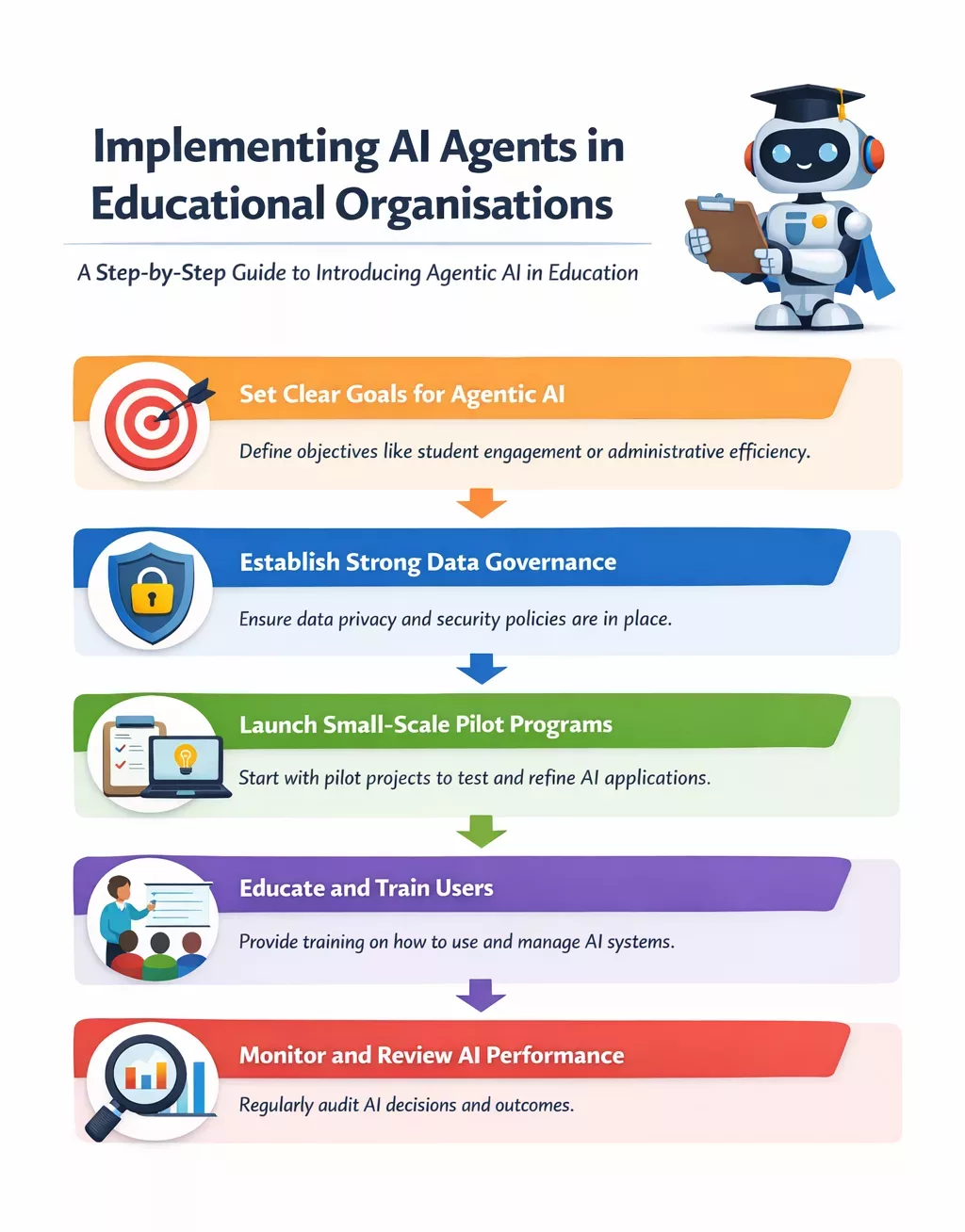
Below is a practical step-by-step guide to introducing agentic AI into educational environments in a structured and responsible manner.
1. Set Clear Goals for Agentic AI
Begin by outlining what you want AI agents to achieve. Are you focused on increasing student engagement, streamlining administrative tasks, or creating more personalized learning paths? Clearly defined objectives ensure that AI implementation aligns with institutional priorities. It also provides a benchmark for evaluating success. Prioritize areas where AI can deliver quick and meaningful improvements.
2. Establish Strong Data Governance Practices
Since AI agents rely heavily on data to function effectively, maintaining data privacy and security is critical. Put clear policies in place regarding data collection, access, and usage. Transparency with stakeholders about how data is handled builds trust and ensures compliance with educational regulations and ethical guidelines.
3. Launch Small-Scale Pilot Programs
Rather than implementing AI agents across the entire institution immediately, begin with targeted pilot projects. These could include automated tutoring systems, intelligent scheduling tools, or AI-driven student support services. Pilots allow institutions to test performance, gather feedback, and refine processes before full-scale deployment.
4. Educate and Train Users
Teachers, staff, and students will need guidance on how to interact with autonomous AI systems. Provide training sessions that explain how AI agents operate, what tasks they manage, and how humans can oversee or intervene when required. Improving digital awareness encourages trust and promotes effective collaboration between people and AI tools.
5. Continuously Monitor and Review AI Performance
Even autonomous AI systems require ongoing supervision. Implement regular audits to review how decisions are made and ensure outcomes align with educational values and objectives. Monitoring helps identify bias, inefficiencies, or unexpected behaviors, allowing institutions to make timely improvements and maintain fairness over time.
Looking for? Best Campus Management Systems
How Much Does Agentic AI Cost for Educational Institutions in 2026?
In 2026, the cost of using Agentic AI in education depends on how it is used and how big the institution is. Agentic AI is different from normal AI tools because it can work on its own, make decisions, and manage tasks without constant human input. This makes it powerful, but also slightly more expensive.
Schools, colleges, universities, and EdTech platforms may spend different amounts based on their needs, systems, and data security rules.
Main Cost Areas of Agentic AI in Education
Agentic AI costs are not just about buying software. Institutions need to plan for setup, daily usage, and long-term maintenance.
| Cost Area | What It Includes | Estimated Cost |
|---|---|---|
| AI Agent Setup | Building or customizing AI agents for teaching, admissions, or admin work | $20,000 – $120,000 |
| System Integration | Connecting AI with LMS, student records, and other tools | $10,000 – $60,000 |
| Cloud & Hosting | Running AI systems, storing data, and daily operations | $1,500 – $8,000 per month |
| AI Tool Usage | Language models, APIs, and agent platforms | $2,000 – $12,000 per month |
| Security & Privacy | Protecting student data and following education laws | $5,000 – $30,000 |
| Training & Support | Training teachers and staff to use AI tools | $3,000 – $15,000 |
| Monitoring & Reviews | Checking AI decisions and improving performance | $2,000 – $10,000 per year |
Average Yearly Cost by Institution Type
| Institution Type | Estimated Annual Cost |
|---|---|
| Small Schools & Coaching Centers | $25,000 – $60,000 |
| Mid-Sized Colleges | $60,000 – $150,000 |
| Universities & Large EdTech Platforms | $150,000 – $400,000+ |
Looking for? Education App Development Companies
Final Words
Agentic AI is slowly changing how education works. From personalized learning and smart tutoring to automated administration and student support, these AI systems can help institutions work faster, smarter, and more efficiently. However, with these benefits also come real risks, such as data privacy concerns, over-automation, and higher implementation costs. That’s why a balanced approach is important.
Educational institutions should clearly understand use cases, risks, and implementation costs before adopting agentic AI. Starting small, setting clear goals, and choosing the right technology partner can make the journey smoother and more successful.
This is where AppsInsight plays an important role.
AppsInsight helps educational institutions find the best Agentic AI solution providers by offering in-depth research, verified listings, and expert-backed insights. We carefully evaluate and list experienced AI companies and industry experts who specialize in building reliable, secure, and scalable agentic AI solutions for education. Instead of spending months comparing vendors, institutions can use AppsInsight to quickly connect with trusted providers that match their needs and budget.
Whether you are a school, college, university, or EdTech platform, AppsInsight makes it easier to choose the right AI partner with confidence.
Agentic AI can transform education, but success depends on informed decisions. With the right strategy and the right experts, educational institutions can unlock real value, and AppsInsight is here to guide that journey.
FAQs
Can Agentic AI adapt to different learning styles?
Yes, Agentic AI can adjust learning content based on how each student learns best. It can observe student behavior such as reading speed, quiz performance, and engagement patterns to change lessons in real time. For example, it may use videos for visual learners, step-by-step explanations for beginners, or practice-based tasks for hands-on learners. Over time, the AI becomes smarter and more accurate in supporting individual learning needs.
Does Agentic AI replace teachers in education?
No, Agentic AI is designed to support teachers, not replace them. It handles time-consuming tasks like grading, attendance tracking, and answering routine student questions. This allows teachers to focus more on teaching, mentoring, and creative classroom activities. Human judgment, emotional understanding, and guidance remain essential in education.
How long does it take to implement Agentic AI in an institution?
Implementation time depends on the scope of use. Small projects, such as AI-based tutoring or admin automation, can take 2–4 months. Larger deployments across multiple departments may take 6–12 months. Starting with pilot programs helps reduce risk and improve results.
Can small schools afford Agentic AI solutions?
Yes, many Agentic AI providers offer flexible pricing models. Small schools can start with basic features and expand gradually. Cloud-based systems also reduce infrastructure costs, making AI more accessible.
What skills do institutions need to manage Agentic AI?
Institutions do not need advanced AI expertise. Basic digital skills, clear policies, and regular monitoring are enough. Most providers offer training and ongoing support to ensure smooth operations.