
Healthcare App trends are changing how hospitals, clinics, doctors, and patients use technology every day. In 2026, healthcare apps are no longer limited to booking appointments or storing medical records. They now help doctors monitor patients remotely, provide personalized health recommendations, improve medical training, and secure sensitive health information. As smartphones, wearable devices, cloud computing, artificial intelligence, and connected medical devices continue to improve, healthcare applications are becoming more useful across the healthcare system.
Whether you are a healthcare provider, startup founder, hospital administrator, or someone interested in healthcare technology, understanding these trends can help you see where the industry is moving. This article explains the top healthcare app development trends in simple language, including how each technology works, where it is being used, and why it matters.
Related Queries
What are the top Healthcare App trends in 2026?
The top Healthcare App trends in 2026 include AI-powered personalization, wearable health monitoring, advanced telemedicine, voice assistants, mental health apps, FemTech solutions, 5G-enabled healthcare, cloud-based EHR systems, blockchain security, and AR/VR applications.
Why is AI important in healthcare apps?
AI helps healthcare apps analyze patient information, provide personalized recommendations, automate routine tasks, and assist healthcare professionals in making informed clinical decisions.
How do wearable devices improve healthcare apps?
Wearable devices continuously collect health data such as heart rate, blood pressure, oxygen levels, and activity, allowing doctors to monitor patients remotely and detect health issues earlier.
Why is cloud technology used in healthcare apps?
Cloud technology allows secure storage and access to electronic health records from different locations, improving collaboration, backup, scalability, and patient care.
Is blockchain useful for healthcare data security?
Blockchain improves data security by creating tamper-resistant records, enhancing transparency, supporting secure information sharing, and maintaining reliable audit trails.
Why Healthcare Apps Continue to Grow in 2026 and Beyond
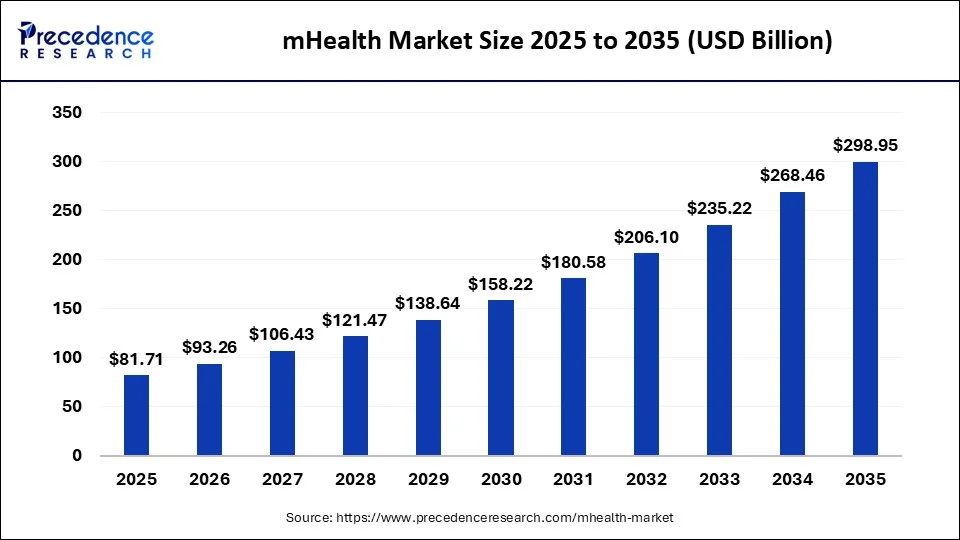
The healthcare industry continues to invest in digital solutions because they help improve patient care while reducing administrative work. According to industry reports from Precedence Research, the global mHealth market size is accounted at USD 81.71 billion in 2025 and predicted to increase from USD 93.26 billion in 2026 to approximately USD 298.95 billion by 2035, at a CAGR of 13.85% from 2026 to 2035.
Healthcare apps now support patients before, during, and after treatment. They help users schedule appointments, receive medication reminders, consult doctors online, track chronic diseases, and access medical reports from anywhere.
Many healthcare app development agencies are focusing on building applications that meet both user needs and healthcare regulations, ensuring patient information remains secure while improving accessibility.
Top 10 Healthcare App Development Trends in 2026

1. AI-driven Personalization in Healthcare Apps
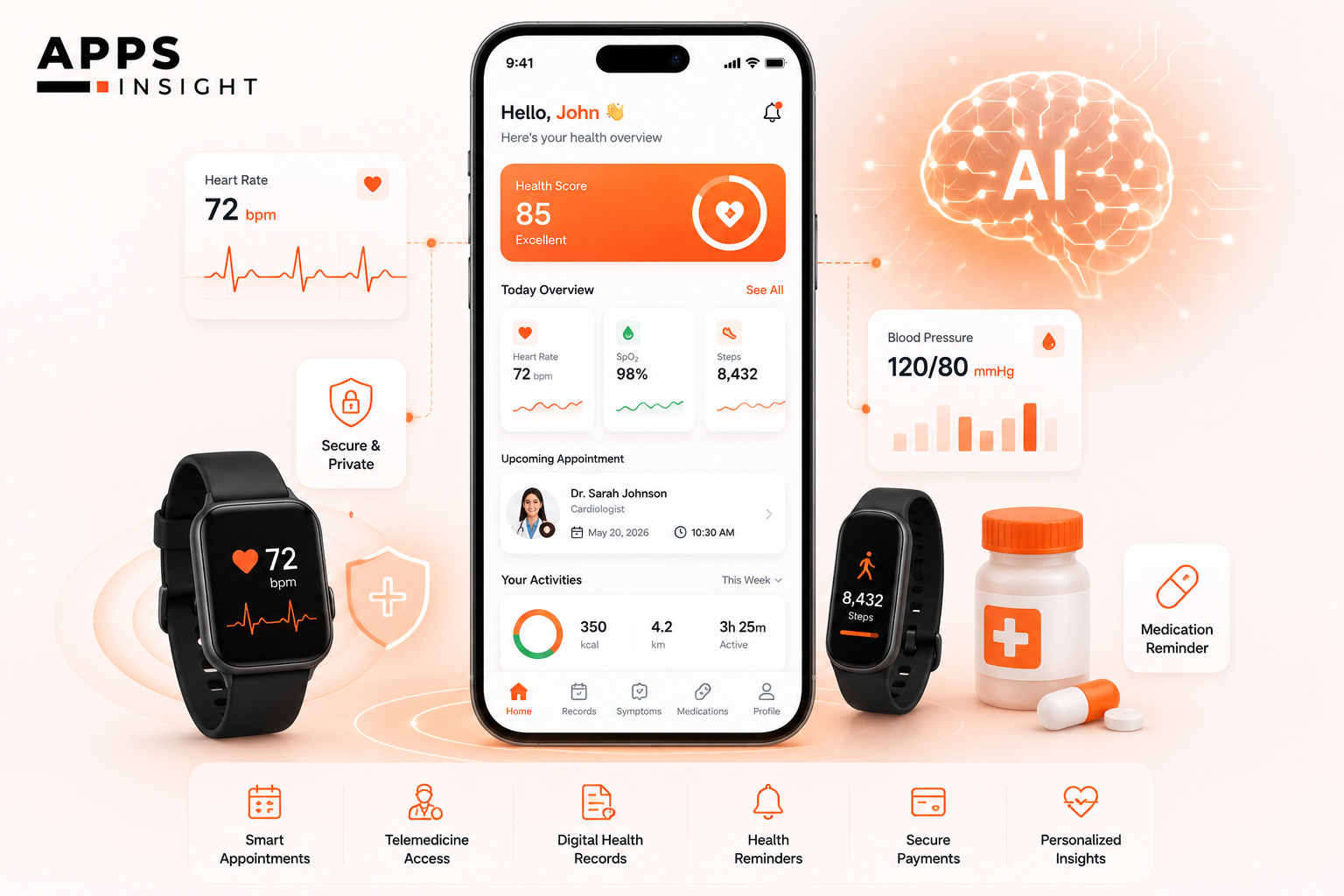
Artificial intelligence is becoming one of the most practical technologies in healthcare applications. Instead of providing the same experience to every user, AI analyzes health records, activity levels, medical history, and user preferences to deliver personalized recommendations.
For example, a diabetes management app can recommend meal plans based on blood sugar readings. A fitness app may adjust exercise suggestions depending on a person’s health condition and daily activity.
The growing use of Agentic AI in the healthcare industry is also helping automate routine tasks. AI agents can remind patients about medication, summarize medical records for doctors, and assist with appointment scheduling without constant human involvement.
According to Accenture, AI has the potential to improve operational efficiency while supporting better clinical decision-making.
Looking for? Healthcare App Features Checklist For Better Patient Care
2. Remote Patient Monitoring via IoT & Wearables
Remote patient monitoring continues to expand because wearable devices have become more accurate and affordable.
Smartwatches, glucose monitors, ECG patches, blood pressure monitors, and pulse oximeters continuously collect patient data and send it securely to healthcare providers.
Doctors can monitor patients with chronic diseases without requiring frequent hospital visits.
Benefits include:
- Earlier detection of health issues
- Better management of chronic conditions
- Reduced hospital readmissions
- Greater convenience for elderly patients
Healthcare providers can also receive alerts if patient readings move outside normal ranges, allowing quicker medical intervention.
Connect with IoT App Development Companies
3. Telemedicine 2.0 with Integrated Features
Video consultation apps became popular during the pandemic, but telemedicine has evolved considerably. Modern healthcare apps combine multiple services into one platform, including:
- Online consultations
- Digital prescriptions
- Lab test booking
- Medical report sharing
- Online payments
- Follow-up scheduling
This integrated approach reduces the need for patients to switch between different applications.
As demand continues to grow, every leading healthcare app development company is investing in more connected telemedicine platforms that improve communication between patients and healthcare professionals.
4. Voice Assistants with Conversational Interfaces
Voice technology is becoming more useful for healthcare because it improves accessibility. Patients can interact with healthcare apps using simple voice commands instead of typing.
Common uses include:
- Setting medicine reminders
- Booking appointments
- Asking health-related questions
- Recording symptoms
- Accessing health reports
Voice assistants are especially helpful for elderly users, visually impaired individuals, and patients with limited mobility.
Natural language processing has improved significantly, allowing healthcare apps to understand conversational speech more accurately than before.
5. Mental Health & Mindfulness Apps with Gamification
Mental health remains an important focus area in digital healthcare. Modern mental wellness applications combine guided meditation, breathing exercises, mood tracking, sleep monitoring, and counseling support.
Gamification helps improve user engagement by introducing:
- Daily goals
- Progress tracking
- Achievement badges
- Wellness challenges
- Streak rewards
These features encourage users to maintain healthy habits consistently rather than using the app only occasionally.
Research published by the World Health Organization highlights the increasing need for accessible mental health support, especially through digital platforms that reach users regardless of location.
Read once! Why IT Consulting in Healthcare Is Essential for Modern Medical Systems
6. Women’s Health (FemTech) Apps
Women’s health applications continue to expand beyond simple period tracking. Today’s FemTech apps help users manage:
- Pregnancy monitoring
- Fertility planning
- Menopause tracking
- Hormonal health
- Nutrition guidance
- Postpartum recovery
Many applications also integrate wearable devices and teleconsultation features so patients can communicate directly with healthcare providers.
As digital healthcare becomes more personalized, women’s health apps are addressing health concerns that previously received limited digital attention.
Looking for? Femtech Companies
7. 5G-enabled Smart App Functionality
The wider availability of 5G networks allows healthcare applications to transfer large amounts of medical data with lower latency.
This improvement supports:
- Faster video consultations
- High-quality medical imaging
- Remote diagnostics
- Real-time wearable monitoring
- Emergency healthcare communication
For example, ambulance teams can transmit patient information to hospitals before arrival, allowing doctors to prepare treatment in advance.
Although internet speed alone does not improve healthcare, faster and more stable connectivity enables healthcare apps to function more efficiently.
8. Cloud-based EHR Access & Storage
Electronic Health Records continue moving toward secure cloud infrastructure. Instead of storing medical records on local servers, hospitals increasingly use cloud-based systems that allow authorized healthcare professionals to access patient records from different locations.
Benefits include:
- Easier collaboration
- Faster record retrieval
- Reduced storage costs
- Better backup and disaster recovery
- Improved scalability
Organizations planning Custom Healthcare Software Development often include cloud-based EHR systems because they improve long-term flexibility.
Many healthcare providers also evaluate EHR Software Development Cost before modernizing their digital infrastructure, as cloud solutions can reduce ongoing maintenance expenses compared to traditional systems.
9. Blockchain for Health Data Security
Healthcare organizations manage highly sensitive patient information. Blockchain technology helps strengthen security by creating tamper-resistant records that are difficult to alter without authorization.
Instead of replacing existing databases, blockchain often works alongside current healthcare systems to improve:
- Data integrity
- Secure record sharing
- Identity verification
- Audit trails
- Consent management
Patients also gain greater transparency regarding who accesses their medical records.
Although blockchain adoption is still growing, healthcare organizations continue exploring practical use cases for protecting digital health information.
Connect with Blockchain Healthcare App Development Companies
10. AR/VR & Metaverse in Medical Training and Therapy
Augmented Reality (AR) and Virtual Reality (VR) are finding practical applications in healthcare beyond entertainment. Medical schools use VR simulations for surgical training, allowing students to practice procedures safely.
Hospitals also use VR for:
- Physical rehabilitation
- Pain management
- Anxiety reduction
- Medical education
- Patient therapy
AR applications help surgeons visualize anatomical structures during procedures by displaying digital information alongside real-world images.
These technologies provide immersive learning experiences while reducing risks associated with traditional training methods.
How These Trends Benefit Healthcare Providers and Patients
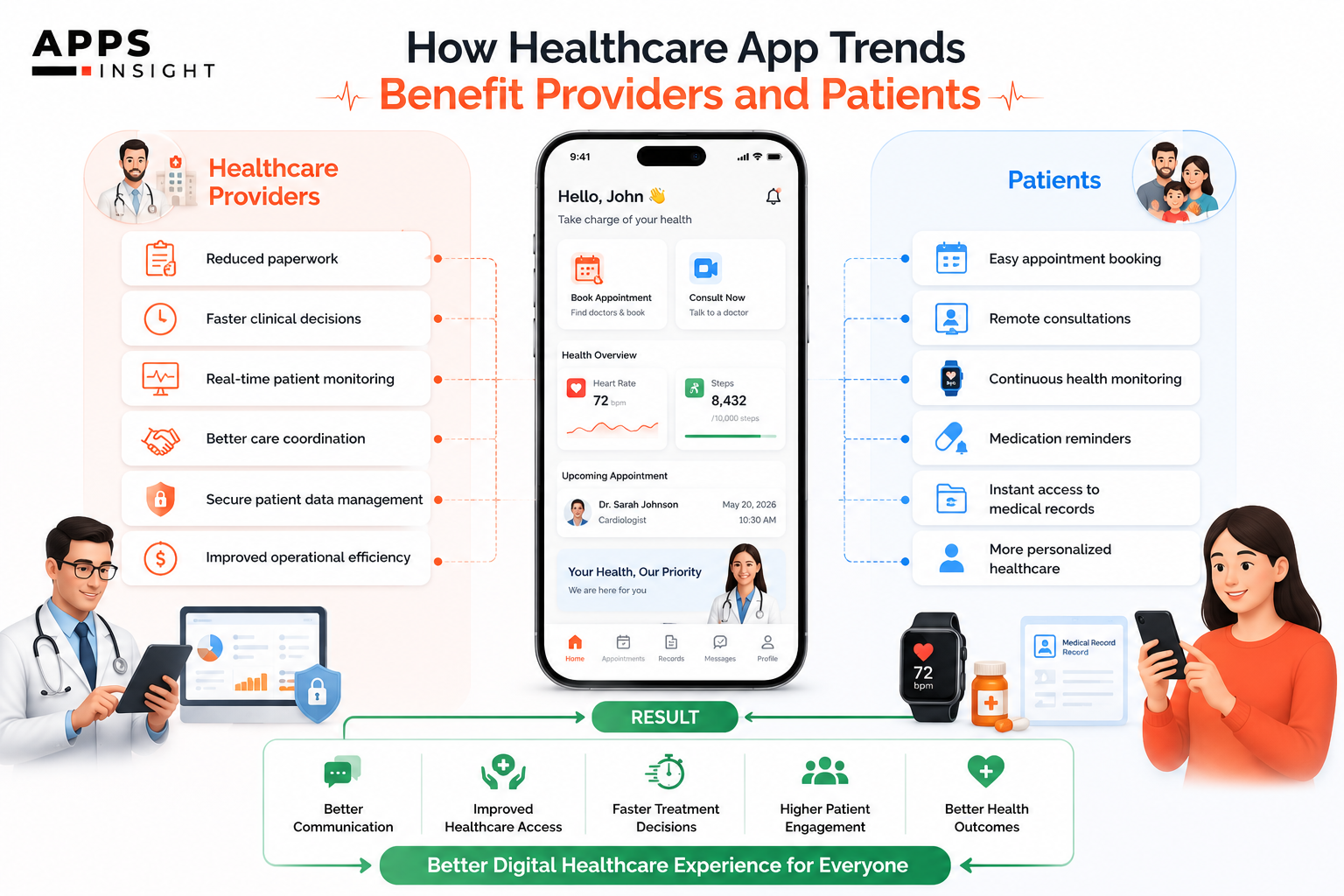
The latest Healthcare App trends improve healthcare by making medical services more accessible, organized, and data-driven.
Patients benefit from:
- Faster access to healthcare services
- Better disease monitoring
- More personalized treatment
- Improved communication with doctors
- Easier access to medical records
Healthcare providers benefit from:
- Better workflow management
- Reduced paperwork
- Improved patient engagement
- Faster clinical decisions
- Better coordination across departments
Hospitals implementing advanced healthcare software development strategies can also improve operational efficiency while maintaining compliance with healthcare regulations.
For example, several organizations investing in hospital management software are integrating mobile applications with hospital systems to simplify appointment management, billing, pharmacy services, and patient communication.
Similarly, experienced Healthcare Software Development Companies in Denver continue contributing to specialized healthcare applications for hospitals, clinics, and medical startups by developing secure digital healthcare platforms.
Another area receiving attention is medication delivery. Growing Digital Pharmacy Market Trends indicate increasing adoption of online prescription management, medicine ordering, and home delivery services integrated directly into healthcare applications.
Sum up
Healthcare apps are becoming an important part of modern medical care because they improve communication, simplify healthcare management, and support better patient outcomes.
The most important Healthcare App trends in 2026 include AI-driven personalization, wearable device integration, advanced telemedicine, voice assistants, mental health applications, FemTech solutions, 5G connectivity, cloud-based electronic health records, blockchain security, and AR/VR technologies.
Each trend addresses a practical healthcare challenge rather than simply introducing new technology. Together, these innovations help healthcare providers deliver more connected, efficient, and accessible care.
If you want to stay updated on healthcare technology, app development, and emerging digital health innovations, AppsInsight regularly publishes detailed articles covering the latest industry developments and practical insights.
Listed here! Healthcare Business Ideas: Entrepreneurs, And Startups
Frequently Asked Questions
1. What are Healthcare App trends?
Healthcare App trends refer to new technologies and features being adopted in healthcare applications to improve patient care, medical workflows, and digital healthcare services.
2. Why are healthcare apps becoming more popular?
Healthcare apps offer easier appointment scheduling, remote consultations, health monitoring, medication reminders, and quick access to medical records, making healthcare more convenient.
3. What role does AI play in healthcare apps?
AI supports personalized healthcare, symptom analysis, predictive insights, automation, and improved patient engagement through intelligent recommendations.
4. Are healthcare apps secure?
Most healthcare apps use encryption, secure authentication, cloud security, and regulatory compliance measures. Some also use blockchain to strengthen data protection.
5. Which healthcare app trend is expected to grow the fastest?
AI-powered personalization and remote patient monitoring through wearable devices are expected to see significant growth due to increasing adoption by healthcare providers and patients.