
If you’re planning a healthcare booking platform similar to HotDoc, the first question is usually the same: how much will it cost to build? A realistic answer is that a focused MVP may cost around $25,000 to $60,000, while a more complete platform can reach $60,000 to $150,000 or more. A large-scale product with telehealth, multiple healthcare integrations, sophisticated administration, analytics and advanced security can exceed $150,000.
The important point is that you’re not simply building a mobile booking app. A HotDoc-style product connects patients, doctors, clinics, appointment schedules, notifications, payments and healthcare systems. Each additional connection increases development and testing requirements.
HotDoc itself reports more than 13 million active patients, 23,000 practitioners and 2.5 million appointments per month on its current About page. That scale illustrates why a similar product needs a strong backend, reliable scheduling infrastructure and careful handling of healthcare information.
This guide explains the cost to build an App Like HotDoc, what features contribute to the budget, how development is normally carried out, and which decisions can keep the first release practical.
Healthcare App Market Size and Growth Projections
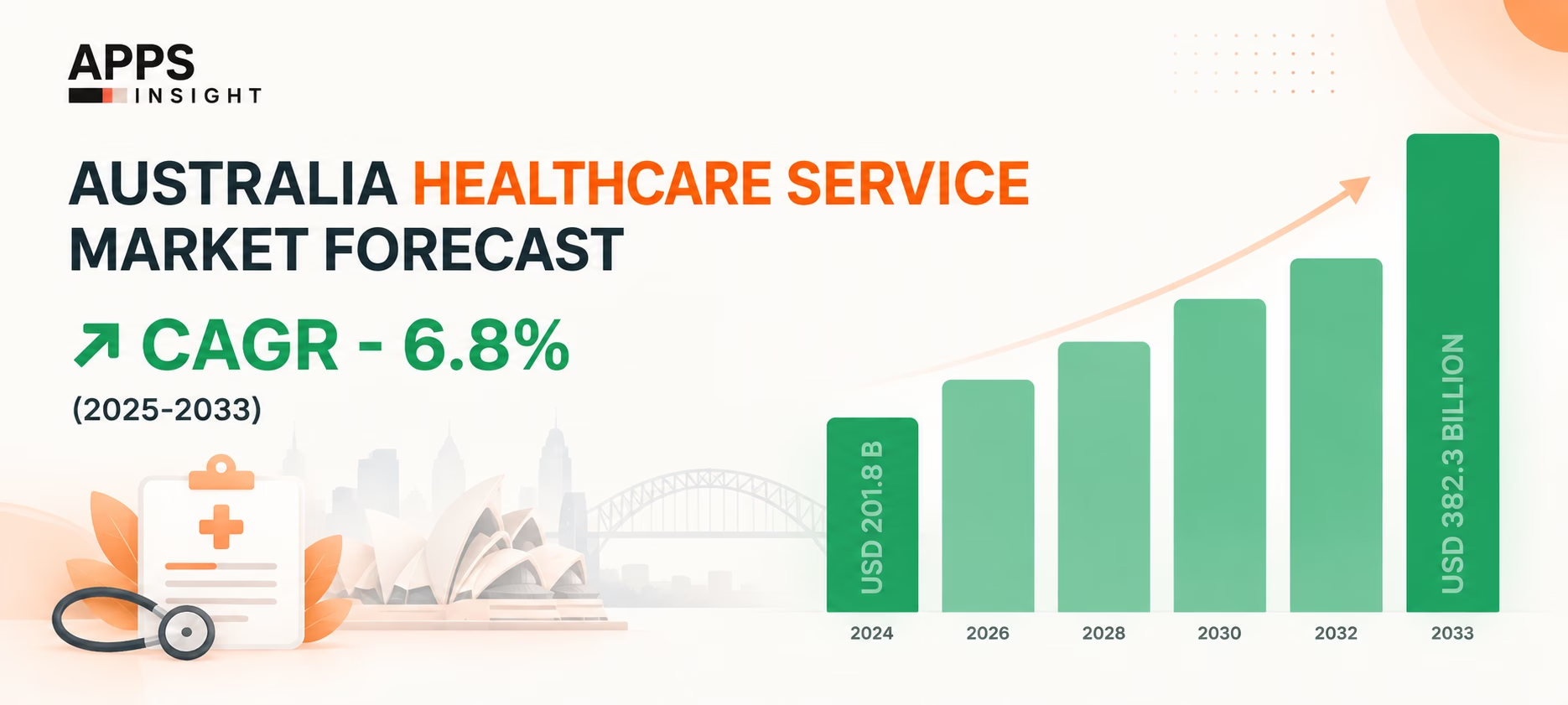
The global mHealth apps market is experiencing significant growth and is expected to expand from USD 40.65 billion in 2025 to USD 88.70 billion by 2032, representing a CAGR of 11.8% throughout the forecast period.
The increasing adoption of telehealth services is also contributing to the rapid expansion of Australia’s digital healthcare ecosystem. The Australian healthcare mobile application market is projected to generate approximately USD 12,957 million in revenue by 2030, growing at an impressive 42.9% CAGR between 2025 and 2030.
At the same time, Australia’s digital health sector is entering a new phase focused on personalized and preventive healthcare. The integration of patient data with AI-powered healthcare applications is enabling businesses to deliver more tailored and proactive healthcare experiences.
Startups and established enterprises are increasingly combining data from wearable devices, genetic testing, and lifestyle tracking to provide users with personalized health insights and recommendations. For businesses considering a similar healthcare model, understanding the cost of building an app like HotDoc is an important first step.
Whether you are launching a healthcare startup or looking to expand an existing healthcare business, developing a platform inspired by HotDoc can create opportunities in Australia’s rapidly growing digital health market. With strong market growth and increasing demand for personalized, technology-driven care, Australia presents an attractive environment for businesses looking to build scalable healthcare applications.
What Is HotDoc and What Does a Similar App Need?
HotDoc is an Australian patient-engagement platform that allows people to find healthcare providers and manage appointments online. Its published product capabilities include online bookings, telehealth, appointment reminders, SMS reminders, digital registration forms, mobile and kiosk check-in, prescription renewals, and preventive health tools.
That combination is important when estimating development costs. A basic appointment app may only need:
- Patient registration
- Doctor search
- Availability
- Appointment booking
- Push notifications
- Appointment history
- Basic administration
A product designed to operate more like HotDoc requires additional systems. Clinics need their own interfaces to manage schedules, practitioners and patients. The platform needs to prevent double bookings and keep availability synchronized. Healthcare providers may also need integrations with existing practice-management software.
This makes the project closer to a two-sided healthcare platform than a conventional consumer app.
There is also a wider market reason for interest in this category. Grand View Research estimates that the global mHealth apps market was worth $37.5 billion in 2024 and could reach $86.4 billion by 2030, representing a projected CAGR of 14.8% from 2025 to 2030.
For founders, the implication is simple: there is an established market for mobile healthcare services, but the technical requirements are also substantial.
Cost to Build a Healthcare App Like HotDoc: Detailed Breakdown
Understanding the cost to build a healthcare app like HotDoc is an important starting point for healthcare entrepreneurs planning their digital product. The development cost is not a fixed figure. It can vary significantly depending on the app’s features, complexity, design, technology, integrations, and development approach.
Several factors influence the overall cost of developing an app like HotDoc, from basic appointment booking functionality to advanced healthcare features and third-party integrations.
The breakdown below will help turn your app concept into a practical budget and give you a clearer idea of what you may need to invest in each stage of development.
Factor 1: App Complexity and Feature Set
One of the biggest factors affecting the cost to build an app like HotDoc is the app’s complexity and the number of features you want to include. A basic healthcare appointment app with essential booking and communication features requires significantly less development time and investment than an advanced platform powered by AI, telehealth, analytics, and healthcare integrations.
As a general estimate, simple healthcare app development can cost around $30,000 to $80,000, while highly advanced platforms with AI integrations, sophisticated analytics, and enterprise-grade functionality can exceed $100,000 to $300,000+.
Your feature set has a direct impact on the overall HotDoc app development cost. Core functionality such as patient registration, doctor search, appointment booking, notifications, and payments provides a relatively affordable foundation. However, integrating EHR systems, patient portals, secure messaging, telehealth, AI-powered recommendations, or advanced reporting can substantially increase development costs.
The right approach is to start with the features that solve your core user problem and add advanced functionality as your platform grows. This helps control the initial cost of developing an app like HotDoc while leaving room for future expansion.
| Complexity Level | Key Features | Estimated Development Time | Estimated Cost (AUD) |
|---|---|---|---|
| Basic / MVP | User registration, doctor search, appointment booking, basic notifications, payment integration, admin panel | 3–4 months | $7,000–$30,000 |
| Intermediate | Advanced search filters, telehealth integration, practice management tools, reviews and ratings, multi-platform support, real-time synchronization | 6–8 months | $20,000–$50,000 |
| Advanced | AI-powered recommendations, EHR integration, multilingual support, advanced analytics, custom reporting, IoT device integration | 10–15 months | $50,000–$100,000 |
| Enterprise | Machine learning, blockchain integration, advanced security, workflow automation, multi-tenant architecture, compliance automation | 18–24 months | $100,000+ |
Note: These figures are indicative estimates. Actual development costs can vary based on the development team’s location, technology stack, UI/UX requirements, integrations, security requirements, platform support, and compliance needs.
For a healthcare platform similar to HotDoc, complexity should be evaluated carefully because features involving patient data, EHR integrations, telehealth, payments, and healthcare compliance can require additional development, testing, security, and infrastructure work.
Read once! Healthcare App Features Checklist For Better Patient Care
Factor 2: Development Team Composition and Location
One of the biggest factors affecting the cost to build an app like HotDoc is the development team you choose and where that team is located. You can work with an Australian development agency, an offshore team, freelancers, or a hybrid development model that combines local and offshore talent.
Your choice will influence more than just the development budget. Team size, expertise, hourly rates, communication, time-zone differences, project management, and healthcare experience can all affect the development timeline and final product quality.
For a healthcare app like HotDoc, choosing the lowest-cost team is not always the best strategy. Your development partner needs to understand healthcare workflows, appointment booking, patient data, integrations, security, and the expectations of Australian users and healthcare providers.
If your target market is Australia, working with Australian mobile app developers or an experienced team familiar with the Australian healthcare ecosystem can also make communication, compliance planning, and localization easier.
Development Team Cost Comparison
| Team Structure | Typical Team Size | Location | Estimated Hourly Rate (AUD) |
|---|---|---|---|
| Freelance Team | 3–4 developers | Mixed locations | $50–$100 |
| Offshore Agency | 5–7 developers | India / Eastern Europe | $30–$60 |
| Hybrid Team | 4–6 developers | Australia + Offshore | $70–$120 |
| Australian Agency | 5–8 developers | Major Australian cities | $100–$200 |
| In-House Team | 6–10 developers | Sydney / Melbourne | $80–$150 |
Which Development Team Should You Choose?
The right option depends on your budget, project complexity, and level of control you want.
- Freelancers can reduce upfront costs but may require more project management and coordination.
- Offshore agencies typically offer lower hourly rates and access to larger development teams.
- Hybrid teams combine local expertise with offshore development resources, offering a balance between cost and local support.
- Australian agencies generally cost more but can provide stronger local communication and market knowledge.
- In-house teams offer the greatest control but come with higher long-term recruitment, infrastructure, and employee costs.
For a healthcare marketplace or appointment-booking platform, a specialized healthcare development team can be a practical choice when you need local market knowledge without taking on the full cost of an in-house team.
Factor 3: UI/UX Design Requirements
UI/UX design is another major factor in the cost to develop an app like HotDoc. In healthcare, design is not simply about making an application look attractive. The interface needs to help patients quickly find doctors, compare available appointments, book consultations, manage their profiles, and access important information without unnecessary friction.
A confusing navigation system or complicated booking process can result in abandoned appointments and poor user adoption. Investing in UX research, intuitive navigation, accessible interfaces, usability testing, and responsive design early in the project can also help prevent expensive redesigns later.
The more customized and sophisticated your design requirements are, the higher your HotDoc-like app development cost will generally be.
UI/UX Design Cost Breakdown
| Design Level | Typical Features | Estimated Timeline | Estimated Cost (AUD) |
|---|---|---|---|
| Basic Design | Standard templates, minimal customization, basic wireframes, simple visual style | 2–3 weeks | $8,000–$15,000 |
| Custom Design | Custom UI components, brand-focused design, user journey mapping, responsive layouts, accessibility considerations | 4–6 weeks | $20,000–$35,000 |
| Premium Design | Advanced animations, interactive prototypes, user testing, multiple iterations, cross-platform consistency, micro-interactions | 8–12 weeks | $40,000–$70,000 |
| Enterprise Design | Design system, multiple user personas, A/B testing, accessibility audits, performance optimization | 12–16 weeks | $70,000–$120,000 |
What Makes Healthcare App Design More Expensive?
A healthcare app typically has multiple user journeys. Patients, doctors, clinics, and administrators may each require different dashboards, workflows, and interfaces. For example, a patient may need to:
- Search for a healthcare provider.
- Filter doctors by specialty, location, availability, or consultation type.
- View a doctor’s profile.
- Select an available appointment.
- Confirm the booking.
- Receive reminders and notifications.
- Manage or reschedule appointments.
Doctors and clinics, meanwhile, may need completely different interfaces for managing schedules, appointments, patient information, availability, and notifications.
This is why the UI/UX design cost for a HotDoc-like healthcare app can vary substantially depending on the number of user roles, screens, workflows, integrations, accessibility requirements, and level of customization.
For an app targeting healthcare providers, prioritize simple navigation, accessibility, mobile responsiveness, clear appointment flows, readable content, and a consistent design system. A well-planned UX can improve adoption while reducing the likelihood of expensive design and development changes later.
Factor 4: Regulatory Compliance and Security
When developing a healthcare app like HotDoc, security, privacy, and regulatory compliance are essential parts of the development process, not optional add-ons. Since these platforms handle sensitive information such as patient details, appointment records, medical information, and healthcare provider data, strong safeguards are required from the beginning.
The cost to build an app like HotDoc can increase considerably depending on the level of security and compliance your platform requires. Australian healthcare applications may need to account for requirements such as the Australian Privacy Principles (APPs), the Privacy Act, healthcare data protection practices, and relevant regulatory obligations. If the app is designed for international markets, additional frameworks such as HIPAA may also need to be considered where applicable.
Security should cover patient data both in transit and at rest. Common measures include data encryption, secure authentication, role-based access controls, audit logs, secure backups, multi-factor authentication, vulnerability testing, and continuous security monitoring.
The more advanced your healthcare app becomes, the more sophisticated its security infrastructure needs to be. For example, an app supporting electronic health records, telehealth, healthcare integrations, online payments, or multiple user roles may require additional security controls and compliance processes. This can increase both the initial healthcare app development cost and ongoing maintenance expenses.
Estimated Compliance and Security Costs
| Compliance & Security Level | Key Requirements | Estimated Cost (AUD) | Estimated Ongoing Cost |
|---|---|---|---|
| Basic Compliance | Australian Privacy Principles, basic encryption, SSL/TLS certificates, privacy policy and terms | $8,000–$15,000 | $3,000–$5,000/year |
| Healthcare Compliance | Healthcare data encryption, audit logging, role-based access controls, secure backups, relevant healthcare integrations | $10,000–$60,000 | $5,000–$15,000/year |
| Advanced Security | Penetration testing, security audits, multi-factor authentication, advanced encryption, incident response planning | $20,000–$100,000 | $10,000–$25,000/year |
| Enterprise Security | ISO 27001-related controls, SOC 2 Type II readiness where required, advanced threat detection, zero-trust architecture, continuous monitoring | $30,000–$150,000 | $15,000–$50,000/year |
Why Security Should Be Planned Early
Adding security and compliance at the end of development can be significantly more expensive than designing them into the application architecture from the start. For a HotDoc-like platform, security should be considered across the entire product lifecycle, from user registration and appointment booking to healthcare-provider access, data storage, APIs, and third-party integrations.
For businesses estimating the cost to build an app like HotDoc, regulatory compliance and security should therefore be included in the initial development budget as well as the long-term operating budget. Investing in a secure foundation can reduce the risk of data breaches, costly remediation, regulatory problems, and loss of user trust while creating a more reliable healthcare platform.
Read once! How Healthcare Software Is Transforming Telemedicine
Factor 5: Third-Party Integrations and API Development
Third-party integrations and API development can have a significant impact on the cost to build an app like HotDoc. A healthcare app needs to connect smoothly with external platforms and services to deliver essential features such as appointment booking, payments, patient communication, electronic health records, telehealth, and notifications.
For an app similar to HotDoc, integrations may include EHR/EMR systems, practice management software, payment gateways, Medicare services, SMS providers, telehealth platforms, analytics tools, and cloud services. Connecting these systems allows healthcare providers and patients to exchange information efficiently while creating a more connected digital healthcare experience.
The complexity and cost of each integration depend on factors such as the availability and quality of the API, the level of customization required, security requirements, data-mapping needs, testing, and compliance considerations. For example, integrating a payment gateway may be relatively straightforward, while connecting an EHR system can require significantly more development and testing because healthcare data is highly sensitive and workflows can vary between systems.
Although integrations can increase the healthcare app development cost, they are often essential to building a reliable and scalable product. Well-designed APIs and integrations can reduce manual work, improve data accuracy, streamline clinical workflows, and create a better experience for both patients and healthcare providers.
| Integration Type | Complexity | Estimated Development Time | Estimated Cost (AUD) |
|---|---|---|---|
| Payment Gateways | Low–Medium | 1–2 weeks | $3,000–$12,000 |
| Practice Management Systems | High | 4–6 weeks per PMS | $9,000–$30,000 |
| Telehealth Platforms | Medium–High | 3–5 weeks | $10,000–$40,000 |
| EHR/EMR Systems | Very High | 8–12 weeks | $20,000–$100,000 |
| Notification Services | Low | 1 week | $2,500–$8,000 |
| Analytics Platforms | Medium | 2–3 weeks | $6,000–$18,000 |
| Cloud Services | Medium | 2–4 weeks | $9,000–$25,000 |
Read once! EHR Software Development Cost
Factor 6: Maintenance and Ongoing Support
The cost to build an app like HotDoc doesn’t end when the app goes live. Once your healthcare app is launched, ongoing maintenance and technical support become essential to keep it secure, reliable, and compatible with the latest technologies.
As a general estimate, ongoing maintenance can cost around 15% to 25% of the initial app development budget per year. The exact amount depends on the app’s complexity, number of users, integrations, features, and required support level.
Regular maintenance typically covers server and cloud hosting, security updates, bug fixes, performance monitoring, database maintenance, and operating system compatibility. For a healthcare app, these services are particularly important because users expect consistent availability and strong protection for sensitive information.
A well-planned maintenance strategy also allows you to introduce new features, improve the user experience, respond to changing healthcare requirements, and keep the app competitive as the digital healthcare market evolves.
Estimated Monthly Maintenance Costs
| Support Level | Services Included | Estimated Monthly Cost (AUD) |
|---|---|---|
| Basic Support | Bug fixes, minor updates, server monitoring | $3,000–$5,000 |
| Standard Support | Regular updates, performance optimization, security patches, phone and email support, monthly reports | $4,000–$8,000 |
| Premium Support | Priority bug fixes, feature enhancements, 24/7 monitoring, dedicated support team, quarterly performance reviews | $6,000–$15,000 |
| Enterprise Support | Custom development, dedicated DevOps team, advanced monitoring, SLA guarantees, strategic technology consulting | $8,000–$25,000 |
Why Ongoing Maintenance Matters
For an app similar to HotDoc, maintenance should be treated as a long-term operational investment rather than an optional expense. Healthcare apps often rely on multiple integrations, cloud services, payment systems, appointment management features, notifications, and third-party APIs. Any outdated or poorly maintained component can affect performance or create security risks.Investing in continuous support helps ensure that your app:
- Remains compatible with the latest iOS and Android versions
- Receives timely security and software updates
- Performs reliably as the number of users grows
- Resolves bugs before they significantly affect users
- Maintains stable integrations with healthcare systems and third-party services
- Supports new features and product improvements
- Delivers a consistent experience for patients, doctors, and healthcare providers
When calculating the cost to build an app like HotDoc, it is therefore important to include post-launch maintenance in your overall budget. Planning for these recurring expenses from the beginning can help you avoid unexpected costs and ensure your healthcare platform remains secure, scalable, and dependable over the long term.
Read once! Digital Pharmacy Trends: Healthcare Startup Should Watch
Main Features of Healthcare Apps Like HotDoc
A healthcare app like HotDoc needs more than a simple appointment-booking interface. It has to support patients looking for healthcare providers, doctors managing appointments, clinics handling patient communication, and administrators monitoring the entire platform. Because of this, the feature set usually includes patient-facing functions, provider tools, administrative controls, integrations, and security features.
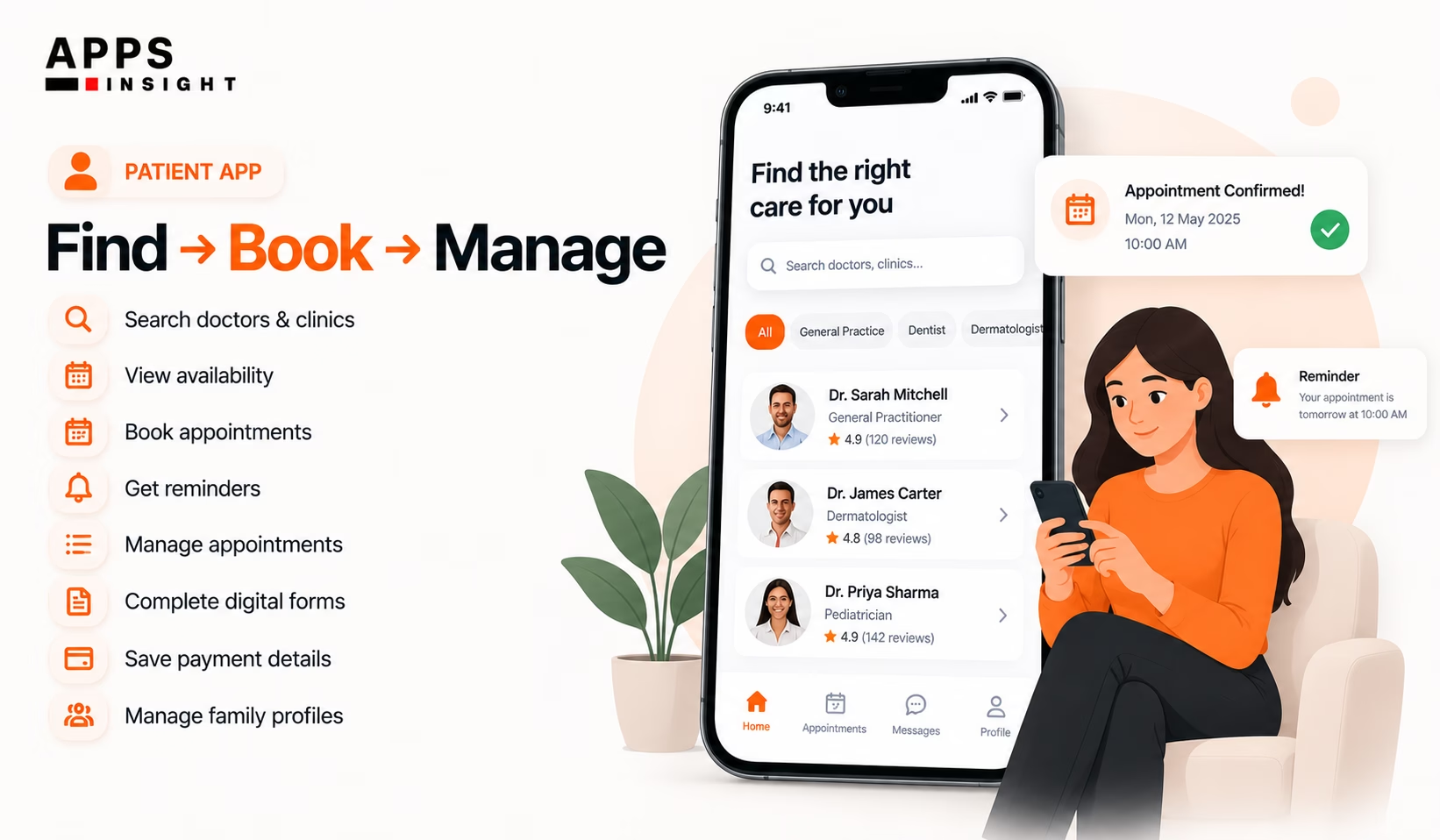
The exact features depend on the business model and target market. A startup launching its first version may only need search, profiles, booking, notifications, and basic provider management. A larger platform can add telehealth, payments, digital forms, reminders, analytics, and integrations with existing healthcare systems.
Here are the main features to consider.
1. Patient Registration and Secure Login
Registration is the starting point for most healthcare applications. Patients should be able to create an account using basic personal information and securely access it whenever they need to book or manage an appointment.
Common options include:
- Email and password registration
- Mobile number verification
- One-time password (OTP) login
- Social login where appropriate
- Two-factor authentication
- Password reset
- Profile management
- Communication preferences
Healthcare apps should collect only the information required for the intended service. Additional health information can be requested later when it becomes necessary.
Security is particularly important because healthcare applications may handle sensitive personal and medical information. Authentication should therefore be supported by appropriate encryption, access controls, session management, and monitoring.
2. Doctor and Clinic Search
Search is one of the most important features in an appointment marketplace. Patients need a quick way to find an appropriate healthcare provider without navigating through complicated menus.
A search system can allow users to search by:
- Doctor name
- Specialty
- Medical condition
- Clinic
- Location
- Availability
- Consultation type
- Language
- Gender, where relevant and legally appropriate
- Insurance or payment options
Filters make the search more useful. For example, a patient may want to find a dermatologist within a specific distance who is available today for an in-person appointment.
Location-based search can use maps and geolocation services to display nearby practices. This requires integration with mapping APIs and additional backend logic, which can increase development effort.
3. Doctor and Clinic Profiles
After finding a provider, patients need enough information to decide whether that provider is suitable.
A profile can include:
- Doctor’s name
- Specialty
- Qualifications
- Years of experience
- Clinic name
- Address
- Consultation fees
- Available services
- Languages spoken
- Consultation options
- Opening hours
- Patient reviews
- Available appointment slots
The information should be structured clearly rather than presented as a large block of text. For a healthcare marketplace, provider profiles also need a management system so doctors or authorised clinic staff can update information without depending on the development team.
4. Real-Time Appointment Booking
Appointment scheduling is the core function of a platform like HotDoc. The application needs to show available time slots based on the provider’s working hours, existing bookings, appointment duration, holidays, and other scheduling rules.
A typical booking journey is:
Select provider → choose appointment type → view available date → select time → confirm booking → receive confirmation.
The backend must also prevent double bookings. If two patients try to select the same appointment slot at almost the same time, the system needs transaction controls to ensure that only one booking succeeds.
More advanced scheduling can support:
- Recurring appointments
- Different appointment durations
- Multiple providers
- Multiple clinic locations
- Break periods
- Provider leave
- Emergency slots
- Waitlists
- Cancellation rules
- Rescheduling
This is one of the areas where development complexity can increase quickly.
5. Appointment Management
Patients should be able to manage appointments after booking them. Useful functions include:
- View upcoming appointments
- View previous appointments
- Cancel an appointment
- Reschedule an appointment
- Add appointments to a calendar
- View appointment details
- Receive directions to the clinic
- Contact the practice
- Receive preparation instructions
On the provider side, staff should be able to approve, modify, cancel, or move appointments according to their scheduling policies. A well-designed appointment-management system reduces unnecessary calls between patients and clinics.
6. Automated Notifications and Reminders
Patients can forget appointments, especially when they book them several days or weeks in advance. Automated reminders can help reduce missed appointments. Notifications can be delivered through:
- Push notifications
- SMS
- In-app notifications
A system can send messages when:
- An appointment is booked
- An appointment is cancelled
- An appointment is rescheduled
- The appointment is approaching
- A payment is completed
- A digital form needs to be completed
- A telehealth consultation is about to begin
The notification system should also allow users to control non-essential communication preferences. From a technical perspective, reliable notifications require backend scheduling, message queues or notification services, delivery tracking, and failure handling.
7. Patient Profiles and Health Information
A patient profile can contain information needed to provide the service. Depending on the product’s purpose and regulatory requirements, this may include:
- Name
- Date of birth
- Contact information
- Address
- Emergency contact
- Appointment history
- Communication preferences
- Insurance information
- Relevant medical information
Not every healthcare app needs to store detailed medical records. A booking-focused application should avoid collecting unnecessary clinical information. If sensitive health data is stored, the architecture must account for appropriate security, encryption, permissions, audit trails, retention policies, and applicable privacy regulations.
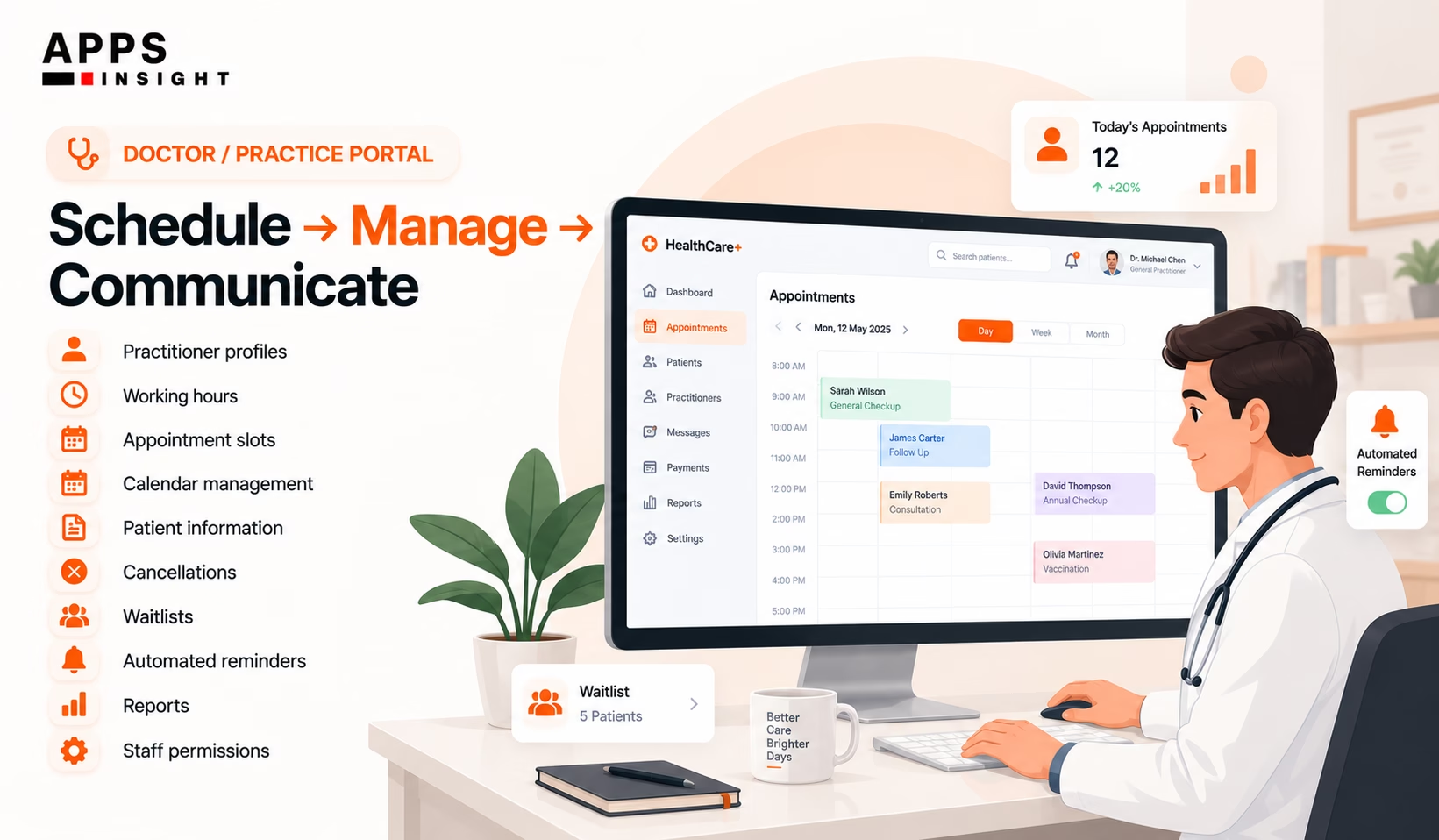
8. Provider Dashboard
Healthcare providers need their own dashboard to manage the service. A provider dashboard may allow doctors and clinic staff to:
- Manage appointments
- Create available time slots
- Update working hours
- Block unavailable periods
- View patient information
- Manage cancellations
- Respond to requests
- Manage services
- Update profile information
- View appointment statistics
Different staff members may need different permissions. For example, a receptionist may manage schedules without having access to information that should only be available to a doctor. Role-based access control helps enforce these differences.
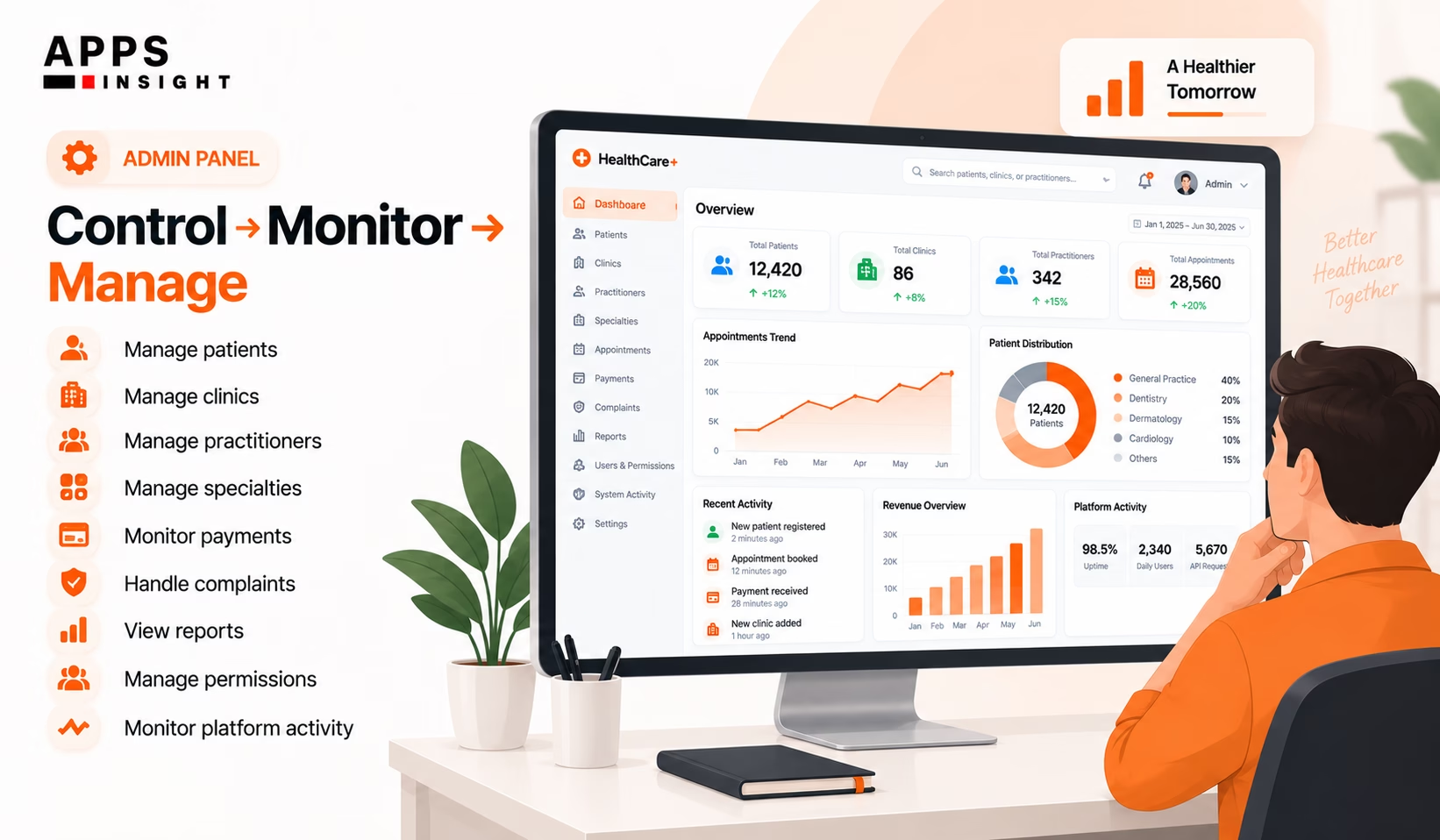
9. Admin Dashboard
The platform operator needs a separate administrative system. An admin dashboard can provide control over:
- Patients
- Doctors
- Clinics
- Specialties
- Appointments
- Payments
- Reviews
- Reports
- Complaints
- Notifications
- Platform settings
Administrators may also need tools for verifying healthcare providers before their profiles become publicly visible. Analytics can help the business monitor metrics such as registrations, bookings, cancellations, active providers, appointment completion, and platform usage. Because the admin panel has broad access, it should have strong authentication and detailed activity logs.
10. Online Payments
If the platform collects consultation fees or service charges, payment functionality can be added to the application. Common payment capabilities include:
- Debit and credit cards
- Digital wallets
- Saved payment methods
- Payment confirmation
- Refunds
- Receipts
- Transaction history
The application should generally avoid storing sensitive card information directly when a trusted payment provider can handle it securely. Payment integration also requires handling failed transactions, refunds, cancelled appointments, partial payments, and reconciliation. For healthcare marketplaces, the payment flow can become more complex if the platform collects money from patients and distributes payments to multiple providers.
11. Telehealth and Video Consultation
A more advanced healthcare platform can allow patients to consult doctors remotely. A telehealth module may include:
- Video consultations
- Audio consultations
- Appointment-based meeting rooms
- Secure chat
- Consultation reminders
- Provider availability
- Payment integration
- Session status
- Post-consultation communication
Building a video system from scratch is usually unnecessary. Many products integrate established video communication infrastructure through APIs or SDKs.
However, the application still needs to manage authentication, appointment permissions, session access, connection failures, notifications, and data-handling policies.
We have listed! Hospital Management Software In USA 2026
12. Digital Registration and Forms
Digital forms can replace some paperwork before a consultation. Patients may complete information such as:
- Personal details
- Reason for visit
- Existing conditions
- Allergies
- Medications
- Consent forms
- Practice-specific questionnaires
Forms should be configurable because different healthcare providers may require different information. The system can also save completed forms against the relevant appointment, subject to applicable privacy and retention requirements.
13. Reviews and Ratings
Reviews can help patients understand other users’ experiences with a provider. A platform can allow patients to rate aspects such as:
- Overall experience
- Appointment process
- Communication
- Waiting time
- Clinic experience
However, healthcare reviews require moderation and clear policies. The platform should have mechanisms for reporting inappropriate content and handling disputes. The business should also decide whether only verified patients can leave reviews. This can reduce fraudulent or irrelevant submissions.
14. Prescription and Referral Management
Depending on the market and regulatory environment, healthcare applications can include prescription-related or referral-related functionality. Possible capabilities include:
- Prescription renewal requests
- Medication information
- Referral documents
- Referral status
- Provider-to-provider communication
These functions involve greater regulatory and security considerations than ordinary appointment management. They should therefore be introduced only when the product has the necessary clinical, legal, and technical foundation.
15. Search by Availability
Searching by doctor name isn’t always enough. Patients often want to know who is available at a convenient time. An availability search can let users enter:
Specialty + location + date + consultation type
The application then returns suitable providers with available slots. For example, a patient looking for a dentist may search for:
Dentist → within 10 km → Saturday → morning → in-person
The system then filters providers based on their actual schedules.
This feature depends heavily on accurate scheduling data. If provider calendars aren’t synchronised correctly, users may see unavailable slots or receive failed booking attempts.
16. Calendar Integration
Calendar integration allows patients and providers to add appointments to services such as Google Calendar or Apple Calendar. A calendar event can include:
- Provider name
- Clinic address
- Appointment date
- Appointment time
- Consultation type
- Instructions
- Video consultation link, where applicable
This is a relatively straightforward feature compared with healthcare-system integration, but it can improve appointment organisation.
17. Secure Messaging
Messaging can allow patients and healthcare providers to communicate without relying entirely on phone calls or external messaging services. Depending on the product, messaging may support:
- Appointment questions
- Clinic instructions
- Follow-up communication
- Document sharing
- Automated responses
Healthcare messaging should have appropriate access controls and data-protection measures. It should also clearly distinguish administrative communication from clinical advice when necessary.
18. Healthcare System Integrations
Integrations are often one of the most technically demanding parts of a healthcare application. A HotDoc-style platform may eventually need to communicate with:
- Practice-management systems
- Electronic medical record systems
- Electronic health record systems
- Payment providers
- Pharmacy systems
- Identity services
- Government healthcare systems
- Video consultation platforms
An integration allows information to move between systems instead of forcing clinic staff to enter the same data multiple times. However, each external system can have different APIs, authentication methods, data formats, limitations, and certification requirements. As a result, integrations can have a significant effect on the overall development budget.
19. Analytics and Reporting
Analytics help the platform operator understand how the service is being used. A dashboard might track:
- Total bookings
- Completed appointments
- Cancellations
- No-shows
- Active patients
- Active providers
- Most searched specialties
- Booking conversion
- Revenue
- Repeat bookings
Providers may receive their own reports, while platform administrators can view aggregate business information. Analytics should be designed carefully when health information is involved. Reports should expose only the information each role is authorised to see.
20. Security, Privacy, and Audit Logs
Security isn’t a separate feature that can simply be added at the end of development. It should be part of the application’s architecture from the beginning. Important controls can include:
- Encryption in transit and at rest
- Secure authentication
- Role-based permissions
- Multi-factor authentication
- API security
- Session management
- Audit logs
- Backup and recovery
- Vulnerability testing
- Monitoring and alerts
Audit logs are particularly useful for healthcare systems because they can record important actions such as account access, changes to patient information, appointment updates, and administrative activity.
The exact security and compliance requirements depend on the country, type of healthcare service, data collected, and integrations used.
Which Features Should Be Included in the First Version?
You don’t need to build every feature at launch. For a first version, a practical feature set could include:
- Patient registration
- Doctor and clinic search
- Provider profiles
- Availability management
- Appointment booking
- Cancellation and rescheduling
- Push notifications
- Patient appointment history
- Provider dashboard
- Admin dashboard
- Basic analytics
- Essential security controls
Once the booking workflow is validated, you can introduce telehealth, payments, digital forms, advanced integrations, messaging, AI-supported features, and other capabilities.
This staged approach helps founders understand actual user demand before committing a large development budget. It also makes testing and compliance management easier because the first release has a clearly defined scope.
The key is to treat a healthcare app as a connected system rather than just a mobile interface. The patient application, provider dashboard, backend, scheduling engine, integrations, security layer, and administration tools all need to work together. That combination is what ultimately determines the development effort and the overall project cost.
Also Read: How Much Does It Cost To Develop A Telemedicine App
What Factors Affect the Final Budget of a Healthcare App?
The cost of healthcare app development isn’t determined by the number of app screens alone. Several technical and business decisions have a direct effect on the final estimate.
Platform Choice
Building separately for iOS and Android generally requires more work than launching a carefully designed cross-platform application.
Flutter or React Native can reduce duplicated development work in some projects. However, the decision should also consider native integrations, performance requirements and long-term maintenance.
Backend Architecture
The backend controls:
- Authentication
- User profiles
- Provider availability
- Appointment logic
- Notifications
- Payments
- APIs
- Data storage
- Reporting
Appointment systems require particularly careful backend logic. For example, two users shouldn’t be able to successfully reserve the same appointment slot at exactly the same time.
Third-Party Integrations
Integrations can become one of the largest cost variables.
Examples include:
- Practice-management systems
- Payment providers
- SMS gateways
- Email services
- Video consultation providers
- Identity services
- Healthcare data systems
- Analytics platforms
Each integration needs API research, implementation, error handling, security testing and ongoing maintenance.
Security and Compliance
Healthcare software handles sensitive information, so security can’t be treated as an optional add-on. The exact requirements depend on the countries, services and data handled by the application. An Australian product may need to consider the Australian Privacy Principles and other applicable healthcare requirements. A product operating in the United States may have additional HIPAA-related obligations.
Australia’s national My Health Record system shows the scale of the country’s digital-health infrastructure. As of April 2025, the Australian Government reported more than 24 million healthcare recipients with a My Health Record, with more than 1.7 billion documents uploaded.
This is one reason interoperability and data governance should be considered during architecture planning rather than after development.
Development Team and Location
The team structure also changes the budget. A typical project may require:
- Product manager
- UI/UX designer
- Mobile developers
- Backend developer
- QA engineer
- DevOps engineer
- Security/compliance specialists
A small MVP can use fewer specialists. A platform integrating several healthcare systems may need dedicated backend, DevOps and security expertise.
Development rates also differ substantially between regions. A local Australian team may have higher hourly rates than an offshore team, while an offshore team may provide cost advantages but require stronger project communication and technical documentation. For founders, comparing only hourly rates can therefore be misleading. The better comparison is the total cost of delivering and maintaining the required scope.
If you are evaluating a healthcare app development company, ask for a feature-level estimate, architecture overview, security approach, testing plan and post-launch support terms.
What Healthcare App Trends Should Founders Watch?
Current Healthcare App Trends increasingly involve moving beyond basic booking and toward connected digital-care workflows.
One major area is interoperability. Patients and providers increasingly expect healthcare information to move between systems rather than remain inside isolated applications.
Another is telehealth. A booking platform can connect appointment scheduling with video consultations, digital forms and post-consultation communication.
Personalisation is another area of development. Applications can use appointment history and preferences to make relevant services easier to find, although health data requires careful consent and governance.
AI is also becoming part of product planning. AI in healthcare software can support administrative use cases such as appointment classification, conversational search, document processing and workflow automation. However, AI features involving diagnosis or clinical decision-making require substantially greater validation, safety and regulatory consideration.
For an initial product, AI shouldn’t be added simply because it is available. A better question is whether it solves a measurable user or operational problem.
Read once! How Agentic AI Can Help Healthcare Providers Deliver Personalized Patient Experiences
Final Say: What Is the Realistic Budget for Your Project?
The HotDoc app development cost depends on what you mean by “like HotDoc.” If you mean a simple doctor-discovery and appointment-booking application, a $25,000–$60,000 MVP can be a reasonable planning range.
If you want patient and provider applications, sophisticated scheduling, payments, notifications, dashboards, telehealth and several integrations, expect approximately $60,000–$150,000.
For a large healthcare platform with extensive interoperability, advanced security, analytics, AI-supported workflows and enterprise infrastructure, $150,000–$300,000+ is a more realistic starting point.
The most important budgeting exercise is therefore not copying every HotDoc feature. It is deciding which problem your product will solve first.
For additional guidance on healthcare technology, app architecture, development approaches and related healthcare app ideas, you can also explore AppsInsight for more related resources.
Final Takeaway
Building a HotDoc-style healthcare platform is a substantial software project because it combines consumer mobile experiences with provider workflows, scheduling, backend infrastructure, integrations and healthcare data security.
A focused MVP can start in the $25,000–$60,000 range, while a broader platform can require $60,000–$150,000 or more. Enterprise-level products may go beyond $300,000, particularly when they require multiple healthcare integrations and advanced compliance controls.
The best way to manage the budget is to define the core patient journey first, identify the minimum provider functionality required to support it, and then add integrations and advanced capabilities in stages.
The market provides a clear reason to investigate the opportunity: global mHealth app revenue was estimated at $37.5 billion in 2024, with the market projected to reach $86.4 billion by 2030. Grand View Research HotDoc’s own scale, with millions of patients and appointments, also demonstrates the operational demands of a mature platform.
For a founder or business planning a similar product, the practical question isn’t simply “How much does an app like HotDoc cost?” It’s “Which version of the product do we need to launch, and what technical requirements does that version create?” Answering that question first gives you a much more useful development budget.