
Artificial intelligence has quickly become part of the daily workflow for many go-to-market (GTM) teams.
Research that once took an hour now takes just a few minutes. Meeting notes are generated automatically. Outreach emails can be drafted in seconds. CRM updates require far less manual effort than ever before.
With these rapid improvements, it’s natural to ask:
Will AI replace jobs in sales, marketing, or customer success?
While that question gets a lot of attention, there is a more valuable one to ask:
As AI handles more work, what will companies value more?
Every major technological shift changes how value is created. It removes friction from certain parts of a job while making other skills significantly more important.
Go-to-market teams are no exception.
The professionals who thrive over the next decade won’t simply be the ones using AI—that will quickly become the baseline.
Instead, they’ll be the professionals who combine AI with uniquely human capabilities that remain difficult to automate.
Also read: How AI Is Transforming Mobile App Development
Information Is Becoming Abundant
For years, having access to information created a competitive advantage.
Today, almost everyone can access the same information within seconds using AI-powered tools.
That changes the competitive landscape.
Success is becoming less about finding information and more about interpreting it.
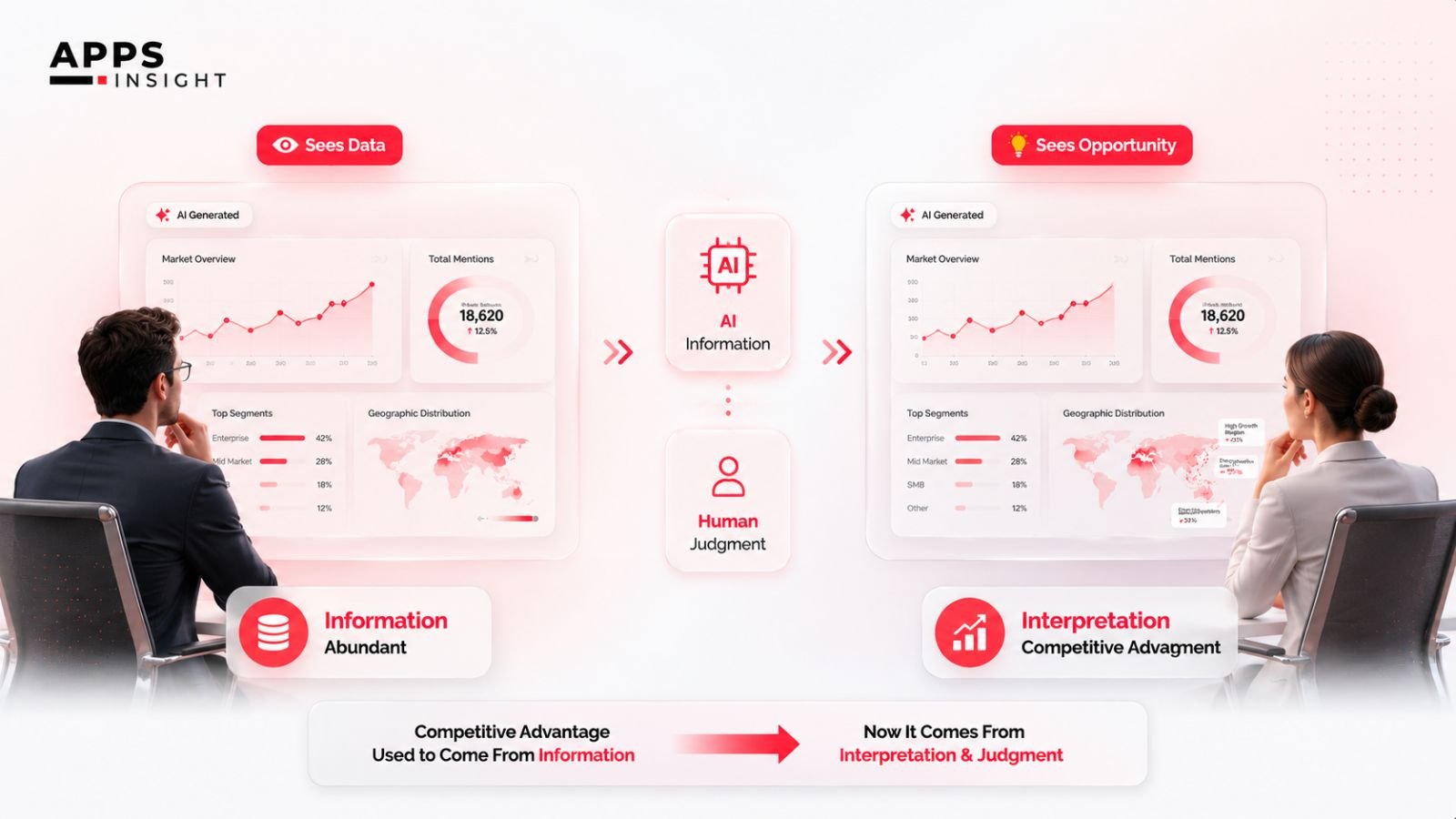
Consider two account executives reviewing:
- The same company
- The same earnings report
- The same AI-generated account summary
Despite having identical information, they may develop completely different strategies.
One sees data.
The other sees opportunity.
That difference comes down to judgment.
The ability to:
- Connect seemingly unrelated information
- Recognize patterns
- Understand business context
- Prioritize what matters most
is becoming increasingly valuable.
Ironically, the easier information becomes to access, the more important human judgment becomes.
Also read: 10 Best AI Apps for Image & Reverse Image Search to Try
Buyers Have More Information Too
Customers are evolving just as quickly.
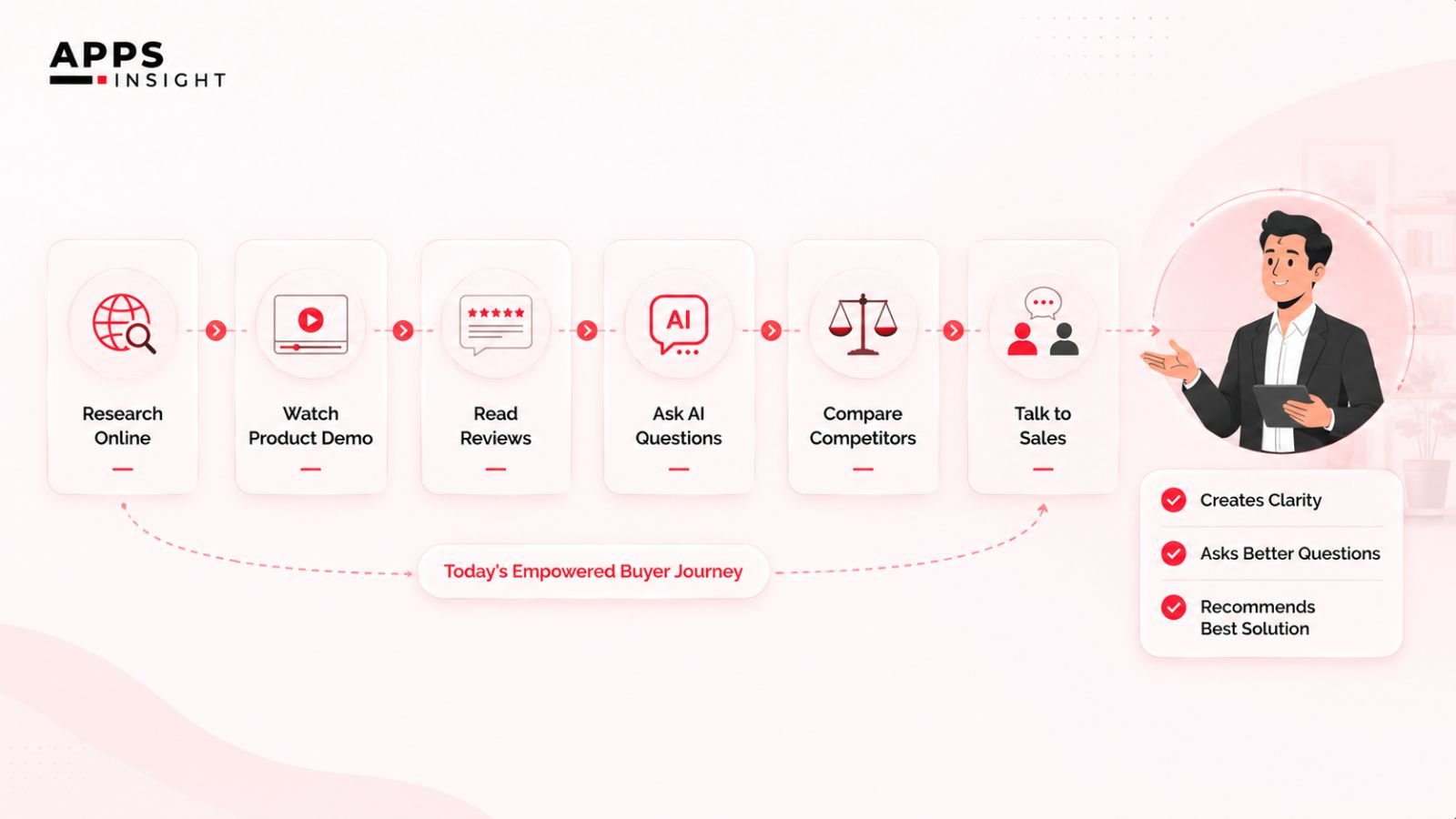
Before speaking with a salesperson, many buyers have already:
- Researched products
- Compared competitors
- Read customer reviews
- Watched product demos
- Asked AI tools for recommendations
- Built shortlists
Because of this, sales conversations must deliver something beyond information.
The best sales professionals don’t simply explain products.
They create clarity.
They ask thoughtful questions.
They connect business problems with meaningful outcomes.
Most importantly, they help customers make confident decisions.
Most buyers don’t need another product presentation.
They need someone who can help them navigate competing priorities, risks, and opportunities.
That requires:
- Curiosity
- Communication
- Active listening
- Business understanding
—not just product knowledge.
Relationships Become More Valuable
One common prediction about AI feels backwards.
Some people believe automation will make relationships less important.
I believe the opposite is true.
As more content, emails, and messages become AI-generated, authentic human conversations become even more valuable.
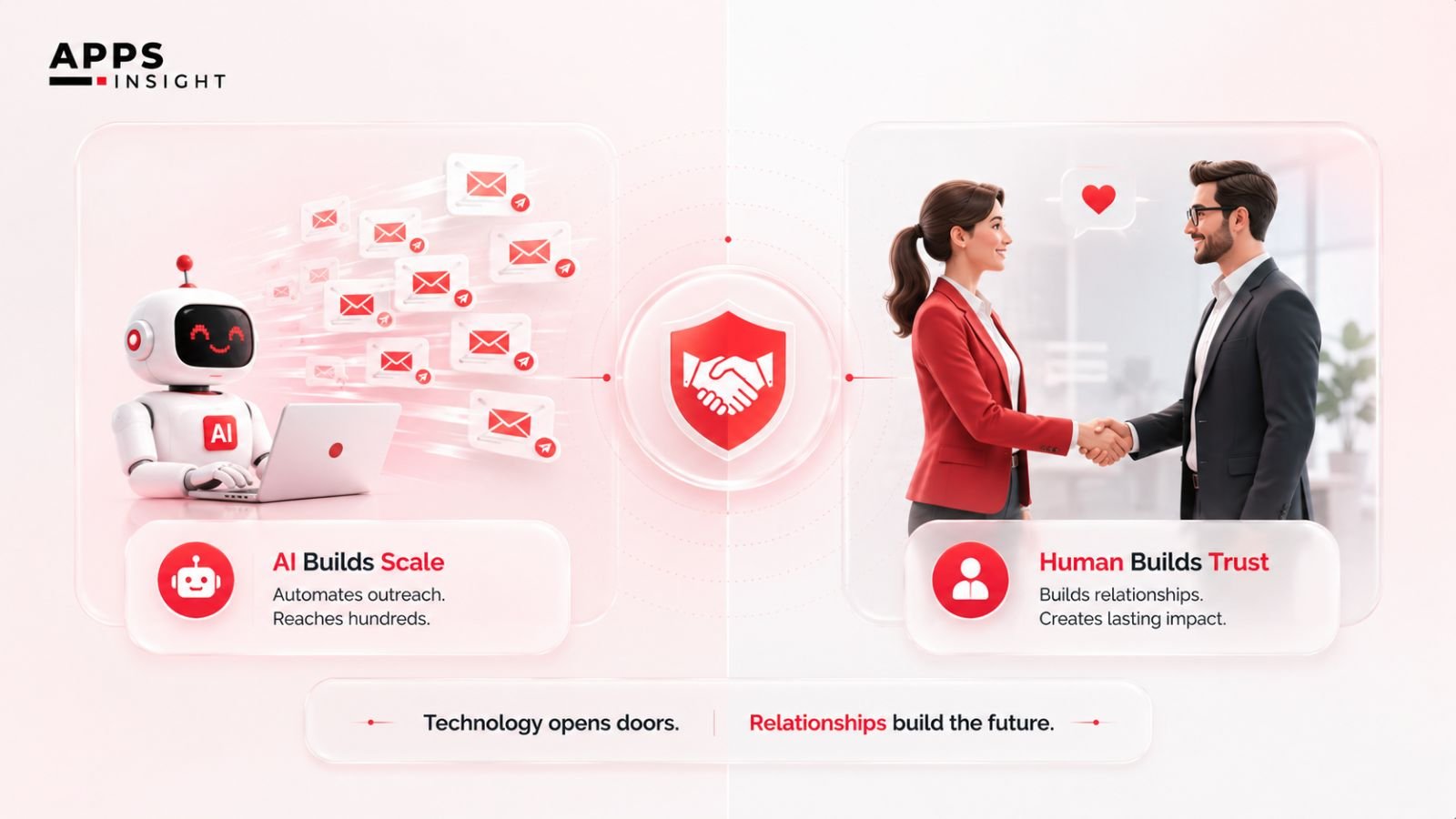
People still want to work with people they trust.
Technology can help initiate conversations.
It cannot replace the credibility earned by:
- Following through
- Showing consistency
- Being reliable
- Genuinely helping others succeed
The strongest business relationships are rarely built during a single meeting.
They’re built through hundreds of small interactions over time.
Those relationships often become the foundation for:
- Future opportunities
- Referrals
- Partnerships
- Long-term careers
Trust remains one of the few competitive advantages AI cannot automate.
The Best GTM Professionals Will Gain Leverage
Every major technological shift creates leverage.
Those who embrace it accomplish more using the same amount of time and energy.
AI gives go-to-market professionals the opportunity to spend less time on administrative work and more time creating real customer value.
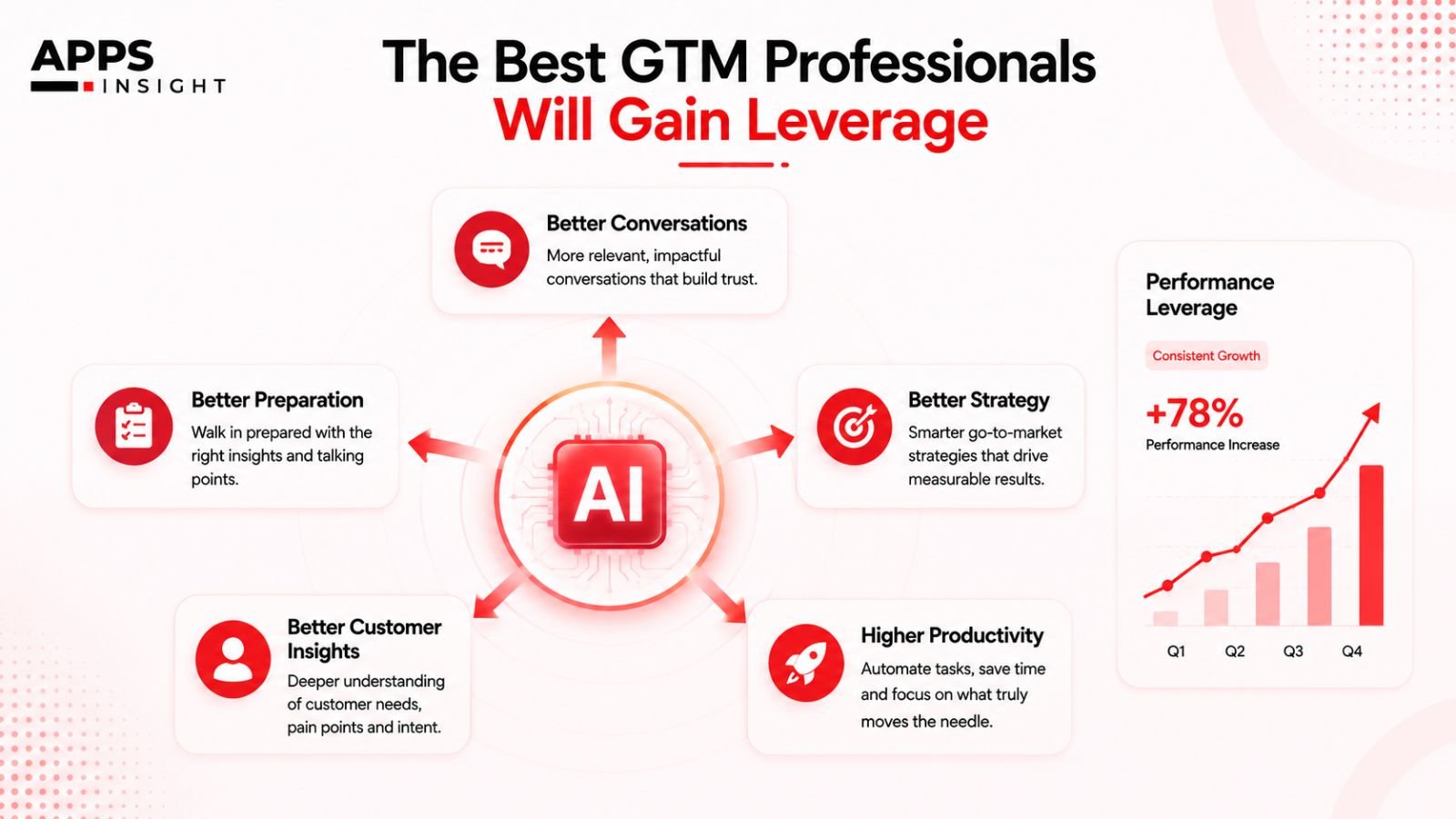
Instead of focusing on repetitive tasks, professionals can invest more time in:
- Better customer conversations
- Better preparation
- Better discovery
- Better strategic thinking
- Better customer understanding
Ironically, AI may actually widen the gap between top performers and average performers.
When everyone has access to the same tools, execution becomes the true differentiator.
Technology becomes equal.
Performance does not.
AI Changes the Work, Not the Purpose
The purpose of go-to-market has never been:
- Updating CRM fields
- Writing follow-up emails
- Formatting reports
- Managing repetitive administrative work
The purpose has always been helping customers solve meaningful business problems.
AI simply removes much of the administrative work standing between professionals and the people they serve.
That’s something to embrace.
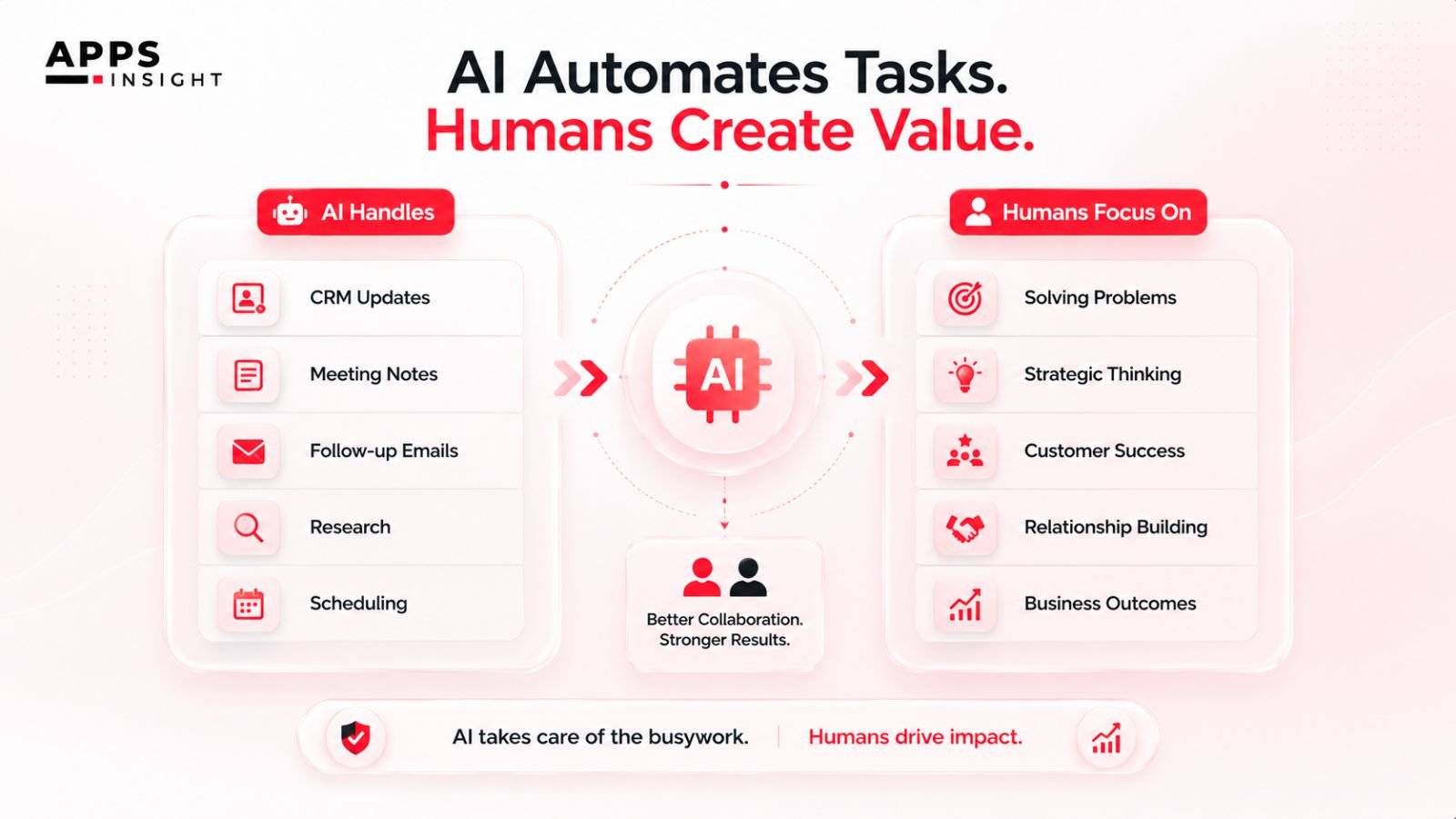
The best professionals won’t use AI merely to complete more tasks.
They’ll use it to:
- Have better conversations
- Think more strategically
- Build stronger relationships
- Deliver greater customer value
Technology changes how work gets done.
It doesn’t change why the work matters.
Looking Ahead: The Future of AI in Go-to-Market
Every major technology creates uncertainty before it creates clarity.
There will undoubtedly be significant changes to how revenue teams operate over the coming years.
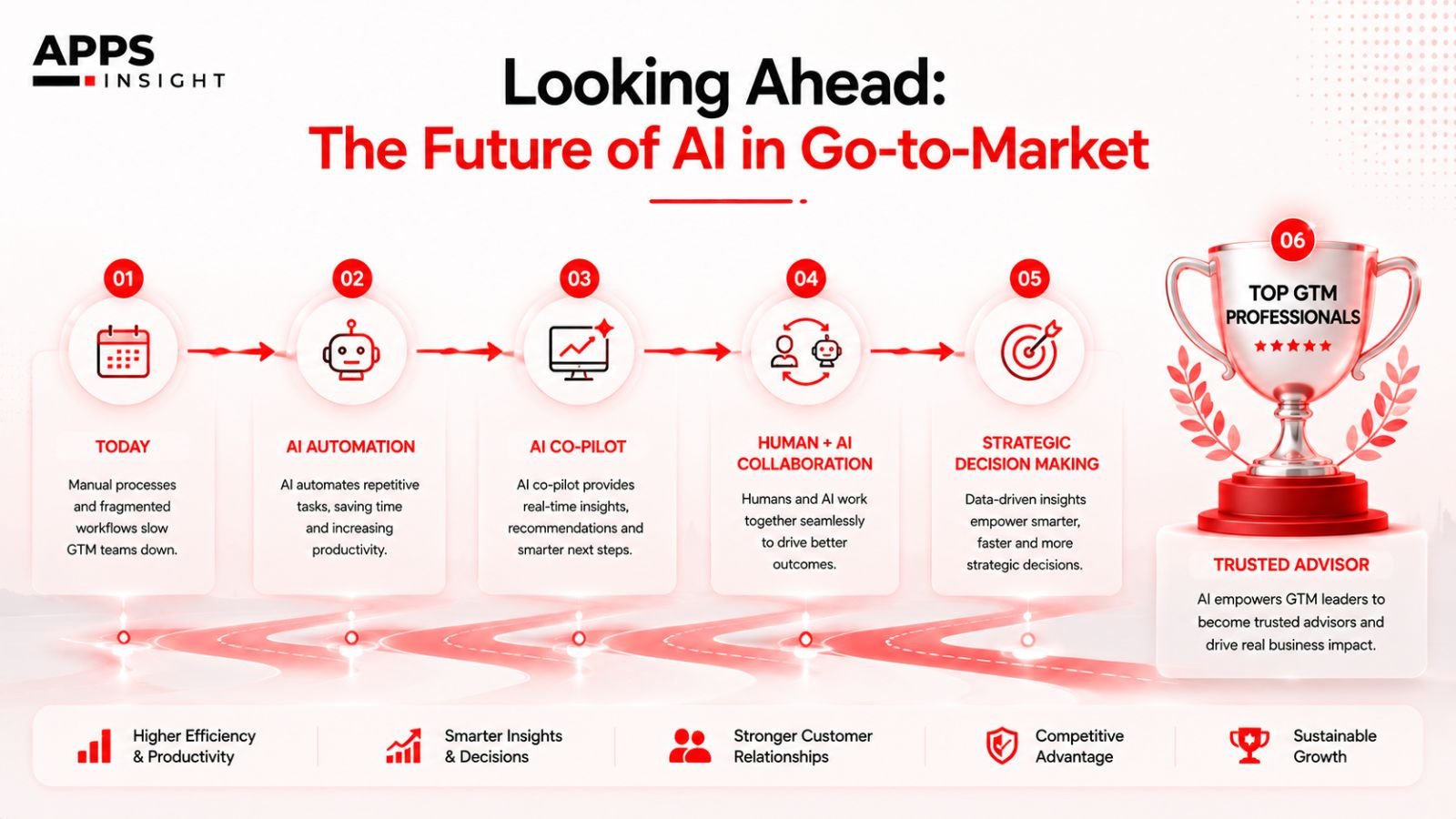
However, the professionals who continue investing in the following skills will remain valuable regardless of how AI evolves:
- Judgment
- Communication
- Curiosity
- Trust
- Adaptability
- Ownership
- Strategic thinking
- Emotional intelligence
These qualities have always separated exceptional go-to-market professionals from average ones.
AI is simply making that difference easier to recognize.
This article focuses on the broader transformation AI is creating across revenue teams.
One question I continue returning to is:
Which specific skills become even more valuable as automation improves?
I explore that topic in greater detail in my companion article:
In that article, I break down each skill and explain why I believe it will continue differentiating top performers for years to come.
Whether AI evolves quickly or gradually, one thing seems increasingly clear:
The professionals who combine powerful technology with genuinely human skills will continue creating the greatest value.
Frequently Asked Questions (FAQs)
Will AI replace sales jobs?
AI is more likely to automate repetitive administrative tasks than replace skilled sales professionals. Human abilities such as relationship building, negotiation, judgment, and strategic thinking remain essential.
How is AI changing marketing teams?
AI helps marketers create content faster, analyze data, automate campaigns, generate insights, and improve productivity. However, creativity, brand strategy, and customer understanding remain human strengths.
What skills are becoming more valuable because of AI?
The most valuable skills include:
- Critical thinking
- Communication
- Relationship building
- Curiosity
- Business judgment
- Emotional intelligence
- Adaptability
- Strategic decision-making
Why are relationships still important in an AI-driven world?
As AI-generated content becomes more common, authentic human interactions become more memorable. Trust and credibility remain difficult to automate.
What is the biggest advantage of AI for GTM teams?
The greatest benefit is leverage. AI reduces repetitive work, allowing professionals to spend more time understanding customers, solving problems, and building stronger relationships.
Final Thoughts
Artificial intelligence is not eliminating the need for go-to-market professionals—it is redefining where they create value.
As AI handles more routine work, human capabilities become even more important.
The future belongs to professionals who can combine AI-powered efficiency with human judgment, empathy, communication, and trust.
Technology will continue to evolve.
The most valuable professionals will evolve with it.