
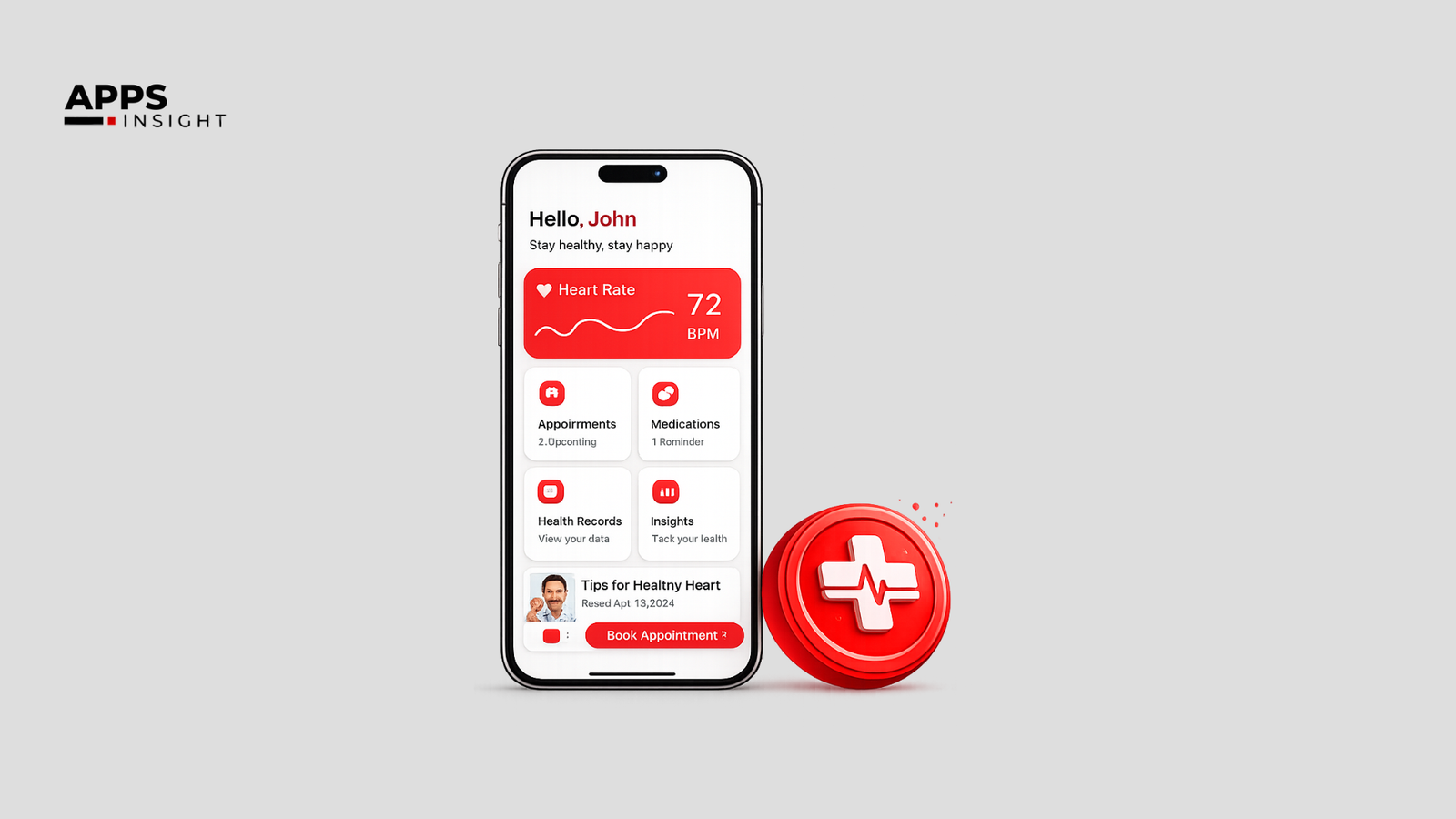
Healthcare apps in 2026 should do more than let users book appointments or view medical records. They should help patients manage their health, connect with doctors, access treatments, receive reminders, and keep personal information secure. The most successful Healthcare App Features focus on solving everyday healthcare problems while making the experience simple for both patients and medical professionals.
Think about the last time you needed medical care. You probably wanted quick access to a doctor, an easy way to book an appointment, clear medical records, and secure communication. These expectations have become common. As digital healthcare continues to grow, users now expect healthcare apps to provide reliable services that save time and improve convenience.
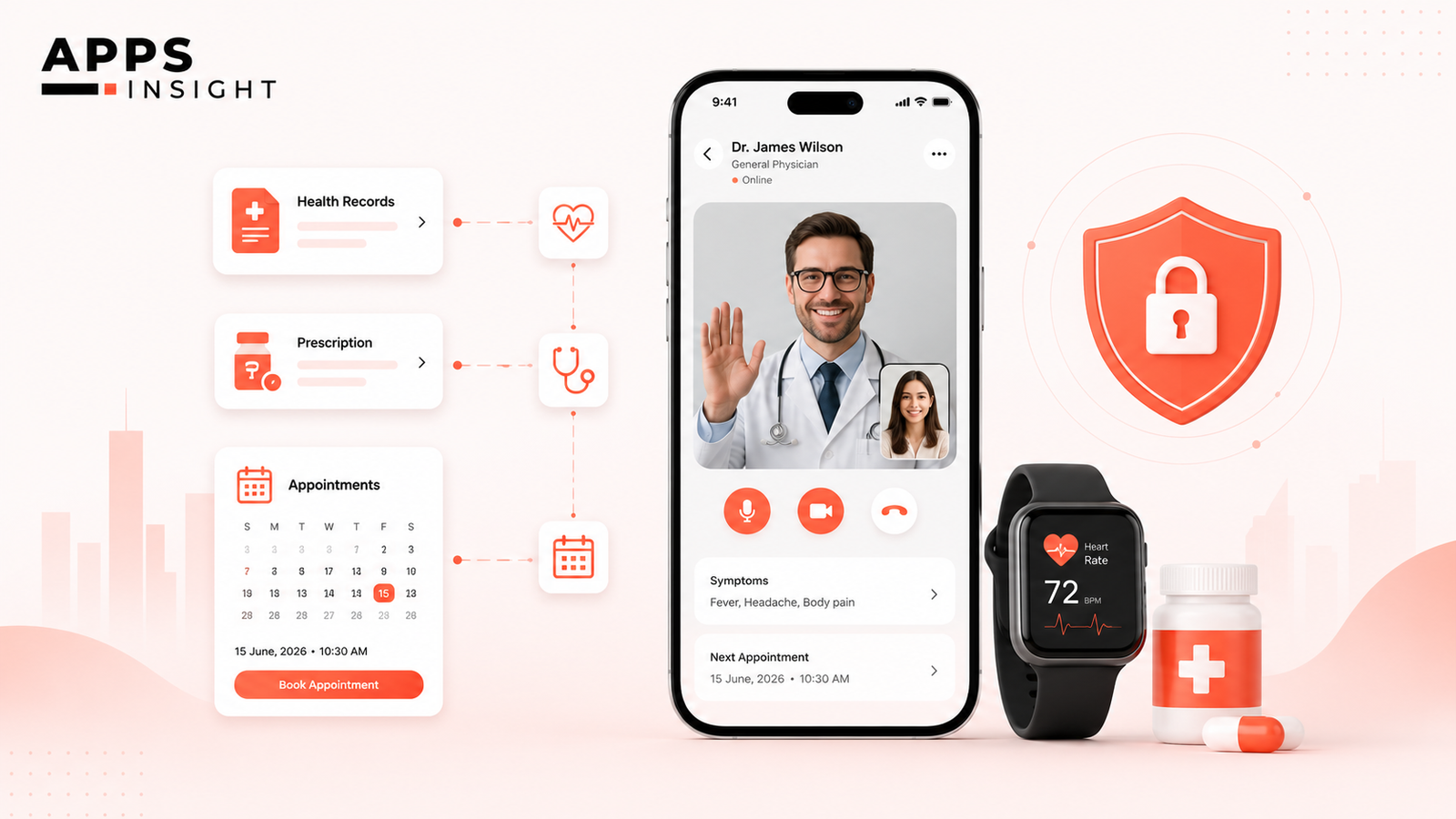
At the same time, hospitals, clinics, and healthcare providers are looking for technology that helps reduce administrative work, improve patient engagement, and organize health data more effectively. This is why choosing the right features has become one of the most important parts of building a healthcare application.
Whether you are planning a patient app, a telemedicine platform, a digital pharmacy solution, or a hospital management system, understanding which features matter most can help create a better experience for everyone involved.
Many healthcare app development agencies now focus on designing applications that balance user experience, security, compliance, and long-term scalability instead of simply adding more functions.
This guide explains the ten essential features every healthcare app should include in 2026, why each feature matters, and how it benefits both patients and healthcare providers.
Related Queries
What are the most important features of a healthcare app?
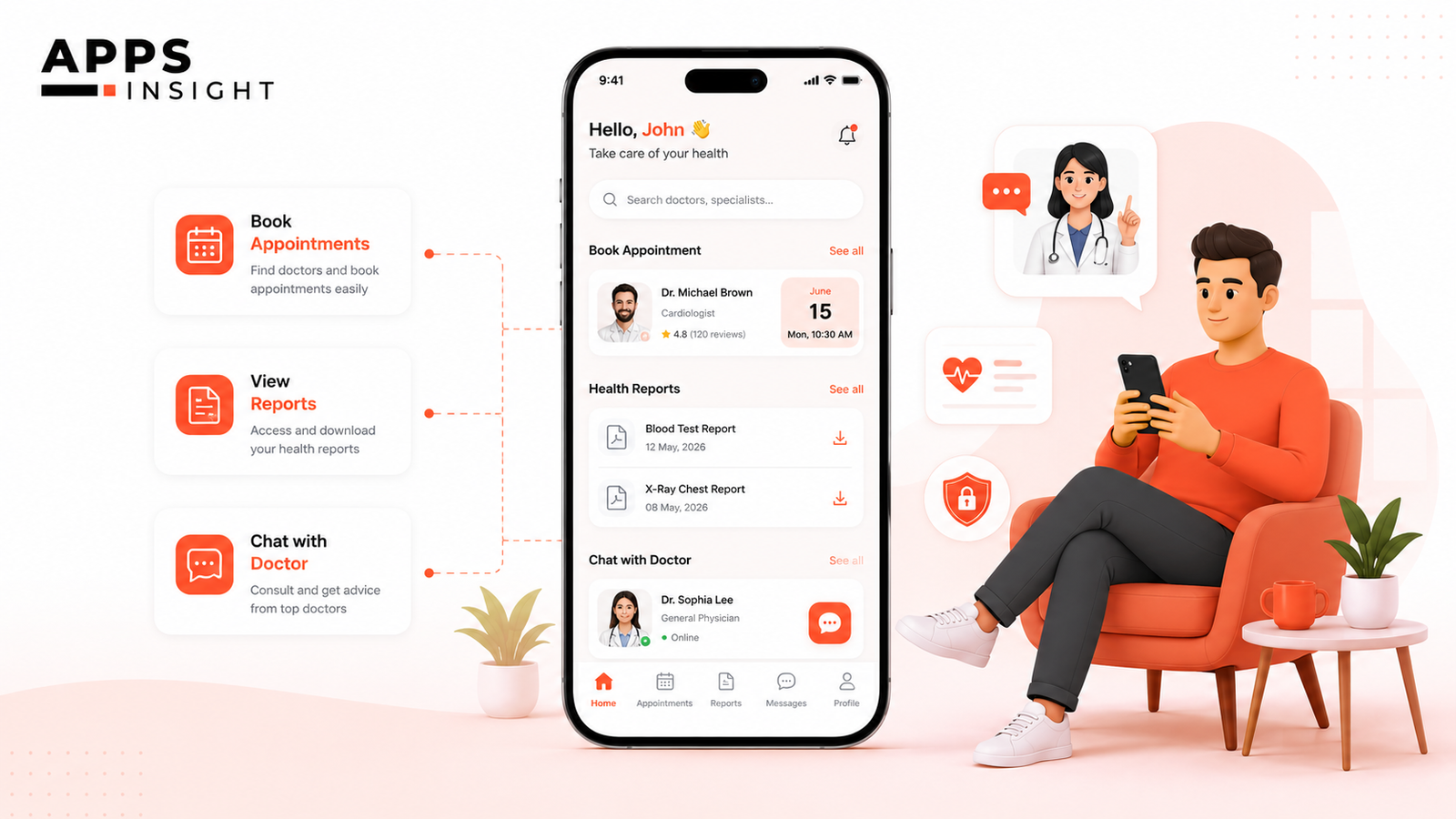
The most important healthcare app features include secure user registration, appointment booking, telemedicine, electronic health records (EHR), medication management, AI assistance, wearable device integration, secure payments, push notifications, and strong data security. These features improve the experience for both patients and healthcare providers.
Why is data security important in healthcare apps?
Healthcare apps store sensitive patient information such as medical records, prescriptions, and personal details. Strong security measures like encryption, multi-factor authentication, and secure cloud storage help protect this information from unauthorized access and support compliance with healthcare regulations.
How does telemedicine improve healthcare apps?
Telemedicine allows patients to consult doctors remotely through video or audio calls. It reduces travel time, improves access to healthcare in remote areas, and makes follow-up consultations more convenient.
Want to know? Cost To Develop A Telemedicine App
Why should healthcare apps integrate wearable devices?
Wearable devices collect health information such as heart rate, sleep patterns, and daily activity. Integrating this data into healthcare apps helps patients monitor their health and provides healthcare professionals with additional information for better treatment decisions.
What should businesses consider before developing a healthcare app?
Businesses should identify their target users, understand the healthcare problem they want to solve, prioritize essential features, ensure data security, plan for future scalability, and follow healthcare regulations throughout the development process.
Why Healthcare Apps Need Better Features in 2026

Healthcare has changed significantly over the last few years. More people now use smartphones to schedule appointments, access prescriptions, communicate with healthcare professionals, and monitor chronic conditions from home.
Healthcare organizations are also investing in digital systems because they improve efficiency and reduce paperwork. Patients appreciate services that are available anytime without visiting a clinic for every small concern.
Adding the right Healthcare App Features is not about increasing the number of options inside the application. It is about solving real healthcare challenges. Every feature should help users complete tasks faster, reduce confusion, improve communication, or support better medical decisions.
Modern healthcare applications should also work smoothly across different devices, protect sensitive patient information, and remain easy to use for people of all ages.

1. Simple and Secure User Registration
The first experience users have with any healthcare application begins with registration. If creating an account is confusing or takes too long, many users may leave before exploring the app.
A healthcare app should provide a simple registration process while maintaining strong security. Users should be able to register using an email address, phone number, or trusted authentication methods. Multi-factor authentication adds another layer of protection without making the process difficult.
Healthcare apps also need secure password management and encrypted user credentials. Personal medical information is highly sensitive, so protecting accounts from unauthorized access is essential.
For example, a patient who wants to schedule an urgent consultation should be able to create an account within minutes instead of completing long forms.
The easier the registration process, the more likely users are to continue using the application.
2. Appointment Booking and Management
Appointment scheduling remains one of the most valuable features for patients and healthcare providers.
Instead of making multiple phone calls, patients should be able to:
- View doctor availability
- Book appointments instantly
- Reschedule visits
- Cancel appointments when necessary
- Receive confirmation messages
Healthcare providers also benefit because automated scheduling reduces administrative work and minimizes booking errors.
Many organizations working with a healthcare app development company prioritize appointment management because it directly improves patient satisfaction while reducing staff workload.
Adding calendar synchronization and automatic reminders further helps reduce missed appointments.
For example, if a patient receives a reminder one day before the appointment, they are less likely to forget their visit.
Looking for? Profitable Healthcare Business Ideas
3. Telemedicine and Video Consultation
Virtual healthcare has become a normal part of medical services.
Patients appreciate the ability to consult doctors from home, especially for routine follow-up visits, prescription renewals, or minor health concerns.
A healthcare app should include:
- Secure video calls
- Audio consultations
- In-app chat
- File sharing
- Image uploads
- Follow-up consultation history
Doctors can review reports before the consultation, while patients avoid unnecessary travel.
This feature is especially useful for elderly patients, individuals living in rural areas, and people with limited mobility.
The continued growth of Digital Pharmacy Market Trends also supports virtual healthcare by allowing patients to receive prescriptions and medicines without multiple in-person visits.
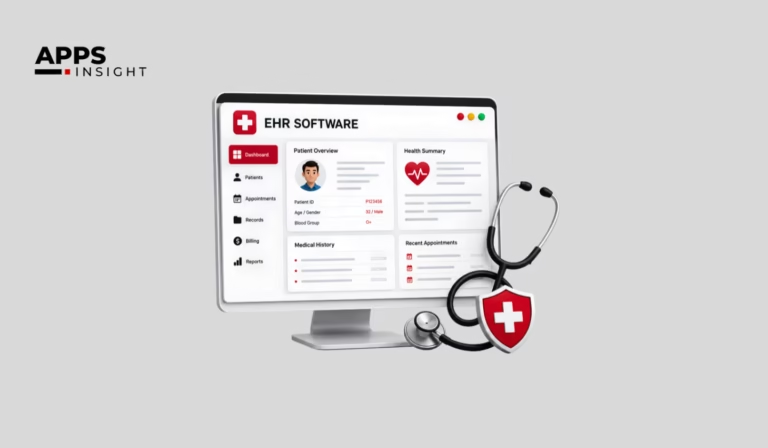
4. Electronic Health Records (EHR) Access
Patients should have easy access to their medical history whenever they need it.
Electronic Health Records allow users to securely view:
- Previous diagnoses
- Prescriptions
- Laboratory reports
- Vaccination history
- Medical imaging
- Treatment records
Doctors also benefit because complete medical histories help them make informed decisions during consultations.
Many healthcare organizations investing in healthcare software development focus on secure EHR integration because it reduces paperwork, improves collaboration between providers, and supports better continuity of care.
For example, if a patient changes hospitals, their medical records can be accessed quickly instead of repeating tests that were already completed.
Easy access to accurate health records improves efficiency for both patients and healthcare professionals while reducing delays in treatment.
Read once! Building a Future-Ready Healthcare Brand Through Digital Transformation
5. Prescription and Medication Management
Managing medications can be difficult, especially for people taking multiple prescriptions or caring for family members. A healthcare app should make this process easier by allowing users to access prescriptions, request refills, and receive medication reminders.
Useful medication management features include:
- Digital prescriptions
- Medicine refill requests
- Dosage reminders
- Prescription history
- Drug information
- Pharmacy integration
These features help users follow their treatment plans more consistently. For healthcare providers, digital prescriptions reduce handwriting errors and make prescription tracking more organized.
For example, a patient with diabetes who takes medication every day can receive timely reminders through the app. This reduces the chances of missing a dose and supports better health management.
Before start creating your healthcare app, “Top Healthcare IT Consulting Firms“
6. AI-Based Health Assistance
Artificial intelligence is becoming a practical tool in healthcare applications. Instead of replacing doctors, AI helps users access basic information, organize health data, and receive faster support.
An AI assistant can help users:
- Answer common health questions
- Guide users to the right healthcare service
- Help schedule appointments
- Provide symptom-based suggestions
- Organize health records
- Offer basic wellness recommendations
One important trend is the growing use of Agentic AI in the healthcare industry, where AI systems can perform multiple connected tasks, such as collecting patient information before an appointment and assisting healthcare staff with routine administrative work. These systems still require medical oversight, but they can improve efficiency by handling repetitive processes.
For example, if a patient reports a fever through the app, the AI assistant may ask follow-up questions and recommend booking an appointment with a doctor rather than making a diagnosis.
The goal is to save time while ensuring that medical decisions remain with qualified healthcare professionals.
7. Wearable Device Integration
Many people now use smartwatches and fitness trackers to monitor their daily health. Connecting these devices with a healthcare app gives users a better view of their overall well-being.
Common health data collected from wearable devices includes:
- Heart rate
- Daily steps
- Sleep patterns
- Blood oxygen levels
- Physical activity
- Calories burned
When this information is shared securely with healthcare providers, it can support ongoing care for patients with chronic conditions.
For example, if a patient’s wearable device records an unusually high heart rate over several days, the doctor can review the information during the next consultation and decide whether additional tests are needed.
Wearable integration helps users become more aware of their health while giving providers additional information that may support treatment decisions.
We have listed! AI in Healthcare: FAQs and User-Generated Queries
8. Secure Payments and Insurance Support
Healthcare apps should simplify the payment process without compromising security. Patients appreciate having one place to manage consultation fees, laboratory payments, and insurance claims.
Important payment features include:
- Multiple payment methods
- Digital invoices
- Insurance verification
- Claim tracking
- Payment history
- Refund management
A smooth payment process reduces administrative work for hospitals and clinics while making the experience more convenient for patients.
Healthcare organizations developing digital systems often combine payment solutions with Hospital Management Software in USA to improve billing accuracy and reduce manual paperwork.
For example, after completing an online consultation, the patient can pay securely within the app and immediately receive a digital receipt.
Looking for? Best Healthcare Agentic AI Developers (HIPAA-Ready)
9. Push Notifications and Health Reminders
Healthcare apps should keep users informed without overwhelming them with unnecessary notifications.
Helpful reminders include:
- Appointment reminders
- Medication alerts
- Vaccination schedules
- Health check-up reminders
- Test result notifications
- Prescription renewal alerts
These notifications encourage patients to stay engaged with their healthcare plans.
For example, someone recovering from surgery may receive reminders about follow-up appointments and rehabilitation exercises. This supports better recovery and helps reduce missed visits.
When notifications are personalized and relevant, users are more likely to continue using the application regularly.
10. Data Security and Regulatory Compliance
Security is one of the most important parts of every healthcare application. Healthcare apps store highly sensitive information, including medical histories, prescriptions, laboratory reports, and personal identification.
Strong security should include:
- End-to-end encryption
- Secure cloud storage
- Role-based access control
- Multi-factor authentication
- Regular security updates
- Activity logs
Healthcare organizations should also ensure their applications comply with applicable healthcare data regulations in the regions where they operate.
Businesses investing in Custom Healthcare Software Development often prioritize security from the beginning of the project instead of treating it as a final step. This approach reduces risks and helps build user trust over time.
Protecting patient information is not only a legal responsibility but also an essential part of delivering reliable healthcare services.

How to Choose the Right Features for Your Healthcare App
Every healthcare app serves a different purpose. A telemedicine platform, a hospital application, a fitness-focused medical app, and a digital pharmacy all have different user needs. Instead of adding every possible function, developers should focus on features that solve real problems for their target audience.
When planning your application, consider the following questions:
- Who will use the app?
- What healthcare problem does it solve?
- Which features will users need most often?
- How will patient information be protected?
- Can the app grow as user needs change?
Answering these questions helps create a more practical application with better long-term value.
It is also important to understand development costs before starting a project. Factors such as platform choice, third-party integrations, security requirements, and application complexity all influence the EHR Software Development Cost.
Building an app with the right priorities from the beginning often reduces future maintenance costs and improves user satisfaction.
Healthcare organizations also benefit from working with experienced development teams that understand healthcare regulations, user experience, and secure software architecture.
For businesses looking for more insights into healthcare technology, software trends, and digital innovation, AppsInsight provides helpful articles covering healthcare applications, emerging technologies, and industry updates.
Read once! Tips to Reduce Mobile App Development Cost
Sum up
Healthcare applications have become an important part of modern healthcare. They help patients access medical services more easily while supporting healthcare providers with better communication, organized records, and efficient workflows.
The most valuable Healthcare App Features are those that solve everyday healthcare challenges rather than simply adding more functions. Features such as secure registration, online appointment booking, telemedicine, electronic health records, medication management, AI assistance, wearable integration, secure payments, health reminders, and strong data protection all contribute to a better user experience.
As healthcare continues to become more digital in 2026, organizations should focus on building applications that are easy to use, secure, and designed around real patient needs. A well-planned healthcare app can improve access to care, reduce administrative work, and help users stay connected with their healthcare providers.
Choosing the right features from the beginning also makes it easier to expand the application in the future as technology and user expectations continue to evolve. By focusing on practical functionality, healthcare organizations can build digital solutions that remain useful for both patients and medical professionals.
Frequently Asked Questions
How long does it take to develop a healthcare app?
Development time depends on the complexity of the project. A basic healthcare application may take several months, while larger platforms with advanced integrations and compliance requirements can take considerably longer.
Can healthcare apps improve patient engagement?
Yes. Features such as medication reminders, appointment notifications, telemedicine, and access to health records encourage patients to stay involved in managing their health.
Are healthcare apps secure?
Healthcare apps can be secure when they use encryption, secure authentication, regular software updates, access controls, and follow healthcare data protection regulations.
Why is AI becoming common in healthcare applications?
AI helps automate routine tasks, answer common user questions, organize health information, and support healthcare professionals by reducing administrative work. It is designed to assist rather than replace medical experts.