

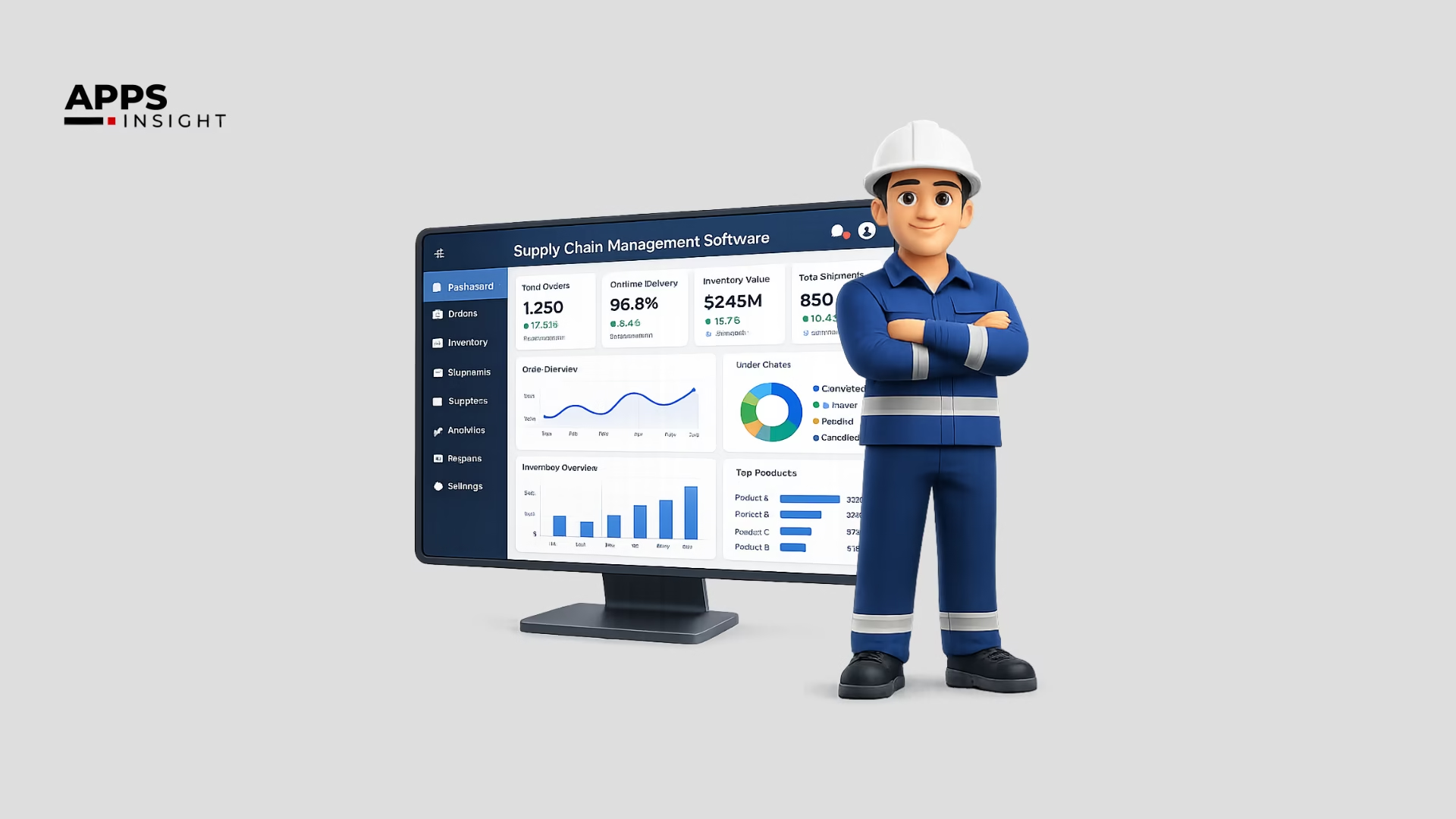
Supply chains involve many moving parts, including inventory, suppliers, transportation, warehouses, orders, and customer deliveries. When businesses manage these activities using disconnected tools or spreadsheets, delays and errors often occur. This is where custom Web Apps for Supply Chain Management can help. These applications are designed around a company’s specific processes, allowing teams to manage operations more efficiently, track information in real time, and improve coordination across the entire supply chain.
As supply chains become more complex, businesses need systems that fit their operations instead of forcing them to adapt to generic software. A custom software solution can provide the exact features required, improve visibility, and support long-term growth. Understanding the benefits of these applications can help organizations make informed decisions about their technology investments.
Related Queries
How Can Custom Web Applications Reduce Supply Chain Costs?
Custom web applications reduce supply chain costs by automating repetitive tasks, improving inventory accuracy, minimizing operational errors, and providing better visibility across the supply chain. By streamlining processes, businesses can reduce waste, lower administrative expenses, and improve resource utilization.
For example, a custom system can automatically update inventory levels, process orders, generate reports, and notify teams about shipment delays. This reduces manual work and decreases the likelihood of costly mistakes.
Custom applications also help businesses identify inefficiencies through real-time analytics. Managers can monitor transportation expenses, warehouse performance, and supplier costs, allowing them to make informed decisions that improve profitability.
Over time, these improvements can deliver a strong return on investment by lowering operating costs while increasing overall efficiency.
What Features Should a Custom Supply Chain Management System Have?
A custom supply chain management system should include features that improve visibility, efficiency, and operational control across the supply chain.
Important features often include:
- Real-time inventory tracking
- Order management
- Supplier management
- Shipment tracking
- Warehouse management
- Automated reporting
- Analytics dashboards
- Demand forecasting
- User access controls
- Integration with existing business systems
Some businesses may also require advanced capabilities such as route optimization, procurement management, customer portals, and performance monitoring tools.
The ideal feature set depends on a company’s industry, operational processes, and growth objectives.
How Do Custom Web Apps Help With Inventory Management?
Custom web apps help with inventory management by providing accurate, real-time information about stock levels, inventory movement, and product availability.
The system automatically updates inventory records whenever products are received, transferred, sold, or returned. This helps businesses maintain accurate inventory data and reduce the risk of stock discrepancies.
Custom solutions can also provide low-stock alerts, inventory forecasting, and reorder recommendations based on historical demand patterns.
As a result, businesses can reduce overstocking, prevent stock shortages, improve warehouse efficiency, and maintain better control over inventory-related costs.
Can Custom Supply Chain Software Integrate With Existing Business Systems?
Custom supply chain software can be designed to integrate with existing business systems, allowing information to flow automatically between platforms.
Common integrations include:
- Enterprise Resource Planning (ERP) systems
- Customer Relationship Management (CRM) platforms
- Accounting software
- Warehouse management systems
- Transportation management systems
- E-commerce platforms
- Procurement tools
For example, customer orders entered into a CRM can automatically appear in warehouse operations and accounting systems without requiring manual data entry.
These integrations improve data accuracy, reduce administrative work, and create a more connected business environment.
What Are the Advantages of Supply Chain Automation Software?
Supply chain automation software helps businesses improve efficiency by reducing manual work and automating routine processes.
Key advantages include:
- Faster order processing
- Reduced human errors
- Improved inventory accuracy
- Better workflow consistency
- Increased productivity
- Real-time updates
- Faster reporting
- Improved operational visibility
For example, automated systems can generate purchase orders, update inventory records, track shipments, and send notifications without employee intervention.
By reducing repetitive tasks, automation allows employees to focus on higher-value activities such as planning, analysis, and customer service.
How Does Real-Time Tracking Improve Supply Chain Management?
Real-time tracking improves supply chain management by providing immediate visibility into inventory, shipments, orders, and transportation activities.
Businesses can monitor product movement throughout the supply chain and quickly identify delays, disruptions, or operational issues.
For example, if a shipment is running behind schedule, managers can receive instant notifications and take corrective action before customers are affected.
Real-time tracking also improves communication between suppliers, warehouses, logistics providers, and customers by ensuring everyone has access to current information.
This increased visibility supports faster decision-making, better customer service, and more efficient supply chain operations.
Is Custom Supply Chain Software Better Than Off-the-Shelf Software?
Custom supply chain software can be a better option for businesses with unique workflows, complex operations, or specific integration requirements. However, the best choice depends on the organization’s needs, budget, and long-term goals.
Custom software offers several advantages:
- Tailored features
- Greater flexibility
- Easier scalability
- Better system integration
- Improved process alignment
Off-the-shelf software may be suitable for businesses with standard operational requirements because it is typically faster to deploy and may involve lower initial costs.
The main difference is that off-the-shelf solutions are designed for a broad audience, while custom software is built specifically around a company’s processes and objectives.
Organizations that require specialized functionality or expect significant growth often find that custom software provides better long-term value and operational efficiency.
Why Businesses Choose Custom Web Apps for Supply Chain Management
Every business operates differently. A manufacturer, distributor, retailer, and logistics provider all have unique workflows and reporting requirements. Standard software often includes unnecessary features while lacking the tools needed for specific operations.

This is why many organizations invest in custom Web Apps for Supply Chain Management. These systems are developed to match business processes, integrate with existing platforms, and provide data that supports daily operations. Instead of changing workflows to fit software, companies can create software that supports the way they already work.
Below are ten important benefits that organizations often gain from adopting a customized approach.
1. Better Visibility Across Supply Chain Operations
One of the biggest challenges in supply chain management is maintaining visibility across multiple departments and locations.
A custom web application can bring information from warehouses, suppliers, transportation partners, and sales channels into a single dashboard. Managers can monitor inventory levels, order status, shipment locations, and supplier performance in real time.
For example, if a shipment is delayed, the system can immediately notify relevant teams so they can adjust schedules or communicate with customers. This visibility helps businesses respond quickly to issues before they affect operations.
2. Centralized Data Management
Many organizations store supply chain information in different systems. Inventory records may exist in one platform, shipping data in another, and supplier information in spreadsheets.
A custom application centralizes this information and creates a single source of truth. Employees can access accurate and updated data without switching between multiple systems.
This reduces confusion, minimizes duplicate records, and helps departments work with consistent information. Better data quality often leads to more accurate planning and reporting.
3. Improved Inventory Control
Inventory management directly affects profitability and customer satisfaction. Excess inventory increases storage costs, while shortages can lead to missed sales opportunities.
A customized system can include advanced Inventory Management Software capabilities tailored to specific business requirements. The application can track stock levels, forecast demand, generate replenishment alerts, and monitor inventory movement across locations.
For example, a retailer can automatically receive notifications when stock reaches a predefined threshold. This helps maintain optimal inventory levels while reducing unnecessary holding costs.
4. Faster and More Accurate Decision-Making
Supply chain decisions depend on timely and accurate information. Custom applications provide real-time reporting and analytics that help managers evaluate performance and identify trends. Instead of waiting for manually generated reports, decision-makers can access dashboards that display current operational data.
For instance, a warehouse manager can review order fulfillment rates and identify bottlenecks immediately. This enables faster responses and supports continuous operational improvement.
The ability to make informed decisions quickly becomes especially important during periods of demand fluctuation or supply disruption.
5. Increased Process Automation
Manual processes consume time and increase the risk of errors. Data entry mistakes, missed updates, and delayed communication can affect overall supply chain performance.
Many organizations implement Supply Chain Automation Software to automate repetitive tasks. A custom web application can automatically process orders, update inventory records, generate invoices, and notify stakeholders about shipment changes.
Automation helps reduce administrative workload while improving consistency and accuracy.
For example, once an order is shipped, the system can automatically update inventory, generate shipping documents, and send tracking information to customers without requiring manual intervention.
6. Better Supplier Management
Suppliers play an important role in maintaining a reliable supply chain. Poor communication or inconsistent performance can lead to delays and increased costs.
Custom web applications can provide supplier portals that allow vendors to update order status, delivery schedules, and inventory availability directly within the system.
Businesses can also track supplier performance using measurable indicators such as delivery accuracy, response times, and order completion rates.
This improved transparency helps organizations build stronger supplier relationships and identify potential issues early.
7. Easier Scalability as the Business Grows
Business requirements often change over time. Companies may expand into new markets, add warehouses, increase product lines, or introduce new distribution channels.
A custom application can be designed with scalability in mind. New features, workflows, and integrations can be added as operational requirements evolve.
Unlike some off-the-shelf solutions that may limit customization, a tailored system can continue supporting business growth without requiring a complete replacement.
Many organizations work with experienced custom software development companies to create systems that can adapt to future needs and changing market conditions.
8. Improved Customer Service
Customers expect accurate information and timely deliveries. A custom supply chain platform can improve communication by providing real-time order tracking, shipment updates, and estimated delivery times.
When customer service teams have access to current supply chain data, they can answer inquiries more effectively and resolve issues faster.
For example, if a customer asks about an order delay, support representatives can immediately review shipment status and provide accurate updates.
Better communication often leads to higher customer satisfaction and stronger business relationships.
9. Enhanced Data Security and Access Control
Supply chains handle large volumes of sensitive information, including supplier contracts, pricing data, inventory records, and customer information.
Custom applications can include security measures that align with organizational requirements. Businesses can define user roles, restrict access to sensitive information, and implement authentication protocols.
This level of control helps reduce security risks and ensures employees only access information relevant to their responsibilities.
For organizations operating across multiple locations, secure web access also supports remote collaboration while maintaining data protection standards.
10. Seamless Integration With Existing Systems
Most businesses already use software for accounting, customer relationship management, warehouse operations, or transportation management.
A major advantage of custom Web Apps for Supply Chain Management is the ability to integrate with existing systems. Data can flow automatically between platforms, reducing manual entry and improving operational efficiency.
For example, order information can move directly from a sales platform to warehouse operations and shipping systems without requiring additional processing.
This connected approach helps create a more efficient and coordinated workflow throughout the organization.
How Custom Software Solutions Support Modern Supply Chains
Modern businesses increasingly rely on technology to improve operational performance. Many organizations combine customized applications with advanced tools such as AI-powered supply chain software to analyze trends, forecast demand, and identify potential disruptions.
Others adopt Cloud-based Supply Chain Management Software models to improve accessibility and support remote operations. Cloud deployment allows authorized users to access information from multiple locations while maintaining centralized control.
As digital transformation continues, customized applications are becoming an important part of broader Technology in Supply Chain Management strategies.
Important Features Businesses Often Include in Suuply Chain Software
When developing a customized application, companies frequently focus on the best supply chain software features that support daily operations. These may include:
- Real-time inventory tracking
- Supplier management portals
- Order processing automation
- Shipment monitoring
- Analytics dashboards
- Demand forecasting tools
- Warehouse management capabilities
- Customer reporting systems
The exact feature set depends on operational requirements and business goals.
Understanding Development and Cost Considerations when Choosing Best Supply Chain Software
Before starting a project, many organizations evaluate the supply chain management software cost and expected return on investment.
Development costs vary depending on factors such as:
- Number of features
- Integration requirements
- User roles and permissions
- Data migration complexity
- Security requirements
- Ongoing maintenance needs
Similarly, the supply chain software implementation cost depends on training, deployment, testing, and system integration activities.
Many businesses consult experienced Supply Chain Software Development Companies to assess project requirements and estimate budgets accurately.
Sum up
Efficient supply chain management depends on accurate information, coordinated processes, and the ability to respond quickly to changing conditions. Custom Web Apps for Supply Chain Management provide organizations with tools that align closely with their operational requirements while supporting growth and long-term efficiency.
From better visibility and inventory control to automation and system integration, these applications help businesses manage complex supply chain activities more effectively. As organizations continue to adopt advanced digital tools such as Supply Chain Management Software, Delivery Management Software Solutions, Logistics Management Software, supply chain software solutions, web-based supply chain management, best SaaS Supply Chain Management Software, and even Free Yard Management Software Solutions where appropriate, customized platforms remain an important option for companies seeking technology that fits their specific operational needs.
FAQs
How Do Custom Web Apps Improve Logistics Management?
Custom web apps improve logistics management by providing real-time visibility into shipments, inventory, delivery schedules, and transportation operations. Unlike standard software, custom solutions are designed around a company’s specific logistics processes.
For example, a logistics company can use a custom application to track vehicle locations, monitor delivery progress, manage warehouse operations, and automate dispatching. Managers can access accurate data from a single dashboard, making it easier to identify delays and respond quickly.
Custom web apps also reduce manual work by automating order processing, route planning, shipment tracking, and reporting. As a result, businesses can improve operational efficiency, reduce errors, and provide better customer service.
What Is the Role of Technology in Supply Chain Management?
Technology plays a critical role in modern supply chain management by improving visibility, communication, accuracy, and decision-making. It helps businesses track products, monitor inventory, manage suppliers, and coordinate transportation activities more effectively.
Digital tools allow organizations to collect and analyze data in real time, helping managers identify issues before they become major problems. Technologies such as automation, cloud computing, artificial intelligence, and data analytics support faster and more informed decisions.
As supply chains become more complex, technology helps companies reduce costs, improve efficiency, and maintain better control over operations across multiple locations.
How Much Does Custom Supply Chain Software Cost?
The cost of custom supply chain software varies depending on business requirements, system complexity, integrations, and feature requirements.
Small projects with basic inventory and order management features may cost less, while enterprise-level solutions with advanced automation, analytics, supplier portals, and third-party integrations require larger investments.
Several factors influence development costs, including:
- Number of users
- Custom features
- Integration requirements
- Security needs
- Reporting capabilities
- Mobile accessibility
- Ongoing maintenance
Businesses should evaluate long-term value rather than focusing only on initial development costs because customized software can improve efficiency and reduce operational expenses over time.
What Are the Challenges Solved by Custom Supply Chain Software?
Custom supply chain software helps solve many common operational challenges.
Some of the most common issues include:
- Poor visibility across operations
- Inventory inaccuracies
- Delayed shipments
- Manual data entry errors
- Inefficient communication
- Lack of system integration
- Slow reporting processes
- Difficulty managing suppliers
A customized solution centralizes data, automates repetitive tasks, and provides real-time insights. This allows organizations to improve coordination, reduce delays, and make better business decisions.
By addressing specific operational problems, custom software helps businesses create a more efficient and reliable supply chain.
How Do Web-Based Supply Chain Management Systems Work?
Web-based supply chain management systems operate through internet-connected platforms that allow users to access supply chain information from any authorized device.
These systems collect data from different supply chain activities, including inventory management, procurement, warehousing, transportation, and order fulfillment. The information is stored in a centralized database and displayed through dashboards and reports.
Users can log in through a web browser to monitor operations, update records, generate reports, and communicate with suppliers or logistics partners.
Because data updates occur in real time, businesses can improve visibility and make faster decisions across the entire supply chain.
What Are the Benefits of Cloud-Based Supply Chain Management Software?
Cloud-based supply chain management software offers flexibility, accessibility, and centralized data management.
Some key benefits include:
- Access from multiple locations
- Real-time data updates
- Lower infrastructure requirements
- Easier software maintenance
- Faster deployment
- Improved collaboration
- Better scalability
Cloud systems allow employees, suppliers, and partners to access relevant information securely from different locations. This helps improve communication and ensures everyone works with current data.
For growing businesses, cloud-based platforms provide a practical way to expand operations without investing heavily in on-site infrastructure.
How Can AI-Powered Supply Chain Software Improve Operations?
AI-powered supply chain software improves operations by analyzing large amounts of data and identifying patterns that may not be immediately visible to human teams.
Artificial intelligence can support:
- Demand forecasting
- Inventory optimization
- Route planning
- Supplier performance analysis
- Risk detection
- Predictive maintenance
For example, AI can analyze historical sales data and market trends to predict future demand. This helps businesses maintain appropriate inventory levels and reduce stock shortages or excess inventory.
By supporting data-driven decisions, AI helps organizations improve efficiency and respond more effectively to changing market conditions.
What Are the Best Supply Chain Software Features for Growing Businesses?
Growing businesses often need software that can support increasing operational complexity while remaining easy to manage.
Some of the most valuable features include:
- Real-time inventory tracking
- Order management
- Supplier management
- Shipment tracking
- Automated reporting
- Demand forecasting
- Analytics dashboards
- User access controls
- System integrations
- Mobile accessibility
These features help businesses maintain visibility, improve efficiency, and support growth without significantly increasing administrative workloads.
The best software solutions are those that align with current operations while providing flexibility for future expansion.
How Does Inventory Tracking Work in Custom Supply Chain Software?
Inventory tracking in custom supply chain software works by monitoring stock movement throughout the supply chain in real time.
The system records inventory transactions such as:
- Product receipts
- Warehouse transfers
- Customer orders
- Returns
- Shipments
As inventory moves through different stages, stock levels are automatically updated within the system. Managers can view current inventory levels, monitor stock movement, and receive alerts when products reach predefined thresholds.
This real-time visibility helps businesses reduce stock shortages, prevent overstocking, and improve inventory accuracy.
When Should a Company Invest in a Custom Supply Chain Management Solution?
A company should consider investing in a custom supply chain management solution when existing systems no longer support operational requirements.
Common signs include:
- Frequent manual processes
- Data stored in multiple systems
- Limited visibility into operations
- Increasing inventory errors
- Difficulty managing growth
- Poor system integration
- Delayed reporting
- Rising operational costs
Custom solutions become particularly valuable when businesses have unique workflows that standard software cannot adequately support.
Investing in a tailored platform can help organizations improve efficiency, gain better operational control, and prepare for future growth while addressing specific supply chain challenges.