Top AI Tools for Marketers in 2026 | The Future of Smarter Digital Marketing
Let’s face it, marketing in 2026 looks nothing like it did just a few years ago. Gone are the days when campaigns were built purely on intuition, spreadsheets, and manual workflows. Today, the smartest brands are powered by AI tools for marketers that can think, analyze, and adapt faster than any human team.
What started as basic automation has evolved into an era of intelligent marketing, where artificial intelligence writes high-performing ad copy, predicts consumer behavior, and optimizes campaigns in real time. Today, businesses working with the best digital marketing companies are leveraging AI tools to enhance creative ideation, streamline targeting, and refine conversion tracking.
From campaign strategy to data-driven decision-making, every corner of marketing has been reshaped by machine learning and intelligent automation.
Recent industry analysis reveals that 88% of marketers use AI in their day-to-day roles (SurveyMonkey 2025), and 78% of organisations use AI in at least one business function (McKinsey 2024). More striking still, companies make $5.44 for every $1 spent on marketing automation (544% ROI), and businesses using automation enjoy 25% higher revenue (Adobe).
The biggest shift? AI is no longer just supporting marketing, it’s leading the way. Wellows helps startups and agencies strengthen their AI visibility by showing how their brands appear across emerging AI-driven search and discovery platforms, along with strategic insights to improve that presence.
Here, we’ll explore the most powerful AI-driven platforms of 2026, organized by category, so you can find the perfect mix of tools to elevate your campaigns, streamline your workflow, and stay ahead in the intelligent marketing era.
Top AI Tools for Content Creation and Optimization
Content is still king, but in 2026, AI is the kingdom’s architect. The days of starting every blog post, ad, or design from scratch are gone. Today’s AI tools for marketers don’t just assist with creation; they collaborate, helping brands craft high-performing, visually stunning, and search-optimized content in minutes instead of hours.
Whether you’re producing blog articles, video campaigns, or social media assets, AI tools now offer seamless creative workflows that connect human imagination with data-driven intelligence.
Here are the leading platforms defining AI-powered content creation in 2026:
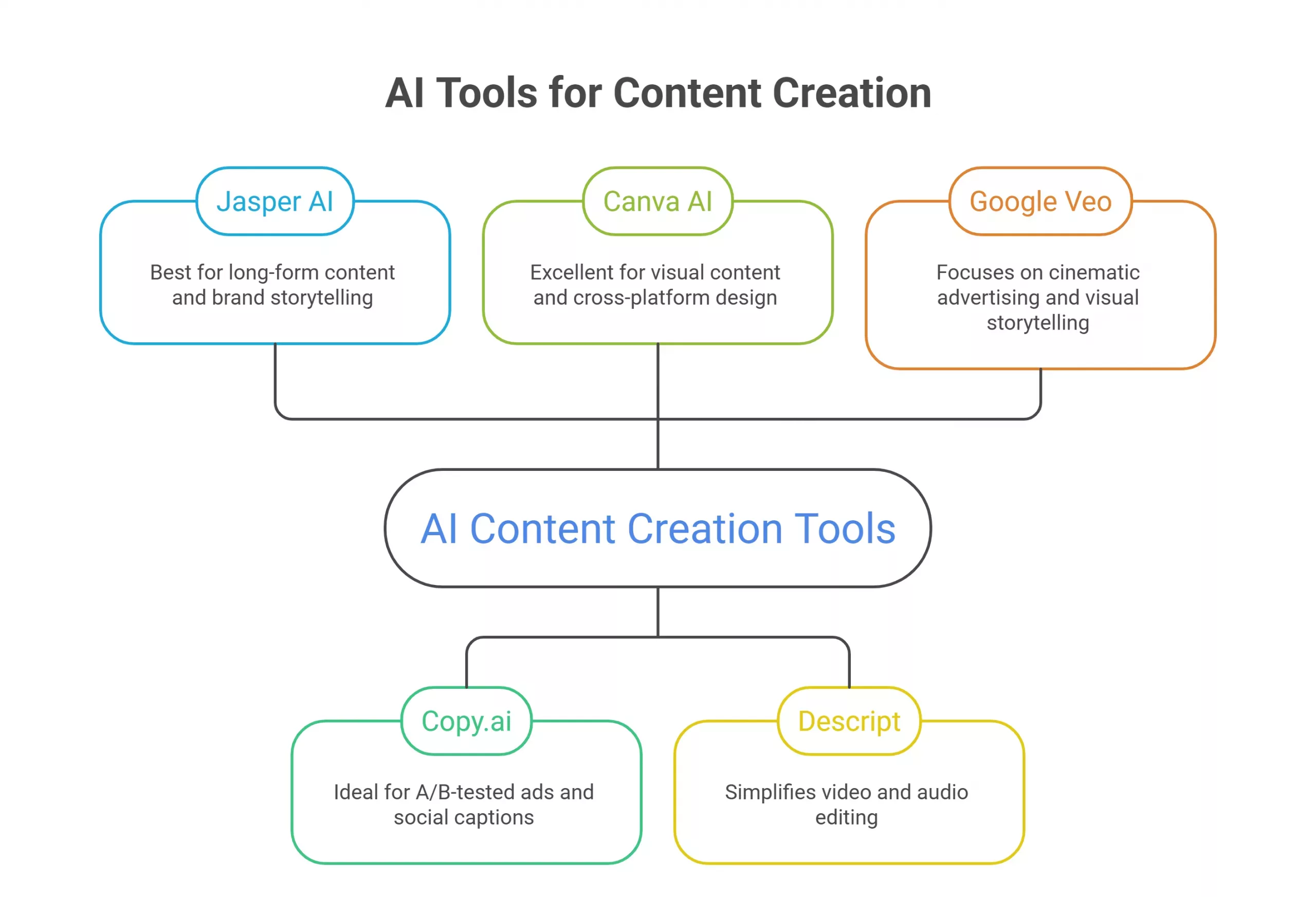
1. Jasper AI — Your Intelligent Content Strategist
Best for: Long-form content, ad copy, and brand storytelling.
Jasper has evolved into a full-scale content intelligence system. It understands your brand tone, audience preferences, and SEO goals, generating blog posts, ad campaigns, and emails that align with your strategy. Its new real-time keyword integration ensures every piece of content performs both creatively and technically.
Pro Tip: Use Jasper’s “Campaign Mode” to develop unified content themes across blog, email, and social platforms.
2. Copy.ai — High-Speed Copy for Ads and Social Media
Best for: A/B-tested ads, headlines, and social captions.
Copy.ai’s 2026 engine focuses on short-form mastery. It uses real-time trend data to generate ad variations that resonate with your target audience — ideal for performance marketers and social media teams looking for agility and scale.
Pro Insight: Combine Copy.ai with predictive analytics tools to test creative performance before launch.
3. Canva AI (Magic Studio) — Design in Seconds
Best for: Visual content creation, branding, and cross-platform design.
Canva AI’s Magic Studio turns written ideas into beautiful visuals with a single prompt. Its adaptive layouts automatically adjust to platform dimensions (Instagram, LinkedIn, YouTube, etc.), making it a must-have for design-heavy marketing teams.
Example: Type “modern tech ad banner for AI software” and Canva instantly generates polished, on-brand designs ready for publishing.
4. Descript — Video and Audio Editing, Simplified
Best for: Podcasts, explainer videos, and video marketing campaigns.
Descript allows you to edit videos just like a document — by changing text in a transcript. It even supports AI voice cloning for overdubbing and removes filler words automatically. For marketers producing short-form videos or branded podcasts, it’s a massive time-saver.
Pro Tip: Use Descript to repurpose webinars or interviews into short, social-ready clips with minimal editing time.
5. Google Veo — AI Video Storytelling for Brands
Best for: Cinematic advertising and visual storytelling.
Google’s new Veo platform is revolutionizing how brands produce video content. Powered by multimodal AI, it creates cinematic-quality videos from text prompts, allowing marketers to scale ad production without needing a full creative studio.
Example: “Generate a 15-second video ad for a luxury eco-watch brand at sunset in Paris” — Veo handles the rest.
Combine Jasper for written storytelling and Canva AI for visuals to maintain consistent brand messaging across every channel. Together, they deliver cohesive creative campaigns that blend intelligence with artistry — the true essence of AI in digital marketing.
Top AI Tools for SEO and Search Marketing
Search marketing in 2026 is no longer about stuffing keywords or tracking rankings manually. It’s about prediction, intent, and adaptability. The rise of AI in digital marketing has turned SEO into a proactive discipline — where machine learning models anticipate what users will search for and optimize content accordingly.
With generative AI search engines like ChatGPT, Perplexity, and Google’s Search Generative Experience (SGE) shaping discovery, today’s AI SEO tools focus on visibility, relevance, and authority across both traditional and conversational search results.
Here are the leading platforms powering the next generation of search intelligence:
1. Surfer SEO — The Real-Time Optimization Powerhouse
Best for: Content optimization and competitor analysis.
Surfer SEO has become a cornerstone for AI-driven SEO strategies. Its real-time on-page optimization engine analyzes top-performing pages, keyword density, and NLP terms to deliver actionable insights. It even integrates with Jasper AI, ensuring that every piece you write ranks well from day one.
Pro Tip: Use Surfer’s “Content Score” to gauge SEO strength instantly while writing in Jasper or Google Docs.
2. Semrush AI — Bridging SEO and Generative Search
Best for: Search visibility tracking across AI and traditional platforms.
Semrush’s new AI Visibility Tracker helps marketers measure how their content appears in both search engine and AI-generated answers (like ChatGPT and Gemini). It also automates backlink audits and keyword clustering using predictive modeling.
Pro Tip: Combine Semrush AI’s keyword forecasting with Google Ads Smart Bidding for unified organic + paid optimization.
3. Clearscope — Contextual SEO Made Simple
Best for: Long-form SEO content with topic authority.
Clearscope helps marketers achieve semantic depth — ensuring each article covers related topics comprehensively. It’s perfect for building authority in competitive niches, as it uses AI to assess contextual relevance, not just keyword density.
Pro Insight: Use Clearscope’s “Topic Coverage” feature to identify subtopics competitors missed.
4. Ahrefs (AI Forecasting) — Predicting SEO ROI

Best for: Backlink intelligence and growth prediction.
Ahrefs has integrated AI forecasting models that predict how backlink strategies and keyword investments will impact rankings over time. This allows marketers to allocate SEO budgets more strategically.
Pro Tip: Track “Link Value Probability” — Ahrefs’ 2026 metric that predicts the long-term worth of each backlink.
5. Ubersuggest — Accessible AI SEO for Small Businesses

Best for: Small to midsize brands seeking affordable AI-powered SEO insights.
Ubersuggest’s 2026 version includes AI-powered keyword clustering and predictive traffic modeling, making it a smart choice for budget-conscious marketers who still want data-driven optimization.
Example: Ubersuggest’s AI can suggest emerging keyword opportunities weeks before they peak in search volume.
Predictive ranking algorithms now enable marketers to forecast traffic, conversions, and ROI before campaigns even go live. The future of SEO isn’t reactive — it’s anticipatory, adaptive, and powered by AI-driven foresight.
Top AI Tools for Social Media Marketing
Social media in 2026 isn’t just about posting consistently, it’s about understanding audiences in real time and crafting content that feels personal, relevant, and timely. That’s where AI in digital marketing shines.
AI-driven social platforms now analyze audience sentiment, create high-performing content variations, and predict the best posting times for engagement — all while maintaining brand voice and consistency. The result: stronger communities, faster growth, and measurable ROI.
Here are the most powerful AI social media tools redefining marketing strategy in 2026:
1. Sprout Social — AI-Driven Social Intelligence
Best for: Data-backed engagement and automated content generation.
Sprout Social’s 2026 AI engine crafts captions, analyzes audience sentiment, and predicts ideal posting times per platform. Its predictive analytics feature identifies what type of content will resonate most — saving time while improving engagement rates.
Pro Tip: Use Sprout’s “Viral Forecast” feature to predict which posts have the highest likelihood of trending based on engagement history.
2. Predis.ai — Social Content Creation Made Simple
Best for: Carousel posts, captions, and hashtags.
Predis.ai turns simple prompts into high-quality carousels, hashtags, and copy based on real-time trend data. Its AI model also suggests creative directions that align with your brand’s tone and current audience sentiment.
Example: Type “B2B SaaS tips for LinkedIn” and Predis instantly creates a multi-slide carousel, engaging caption, and data-backed hashtags.
3. FeedHive — Smart Content Repurposing and Recycling
Best for: Maximizing visibility through intelligent reposting.
FeedHive uses AI to identify your best-performing content and automatically repurposes it at optimal intervals. It also suggests updated variations to keep your message fresh without additional manual effort.
Pro Insight: Schedule evergreen posts to recur quarterly using FeedHive’s “Content Lifespan Optimization” feature.
4. Hootsuite (OwlyWriter AI) — Platform-Specific Automation
Best for: Managing multi-platform campaigns with minimal effort.
Hootsuite’s OwlyWriter AI helps marketers write, repurpose, and schedule posts across all platforms while maintaining brand tone. Its AI dashboard suggests platform-specific content adjustments for Instagram, LinkedIn, and TikTok.
Example: OwlyWriter may shorten captions for Instagram while expanding storytelling for LinkedIn — automatically.
According to SocialPilot’s 2025 Engagement Report, marketers who use AI social media scheduling tools see up to 35% higher engagement rates compared to manual posting — proof that smart timing and consistent branding make all the difference.
In 2026, social media success isn’t about guessing what will work — it’s about letting AI analyze, optimize, and amplify your message. These AI tools for marketers ensure your content doesn’t just reach audiences, it resonates.
Top AI Tools for Advertising and Performance Marketing
In 2026, advertising isn’t just creative, it’s cognitive. Marketers no longer rely on guesswork or manual A/B testing to optimize performance. Instead, AI in digital marketing is driving autonomous campaign management, where machine learning models adjust ad spend, creative variations, and audience targeting in real time to deliver the highest possible ROI.
These AI advertising tools use data to identify which audiences are most likely to convert, which messages resonate best, and which visuals drive the highest engagement — all without human intervention.
Here are the top-performing AI tools for marketers in the advertising space:
1. Google Ads (Performance Max + Smart Bidding)
Best for: Cross-channel ad optimization and automated campaign scaling.
Google’s Performance Max campaigns use advanced machine learning to automatically optimize targeting, creatives, and bids across all Google channels — including Search, YouTube, and Display. The Smart Bidding system continually analyzes conversion data to ensure every dollar spent works harder.
Pro Tip: Pair Performance Max with GA4 insights to unify paid and organic campaign analysis.
2. Meta Advantage+ Campaigns — Intelligent Ad Scaling for Social Platforms
Best for: Facebook and Instagram advertising automation.
Meta’s Advantage+ Campaigns use generative AI to test creative assets, identify high-performing audience segments, and dynamically adjust ad placements. Its real-time learning loop ensures optimal performance, even as audience behavior shifts.
Example: Advantage+ can instantly reallocate budget to Instagram Reels if it detects higher engagement than Stories during a campaign.
3. AdCreative.ai — Design That Sells Itself
Best for: Ad creative generation and conversion-focused visuals.
AdCreative.ai creates hundreds of ad variations from a single brief, analyzing which combinations of headlines, images, and CTAs will perform best before launch. Perfect for marketers seeking data-backed design decisions.
Pro Insight: Use AdCreative.ai’s “CTR Predictor” to test creative variations and choose the top-performing designs before running live ads.
4. Albert.ai — The Autonomous Marketing Platform
Best for: Fully AI-managed advertising campaigns.
Albert.ai represents the future of AI in digital marketing — an autonomous marketing system that plans, executes, and scales ad campaigns across multiple platforms without human intervention. It continuously learns from performance data, automatically adjusting creative and budget allocations for maximum efficiency.
Example: Albert can manage a multi-channel campaign — from Google Ads to TikTok — and redistribute spend based on which platform drives better CPA in real time.
For best results, pair AI ad platforms like Google Performance Max or Meta Advantage+ with predictive analytics tools (e.g., GA4, Tableau AI). This combination provides deeper insights into lifetime value, churn probability, and ROI — giving you both automation and foresight in one strategy.
In 2026, the most effective marketers aren’t just creating ads, they’re training intelligent systems to run them. These AI advertising platforms are rewriting the rules of campaign optimization, turning data into creative intelligence and automation into growth.
Top AI Tools for Marketing Automation and CRM
In 2026, customer relationship management (CRM) has evolved beyond simple contact databases. Today’s CRMs are intelligent ecosystems, capable of learning from customer behavior, predicting purchase intent, and automating entire marketing journeys.
Modern AI tools for marketers don’t just organize leads; they understand them. They analyze every interaction — from clicks and emails to purchase patterns — helping brands deliver the right message to the right customer at the perfect time.
Here are the top AI-powered marketing automation and CRM tools shaping 2026:
1. HubSpot (Breeze) — Predictive Intelligence Meets Workflow Automation
Best for: Lead scoring, content recommendations, and campaign automation.
HubSpot’s 2026 upgrade, Breeze, uses AI to automate personalized workflows across email, social, and CRM. It can predict which leads are most likely to convert, automatically triggering nurture sequences and follow-ups.
Pro Tip: Use Breeze’s AI “Lead Heatmap” to visualize conversion probability and engagement intensity across your pipeline.
2. ActiveCampaign — Predictive Segmentation and Multi-Channel Automation
Best for: Personalized messaging across email, SMS, and social platforms.
ActiveCampaign combines behavioral analytics with predictive customer segmentation, allowing marketers to send the right message through the right channel automatically. It’s ideal for B2B and eCommerce brands looking to improve retention and customer lifetime value.
Pro Insight: Use ActiveCampaign’s “Customer Journey Predictor” to forecast when users are likely to purchase again — and automate re-engagement offers.
3. Klaviyo — AI-Powered eCommerce Personalization
Best for: eCommerce campaigns and dynamic email automation.
Klaviyo leverages machine learning models to personalize product recommendations and trigger campaigns based on real-time user activity. From abandoned cart reminders to post-purchase upsells, Klaviyo’s AI ensures every message is relevant.
Example: Klaviyo can detect when a customer browses but doesn’t buy — then send a personalized incentive email within minutes.
4. Salesforce Einstein — Enterprise-Grade AI CRM Intelligence
Best for: Large organizations and enterprise personalization.
Salesforce Einstein integrates predictive analytics, automation, and data unification into one intelligent CRM system. It provides sales and marketing teams with actionable insights on customer intent, engagement probability, and optimal communication timing.
Pro Tip: Use Einstein’s “Next Best Action” feature to automate follow-up strategies and improve lead-to-close ratios.
5. Zapier AI — Connecting and Automating Everything
Best for: No-code workflow automation across tools.
Zapier AI automates repetitive cross-platform tasks — like syncing CRM data, publishing campaigns, or triggering Slack notifications — without a single line of code. It’s the perfect glue between marketing apps, making automation accessible even to non-technical teams.
Example: When a new lead is created in HubSpot, Zapier can automatically add them to an ActiveCampaign drip campaign or Slack channel for real-time visibility.
According to Forrester’s 2026 Automation Report, over 82% of B2B marketers now rely on AI-powered CRM systems to manage the entire customer lifecycle. From acquisition to retention, resulting in faster response times and more personalized experiences.
With these AI marketing automation tools, marketers are building smarter predictive ecosystems that anticipate customer needs and nurture loyalty at scale.
Top AI Tools for Data Analytics and Personalization
In 2026, marketing success depends on one thing above all else, data-driven intelligence. Every click, view, and scroll generates insights waiting to be unlocked. The challenge isn’t data collection anymore; it’s interpretation.
That’s where AI in digital marketing transforms the game. AI-powered analytics tools can process millions of data points in real time, identify hidden patterns, and deliver predictions that help marketers make smarter, faster, and more profitable decisions.
Meanwhile, AI personalization platforms ensure that every customer interaction feels unique — turning insights into meaningful, one-to-one experiences.
Here are the top AI tools for marketers focused on analytics and personalization in 2026:
1. Google Analytics 4 (GA4) — Predictive Behavioral Insights
Best for: Conversion prediction and audience analysis.
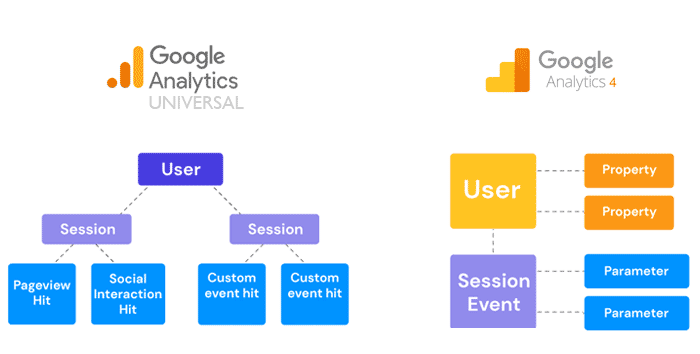
GA4 has evolved far beyond tracking page views — it now uses machine learning models to forecast user actions, such as purchase likelihood or churn risk. Its Predictive Metrics Dashboard lets marketers identify high-value segments and target them across campaigns automatically.
Pro Tip: Integrate GA4 with Google Ads and Performance Max to create real-time feedback loops between paid and organic data.
2. Tableau + Einstein Analytics — Predictive Storytelling for Data-Driven Teams
Best for: Visualization and predictive modeling.
Tableau, enhanced with Salesforce’s Einstein AI, empowers marketers to visualize patterns, correlations, and campaign outcomes before they happen. It’s the ultimate tool for marketing strategists who want clarity and foresight.
Pro Insight: Use Einstein’s “Predictive Lens” to simulate campaign results under different budget or targeting scenarios.
3. Dynamic Yield — Real-Time AI Personalization
Best for: On-site personalization and adaptive content.
Dynamic Yield uses real-time user behavior tracking to adjust website layouts, offers, and messages based on individual user preferences. It’s widely used in eCommerce and media industries to deliver personalized product recommendations and experiences.
Example: If a visitor repeatedly views sustainable products, Dynamic Yield automatically promotes eco-friendly items on their next visit.
4. Looker Studio (AI-Driven) — Automated Insights and Adaptive Dashboards
Best for: Unified marketing reporting and data storytelling.
Google’s Looker Studio integrates AI to automatically generate insights, flag anomalies, and suggest campaign improvements. It creates dynamic dashboards that update as data streams in, ensuring marketers always have the most accurate performance snapshot.
Pro Tip: Combine Looker with GA4’s predictive metrics for a unified view of past performance and future projections.
According to McKinsey’s 2026 Digital Analytics Report, marketers using AI-driven personalization and analytics tools report a 30–40% boost in conversion rates — thanks to predictive segmentation and real-time content optimization.
In the age of data overload, AI analytics platforms act as the marketer’s compass. They are transforming information into insight and personalization into profit. These tools don’t just tell you what happened; they reveal what to do next.
How to Choose the Best AI Tool for Your Marketing Needs
With so many powerful AI tools for marketers available in 2026, the real challenge isn’t finding one — it’s choosing the right one. Every organization has different objectives, budgets, and workflows, so selecting a tool should be based on strategic alignment rather than hype.
AI tools should simplify your processes, enhance creativity, and deliver measurable outcomes — not add complexity. Whether you’re optimizing SEO, automating campaigns, or improving personalization, the best choice is the one that seamlessly integrates into your existing ecosystem and scales as your business grows.
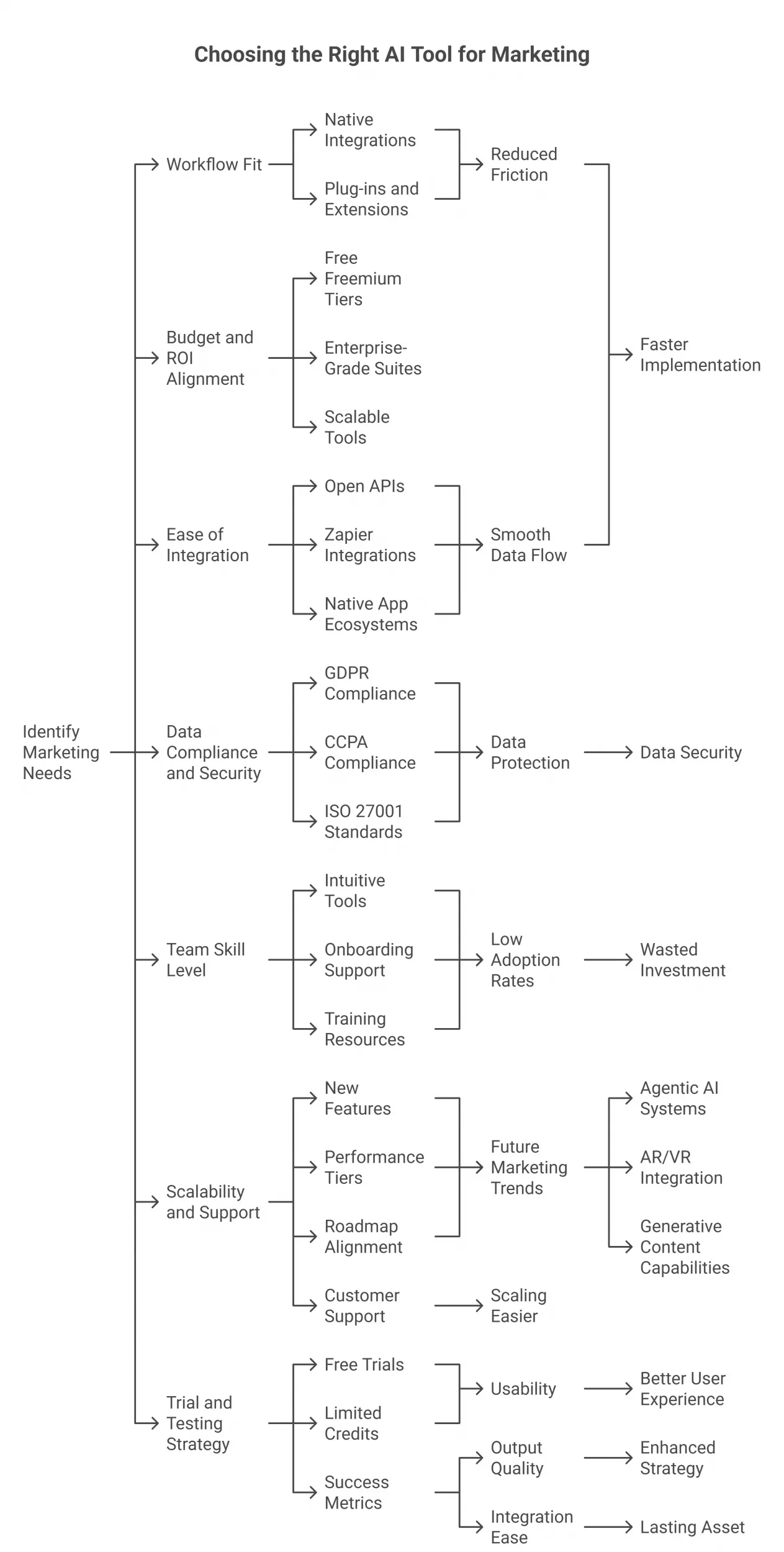
Here’s what to consider before investing in your next AI marketing software:
1. Workflow Fit
Ask yourself: does this tool complement your current marketing stack (e.g., HubSpot, Shopify, WordPress, Salesforce)?
Tools that integrate natively into your workflows will reduce friction and speed up implementation.
Look for AI platforms offering plug-ins or browser extensions for the apps you already use.
2. Budget and ROI Alignment
AI solutions range from free freemium tiers to enterprise-grade suites. Define your use case and calculate potential ROI before committing.
Choose scalable tools that let you start small and expand as performance proves value.
Tools like Jasper, HubSpot, and Semrush offer entry-level plans with high scalability for growing teams.
3. Ease of Integration
A great AI tool is useless if it doesn’t play well with others. Prioritize platforms with open APIs, Zapier integrations, or native app ecosystems to ensure smooth data flow across your marketing stack.
Check for cross-platform automation compatibility — e.g., integrating ActiveCampaign AI workflows with Slack or Google Analytics.
4. Data Compliance and Security
AI in digital marketing relies heavily on user data. Ensure that your chosen tool complies with data protection regulations like GDPR, CCPA, or ISO 27001 standards.
Always verify how the tool handles data storage, anonymization, and consent management before integrating it into your campaigns.
5. Team Skill Level
If your team is new to AI, prioritize intuitive tools with strong onboarding support and training resources. Complex systems can lead to low adoption rates and wasted investment.
Platforms like Canva AI, Jasper, and HubSpot Breeze are built with beginner-friendly interfaces and guided automation flows.
6. Scalability and Support
Choose tools that grow with your business, offering new features, integrations, and performance tiers as your needs expand. Reliable customer support, community forums, and AI-assisted troubleshooting make scaling easier.
Evaluate whether the tool’s roadmap aligns with future marketing trends like agentic AI systems, AR/VR integration, or generative content capabilities.
7. Trial and Testing Strategy
Don’t commit without experimenting. Many AI tools for marketers offer free trials or limited credits. Test multiple tools side-by-side for usability, output quality, and integration ease.
Set clear success metrics (e.g., “reduce campaign creation time by 30%”) before testing — and track whether the AI tool meets them.
The best AI marketing software isn’t the most expensive, it’s the most aligned. By balancing capability with compatibility, marketers can invest in AI that not only enhances their strategy but becomes a lasting asset in their digital ecosystem.
The Future of AI Marketing Tools — 2026 and Beyond
If 2026 is the year AI became essential for marketers, the years ahead will be when AI becomes autonomous. The evolution of AI in digital marketing is moving fast. From assistive tools that recommend actions to intelligent systems capable of managing campaigns end-to-end, learning from performance data, and improving with every interaction.
The next frontier isn’t just smarter automation, it’s adaptive intelligence that works like a digital teammate. Here’s what’s next for AI marketing tools beyond 2026:
1. The Rise of Agentic AI Systems
AI will soon evolve into agentic marketing assistants — autonomous systems that plan, execute, and optimize campaigns in real time. These agents won’t just follow instructions; they’ll make data-informed decisions, reallocate ad budgets, and even recommend creative directions based on audience feedback.
Imagine an AI marketing agent that runs your Google Ads, writes your social posts, and adjusts your SEO strategy automatically — all while reporting ROI improvements weekly.
2. Integration with AR, VR, and Metaverse Marketing
As augmented and virtual reality gain momentum, AI tools for marketers will become essential in designing immersive experiences. Brands will use AI to personalize virtual environments, product demos, and interactive ads in metaverse spaces — blurring the line between storytelling and simulation.
Expect generative AI to create dynamic 3D assets, AR filters, and virtual showrooms that evolve based on user behavior.
3. Predictive Content Creation and Sentiment-Driven Marketing
AI’s next leap is emotional intelligence — systems that understand consumer sentiment in real time and create content that aligns with audience mood and intent. Predictive models will help marketers craft stories that resonate before a trend even peaks.
An AI tool might detect rising excitement around sustainability and automatically launch a green-focused campaign with optimized messaging and visuals.
4. Ethical, Transparent, and Privacy-First AI
As AI becomes more powerful, trust will be the new currency. Consumers will expect brands to use data responsibly and communicate how AI influences personalization and targeting. Future AI marketing software will include built-in explainability, ethical governance, and transparent decision-tracking.
Ethical AI adoption will not only protect brand reputation but also enhance customer loyalty in a privacy-conscious world.
5. Cross-Platform Intelligence and Unified AI Ecosystems
The next phase of AI tools will focus on integration and interoperability — breaking down silos between CRM, advertising, analytics, and creative platforms. Unified AI ecosystems will give marketers a single, intelligent command center for all campaigns.
Imagine combining Jasper’s content engine, HubSpot’s automation, and GA4’s predictive analytics into one synchronized AI dashboard that runs 24/7.
The future of AI tools for marketers will be defined by autonomy, adaptability, and authenticity. AI won’t just assist marketers — it will partner with them, amplifying creativity while managing complexity.
The marketers who use these technologies early won’t just keep up, they’ll lead. Because in the coming era, marketing isn’t about working harder or even smarter, it’s about working intelligently with AI.
Final Words
Artificial intelligence is now the foundation of modern marketing success. From creating content and automating workflows to predicting audience behavior and optimizing campaigns, the right AI tools for marketers have redefined what’s possible.
But technology alone isn’t the differentiator. What separates successful marketers in 2026 and beyond is how they use AI. It’s not just about working faster, but to think smarter, personalize deeper, and connect more authentically.
Those who use AI in digital marketing today are already shaping the next era of the industry, one where data fuels creativity, and machines amplify human potential rather than replace it. As AI continues to evolve into autonomous, adaptive systems, marketers who lean into experimentation, ethical adoption, and cross-platform intelligence will lead the transformation.
AI isn’t coming for your job, it’s coming for your limits. The future of marketing belongs to those who learn to collaborate with intelligence, not compete against it.
Now is the time to explore, test, and integrate, because the brands that master AI today will define digital marketing tomorrow.
FAQs
Which free AI is best for marketing?
The best free AI for marketing is ChatGPT because it helps with content creation, SEO ideas, ad copy, email campaigns, and strategy in one place. Google Gemini is great for real-time research and Google Ads support, while Canva AI is ideal for social media creatives and visuals. Many marketers use a combination of these tools to save time, improve accuracy, and boost productivity without spending money on multiple platforms.
How is AI transforming digital marketing in 2026?
AI is transforming digital marketing by automating repetitive tasks, improving customer targeting, enabling predictive analytics, and generating personalized content at scale. Marketers can now make faster decisions, optimize campaigns in real time, and deliver better customer experiences with minimal manual work.
Are AI marketing tools suitable for small businesses?
Yes, many AI marketing tools offer free or affordable plans that are perfect for small businesses. They help with content writing, social media scheduling, email marketing, and SEO, allowing small teams to compete with larger brands without needing a big budget.
Can AI replace human marketers in the future?
AI will not replace human marketers but will enhance their capabilities. It handles data analysis, automation, and content generation, while marketers focus on strategy, creativity, branding, and relationship building for better results.
How do I choose the right AI tool for my marketing needs?
Start by identifying your goals such as content creation, SEO, social media management, or email automation. Then choose tools that integrate with your workflow, fit your budget, and offer features that solve your specific marketing challenges.