
The landscape of relationship counseling is undergoing a profound transformation as artificial intelligence increasingly enters therapeutic settings. While traditional couples therapy has been the gold standard for decades, recent research reveals that AI-powered tools are becoming valuable assets in helping couples navigate their challenges. However, the most promising approach appears to be neither purely AI nor exclusively human; it’s the hybrid model that combines the best of both worlds.
The Growing Adoption of AI in Couples Therapy
The integration of AI into relationship therapy has accelerated dramatically in recent years. A significant portion of Generation Z now utilizes artificial intelligence for dating and relationship guidance, with nearly half of this demographic relying on AI chatbots for advice on everything from casual interactions to serious relationship conflicts. This growing acceptance reflects a broader trend where AI is being recognized as a legitimate support tool in mental health care.
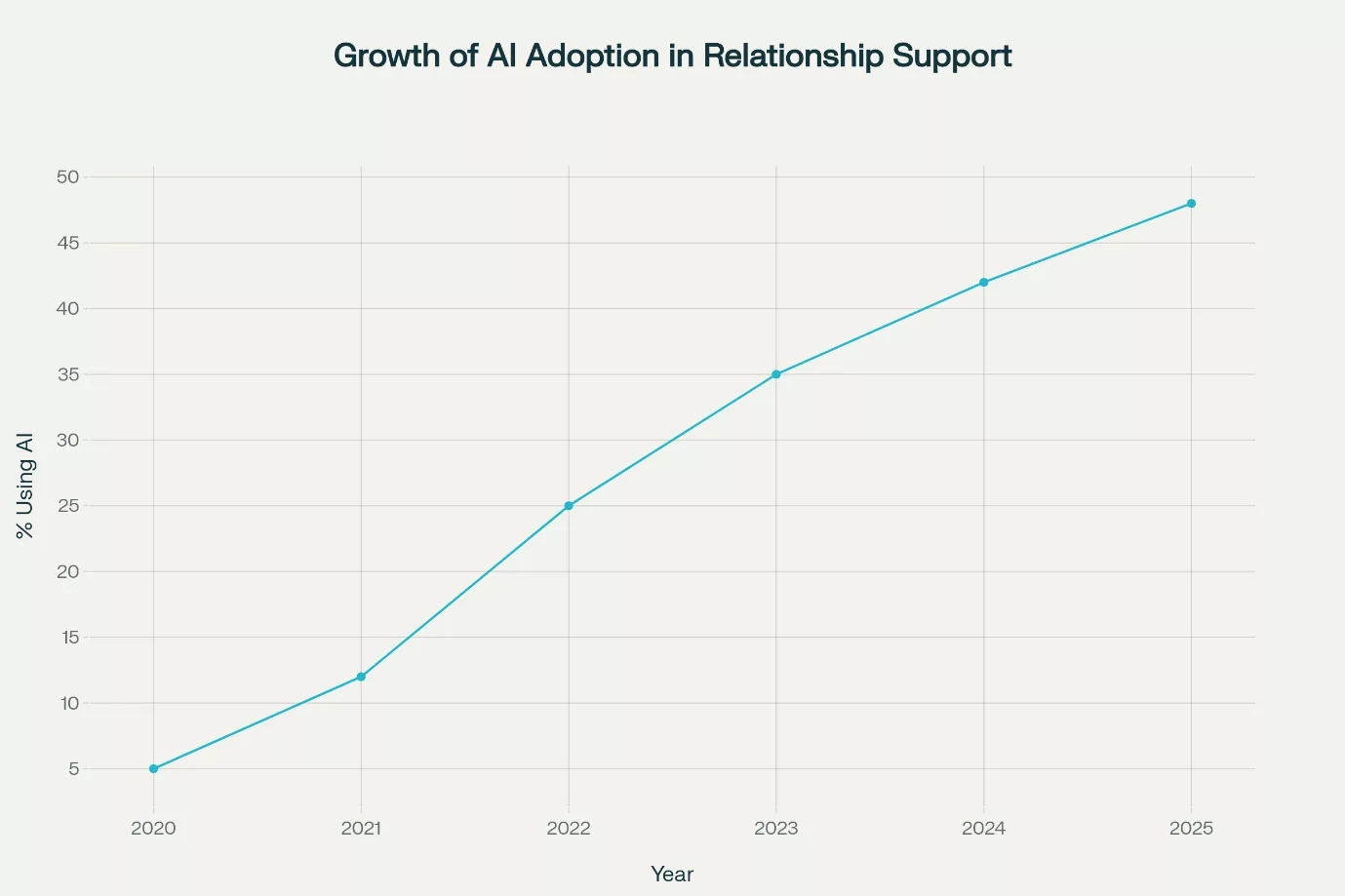
Dramatic increase in AI adoption for relationship support, particularly among younger generations
AI applications in couples therapy today include several key areas: chatbot-based pre-therapy assessments that help couples identify their concerns in a low-stakes environment, communication tracking systems that analyze speech patterns and emotional responses, and AI-assisted relationship coaching apps that provide real-time feedback and personalized guidance.
Research has demonstrated that machine learning algorithms can recognize emotions in couples’ speech with remarkable 90% accuracy, offering valuable insights into relationship dynamics that might otherwise go unnoticed.
Looking for? Most Trending Dating Apps
The Effectiveness of AI-Powered Interventions
The research on AI’s effectiveness in therapeutic settings is increasingly compelling. A comprehensive meta-analysis of AI-based conversational agents found that these tools significantly reduce symptoms of depression (effect size 0.64) and psychological distress (effect size 0.7). When applied specifically to relationship therapy, the results are even more encouraging. Relationship coaching apps show small to moderate gains with effect sizes ranging from 0.30 to 0.45.
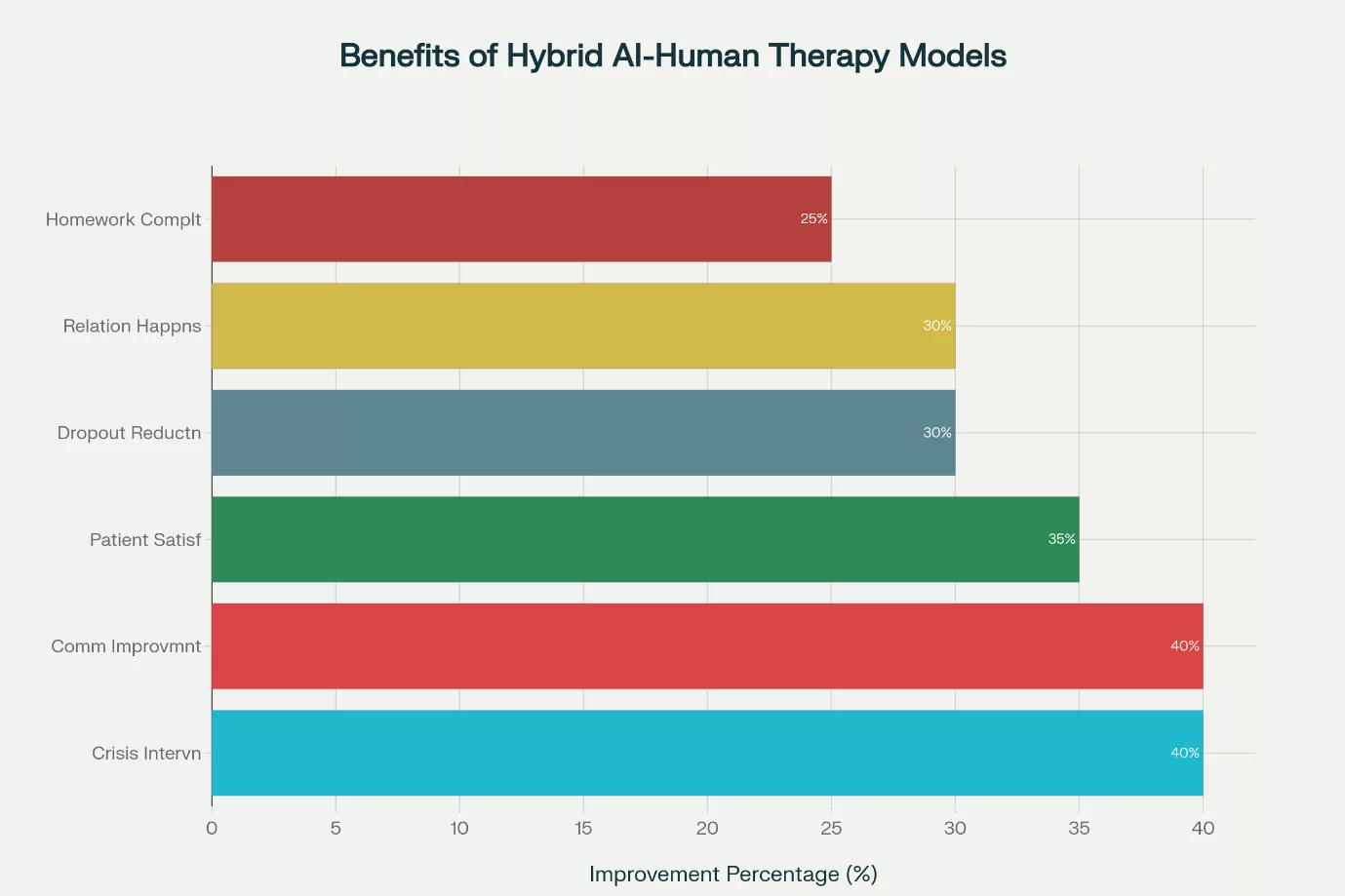
The Couples Analytics platform, which represents a cutting-edge approach to AI-assisted relationship improvement, has documented significant outcomes in their research. Their data shows that AI-refined communication can reduce misunderstandings by up to 40%, leading to fewer conflicts, while structured dialogue fosters intimacy, boosting relationship happiness by around 30%. Additionally, early intervention through AI tools cuts dispute duration by 25%, helping couples resolve issues before they escalate.
Particularly striking is research from the University of Southern California, where machine learning algorithms analyzed couples therapy sessions and predicted relationship outcomes with 79.3% accuracy; outperforming human psychological experts who achieved only 75.6% accuracy. This suggests that AI can identify patterns in relationship dynamics that even trained professionals might miss.
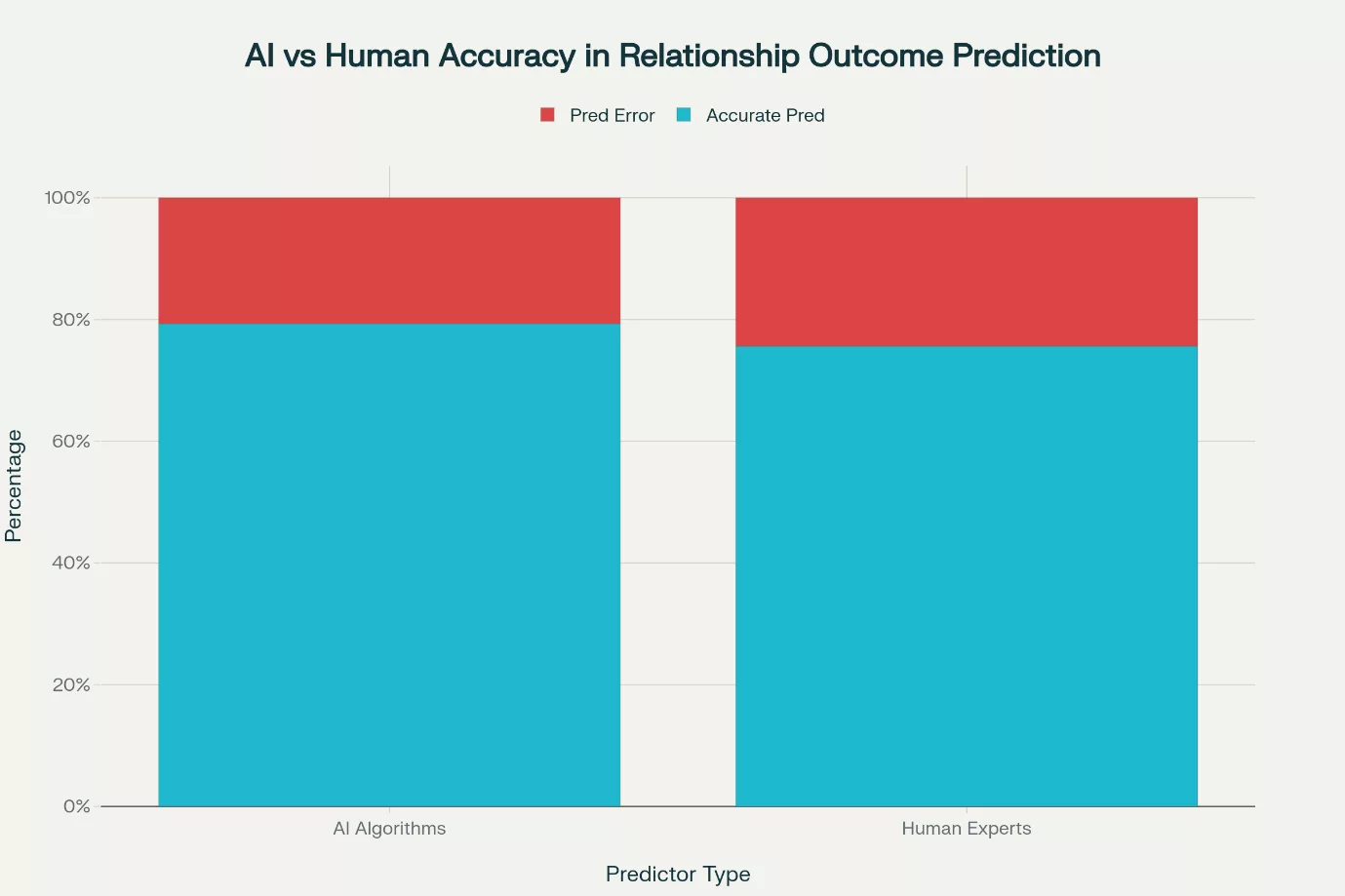
AI algorithms outperform human psychological experts in predicting relationship outcomes
The Power of Hybrid Models
While AI demonstrates impressive capabilities, research consistently shows that hybrid models; combining AI technology with human therapists; produce superior results to either approach alone. A recent study found that traditional therapy achieved 45-50% symptom reduction compared to 30-35% for AI therapy alone. However, when combined in a hybrid approach, the effectiveness increases significantly.
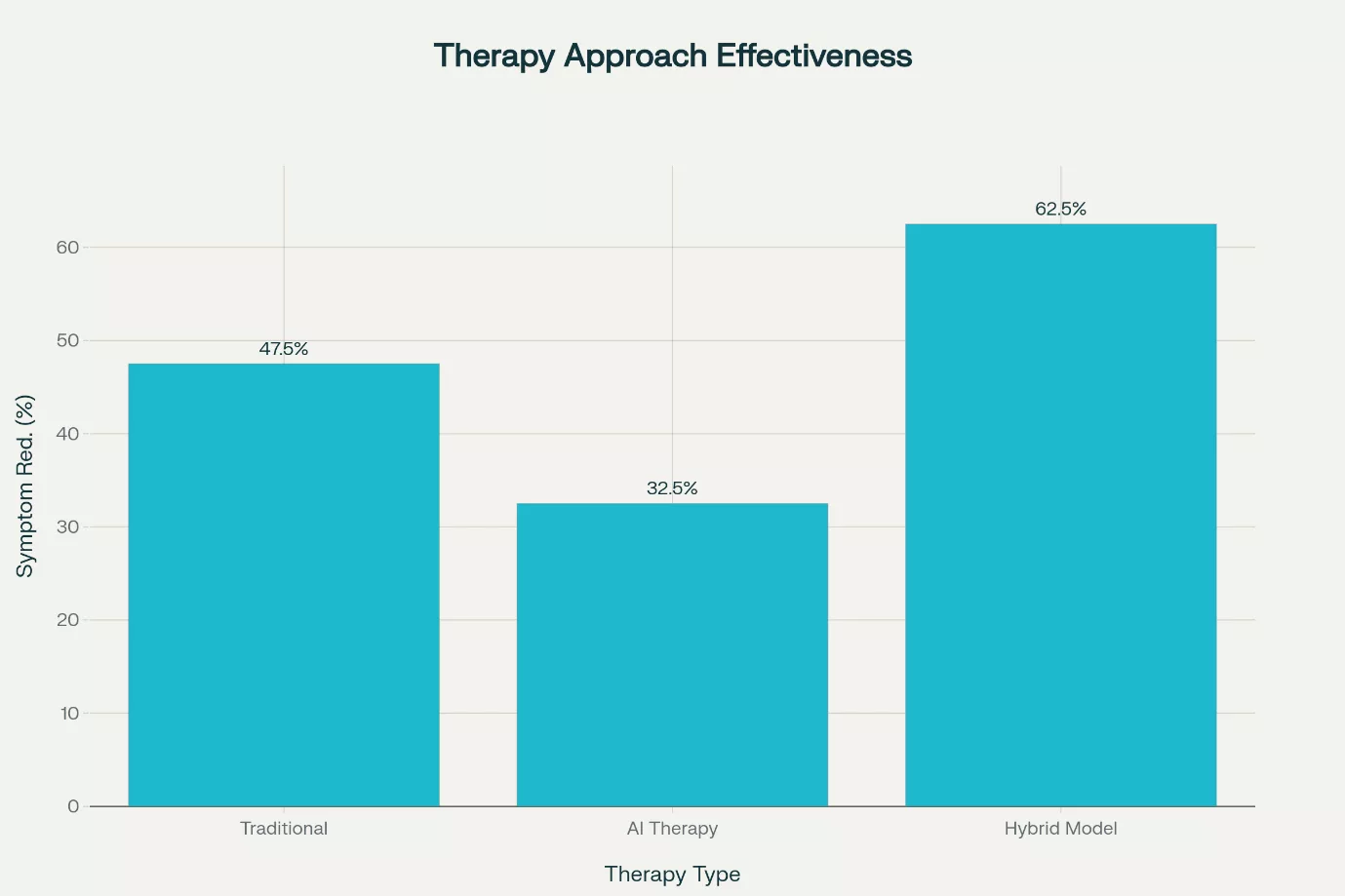
Comparison of therapy effectiveness showing hybrid models achieve superior outcomes
Hybrid models typically involve AI providing daily emotional support between human therapy sessions, skill-building practice with cognitive behavioral therapy techniques, mood tracking and pattern recognition that informs human therapy sessions, and crisis de-escalation during off-hours when human therapists aren’t available. The human therapist then focuses on deep processing of complex emotional issues, treatment planning and therapeutic goal setting, crisis intervention and safety assessment, and integration of insights from AI therapy interactions.
Studies of hybrid approaches show remarkable promise, with healthcare systems piloting programs reporting multiple benefits across various outcome measures. The blended approach appears to offer the largest effect sizes, with one meta-analysis showing blended interventions achieving an effect size of 0.73 compared to 0.42 for human contact alone and 0.40 for AI-only interventions.
Multiple benefits of hybrid therapy models across various outcome measures
Insights from Couples Analytics Research
The research conducted by Couples Analytics provides valuable insights into the effectiveness of digital conflict repair methods. Their analysis of digital communication in relationships reveals that accepting at least 60% of repair texts predicts under 10% divorce risk over six years.
They’ve identified specific strategies that work in text-based repairs, such as I-language with perspective (“I’m tense, your view makes sense”) which lowers defensiveness with a correlation of 0.72, and validation messages (“That must feel awful”) which reduce negative affect by 65%.
Importantly, their research shows that video therapy works as well as in-person sessions, with no difference in outcomes between video and face-to-face therapy for satisfaction, communication, or mental health. Client data from 1,157 participants showed equal gains, though in-person sessions form therapist alliances twice as fast. This research supports the viability of digital therapeutic interventions while acknowledging the unique benefits of human connection.
We have listed! Best Relationship Apps For Couples
The Limitations of AI-Only Approaches
Despite its impressive capabilities, AI therapy has significant limitations that highlight why hybrid models are essential. Current AI systems struggle with complex mental health conditions requiring nuanced understanding and flexible treatment approaches. They cannot provide the deep emotional connection and empathy that human therapists offer, nor can they handle crisis situations or make complex clinical judgments about safety and risk.
AI also faces challenges with cultural sensitivity and understanding context-specific relationship dynamics that vary across different communities and backgrounds. The technology works best for individuals with mild to moderate symptoms rather than severe mental health conditions. Additionally, privacy concerns and the risk of over-dependence on digital solutions remain significant considerations.
The Future of Relationship Counseling
The evidence points toward a future where hybrid models become the standard of care in relationship counseling. This approach leverages AI’s strengths in pattern recognition, 24/7 availability, and consistent skill practice while preserving the irreplaceable human elements of empathy, clinical judgment, and deep therapeutic relationships.
Emerging trends suggest we’ll see more sophisticated AI integration, including real-time emotion recognition during therapy sessions, predictive analytics to identify couples at risk of separation, personalized intervention recommendations based on relationship patterns, and seamless coordination between AI tools and human therapists. The goal is not to replace human therapists but to augment their capabilities and extend their reach.
As research from organizations like Couples Analytics continues to demonstrate, the combination of AI insights and human wisdom represents the most promising path forward for helping couples build stronger, more resilient relationships. The hybrid model offers the scalability and accessibility of AI with the depth and nuance that only human connection can provide; creating a new paradigm in relationship support that serves couples more effectively than either approach alone.