
Lead generation is the lifeblood of modern business growth. With the global lead generation software market projected to grow from $5.39 billion in 2024 to $5.88 billion in 2025 at a 9.1% CAGR, it’s clear that more companies are turning to technology to capture and convert high-quality leads. Yet, with dozens of tools on the market, choosing the best lead generation software for your business can feel overwhelming.
The right tool can help you automate repetitive tasks, improve lead quality, and shorten your sales cycle. On the other hand, the wrong one might drain your budget and leave your team stuck with unqualified leads. That’s why it’s important to understand not only what these tools do but also how they differ in features, pricing, and ease of use.
Ready to discover which solutions stand out in today’s crowded market? Let’s start by understanding what lead generation software is all about.
About Lead Generation Software
Lead generation software is designed to help businesses attract, capture, and manage potential customers more efficiently. Instead of relying only on manual outreach or guesswork, companies can use these tools to streamline the process of finding people who are genuinely interested in their products or services.
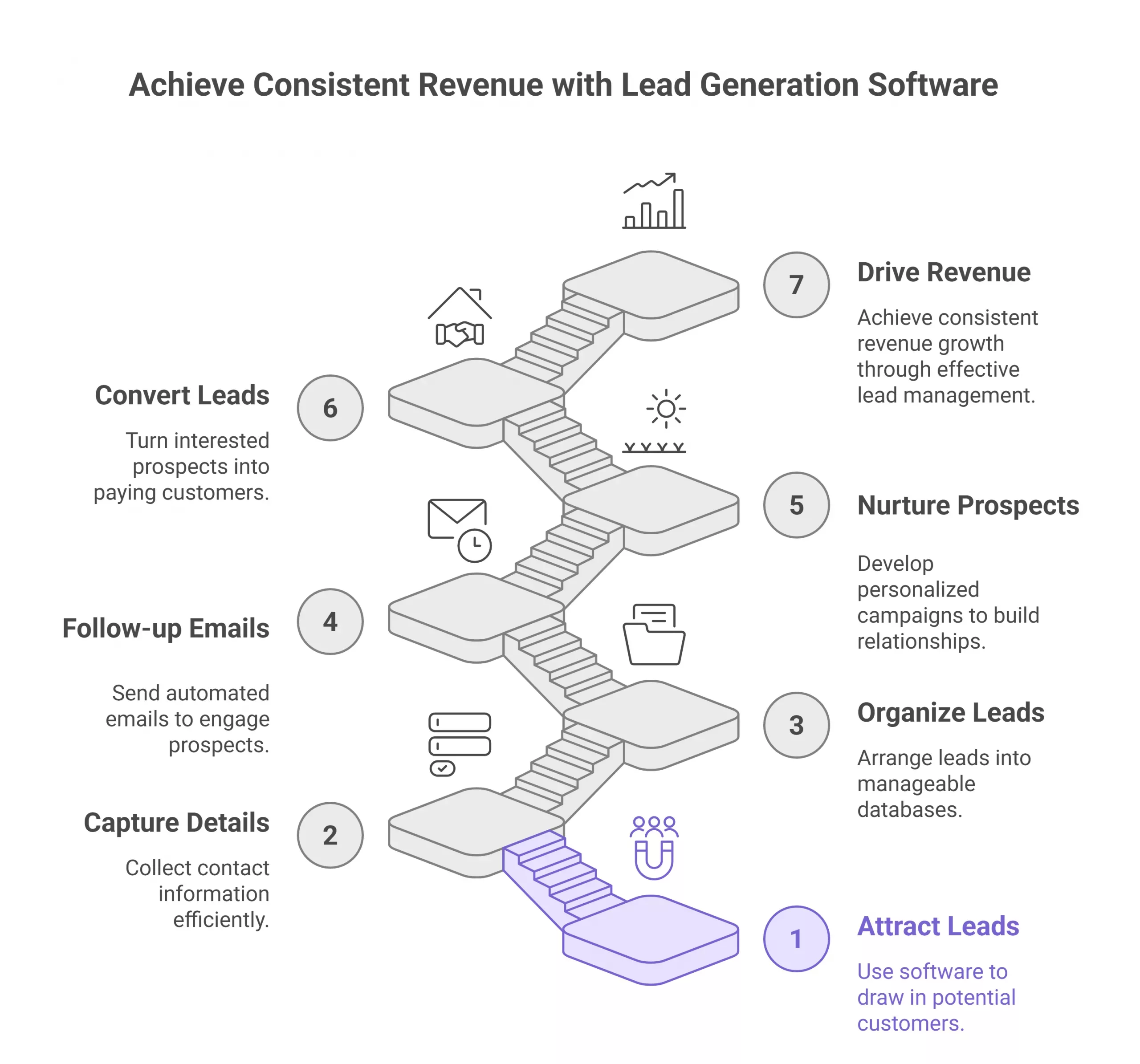
The software typically handles repetitive tasks like collecting contact details, organizing leads into databases, sending follow-up emails, and even nurturing prospects through personalized campaigns.
This technology has become increasingly important in today’s competitive market, where the speed and quality of lead capture can make or break sales growth. By combining automation with data-driven insights, businesses can ensure they not only generate more leads but also identify which ones are most likely to convert.
With the right solution, teams save valuable time, reduce the risk of losing potential customers, and build a more predictable pipeline that drives consistent revenue growth.
Looking for? Best SaaS Marketing Agencies
What’s The Need To Look for the Best Lead Generation Software Alternatives?

Even though there are many lead generation tools, no one tool is perfect for all businesses. You need alternatives because:
- Businesses have different budgets (startup vs enterprise)
- The quality of leads matters, not just quantity
- Different tools specialize in different channels (social media, email, cold outreach, etc.)
- Some tools use AI, others more manual/automation-based
- Legal & privacy compliance varies across tools and regions
So exploring alternatives ensures you find tooling that fits your needs, cost constraints, workflow, and growth plans.
Why Do People Use Best Lead Generation Software?
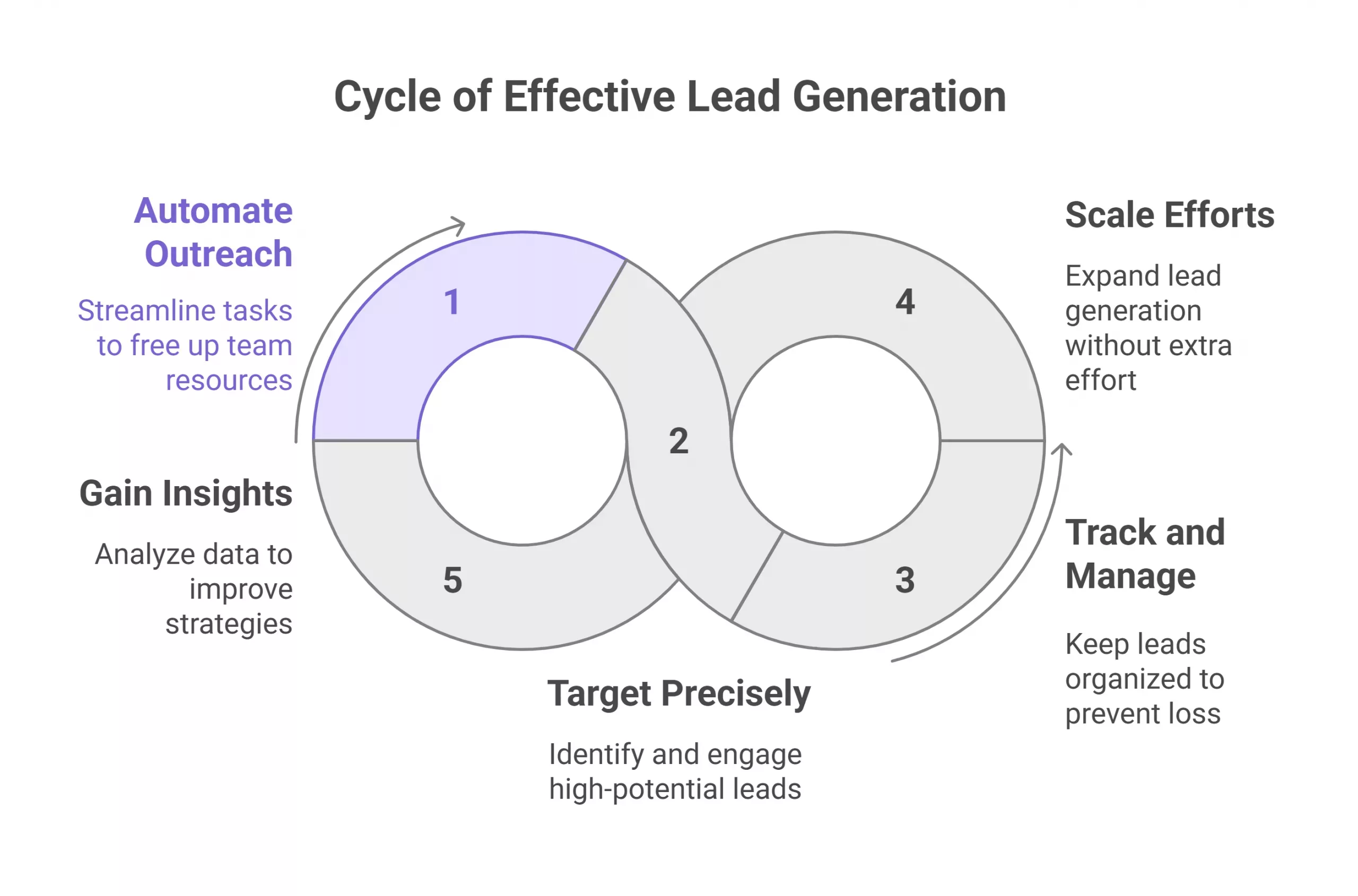
People use the best lead generation software because it helps them:
- Automate tedious outreach tasks so teams can focus on high-value work.
- Target more precisely: finding leads who are more likely to convert.
- Track and manage leads in one place (so nothing falls through the cracks).
- Scale lead generation efforts without proportional increases in human effort.
- Gain analytics and insights: what works, what doesn’t, so iterative improvement.
How Does Best Lead Generation Software Work?
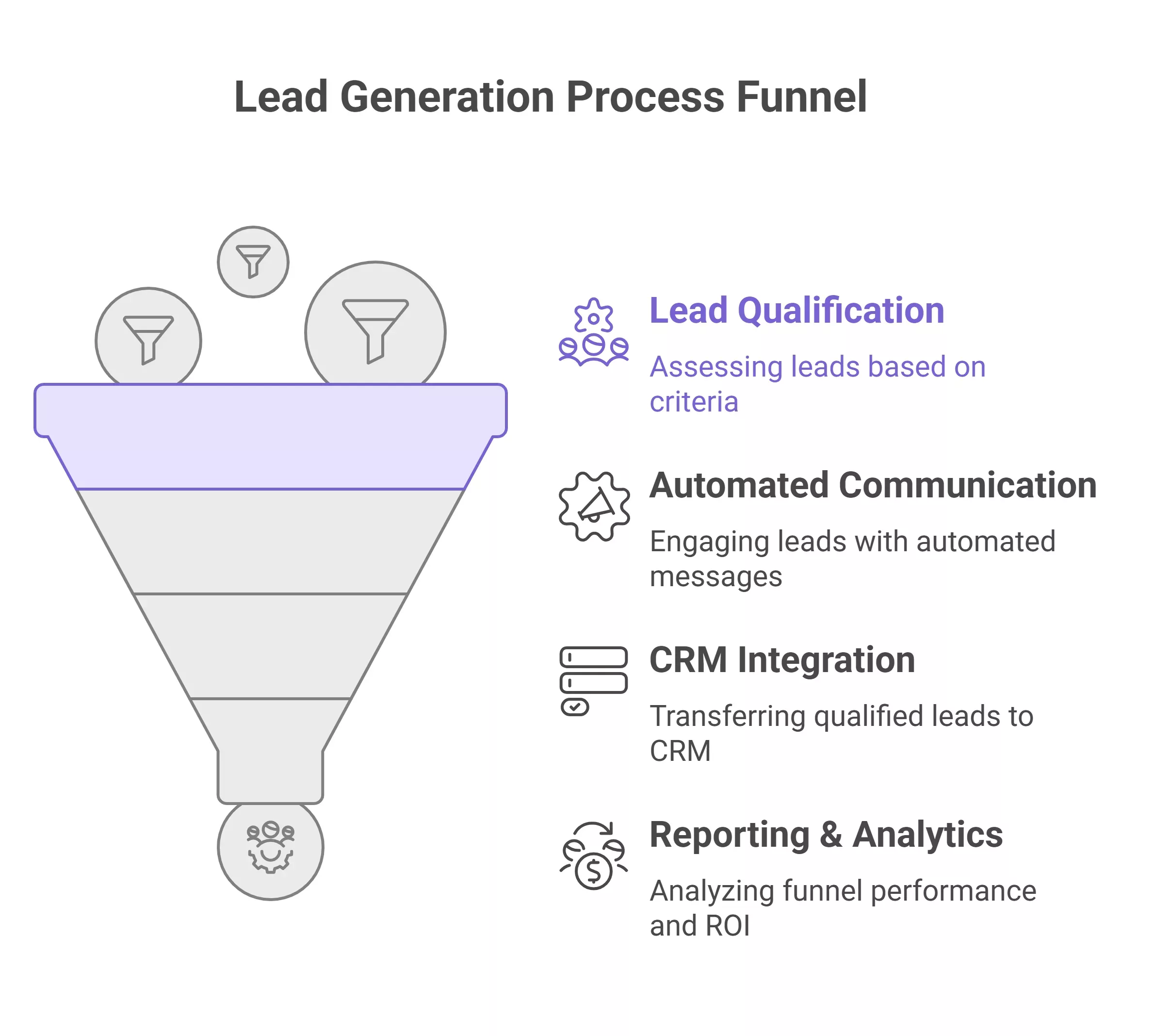
Typically, the best lead generation software works by:
- Capturing lead information (via forms, landing pages, integrations, scraping, etc.)
- Qualifying and scoring leads based on behavior, demographics, intent signals
- Automating communication (emails, messages, follow-ups)
- Integrating with CRM & sales workflows so leads can be handed over cleanly
- Reporting & analytics to understand funnel leakage, conversion rates, and ROI
Top 10 Lead Generation Platforms to Grow Your Business
Below are detailed overviews of 10 leading apps, each with sections: Overview, Requirements, Fee/Paid, Key features, Supported Locations, Rating. These are among the best lead generation software you might consider.
1) Smartlead.ai: Best Lead Generation Software
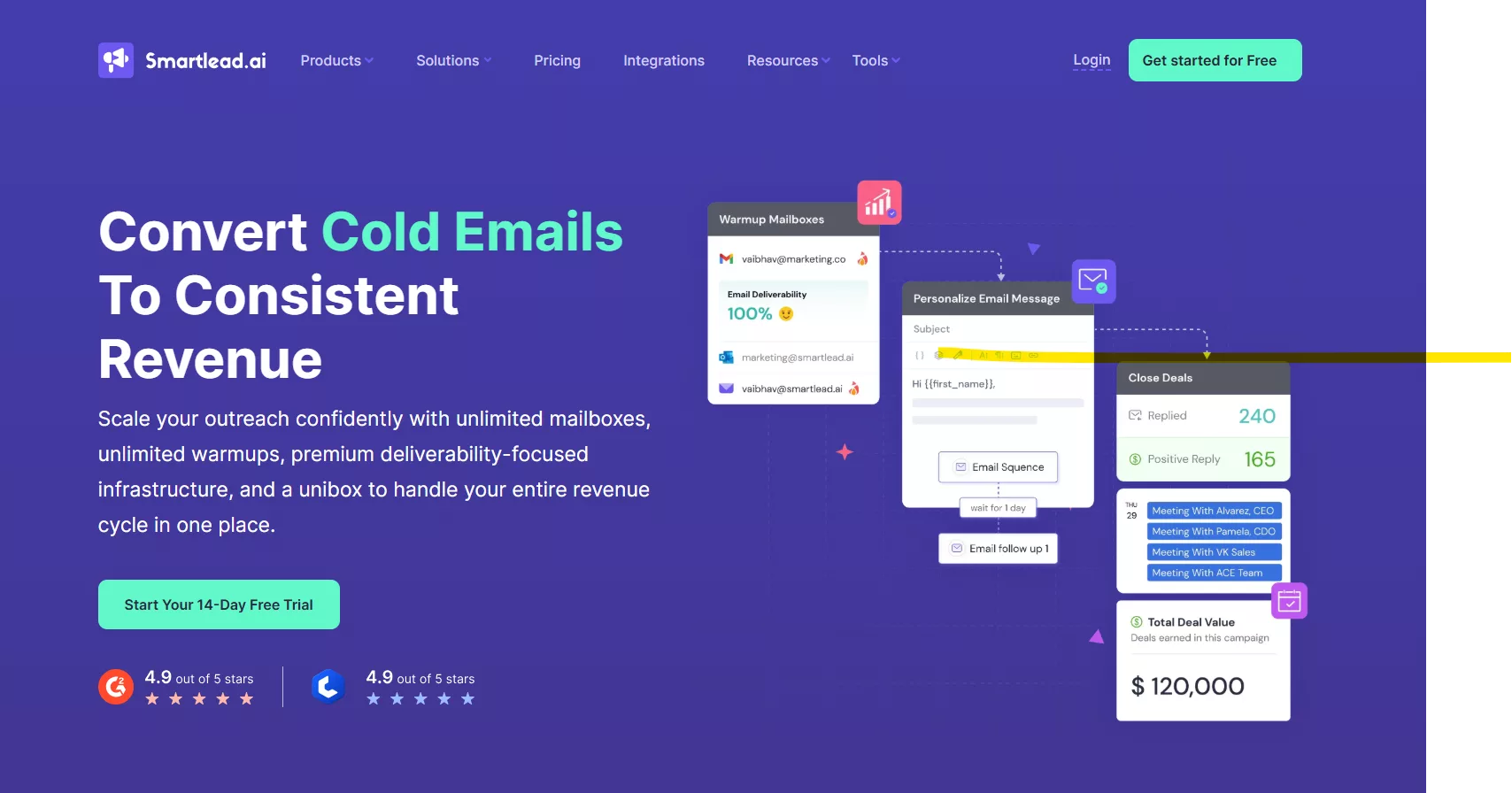
Smartlead.ai is a platform built to help you scale cold outreach and lead prospecting using AI-assistance. It allows you to find leads, automate email sequences, track replies, and optimize campaigns. Because it is AI-driven, it can help reduce manual labor, suggest improvements, and try to increase reply rates. If you’re trying to find the best lead generation software, Smartlead.ai is one strong candidate, particularly for outbound email focused growth.
Requirement:
- Good quality prospect list or sources (domains, target companies)
- Email deliverability setup (domain, SPF/DKIM, etc.)
- Integration or ability to export/import data to CRM
- Clean data (to avoid bounces, spam issues)
- Knowledge of email outreach best practices
Fee/Paid
There is a subscription model; different tiers depending on volume of outreach, number of users, and extra features (AI suggestions, campaign automation). Free trial or a limited free plan may exist but with restricted features.
Key features:
- Automated email sequencing with follow-ups
- AI-powered content suggestions for outreach
- Performance analytics (open rates, reply rates, etc.)
- Tracking of replies & campaign health
- Integration/export with CRMs or spreadsheets
Supported Locations:
Mostly global — works where email marketing/outbound is allowed. No strict geographical restriction; usable across Asia, Europe, Americas, etc.
Rating:
7.5-8.5/10 (depending on volume & use case)
2) Viral Loops: Affordable lead generation software
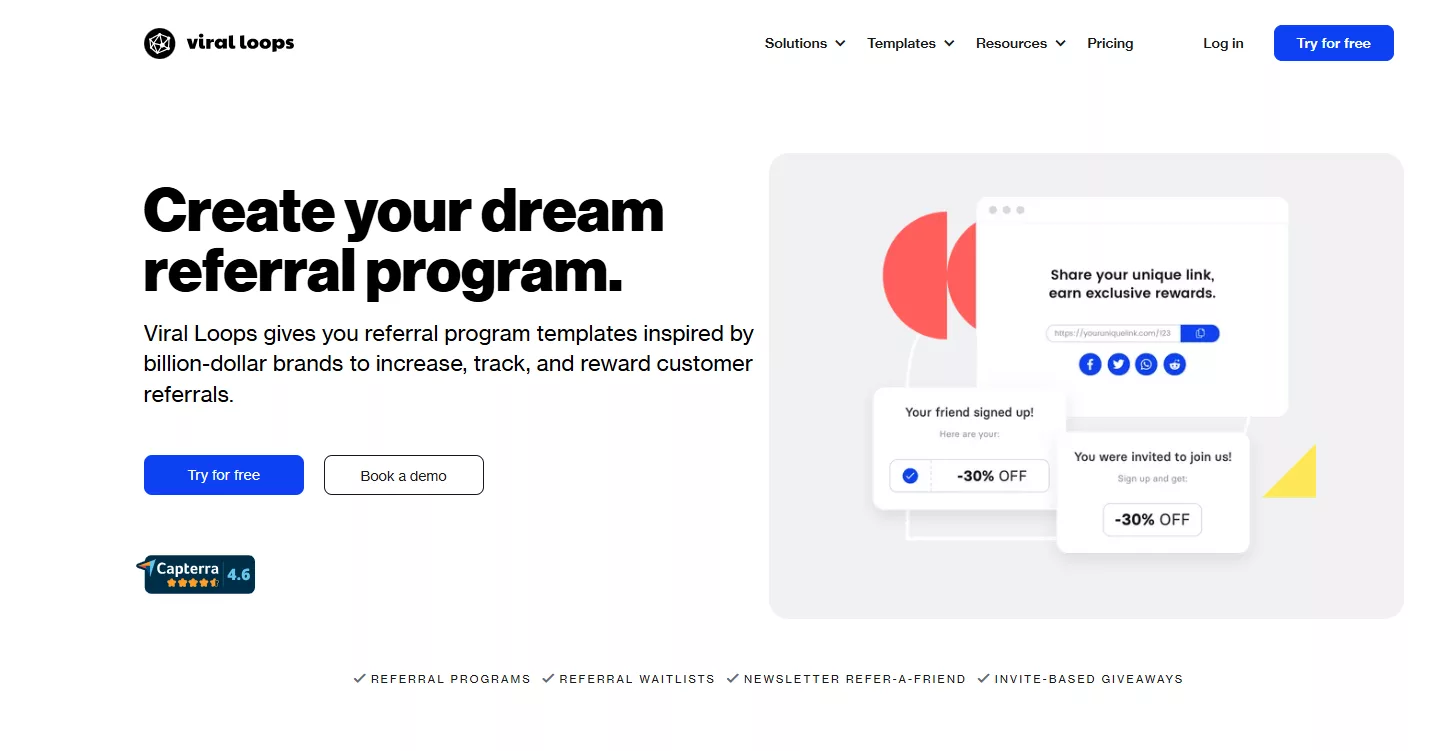
Viral Loops is focused on referral marketing and viral campaigns. It helps you design contests, giveaways, referral programs to generate leads via word-of-mouth and sharing. For small businesses or startups with limited budgets, it can be an affordable lead generation software option because the viral aspect helps magnify reach without needing large paid ad spend.
Requirement:
- A clear offer or incentive for referrals / contests
- Ability to integrate embed codes or landing pages on your site
- Email list / contact management to follow up leads
- Understanding of your audience to design appealing campaigns
- Budget for prize or incentive (if applicable)
Fee/Paid
Has multiple pricing tiers; basic plans cheaper, more advanced ones cost more depending on number of leads, features, integrations.
Key features:
- Templates for referral, giveaway, and loyalty campaigns
- Dashboard to track referral performance
- Integration with email tools & CRMs
- Lead capture via landing pages or pop-ups
- Branding/customization for campaigns
Supported Locations:
Global. As long as your audience participates in referrals and the local rules allow such promotions.
Rating:
7/10
3) PhantomBuster: Lead generation software for businesses
PhantomBuster specializes in automating data extraction and workflow automation from social networks, websites, etc. It’s useful for scraping public data, connecting to APIs, triggering outreach workflows. For businesses that want to generate leads from LinkedIn, Instagram, or other social platforms, PhantomBuster can automate a lot of that. It’s well suited for growth hackers, sales teams, or startups that want lead generation software that can pull in leads from multiple sources.
Requirement:
- Accounts on the platforms you want to extract data from (e.g. LinkedIn, Instagram)
- Respect for terms of service / policies of platforms (to avoid bans)
- Some technical setup for automation workflows
- Proxy or certain setup if scraping across countries
- Data cleaning & deduplication capability
Fee/Paid
Subscription based; free tier or limited credits might be available, but usage limits will apply. More advanced usage requires higher plans.
Key features:
- Social media scraping / data extraction from public sources
- Automated workflows to push data into CRMs or send messages
- Scheduling & automation tools
- Export to spreadsheets or integrations
- Rate-limiting / control over extraction settings
Supported Locations:
Global, but effectiveness may vary depending on platform restrictions in different countries.
Rating:
7/10
4) Taplink: Best B2B lead generation software
Taplink originally is known for its link-in-bio tools and landing page functionality, enabling B2B companies to funnel potential leads via social profiles. You can build multi-link landing pages, embed forms, collect leads, and direct traffic to specific actions. As B2B lead generation software, it helps companies who have heavy social or influencer visibility to capture leads directly from those channels.
Requirement:
- Social profiles or traffic sources to redirect / embed links
- Basic web hosting or site embed capability (if embedding)
- Forms setup for capturing contact info
- Good follow-up process (so leads are nurtured)
- Integration/export to CRM or email tool
Fee/Paid
Has free/basic version with limited features; paid tiers unlock more templates, more capacity, integrations, custom domain, etc.
Key features:
- Customizable landing pages / link-in-bio multi-link pages
- Embedded forms for lead capture
- Analytics of clicks / traffic sources
- Custom domains, branding settings
- Integration with email tools / CRMs
Supported Locations:
Global; works wherever your audience is using social media.
Rating:
6.5-7.5/10
5) Leads Sniper
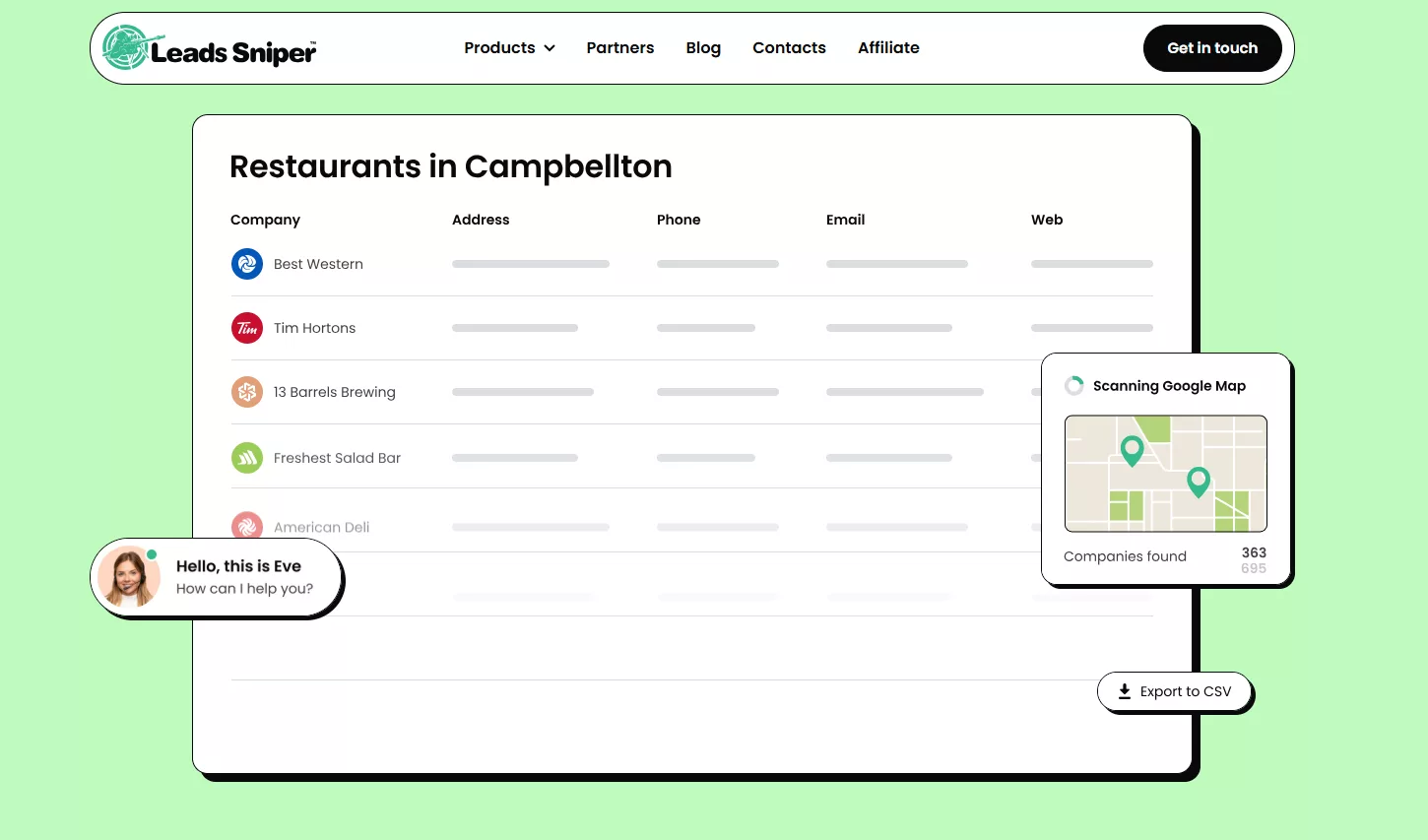
Leads Sniper is a tool specially designed to find email addresses and contact info of prospects (e.g. from LinkedIn, websites), often via browser extension or plugin. It makes prospecting faster by helping users discover leads quickly, verify emails, and then export or engage with them. If you’re aiming for the best lead generation software, Leads Sniper is useful for the top-of-funnel work of discovering leads.
Requirement:
- Web browser and appropriate permissions/extensions installed
- Access to data sources or directories & public profiles
- Email verification service to reduce bounce risk
- Integration/export capability to CRM
- Clean usage to respect privacy / platform terms
Fee/Paid
Subscription or one-time fee depending on version; free trial or limited usage may exist. Higher plans for higher volume.
Key features:
- Prospect discovery via public web / LinkedIn etc.
- Email verification
- Bulk export of leads
- Possibly enrichment of contact data (company, position etc.)
- CRM or spreadsheet integration
Supported Locations:
Global (those markets with public online profiles).
Rating:
6-7.5/10
6) La Growth Machine: Best AI lead generation Software
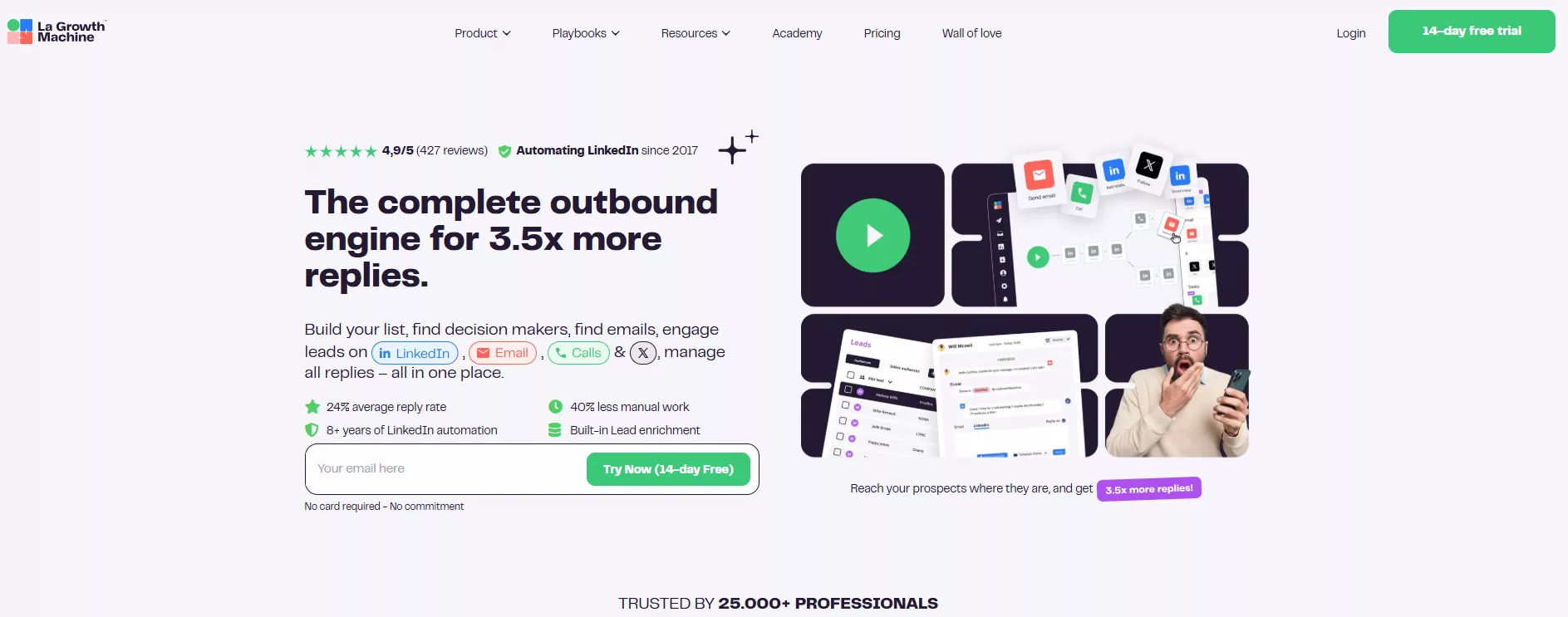
La Growth Machine uses AI to assist in prospecting, outreach sequencing, follow-ups, lead scoring, and personalization. If you want the best lead generation software with strong AI features, this is aimed at automating many decisions, helping you get more qualified replies, and reduce manual work. It tends to be used by more growth-oriented teams who want smart automation.
Requirement:
- Access to target audiences and list sources
- Good data inputs (company size, role, etc.) for AI to work well
- Setup of the automation sequences & rules
- Monitoring/feedback to the AI system
- Integration with CRM / outreach channels
Fee/Paid
Premium subscription; higher costs for more AI features, sequences, users. Likely no free unlimited use.
Key features:
- AI-driven personalization of messages & content
- Automated follow-up sequencing
- Lead scoring / prioritization based on behavior & engagement
- Analytics and feedback loops to improve AI suggestions
- Integration with outreach tools / CRM
Supported Locations:
Global; works best when outreach is allowed and AI compliance is satisfied.
Rating:
8/10
7) Re:tune: Top Lead Generation App
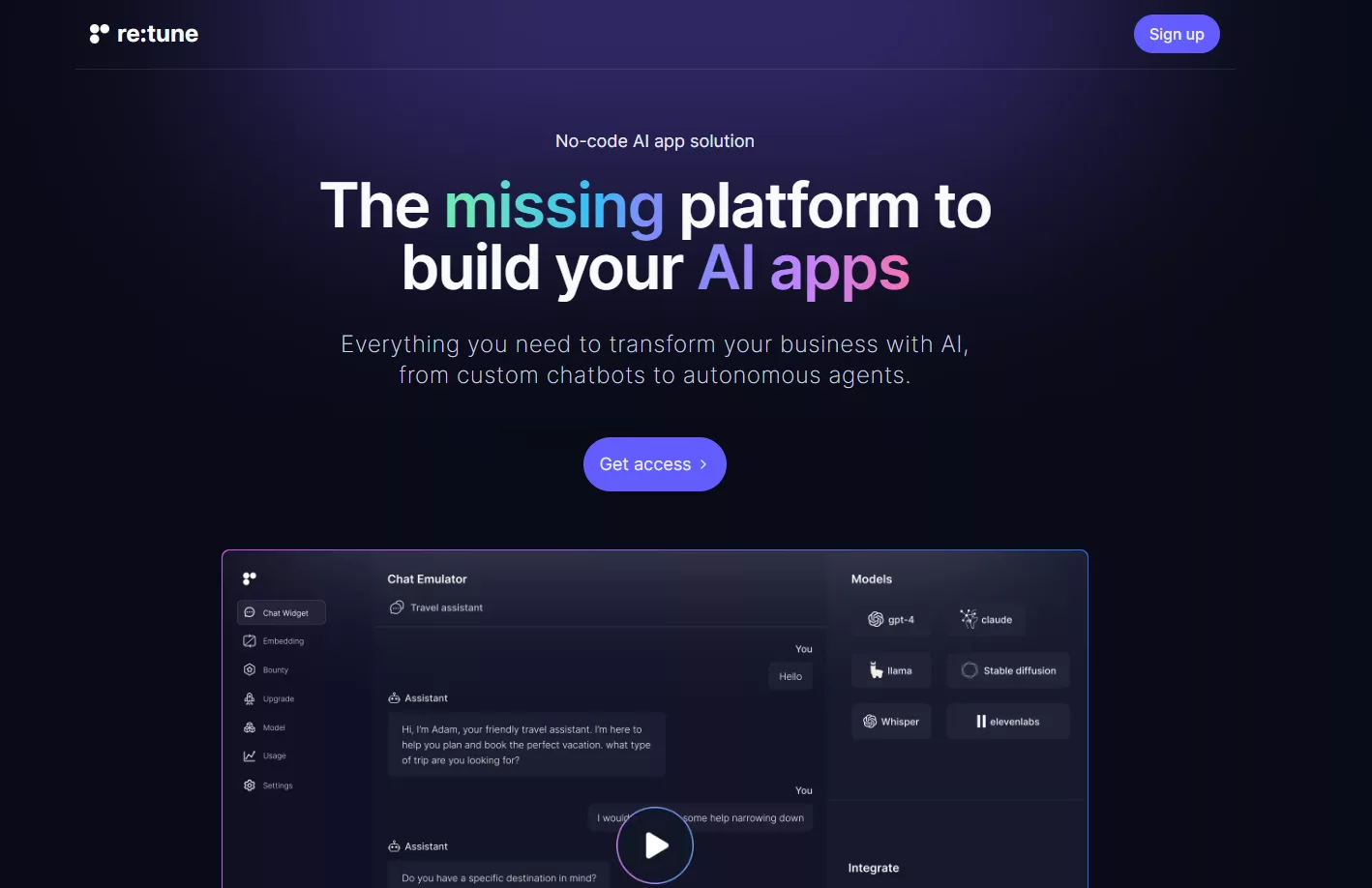
Re:tune is designed to help businesses re-engage inactive leads, improve retention, and convert cold or lukewarm leads into active prospects. It’s less about purely finding new leads, more about maximising potential from existing or lost leads. As a top lead generation app, it fills a niche of re-activation and tuning campaigns.
Requirement:
- Existing list of leads / contacts to re-engage
- Good segmentation of leads (those inactive, cold, etc.)
- Ability to send emails / messages or run campaigns to these leads
- Tracking capabilities to measure re-engagement
- Compliance with email/sms rules and permissions
Fee/Paid
Subscription-based; often sliding based on size of contact list, frequency of outreach, features.
Key features:
- Re-engagement email / messaging campaigns
- Segmentation of inactive / unresponsive leads
- Automated follow-ups / reminders
- Performance tracking (open, click, conversion)
- Integration with CRM / email platform
Supported Locations:
Global; effectiveness may depend on inbox deliverability in various countries.
Rating:
7/10
8) Salesflare: Automated lead generation tools for sales
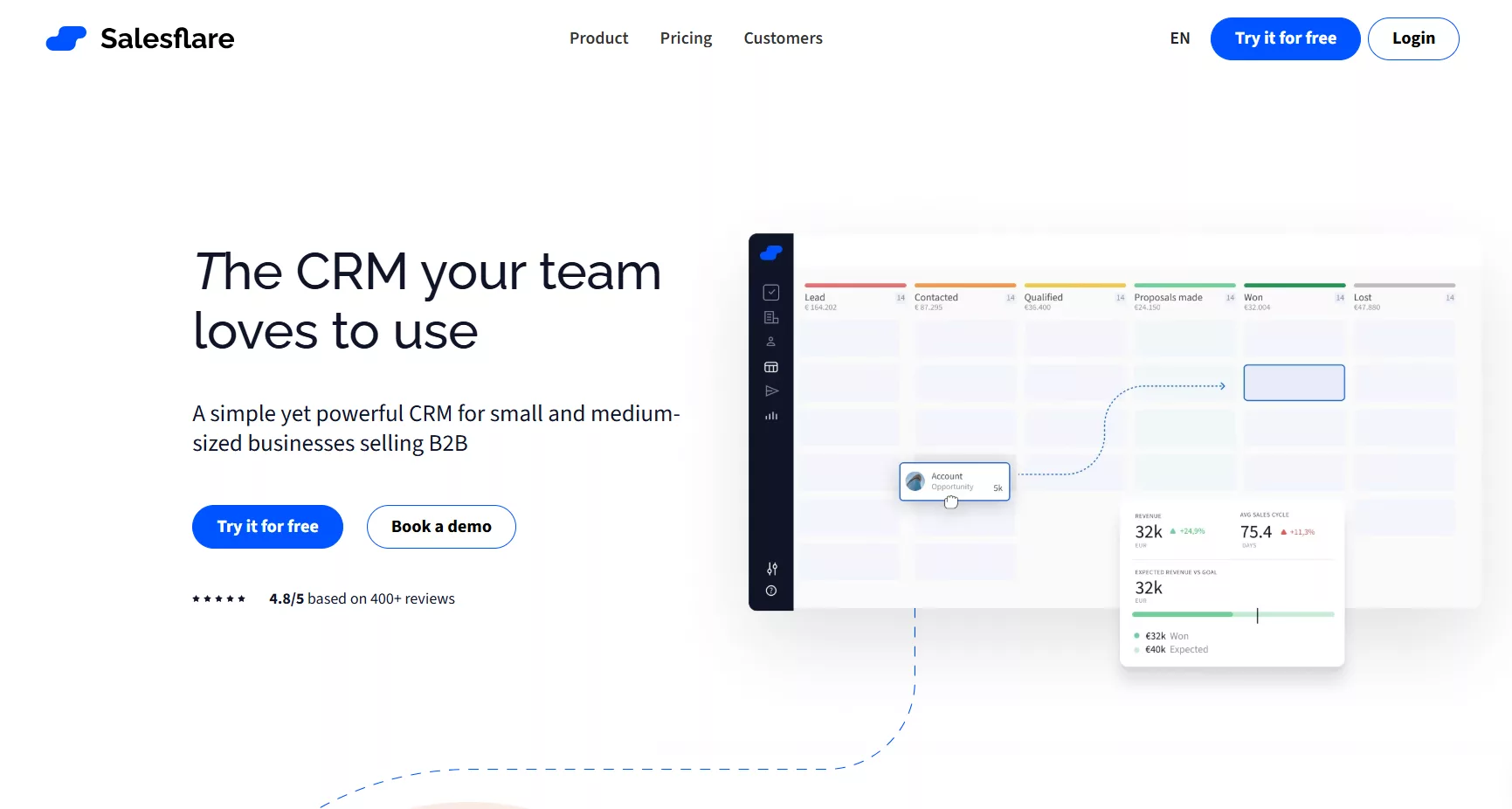
Salesflare is a CRM with built-in automation, particularly suited to sales teams. It tries to automate data entry, follow-ups, contact tracking, and reminders so salespeople spend more time selling. It may not be purely a lead generation software tool, but it’s very useful for both generating leads (via forms, integrations) and managing them automatically once they are in the system.
Requirement:
- Sales team to adopt the workflows
- Integration with email, calendar, website forms etc.
- Clean contact/contact source management
- Defined process for follow-ups and pipeline stages
- Ability to customize fields and automation rules
Fee/Paid
Has subscription pricing; free trial or demo usually offered. Paid plans typically unlock automations, more users, more integrations.
Key features:
- Automatic enrichment of contact information
- Contact & lead follow-up reminders and scheduling
- Email & calendar integration
- Pipeline & deal tracking
- Analytics / reporting dashboards
Supported Locations:
Global, especially in markets where standard business CRMs are used.
Rating:
8/10
9) FindThatLead: Best CRM and Lead Generation Software
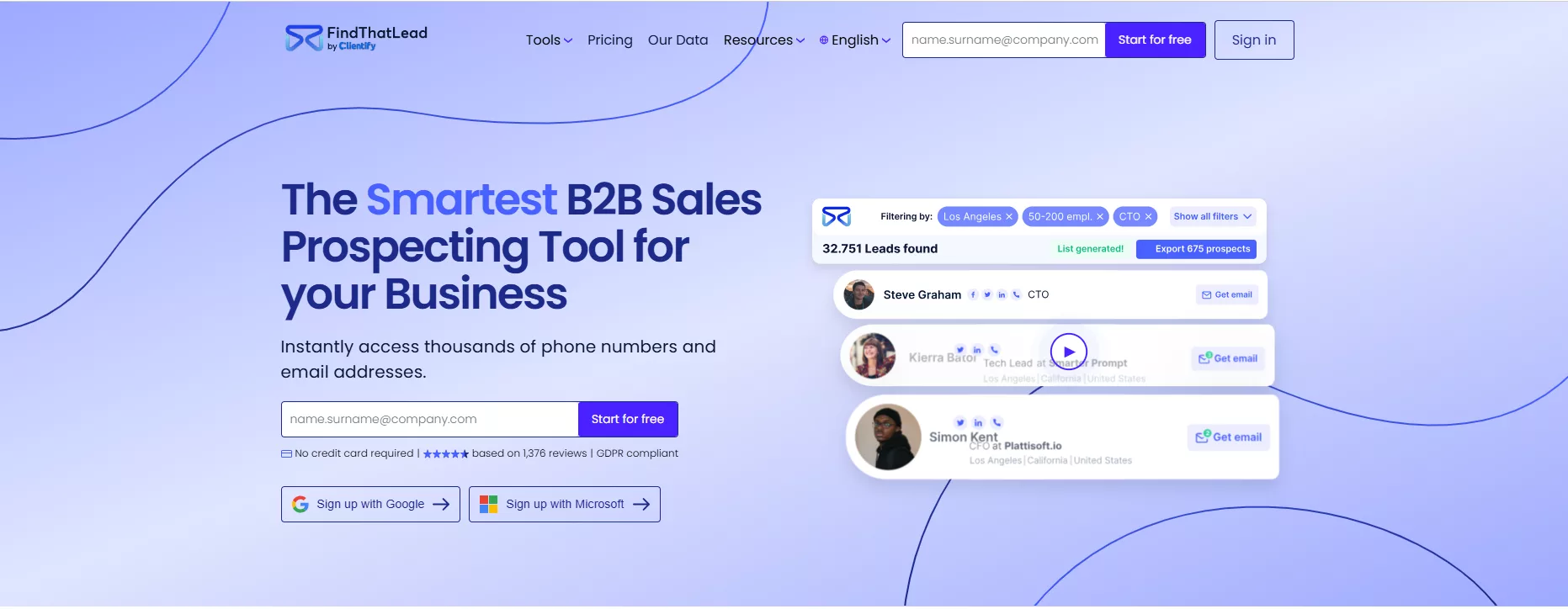
FindThatLead combines lead discovery with email verification, prospecting and some CRM-like features. You can search for leads by domain, company, role, verify email addresses, and follow up. It works well for people who want both lead generation software and CRM functionality in one tool.
Requirement:
- Good domain/company target data or list sources
- Setup for verifying emails to avoid hard bounces
- Ability to manage and follow up leads (CRM or similar)
- Integrations / exporting options
- Clean data hygiene practices
Fee/Paid
Tiered subscription; higher price for heavy usage (many leads, many users), with free trial or limited free plan in many cases.
Key features:
- Prospecting based on domains or companies
- Email address finding & verification
- CRM-like lead tracking & management
- Integrations/export with other tools
- Analytics & lead-source tracking
Supported Locations:
Global; works in many countries but email laws differ across regions.
Rating:
7.5/10
10) Marketing Examples: Marketing automation and lead generation software
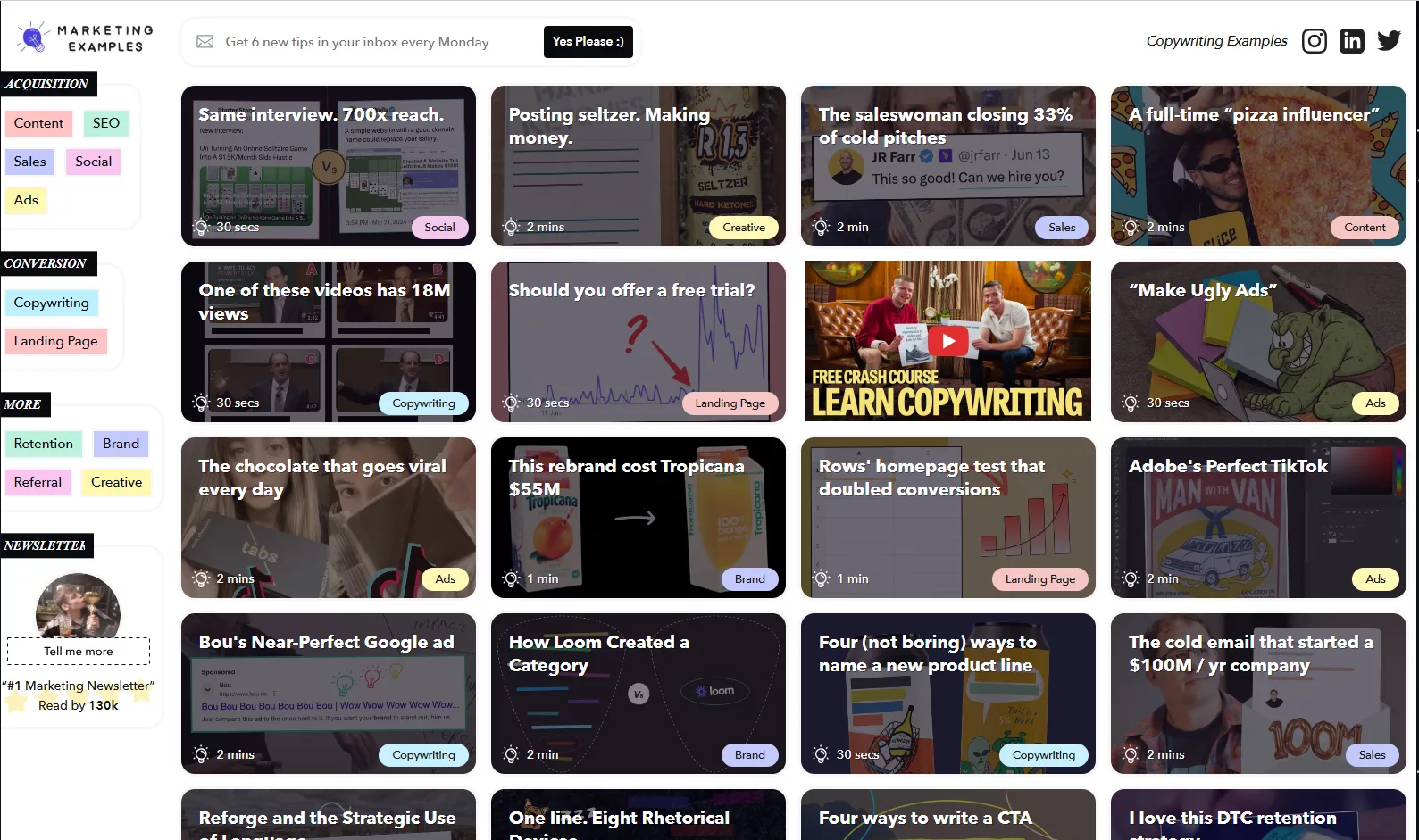
Marketing Examples is better known for its case studies and educational content, but if interpreted as a tool-set or invoking its philosophy, it helps marketers see how real campaigns generate leads and how marketing automation works in practice. If it has associated tools, they are focused on automation of campaigns, email flows, and learning by example. As marketing and lead generation software, it helps you not just with touches and forms, but with smart messaging driven by examples and tested templates.
Requirement:
- You need to adapt the examples to your audience
- Some learning curve to see which examples align with your product or market
- Ability to implement automation (email, landing page, etc.)
- Tracking & measurement capability
- Possibly ability to purchase templates or subscribe to tools
Fee/Paid
May be free content/examples; tools or templates likely paid. The more advanced, the more cost.
Key features:
- Real-world campaign examples & templates
- Marketing automation flows (e.g. welcome, nurture)
- Guidance / educational resources
- Tools or integrations associated with the examples
- Analytics to test & adapt
Supported Locations:
Global (because content is accessible everywhere), though certain campaign tools may have regional constraints.
Rating:
6/10
Side-by-Side Comparison of the Best Lead Generation Software
With so many options available, it can be overwhelming to decide which tool is right for your business. To make things easier, here’s a side-by-side comparison of the top lead generation apps covered above. This table highlights their strengths, cost levels, features, and integration support so you can quickly see which platform aligns best with your goals.
| App | Best For / Strength | Approx Cost Level* | AI / Advanced Features | Lead Discovery Channels | CRM / Integration Support |
|---|---|---|---|---|---|
| Smartlead.ai | Outbound & email sequencing | Mid-tier | Yes (AI suggestions, personalization) | Email lists, outreach | Good – exports & CRM integration |
| Viral Loops | Referral / viral campaigns | Low-to-mid | No / limited | Social, referrals, landing pages | Integrates with email / list tools |
| PhantomBuster | Social / web scraping & automation | Mid | Some automation, less AI | Social networks, web data | Exports, integrate with CRMs |
| Taplink | Social profile & landing page traffic | Low | Limited AI, more UI/design tools | Social traffic, landing pages | Basic exports, form integrations |
| Leads Sniper | Prospect discovery & email finding | Low-mid | Limited | Public web, LinkedIn etc. | Export, some CRM tie-ins |
| La Growth Machine | High automations & AI outreach | Higher cost | Yes, AI heavy | Multichannel outreach | Strong integration & automation |
| Re:tune | Re-engagement of leads | Mid | Limited AI (focus more on messaging and workflow) | Inactive lists, previous leads | CRM, email / messaging tools |
| Salesflare | End-to-end sales & lead flow automation | Mid-high | Some predictive / automation | Forms, integrations, email, calendar | Good CRM features built-in |
| FindThatLead | All-in-one discovery + CRM style | Mid | Some automation, verification | Domains, public profiles, email search | CRM/lead management included |
| Marketing Examples | Learning, templates, automation examples | Low-mid (mostly content) | Minimal / tool-adjacent | Case studies, tested templates | Varies depending on tools used |
Sum up
Finding the best lead generation software is less about choosing the most popular app and more about matching the right tool to your business needs. Some platforms focus on delivering sheer volume, while others emphasize quality, automation, and AI-powered personalization.
The tools we reviewed show how diverse the market has become, offering solutions for startups on a tight budget, enterprises needing advanced automation, and businesses aiming to re-engage existing contacts.
Ultimately, success in lead generation depends not just on the software you choose but also on how consistently and strategically you use it. The right combination of features, integration, and execution can transform lead generation from a manual, time-consuming process into a scalable growth engine.
FAQs on the Best Lead Generation Software
What is the difference between lead generation and demand generation software?
Lead generation software focuses specifically on capturing and managing potential customer details, such as emails, phone numbers, or company information. Demand generation software, on the other hand, is broader. It aims to build awareness and interest in your product or service through campaigns, content marketing, and events.
In practice, businesses often use both: demand generation to create awareness and interest, and lead generation software to capture and convert those interested prospects into tangible leads.
How do I measure the ROI of lead generation software?
To measure ROI, you need to track how many qualified leads your software delivers and how many of those convert into paying customers. Start by calculating the cost per lead (CPL) and then the customer acquisition cost (CAC). If the revenue generated from those acquired customers exceeds the combined cost of software plus resources spent, you’re getting a positive ROI.
Good lead generation software often provides dashboards with metrics like conversion rates, cost per lead, and pipeline contribution to make this process easier.
Can lead generation software integrate with social media platforms?
Many lead generation tools now integrate directly with platforms like LinkedIn, Facebook, and Instagram. For example, tools such as PhantomBuster and Taplink pull data from LinkedIn or social profiles, while Viral Loops uses referral campaigns to encourage social sharing.
These integrations allow businesses to collect leads from audiences who engage on social media, a critical space for both B2C and B2B companies today.
What are the common mistakes to avoid when using lead generation software?
One common mistake is focusing solely on the number of leads instead of their quality. Another is failing to clean and verify data, which leads to high bounce rates and wasted outreach efforts.
Over-automation is also a pitfall: sending generic, robotic messages can harm your brand and reduce response rates. Finally, ignoring compliance laws such as GDPR or CAN-SPAM can lead to legal trouble. Successful businesses use software responsibly by balancing automation with personalization and always respecting privacy rules.
Is free lead generation software effective for startups?
Free or freemium versions can be effective for startups just beginning to build their pipelines, but they usually come with limitations such as fewer contacts, restricted automation, or limited integrations. While they help you experiment and learn, scaling up often requires a paid plan.
Startups that outgrow free plans usually upgrade once they see consistent traction and need advanced features like AI personalization, CRM integrations, or analytics.