10 Factors to be Considered Before Developing Sports Apps
Mobile applications are now central to how people experience sports. Fans rely on them for live updates, athletes use them to track performance, and casual users turn to fitness apps to monitor daily activity. This widespread adoption highlights the importance of thoughtful planning before Developing Sports Apps.
Building a sports app is not just about coding and design. It requires careful attention to user behavior, platform compatibility, real-time data, and security. At the same time, app developers must navigate regulations, plan for scalability, and ensure ongoing maintenance.
This article explores ten factors that play a significant role in shaping successful sports apps. Each section explains not only what to consider, but also how these elements affect both users and developers in practice.
We have listed! Best Sports App Ideas
Factor 1) Understanding User Needs and Behaviors
Before beginning the process of developing sports apps, it is essential to identify who the primary users will be and what problems the app will solve for them. Users can range from professional athletes and coaches to casual fans or people focused on fitness tracking. Each group has different expectations, and designing without this knowledge often results in poor adoption.
One practical way to learn about user needs is through surveys, interviews, and observation of current app usage trends. For example, fitness app developers often study how individuals track steps, workouts, or calorie intake to identify the most valued features. Similarly, a fantasy sports platform may analyze how users engage with real-time statistics during tournaments.
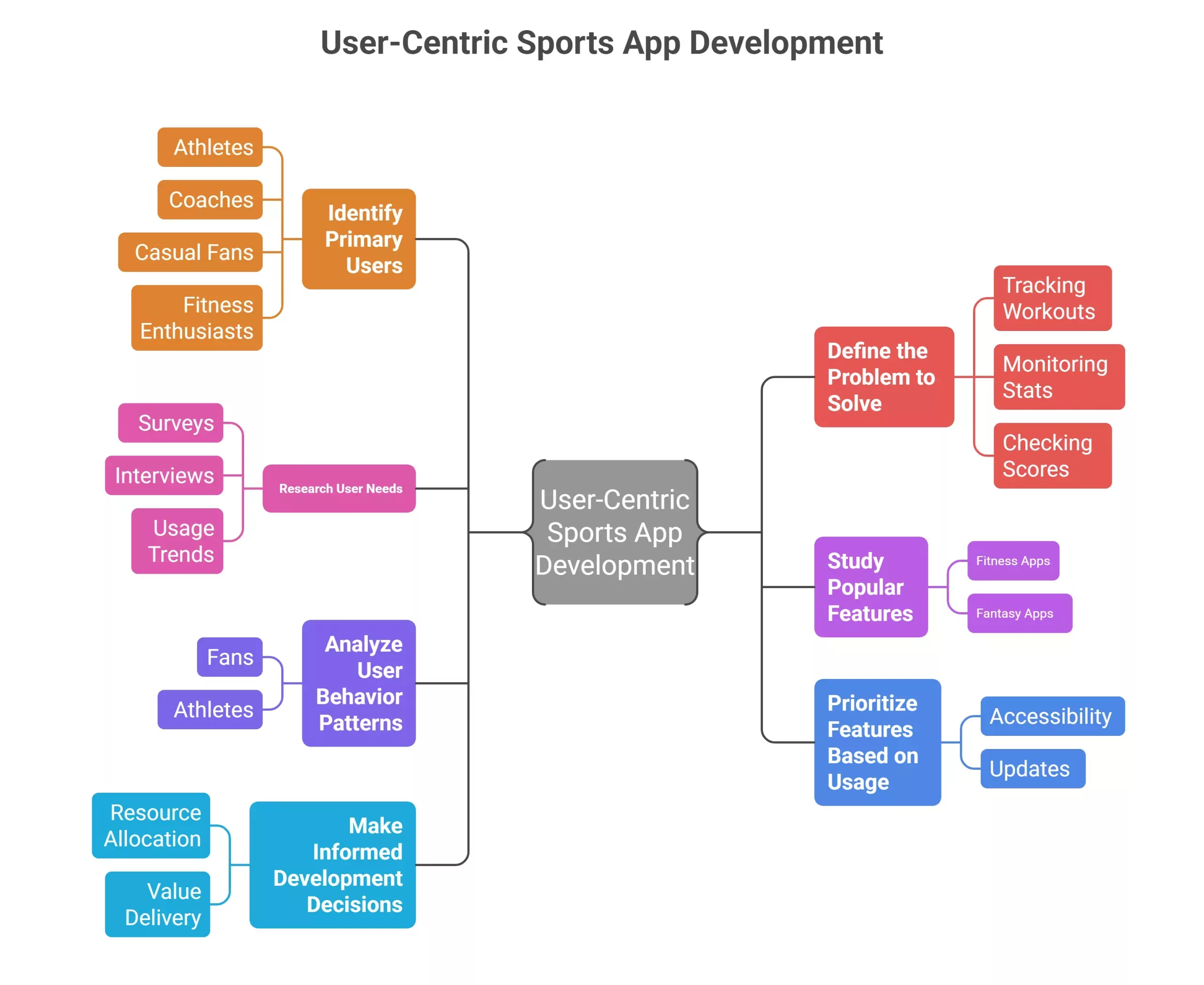
Understanding behaviors also means examining when and how often users interact with apps. A fan may check scores several times a day, while an athlete may log performance data after every training session. Recognizing these patterns helps determine which features should be prioritized and how frequently updates should be pushed.
For startups, this translates into making informed decisions about where to allocate development resources — ensuring the app delivers meaningful value to the intended audience.
Read once! How Much Does Dofu Sports App Development Cost?
Factor 2) Platform and Device Compatibility
A key consideration in Developing Sports Apps is deciding which platforms and devices the app will support. Sports apps are commonly used on smartphones, but users increasingly expect access through tablets, smartwatches, and other wearables. Failing to plan for this diversity can limit adoption.
There are two primary development approaches:
- Native development: Building separate apps for iOS and Android. This often provides better performance and smoother integration with device features (such as GPS or push notifications), but it requires higher budgets and more development time.
- Cross-platform development: Using frameworks like React Native or Flutter to create one codebase that runs on multiple platforms. This reduces time and cost but may introduce limitations in accessing advanced device-specific features.
Real-world examples illustrate these trade-offs. ESPN’s app offers rich, device-specific features on both iOS and Android, requiring significant investment in native development. In contrast, smaller fitness plan apps often use cross-platform solutions to reach users quickly with fewer resources.
Compatibility also extends to wearables. Fitness tracking apps, for example, need seamless integration with devices like Apple Watch or Fitbit. This involves working with APIs and testing across multiple screen sizes and operating systems.
For developers, the practical takeaway is to balance performance expectations with available resources. Startups may find cross-platform tools more efficient, while established companies with larger budgets might invest in native development for maximum control.
Factor 3) Real-Time Data Integration
One of the defining features of many sports applications is the ability to provide real-time updates. Whether it is live scores, player statistics, or streaming match commentary, users expect information that reflects what is happening in the moment. Without reliable data integration, the core purpose of a sports app can be undermined.
Real-time data is typically delivered through Application Programming Interfaces (APIs), which allow apps to connect with external data providers. For example, fantasy sports apps depend on accurate, real-time feeds to calculate points and rankings. If the data is delayed or inaccurate, user trust can decline quickly.
The technical challenge lies in ensuring speed and reliability. App Developers often use caching strategies and cloud infrastructure to minimize delays. At the same time, partnerships with trusted sports data providers are critical to avoid disruptions during high-demand events such as major tournaments.
A limitation to consider is cost. Access to high-quality, licensed data feeds can be expensive, particularly for startups. In some cases, developers may need to begin with limited data sets and expand as the app grows.
For organizations, the key action is to assess both the technical and financial implications of real-time data. Investing early in reliable infrastructure can reduce user complaints and improve long-term engagement.
Factor 4) User Interface (UI) and User Experience (UX)
Design is often what determines whether users continue using a sports app after the first download. A clear User Interface (UI) and a smooth User Experience (UX) ensure that people can find information quickly and interact with the app without frustration.
In the context of Developing Sports Apps, UI refers to the layout, colors, buttons, and typography, while UX involves the overall flow — how easy it is to navigate between sections, how long it takes to load content, and how accessible the app feels.
For example, a fantasy sports app may need to display large volumes of player data in a way that remains readable on small screens. Fitness apps often prioritize dashboards with simple graphs, allowing users to view progress at a glance. In both cases, poor design can result in confusion, longer learning curves, or abandoned sessions. That’s why many businesses partner with the Best Fitness App Development Companies, as these experts know how to balance usability with engaging design, ensuring users stay motivated and active on the platform.
Accessibility is another important aspect. Features like adjustable text size, voice support, or color contrast settings can make the app usable for a wider audience. Many regions are also introducing legal requirements for digital accessibility, making this more than just an optional improvement.
The limitation is that balancing rich functionality with simplicity is not always straightforward. Adding too many features risks overwhelming users, while removing features may reduce usefulness.
For developers, the actionable step is to conduct usability testing with real users early in the design process. Observing how people interact with prototypes helps identify pain points before large investments in coding and design are made.
Read once! Must-Have Features For Mobile App Success And User Growth
Factor 5) Security and Privacy Concerns
Any app that handles personal data must address security and privacy from the outset, and this is especially true when Developing Sports Apps. Many of these apps collect sensitive information, such as health metrics, location data, or payment details. Without strong protections, users may be exposed to risks such as data theft or unauthorized access.
Security begins with standard practices like data encryption, secure authentication methods (e.g., two-factor login), and regular vulnerability testing. For instance, a fitness app that records heart rate and workout history should encrypt data both while stored and while transmitted between devices. Payment details require even stricter measures, often involving compliance with the Payment Card Industry Data Security Standard (PCI DSS).
Privacy laws also shape development. Regulations such as the General Data Protection Regulation (GDPR) in Europe or HIPAA in the United States set rules on how user data can be collected, stored, and shared. Non-compliance can lead to legal penalties and loss of user trust.
There are, however, trade-offs. Stronger security measures may increase development costs and lengthen timelines. For smaller organizations, balancing compliance requirements with available resources can be challenging.
The practical takeaway is that privacy and security should be built into the app’s foundation rather than added later. For startups, this may mean consulting experts early, even if the app is still in a prototype stage. Doing so reduces risks and builds credibility with users from the beginning.
Factor 6) Scalability and Performance
Scalability refers to an app’s ability to handle growth in users, data, and activity without significant slowdowns or crashes. In the case of Developing Sports Apps, scalability is particularly important because user demand often spikes during major sporting events or seasonal tournaments.
To manage these demands, developers often rely on cloud-based infrastructure. Cloud services allow apps to scale resources up or down as needed, reducing downtime during peak activity. Load balancing is another technique, where user requests are distributed across multiple servers to prevent overload.
A practical example comes from fantasy sports app development companies, which regularly face traffic surges when matches begin. Without adequate preparation, these apps risk delays in score updates or even temporary outages — both of which can frustrate users. By contrast, platforms that invest in scalable architecture can support millions of concurrent users with fewer disruptions.
Performance also plays a role in user experience. Slow loading times or crashes may lead to app abandonment, even if the core features are strong. Developers often use techniques such as caching, code optimization, and database tuning to improve speed and reliability.
The limitation is cost: scalable cloud infrastructure and high-performance solutions can become expensive as usage grows. For startups, it may be necessary to begin with smaller-scale solutions while keeping scalability in mind for future updates.
The actionable insight is to plan for scalability from the start, even if the app’s initial user base is small. Building a flexible foundation makes it easier — and less costly — to adapt as the app gains popularity.
Read once! Stages Of Mobile App Development Services
Factor 7) Monetization Models
An important part of Developing Sports Apps is deciding how the app will generate revenue. Monetization affects not only financial sustainability but also the overall user experience. Selecting the right approach requires weighing both the benefits and potential drawbacks.
Common models include:
- Subscription-based: Users pay a recurring fee for premium features or an ad-free experience. Fitness apps often use this model, offering free basic tracking with advanced analytics available only to subscribers.
- Advertising: Revenue comes from in-app ads. While widely adopted, excessive ads can frustrate users if not managed carefully.
- In-app purchases: Users pay for additional content or features, such as unlocking advanced training plans or exclusive live data feeds.
- Freemium model: The app is free to download, but advanced features require payment. Many of the Best Sports App Ideas rely on this structure, balancing accessibility with revenue generation.
Each option has trade-offs. Subscriptions create steady income but may reduce user adoption if the price feels too high. Ads can reach large audiences but risk cluttering the interface. In-app purchases encourage flexibility but may only generate revenue from a small percentage of users.
For startups, the practical step is to align the model with user expectations and market norms. Conducting competitor analysis helps determine what users are accustomed to paying for and where gaps exist. Importantly, monetization should not come at the expense of usability — a smooth user experience often leads to higher retention and, ultimately, more reliable revenue streams.
We have listed! Best App Ideas With Costs
Factor 8) Integration with Wearables and IoT
Sports and fitness users increasingly expect apps to connect with devices beyond smartphones. This includes wearables such as smartwatches, fitness trackers, and connected equipment, all of which fall under the broader category of the Internet of Things (IoT). For developers, planning for this integration is a significant part of Developing Sports Apps.
Wearables generate continuous streams of data, such as heart rate, step counts, or sleep patterns. To capture and display this information, apps typically rely on device-specific APIs (Application Programming Interfaces). For example, Apple provides HealthKit for iOS devices, while Google offers Fit APIs for Android. These tools allow developers to integrate wearable data into apps in a consistent and secure way.
The benefits are clear: apps that connect with wearables often see higher engagement, since users gain personalized insights that go beyond general statistics. A fitness app, for instance, becomes more valuable when it can analyze both workout performance and recovery trends through smartwatch data.
However, integration also brings challenges. Wearable devices differ in how they store and transmit data, which can make development more complex. Battery life is another concern; continuous syncing with devices may drain power faster, frustrating users.
For organizations, the key action is to identify which devices their target users are most likely to own and prioritize compatibility with those platforms. Startups can begin with limited integration — focusing on one or two major wearable brands — and expand as demand grows.
Factor 9) Regulatory and Licensing Issues
Legal and regulatory considerations often receive less attention during early planning, but they can significantly affect the success of a sports app. When Developing Sports Apps, overlooking licensing rules or compliance obligations can result in delays, fines, or restrictions on distribution.
One key area is broadcasting rights. Sports leagues and organizations often own the rights to distribute live scores, video highlights, or match commentary. Using this content without proper agreements can lead to legal disputes. Developers must therefore secure licenses before offering features tied to official game data or media.
Player data permissions are another consideration. Apps that use detailed athlete statistics or images may need approval from the respective teams, leagues, or athletes themselves. This is particularly relevant for fantasy sports apps, which depend heavily on accurate and official data feeds.
In addition, some regions regulate apps that involve betting or fantasy sports. For example, fantasy sports platforms are restricted in certain U.S. states due to gambling laws. Understanding these restrictions early can prevent wasted development resources on features that cannot be legally offered in key markets.
The limitation is that licensing can be costly, especially for smaller organizations. Negotiating rights with leagues or data providers requires both financial resources and legal expertise.
For developers, the practical takeaway is to consult legal professionals during the planning phase. Even if an app begins with limited functionality, ensuring compliance from the start reduces risks and builds a foundation for future growth.
Want to know? Trending Apps In USA
Factor 10) Post-Launch Support and Maintenance
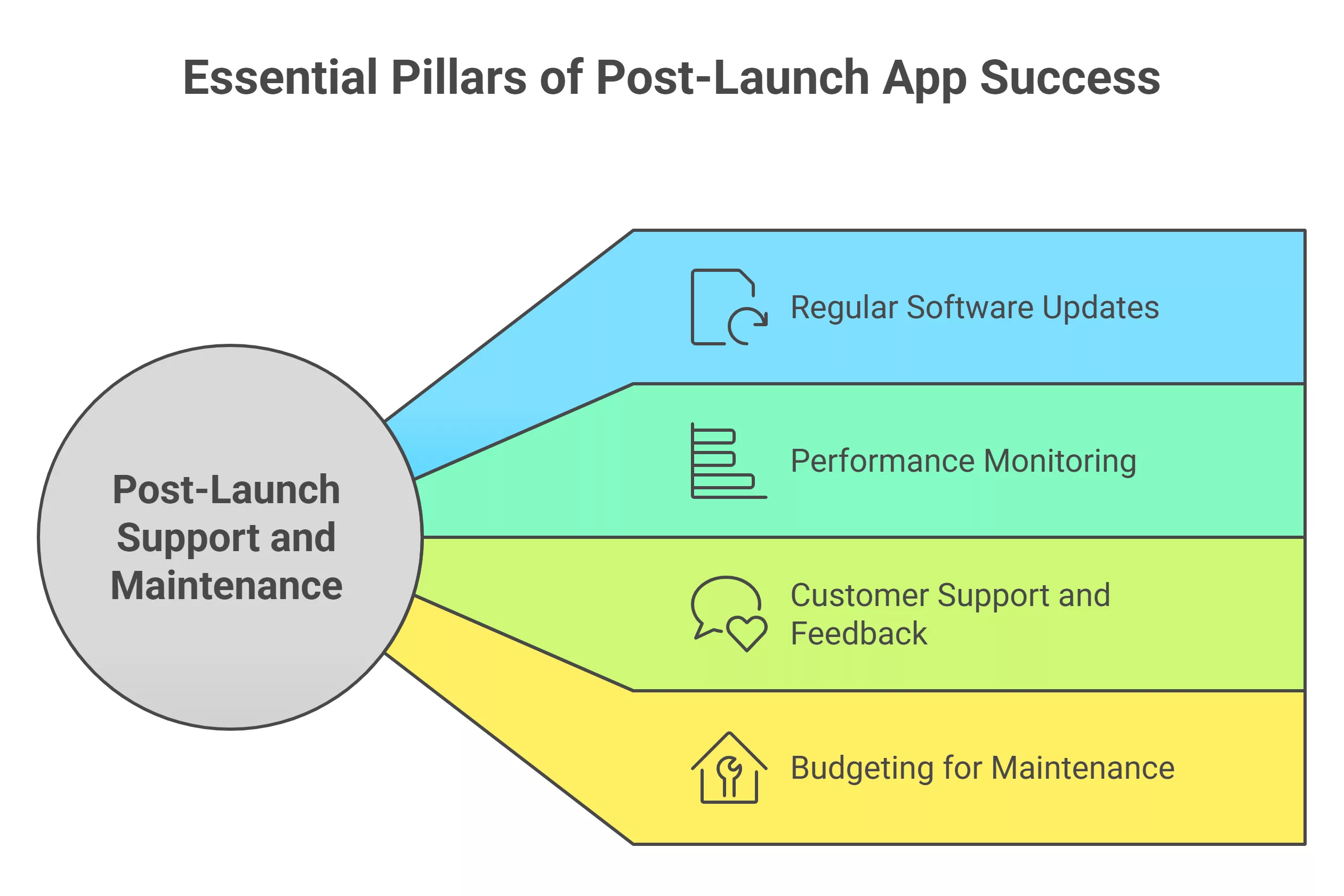
The work of Developing Sports Apps does not end once the app is launched. Long-term success depends on continuous monitoring, updates, and user support. Without these, even well-designed apps can quickly lose relevance.
Regular Software Updates
Updates are necessary to fix bugs, address security vulnerabilities, and ensure compatibility with new operating systems. For example, a fitness app that fails to update regularly may stop syncing with the latest smartwatch models, frustrating users and reducing retention.
Performance Monitoring
Analytics tools allow developers to observe how users interact with the app. Tracking popular features, session lengths, and drop-off points helps identify where improvements are needed. This evidence-based approach ensures development resources are used effectively.
Customer Support and Feedback
Strong customer support contributes to positive user experiences. In-app chat, help centers, or email support can resolve problems quickly. Without these, negative reviews may accumulate, discouraging new users from downloading the app.
Budgeting for Maintenance
Ongoing support requires resources, yet many startups underestimate this need. Allocating a portion of the budget for updates and support from the start ensures the app remains secure, functional, and aligned with evolving user needs.
Share Your Expertise on Sports and Technology
The sports and fitness app industry continues to grow, and fresh perspectives are always valuable. At AppsInsight, we welcome contributions from professionals, developers, and researchers who have insights into Developing Sports Apps, fitness technologies, or digital sports innovation.
If you have experience or expertise in these areas and would like to share your knowledge with a wider audience, you can contribute to our platform. Writing for us is an opportunity to inform others, highlight best practices, and explore new ideas shaping the future of sports and technology.
Final Say
Developing sports apps involves more than building features; it requires careful attention to user needs, technical design, compliance, and long-term maintenance. The ten factors discussed — from understanding user behavior and ensuring platform compatibility to addressing security, scalability, and regulatory issues — provide a practical framework for creating apps that are both useful and sustainable.
For developers and organizations, the most important takeaways are:
- Plan around user needs and expectations before investing in development.
- Build with scalability, security, and compliance in mind from the start.
- Treat post-launch support as an ongoing commitment, not an afterthought.
By approaching development with these factors in mind, teams can reduce risks, improve user satisfaction, and adapt to the evolving sports and fitness technology landscape.
Frequently Asked Questions (FAQs)
What technologies are commonly used for developing sports apps?
Sports apps are typically built using programming languages such as Swift (iOS) or Kotlin (Android) for native apps, and frameworks like React Native or Flutter for cross-platform development. For real-time data, APIs from sports data providers are widely adopted. Cloud platforms such as AWS or Google Cloud support scalability. The choice depends on budget, timeline, and the need for device-specific features.
How do sports apps ensure data security for users?
Most sports apps protect user data through encryption, secure login systems (e.g., two-factor authentication), and regular vulnerability testing. Compliance with regulations such as GDPR or HIPAA is necessary when dealing with sensitive health or personal information. However, implementing these measures can increase development costs, especially for smaller startups.
What are the biggest challenges in integrating wearables with sports apps?
Wearables provide valuable data such as heart rate, sleep tracking, and workout history, but integration is complex. Developers must work with multiple device APIs (Apple HealthKit, Google Fit, Fitbit SDKs), which vary in functionality. Battery drain and inconsistent data accuracy are common limitations. Prioritizing the most widely used devices helps reduce initial complexity.
Which monetization models work best for sports apps?
Monetization models include subscriptions, ads, in-app purchases, and freemium approaches. Fitness apps often succeed with subscriptions because users value continuous progress tracking. Fantasy sports apps may rely more on ads or in-app purchases during seasonal spikes. The best choice depends on the target audience and their willingness to pay. Overuse of ads, however, can negatively affect user experience.
How long does it take to develop a sports app?
Timelines vary depending on complexity, features, and team size. A simple fitness tracker may take three to six months to build, while a full-featured fantasy sports platform with real-time data and scalability features may require a year or more. Ongoing updates and maintenance extend beyond the launch, making development an ongoing process rather than a one-time effort.