


Engine Room Media
We run the numbers. You run the show - cross-platform analytics and recommendations for creators.
Free+Paid
- Web app

Swipe right if you would pay - real demand signals for indie startups.
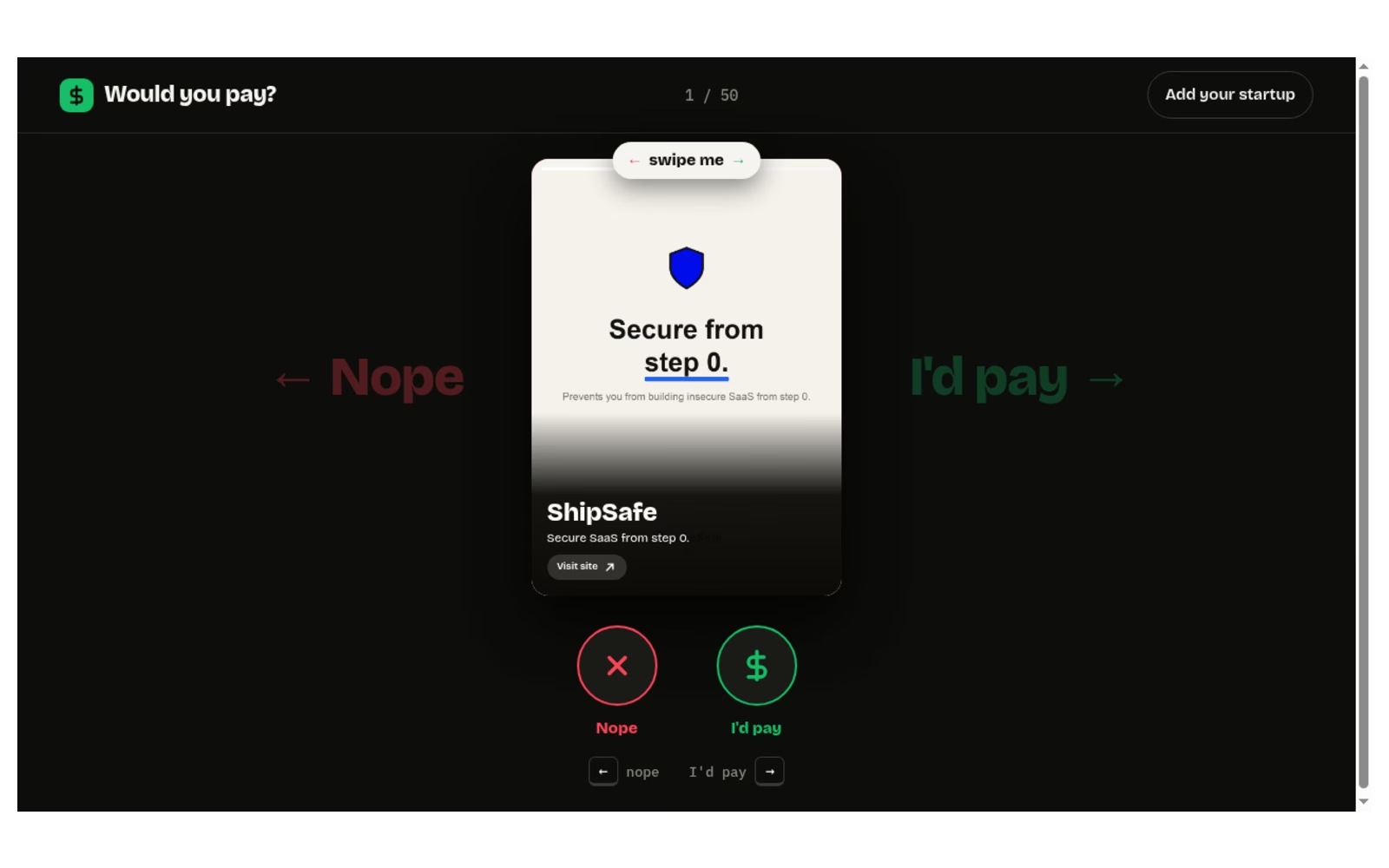
Swipe right if you would pay - real demand signals for indie startups. Would you pay?: validation as a swipe Would you pay?
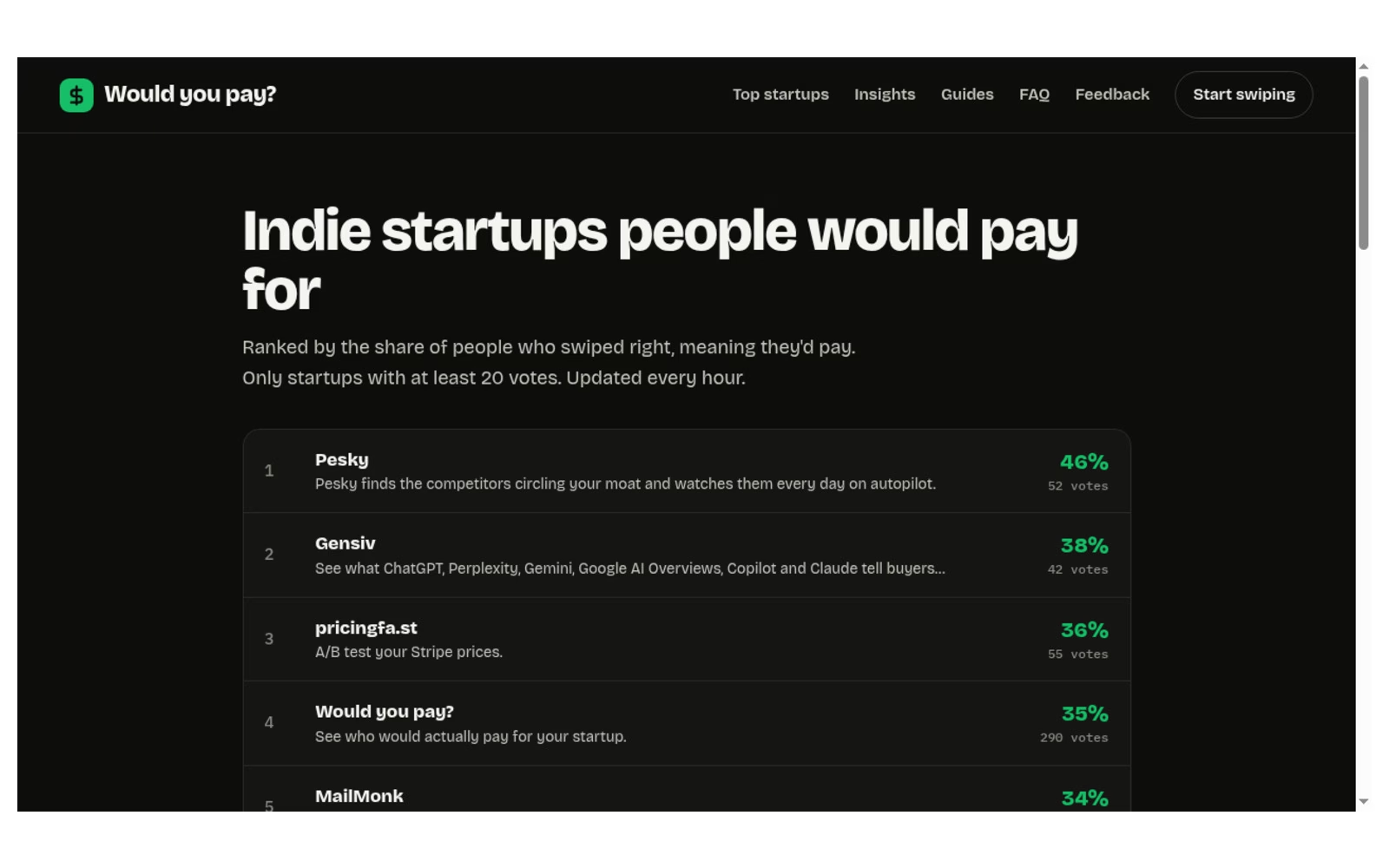
Would you pay? turns validation into a swipe: visitors vote on indie startups with a pay-intent yes or no, and makers get a free, shareable percentage plus role breakdown and click-throughs. It is honest about being intent rather than sales, the core is genuinely free, and the live deck shows real traction.
Would you pay? borrows the dating-app mechanic for startup validation. Visitors see one indie startup card at a time and swipe right if they would pay for it, left if not. No signup, no accounts for voters – the first card loads in about a second. Makers get what landing-page likes cannot tell them: a share of people who say they would open their wallet.
The design choices are unusually careful for a free indie tool. A startup’s pay-intent percentage only appears after 10 swipes, so one or two early votes cannot skew it. The paid Boost – USD 9 at launch – puts a card at the front of the deck for 24 hours but cannot buy yes votes, and if the card does not reach 100 swipes, boosting continues free until it does. Makers see the percentage, whether yes-voters
Would you pay? borrows the dating-app mechanic for startup validation. Visitors see one indie startup card at a time and swipe right if they would pay for it, left if not. No signup, no accounts for voters – the first card loads in about a second. Makers get what landing-page likes cannot tell them: a share of people who say they would open their wallet.
The design choices are unusually careful for a free indie tool. A startup’s pay-intent percentage only appears after 10 swipes, so one or two early votes cannot skew it. The paid Boost – USD 9 at launch – puts a card at the front of the deck for 24 hours but cannot buy yes votes, and if the card does not reach 100 swipes, boosting continues free until it does. Makers see the percentage, whether yes-voters are developers, founders or marketers, and how many clicked through, plus a public share page built for posting on X.
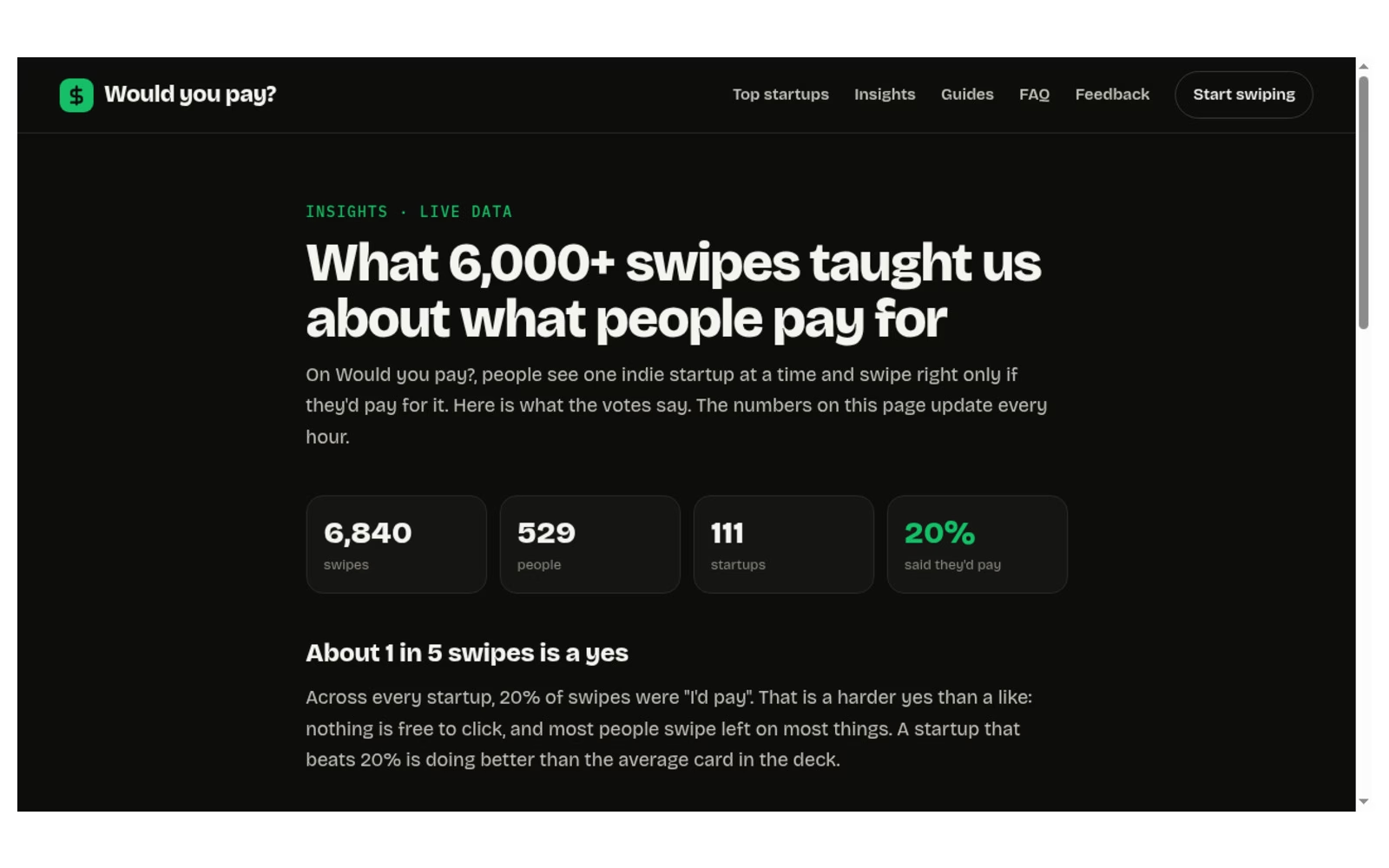
The live numbers are public: at review time the insights page showed 6,840 swipes from 529 people across 111 startups, with about one in five swipes a yes, updated hourly. A leaderboard ranks startups by pay-intent share with a 20-vote minimum. That is genuine activity, but it is also the limit: the voter pool is whoever shows up, skewing toward indie-hacker and Product Hunt audiences. A B2B compliance tool gets judged by the same crowd as a meme generator.
The vendor deserves credit for stating the obvious caveat itself: a swipe right is intent, not a sale. Treat the percentage as a pitch test – does the first impression land – not as demand forecasting. The product is a single-maker project with no company identity, no terms or privacy pages, and support through a form or X DM, so keep expectations sized accordingly.
As a free first filter before you build more, this is a smart hour to spend: add your card, watch the percentage, read the role breakdown. Just remember whose thumbs are voting. The provisional desk-research score is 3.8/5.
Desk-research disclosure: Official pages reviewed September 30, 2026. No submission, boost purchase, account or vote. Live counters and mechanics are vendor-published; identity fields beyond the X handle remain blank.
Ashley Richmond desk research September 30, 2026. Official site pages reviewed: home, swipe deck, top startups, insights, faq. No startup submission, boost purchase, account or vote cast. Identity: site says Built by @mustafaergisi; no company name, legal entity, headquarters or founding year published - those fields left blank; founders field holds the published X handle. No terms or privacy pages found and left blank. Support: feedback form or X DM only, no email published. Pricing facts (free core, USD 9 launch boost, 24-hour front-of-deck, 100-swipe guarantee, 10-swipe threshold) from official homepage and FAQ; there is no dedicated pricing page. Live counters (111 startups, 6,840 swipes, 529 people, 20% pay-intent) from the official insights page at review time. Category set to product-analytics as the closest available fit for a demand-validation tool - flagged as judgment. Media: official icon.svg mark and genuine product UI captured from iwouldpay.dev (swipe deck, leaderboard, insights). Sources: https://iwouldpay.dev/ ; https://iwouldpay.dev/faq ; https://iwouldpay.dev/top ; https://iwouldpay.dev/insights ; https://www.producthunt.com/products/would-you-pay
| Pricing | Free+Paid |
|---|---|
| Free plan | Yes |
| Free trial | No |
| Platforms | Web app |
| API | No |
| Apps Insight Score | 37/100 |
| Implementation | Easy |
| Learning curve | Beginner |
Editorial points are assigned by AppsInsight editors and cannot be purchased or influenced.
| Feature | Would you pay? | Engine Room Media | KWatch.io | Awshar AI |
|---|---|---|---|---|
| Rating | 3.8 / 5 | 4.2 / 5 | 3.7 / 5 | 3.6 / 5 |
| Pricing | Free+Paid | Free+Paid | Free+Paid | Contact sales |
| Starting price | — | — | $19/month | Contact sales |
| Free plan | Included | Included | Included | No |
| Free trial | No | No | No | Yes |
| Platforms | Web app | Web app | Web app | Web app |
| Best for | Indie makers and early-stage founders who want a fast, free first read on whether their startup pitch would make people pay. | Creators and podcasters earning across several platforms who want one dashboard with concrete recommendations, media kits and sponsorship pricing instead of juggling separate analytics tools. | Teams tracking brand mentions and sales signals, founders monitoring competitors, support teams watching public complaints | Brands, agencies, government bodies and political organisations that need to monitor Indian-language conversations across social platforms and news sources, and teams that want AI-generated action plans rather than raw mention streams. |
Would you pay? vs Engine Room Media Would you pay? vs KWatch.io Would you pay? vs Awshar AI
0 /mo
We run the numbers. You run the show - cross-platform analytics and recommendations for creators.

Track keywords and conversations across social networks with real-time alerts

AI social listening and brand monitoring platform built for India
We run the numbers. You run the show - cross-platform analytics and recommendations for creators.
Track keywords and conversations across social networks with real-time alerts
AI social listening and brand monitoring platform built for India
No reviews yet. Be the first to review this app.
Already have an account? Log in to track your reviews.