
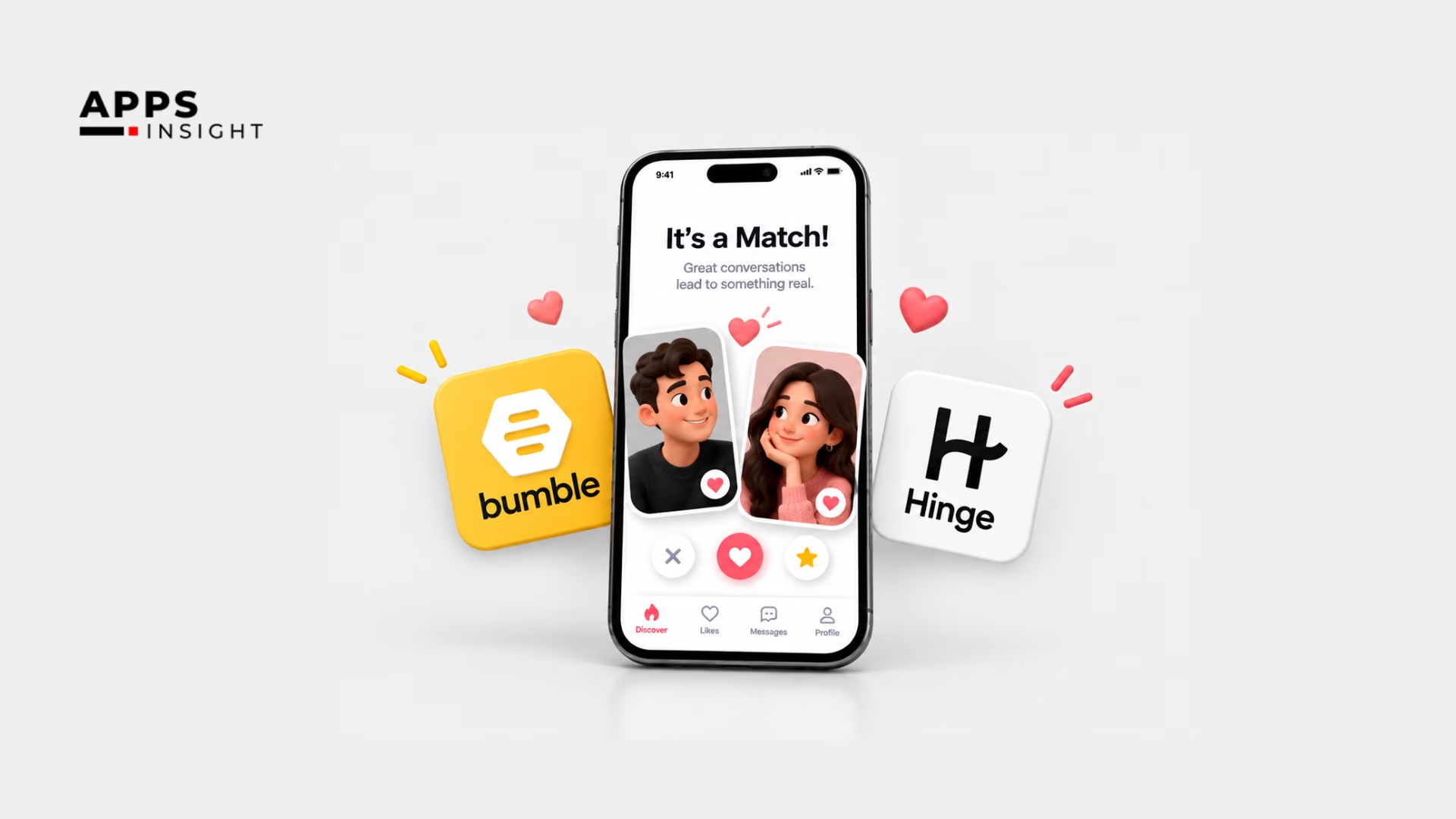
Online dating has become a major part of how modern relationships begin, with dating apps transforming the way people meet, communicate, and build connections. However, the industry is moving beyond the traditional swipe-and-match model. While many dating apps prioritize quick matches and casual conversations, Hinge has taken a different approach by focusing on meaningful connections and long-term compatibility.
Known for its “designed to be deleted” positioning, Hinge aims to help users move beyond endless swiping and build genuine relationships. Its profile prompts, compatibility-focused features, and conversation-driven experience have helped differentiate the platform from conventional dating apps.
This relationship-first approach has also created new opportunities for entrepreneurs and startups exploring the development of dating apps like Hinge. Instead of simply replicating the Tinder-style swipe experience, businesses are increasingly looking at ways to create dating platforms that encourage meaningful interactions, personalized matches, and long-term user engagement.
If you’re considering building a dating app like Hinge, one of the first questions is likely to be: How much does it cost to develop a Hinge-like app? The answer depends on several factors, including the app’s features, design complexity, technology stack, development team, security requirements, and post-launch maintenance.
This guide goes beyond development costs. It explores the key features, development process, technology considerations, monetization strategies, and major cost factors involved in building a dating app like Hinge, helping you understand what it takes to create a dating platform that users genuinely want to return to.
Key Dating App Market Statistics
Hinge generated $396 million in revenue in 2023, rising significantly from $284 million in 2022, highlighting the growing commercial potential of dating apps.
The global online dating app market was valued at $7.94 billion in 2022 and is expected to reach $14.42 billion by 2030, expanding at a 7.6% CAGR between 2023 and 2030.
Around 52% of Gen Z dating app users are seeking serious relationships, making this generation more relationship-focused than users from other age groups.
Top Dating Apps like Bumble and Hinge
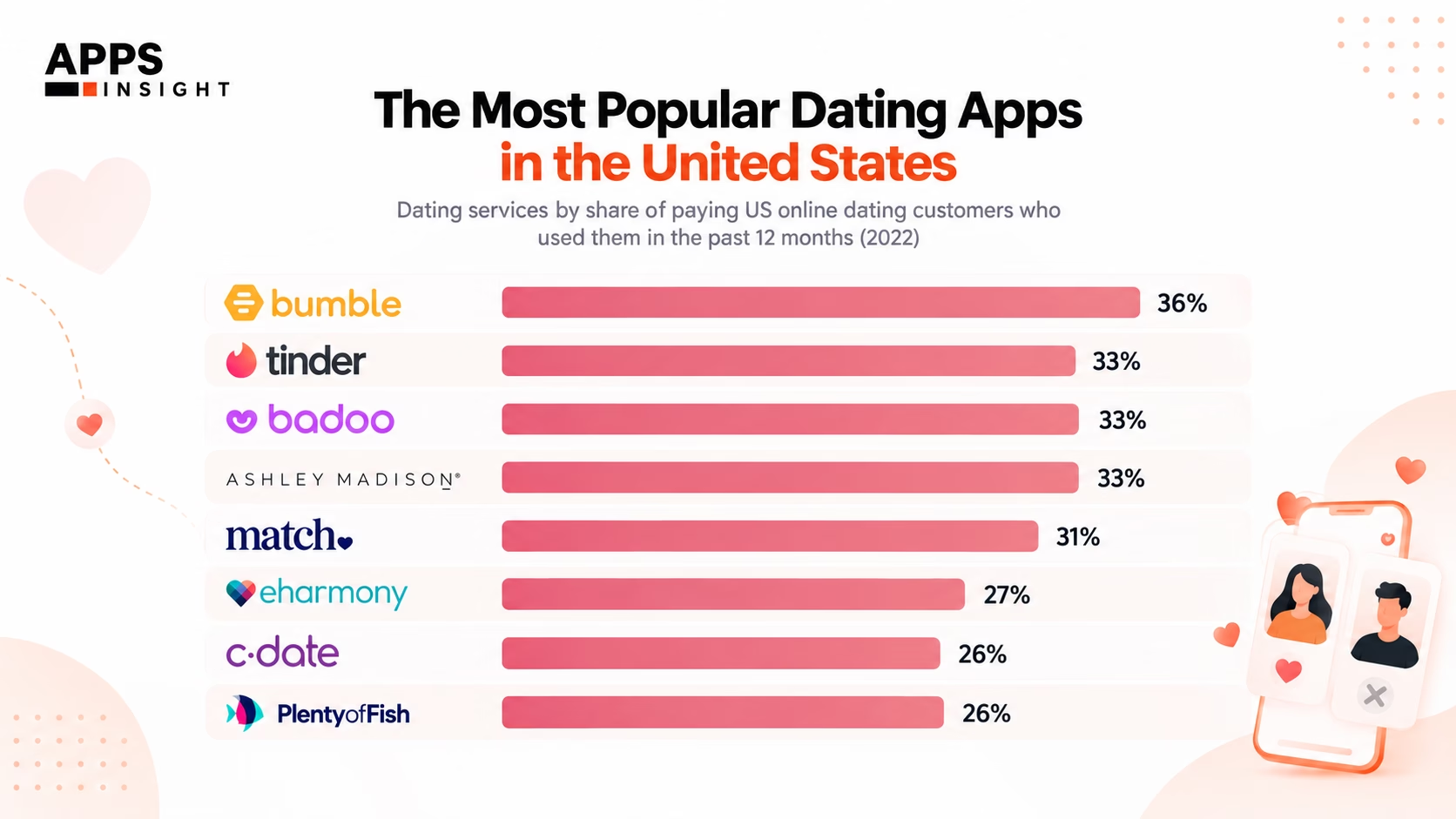
The dating app market offers plenty of options beyond popular platforms like Bumble and Hinge. If you’re looking for apps similar to Bumble, several dating platforms offer unique features, matching experiences, and ways to connect with potential partners. Here are some of the best Bumble alternatives to consider:
- Tinder
- Happn
- OkCupid
- Grindr
- eHarmony
- HER
- Badoo
- Zoe
After exploring these Bumble alternatives and apps like Hinge, let’s take a closer look at what Bumble is, how it works, and what makes it different from other dating apps.
The Hinge Model: What Makes It Unique?
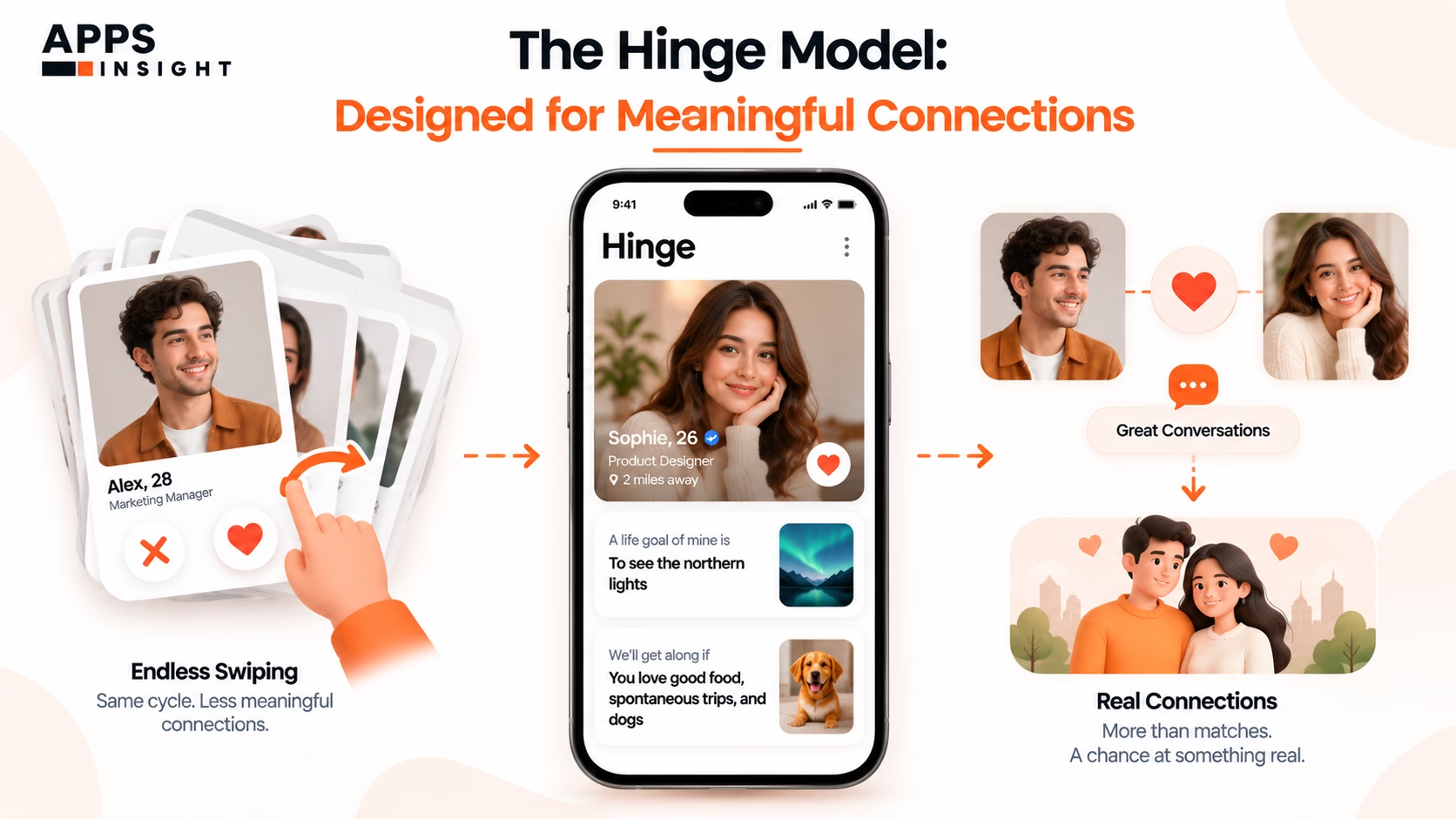
Many dating apps follow a familiar pattern: swipe through profiles, match with someone, start a conversation, and repeat the process. Dating apps like Hinge take a different approach by focusing on meaningful connections and intentional dating rather than endless swiping and short conversations.
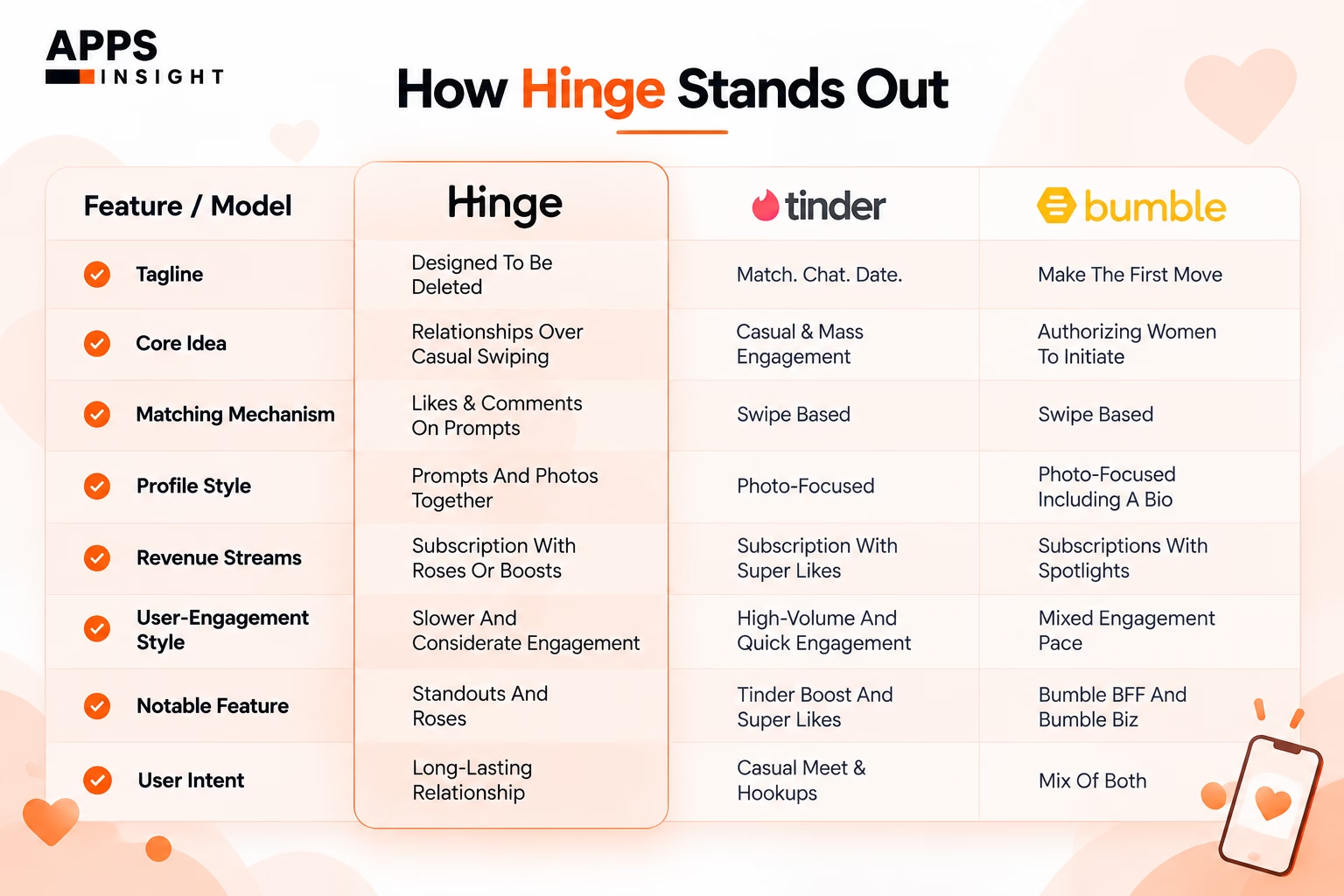
Hinge’s well-known tagline, “Designed to be deleted,” reflects more than a marketing message. It represents the product philosophy behind the platform. The goal is to help users find a compatible partner and eventually have a reason to stop using the dating app.
This approach influences almost every part of the Hinge experience, from profile creation and conversation features to its matching algorithm and premium offerings.
Want to know? Tinder-Like Dating App Development Cost
What Sets a Dating App Like Hinge Apart?
If you are planning to build a dating app like Hinge, understanding what makes its model different from traditional swipe-based platforms is essential. Here are some of the key characteristics that define the Hinge experience.
Conversation-First Profile Design
Hinge places greater emphasis on conversations by allowing users to build profiles around prompts and personal responses. Instead of relying primarily on profile photos, users can answer questions and share opinions that give potential matches an easy way to start a conversation.
Prompts such as relationship preferences, personality-based questions, or fun icebreakers give users more context before they decide to connect. This approach makes the profile more interactive and provides potential matches with conversation starters beyond a simple “Hi.”
Less Reliance on Endless Swiping
Traditional dating apps can encourage users to move rapidly from one profile to another. Hinge takes a more selective approach by allowing users to interact with specific elements of a profile.
Users can like or comment on a particular photo, prompt answer, or other profile detail. This creates a more targeted interaction and can encourage users to engage with the person rather than simply judging a profile through a quick swipe.
For businesses planning to develop an app like Hinge, this interaction model can be an important UX consideration. The objective is to encourage meaningful engagement without creating unnecessary friction.
A Continuously Refined Matching Algorithm
Personalization is another important part of a Hinge-style dating experience. The platform can use interaction signals, such as the profiles users engage with and the types of people who respond positively to them, to improve future recommendations.
For a dating app like Hinge, the recommendation engine needs to balance multiple factors, including user preferences, behavior, profile information, and engagement patterns.
The better the recommendation system understands user intent, the more relevant the suggested profiles can become. For businesses developing a similar application, this means investing in a robust backend, data architecture, analytics, and personalization capabilities.
Hinge Revenue Model Explained
A dating app needs more than an engaging user experience to become a sustainable business. Hinge combines subscription-based features with in-app purchases to generate revenue while keeping its core dating experience accessible.
1. Hinge Preferred Subscription
Hinge offers a premium subscription that provides users with additional features designed to improve their ability to discover and connect with potential matches.
Depending on the current plan and market, premium functionality can include enhanced preferences or filters, additional likes, and tools that provide greater visibility into interactions.
The broader business model is straightforward: users who are highly motivated to find a compatible partner may be willing to pay for additional functionality that makes the discovery and matching process more efficient.
2. In-App Purchases and Premium Interactions
In addition to subscriptions, Hinge uses premium interactions and visibility-focused features as another monetization channel. Features such as Boosts and Roses can give users additional ways to increase their visibility or signal stronger interest in another profile.
These types of microtransactions create additional revenue opportunities without requiring every user to purchase a long-term subscription.
For companies planning to build an app like Hinge, this demonstrates how monetization can be integrated directly into the user journey rather than treated as a separate component of the application.
What Does It Take to Build an App Like Hinge?
The Hinge model requires considerably more than a profile database and a basic matching system. A successful dating app needs strong personalization, reliable communication infrastructure, engaging UX, moderation capabilities, and scalable backend architecture.
If you want to build a dating app like Hinge, several technical components deserve particular attention:
- Recommendation engine: The app needs an intelligent matching and recommendation system capable of analyzing user preferences and behavioral signals.
- Engagement features: Interactive elements such as profile prompts, premium likes, recommendations, and curated profiles can encourage meaningful engagement while supporting monetization.
- Advanced filters and preferences: Users should be able to communicate what they are looking for and refine their discovery experience through relevant preferences.
- Personalized user experience: Recommendations, notifications, content, and interactions should become increasingly relevant as the application collects useful behavioral data.
These capabilities require additional development effort across the frontend, backend, database, recommendation logic, analytics, and personalization layers. As a result, the cost to build an app like Hinge depends heavily on the complexity of the matching algorithm, premium features, communication infrastructure, security requirements, and level of personalization.
Ultimately, the biggest lesson from the Hinge model is that a dating app does not have to compete solely on the number of profiles or the speed of swiping. A product can differentiate itself by designing the entire experience around better conversations, more relevant recommendations, and meaningful relationships.
Core Features to Consider When Building a Dating App Like Hinge
Before investing in AI-powered matchmaking, video dating, or other advanced capabilities, your dating app needs to get the fundamentals right. The core features determine whether users can easily create profiles, discover compatible people, connect with matches, and communicate safely.
These features form the foundation of a successful dating app MVP (Minimum Viable Product). A well-planned MVP should not simply function technically. It should provide a smooth, intuitive, and trustworthy experience from the moment a user signs up.
If you’re planning to build a dating app like Hinge, focusing on these essential features first can help control development costs, validate your concept with real users, and create a foundation that can support more advanced features later.
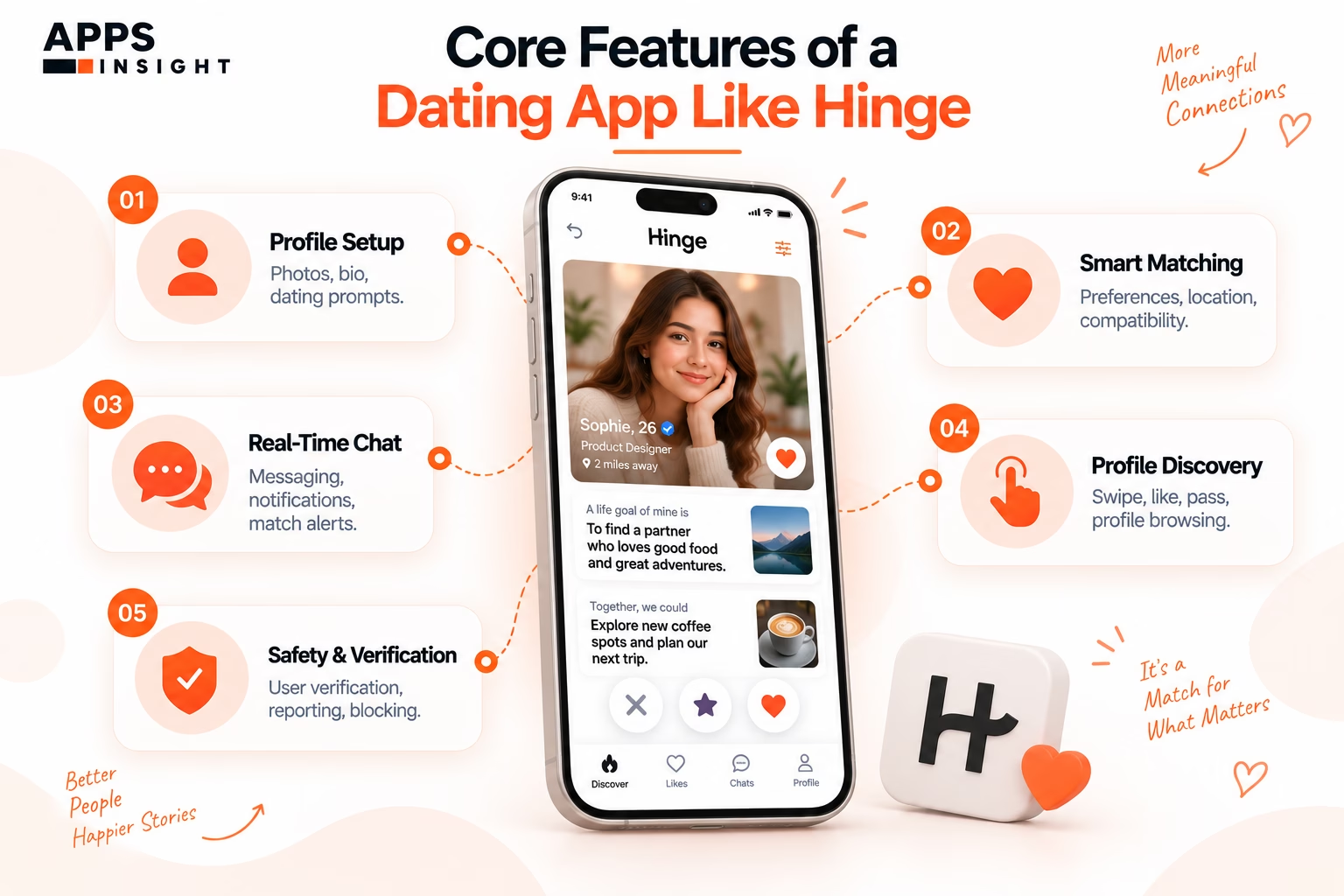
1. User Registration and Profile Setup
The registration process should be quick and straightforward. Give users multiple ways to create an account, such as email, phone number, or social login, and then guide them through setting up a meaningful dating profile.
A well-designed profile should allow users to upload photos, add a short bio, specify basic personal information, and answer prompts that reveal their personality. This is particularly important for a Hinge-style dating experience because profile prompts can encourage more meaningful interactions than photos alone.
What’s included:
- Email, phone, Apple, or Google login
- Profile photo upload
- Name, age, gender, and basic profile information
- Bio and dating prompts
- Guided onboarding flow
- Basic profile management
Estimated development cost: $4,000–$6,000
This estimate generally covers database architecture along with the required frontend and backend development.
2. Basic Matching Algorithm
A reliable matching system is at the heart of any dating application. For an MVP, you don’t necessarily need a sophisticated AI matchmaking engine. You can begin with rule-based matching using user preferences and profile information.
The initial algorithm can consider factors such as location, age range, gender, sexual orientation, and other preferences selected during onboarding.
What’s included:
- Preference-based matching
- Age and gender filters
- Location-based matching
- GPS-based distance calculation
- Match recommendation queue
- Basic matching logic
Estimated development cost: $5,000–$8,000
Although the initial matching system may be relatively simple, its architecture should be designed to scale. As your user base grows, you can introduce behavioral data, machine learning, compatibility scoring, and AI-powered recommendations.
3. Profile Discovery and Engagement Tools
Users need an intuitive way to explore potential matches and interact with profiles. A swipe-based or card-style interface can make profile discovery simple and engaging. Your MVP can allow users to like, pass, or view profiles while keeping the interaction flow quick and easy to understand.
What’s included:
- Swipeable profile cards
- Like and pass actions
- Profile viewing
- Card-stack interface
- Basic interaction animations
- Match feedback
Estimated development cost: $3,000–$5,000
A smooth discovery experience can have a direct impact on engagement. If users find it difficult to browse profiles or interact with potential matches, they may leave the app before forming meaningful connections.
4. Real-Time Messaging and Communication
Once two users match, the app needs to provide a reliable communication channel. One-to-one messaging should be fast, intuitive, and available immediately after a mutual match. For an MVP, the messaging system can include real-time text communication, message delivery indicators, typing indicators, and push notifications.
What’s included:
- One-to-one messaging
- Real-time message delivery
- Typing indicators
- Read or delivery indicators
- Push notifications
- Firebase or WebSocket integration
- Basic chat management
Estimated development cost: $6,000–$10,000
Real-time communication requires a reliable backend architecture. As the application grows, the messaging infrastructure should be capable of handling more simultaneous users, conversations, notifications, and message traffic.
5. Safety, Reporting, and User Verification
Trust is critical for dating applications. Users need to feel confident that the people they interact with are genuine and that inappropriate behavior can be reported quickly.
Your dating app MVP should therefore include essential verification, reporting, blocking, and moderation capabilities from the beginning. These features can also help you address platform safety expectations and create a more trustworthy user experience.
What’s included:
- Email or phone verification
- User authentication
- Block and report functionality
- Basic content moderation
- Inappropriate-content detection triggers
- User safety controls
- Account management
Estimated development cost: $4,000–$6,000
Safety should not be treated as a feature to add after launch. Building moderation and reporting workflows into the initial product can help protect users, reduce abuse, and establish trust as your dating platform grows.
Why These Features Matter for a Dating App MVP
The objective of an MVP is not to replicate every feature of Hinge from day one. Instead, it should deliver the core dating experience effectively: users should be able to register, create profiles, discover potential matches, express interest, communicate with mutual matches, and stay safe.
Once these fundamentals are validated, you can expand the platform with more advanced capabilities such as AI matchmaking, video dates, voice calls, advanced compatibility scoring, personalized recommendations, premium subscriptions, virtual gifts, location-based discovery, and AI-powered safety moderation.
Starting with a focused feature set also makes it easier to estimate the cost to develop a dating app like Hinge, prioritize the product roadmap, and determine which features should be introduced in later development phases.
Now let’s learn about Bumble,
The Bumble Model: What Makes It Unique?
Many dating apps are built around the same basic journey: create a profile, browse potential matches, connect with someone, and start a conversation. Bumble takes a more intentional approach to online dating by giving users greater control over how connections begin and how they interact with potential matches.
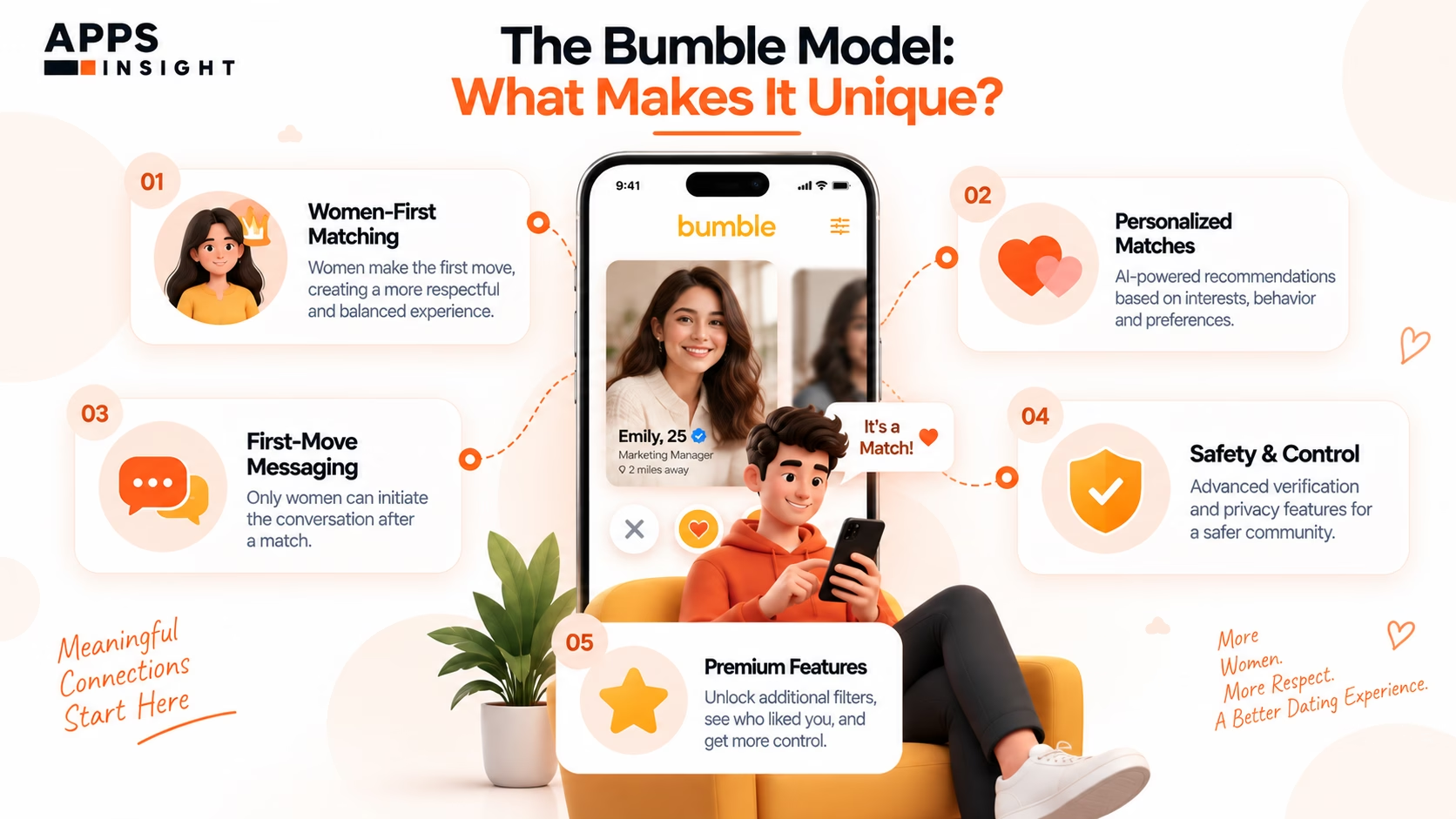
One of the platform’s most recognizable ideas is its women-first approach to heterosexual matches, where women traditionally make the first move. This concept helped Bumble differentiate itself in a crowded dating app market by putting more emphasis on user control, respectful interactions, and meaningful conversations.
Bumble has also expanded beyond traditional dating. Its broader platform has included experiences focused on dating, friendship, and professional networking, demonstrating how a matching-based product can serve different types of social connections.
For businesses planning to build a dating app like Bumble, this model offers an important lesson: differentiation does not necessarily require reinventing the entire dating experience. A strong product can stand out by changing how users discover people, initiate conversations, manage preferences, and feel safe while using the platform.
The Bumble model combines profile-based discovery, personalized matching, communication tools, safety features, and premium functionality into a single user experience. These elements provide a useful foundation for understanding what it takes to develop a Bumble-like dating application in 2026.
Read once! Why Dating Platforms Continue To Invest In Social Media App
What Sets a Dating App Like Bumble Apart?
If you are planning to build a dating app like Bumble, understanding the product decisions that differentiate it from conventional dating platforms is essential. Bumble is not simply a profile-swiping application. Its value proposition is built around giving users more control over connections, encouraging intentional interactions, and creating a safer environment for meeting new people.
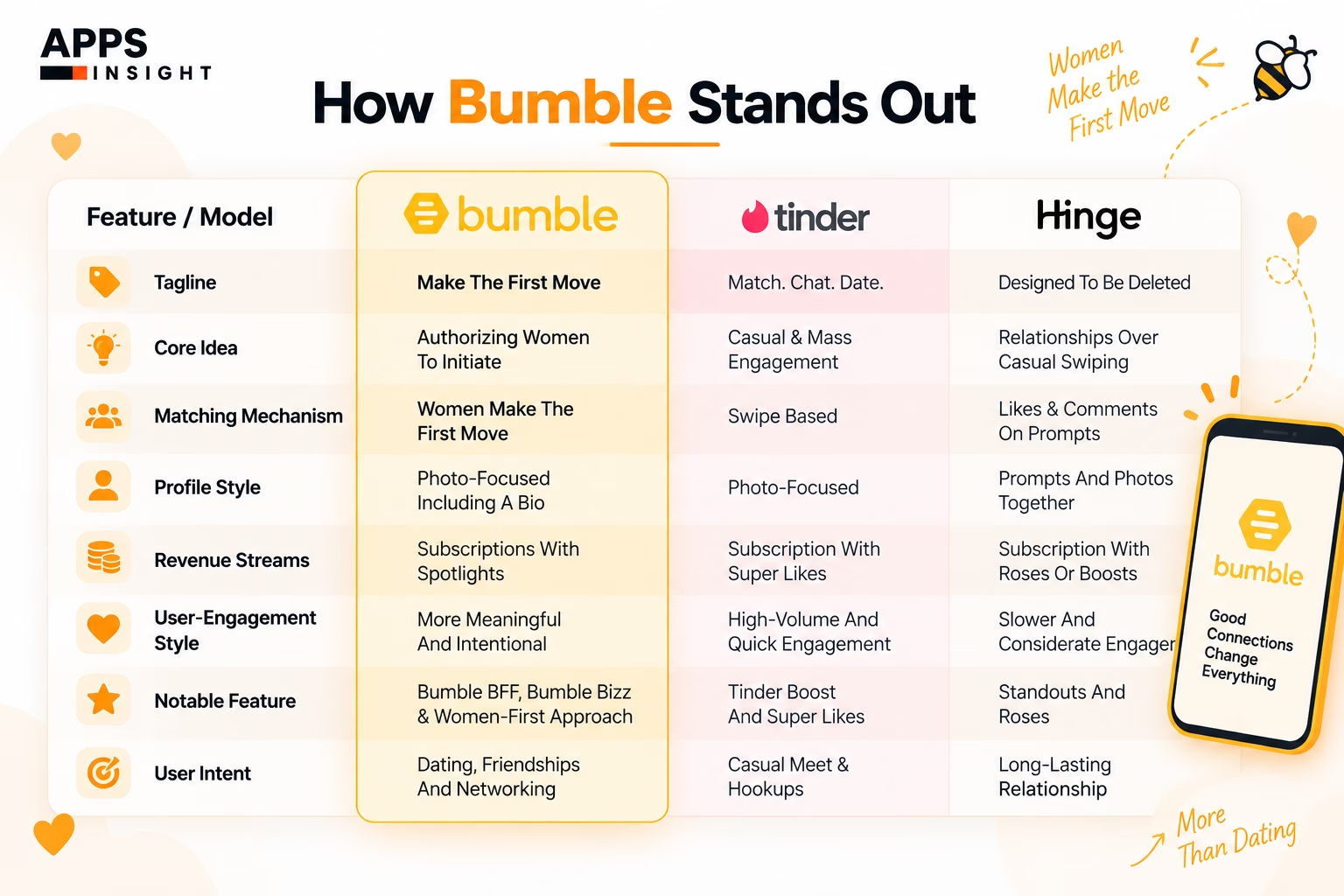
Several elements of the Bumble experience can serve as inspiration when planning the features and user journey of a Bumble-like dating app.
Women-First Dating Experience
One of Bumble’s most recognizable differentiators is its women-first approach to heterosexual dating. Rather than allowing either person to immediately start a conversation after a mutual match, the platform has traditionally given women the opportunity to initiate the conversation.
This approach changes the dynamics of the typical dating app experience. It gives users more control over who starts the conversation and can help create a more intentional first interaction.
For businesses developing a dating app like Bumble, this demonstrates how a distinct communication rule can become a core product differentiator. The goal is not necessarily to copy Bumble’s exact approach, but to identify a unique interaction model that addresses a genuine user concern.
Profile-Based Matching and Discovery
Bumble uses profile discovery as a central part of its dating experience. Users can view information about potential matches, including photos, personal details, interests, and preferences, before deciding whether they want to connect.
A well-designed discovery interface needs to make important information easy to understand without overwhelming the user. The combination of profile information, preferences, location, and user activity can help create a more personalized discovery experience.
When developing a Bumble-like app, businesses should therefore focus on creating profiles that communicate personality and compatibility rather than relying entirely on photographs.
Match and Messaging Experience
Matching is only the beginning of the dating journey. Once two users express mutual interest, the application needs to provide a simple and reliable way for them to communicate.
Bumble’s interaction model places particular importance on how conversations begin. This makes the messaging experience an important part of the overall product rather than simply a standard chat feature.
For a new dating application, developers can build features such as real-time messaging, push notifications, typing indicators, message status, conversation controls, and match expiration rules, depending on the product strategy.
The objective is to reduce friction between matching and meaningful conversation while giving users appropriate control over their interactions.
Safety and User Control
Safety is a fundamental consideration for any modern dating application. Users need tools that allow them to manage unwanted interactions, report inappropriate behavior, block other accounts, and control aspects of their visibility and communication.
For a Bumble-like application, safety should be integrated into the product architecture from the beginning. Account verification, reporting workflows, moderation systems, privacy controls, and secure authentication can help create a more trustworthy environment.
This is particularly important when developing a dating app for a large user base because safety requirements become increasingly complex as the number of users and interactions grows.
Personalized Dating Experience
A modern dating application should become more relevant as users interact with it. Matching and recommendation systems can use information such as preferences, location, profile characteristics, and engagement patterns to improve the profiles presented to users.
For businesses planning to develop an app like Bumble, personalization can become an important competitive advantage. A basic rule-based matching system can be appropriate for an MVP, while more advanced recommendation models can be introduced as the application collects sufficient behavioral data.
This creates a development path where the product can begin with essential functionality and gradually evolve toward AI-powered matchmaking and personalized recommendations without making the initial MVP unnecessarily complex.
Bumble Revenue Model Explained
A successful dating app needs a sustainable monetization strategy alongside an engaging user experience. Bumble combines subscription plans, premium features, and in-app purchases to generate revenue while allowing users to access the core dating experience without necessarily paying.
For businesses planning to develop an app like Bumble, this model demonstrates how premium functionality can be introduced at different stages of the user’s journey. Rather than placing essential functionality behind a paywall, a dating app can offer additional discovery, visibility, and interaction features to users who want a more advanced experience.
1. Bumble Premium Subscription
A premium subscription can provide users with additional tools that make finding and connecting with potential matches more convenient.
Depending on the plan and market, premium functionality may include advanced filters, access to people who have already shown interest, extended matching options, and other discovery-related features.
The subscription model works because users who are more actively looking for connections may be willing to pay for features that give them greater control over their dating experience.
For companies building a Bumble-like dating app, subscriptions can become a predictable recurring revenue stream while keeping the basic version of the application accessible to a wider audience.
2. Bumble Boost and Premium Interactions
In addition to recurring subscriptions, dating applications can generate revenue through individual premium features and interactions.
Visibility-oriented features can allow users to increase the exposure of their profiles, extend certain interactions, or receive additional opportunities to connect with potential matches.
These features work particularly well when they are integrated naturally into the discovery experience. A user who wants more visibility or additional opportunities does not necessarily need to commit to a long-term subscription.
For businesses developing a dating app like Bumble, this creates another monetization channel alongside subscriptions. The combination of recurring subscriptions and one-time premium purchases can provide greater flexibility in how users choose to pay for additional functionality.
3. Premium Features as Part of the User Journey
The most effective dating app monetization strategies do not make users feel that they must pay simply to use the application. Instead, premium features should solve specific problems or provide additional value.
For example, users may pay for greater profile visibility, enhanced discovery options, additional interactions, or more control over their matching experience.
When these features are introduced at the right point in the user journey, monetization can support the business without unnecessarily disrupting the core dating experience.
For a startup planning to build an app like Bumble, it is therefore important to consider monetization during product planning rather than adding premium features after development is complete. The application’s database, payment infrastructure, user permissions, subscription management, and backend architecture should be designed to support future monetization from the beginning.
What Does It Take to Build an App Like Bumble?
Building an app like Bumble requires more than creating a dating interface with profiles and a swipe feature. A successful dating platform needs a combination of matching technology, user experience, real-time communication, safety infrastructure, personalization, and monetization.
The development approach should also match the stage of your business. An MVP can start with essential dating functionality and a straightforward matching system, while advanced capabilities can be introduced after the product has been validated with real users.
If you want to build a dating app like Bumble, the following technical components deserve particular attention:
Matching and recommendation engine: The application needs a reliable system for recommending relevant profiles based on preferences, location, profile information, and user behavior. More advanced versions can later incorporate machine learning and AI-based personalization.
Profile and discovery system: Users need an intuitive way to create detailed profiles, explore potential matches, apply preferences, and express interest. The discovery experience should be fast, visually engaging, and easy to navigate.
Real-time communication: Once users match, the application needs dependable messaging infrastructure. Real-time chat, push notifications, typing indicators, message status, and communication controls can help create a smooth post-match experience.
Safety and moderation: Dating platforms need strong protection against fake accounts, harassment, inappropriate content, and unwanted interactions. Authentication, profile verification, reporting, blocking, moderation, and privacy controls should be considered during the initial architecture.
Location-based functionality: Location can play an important role in dating recommendations. GPS and location services can help users discover potential matches within a preferred distance while giving them appropriate privacy controls.
Premium monetization: If the application will use subscriptions or paid features, the backend should support subscription management, in-app purchases, payment processing, premium permissions, and feature access from the beginning.
The complexity of these components directly affects the cost to develop an app like Bumble. A basic MVP with profiles, matching, discovery, messaging, and safety features will require considerably less investment than a full-scale platform with AI matchmaking, advanced recommendations, video communication, sophisticated moderation, and multiple monetization options.
For this reason, businesses should avoid trying to replicate every Bumble feature in the first release. A focused MVP can help validate the concept, understand user behavior, identify the features users value most, and provide a stronger foundation for subsequent development.
The technology stack should also be selected according to the application’s scalability requirements. Cross-platform frameworks can help reduce development effort when launching on both iOS and Android, while native development may be appropriate when the product requires deeper platform-specific functionality.
Ultimately, Bumble-like app development is a combination of product strategy and engineering. The strongest applications are not necessarily the ones with the longest feature lists. They are the ones that make matching, communication, safety, and user engagement work together as one seamless experience.

Core Features to Consider When Building a Dating App Like Bumble
Before adding AI-powered matchmaking, video dating, advanced recommendations, or other sophisticated capabilities, your Bumble-like dating app should establish a strong foundation with the essential features users expect from a modern dating platform.
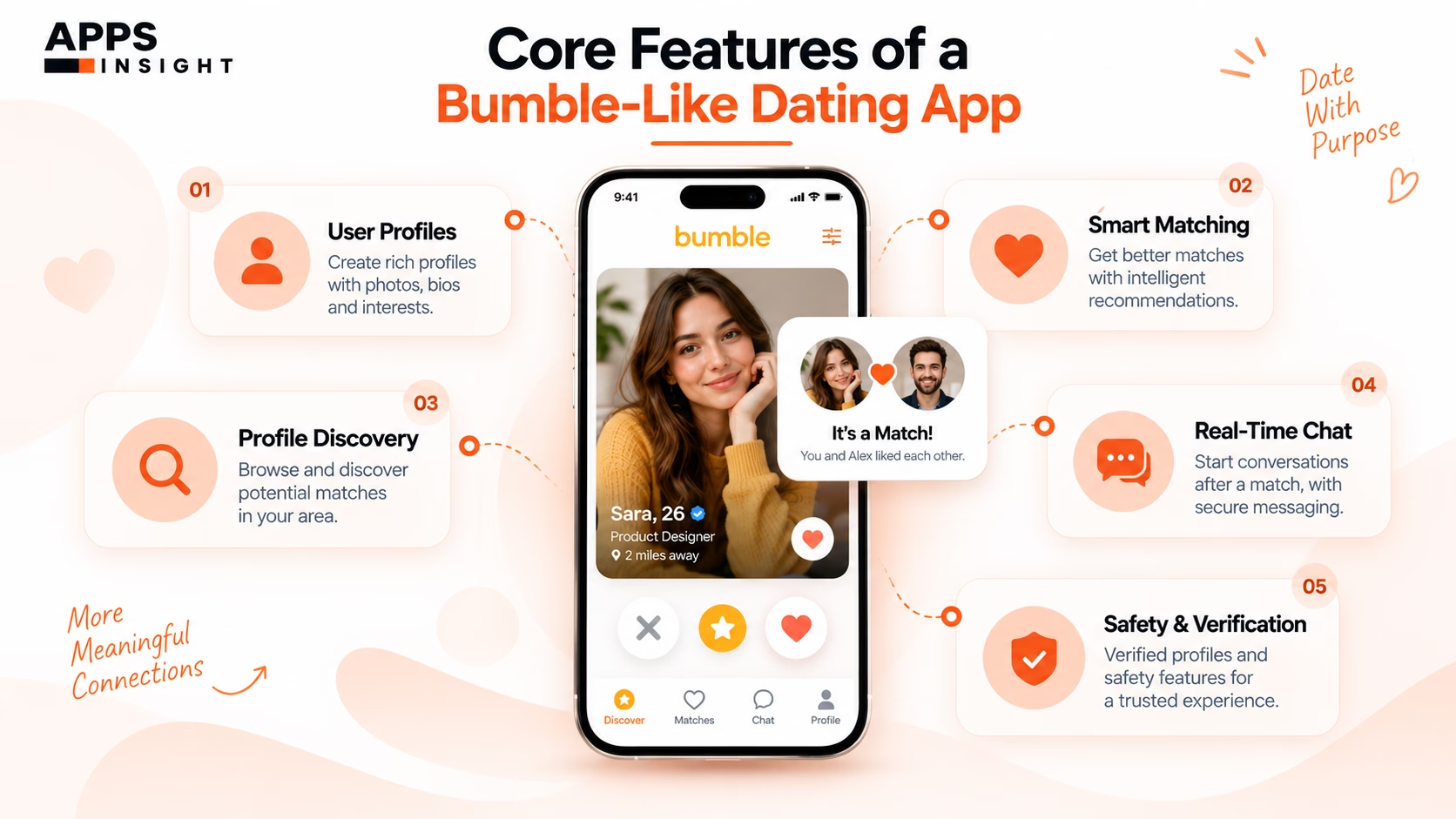
These core features make up the foundation of a dating app MVP (Minimum Viable Product). The objective is not to reproduce every Bumble capability in the first version, but to create a reliable experience that allows users to register, build profiles, discover potential matches, connect, communicate, and manage their safety.
If you’re planning to build an app like Bumble, prioritizing these features can help control the initial development budget, validate your concept with real users, and create an architecture that can support advanced functionality as the platform grows.
1. User Registration and Profile Setup
Registration is the first interaction users have with your dating application, so the onboarding process should be simple and frictionless. Users should be able to create an account using email, phone number, or supported social login options.
Once registered, they should be guided through profile creation, where they can upload photos, provide personal information, describe their interests, and specify their dating preferences.
What’s included:
- Email and phone registration
- Google, Apple, or social login
- Profile photo uploads
- Name, age, gender, and basic information
- Interests and preferences
- Profile bio
- Guided onboarding
- Profile editing and management
Estimated development cost: $4,000–$6,000
The cost generally covers the frontend, backend, database structure, authentication, and basic profile-management functionality.
2. Matching Algorithm
The matching system is one of the most important components of a dating application. For an MVP, you can begin with a rule-based algorithm that recommends profiles according to information users provide during registration.
The system can consider factors such as age range, location, gender, orientation, interests, and selected preferences.
What’s included:
- Preference-based matching
- Age and gender filters
- Location-based recommendations
- Distance calculation
- Match recommendation queue
- Like and pass logic
- Basic compatibility rules
Estimated development cost: $5,000–$8,000
You don’t necessarily need AI for the first version. However, the matching architecture should be designed so that behavioral data and machine learning can be introduced later. As your platform collects more interaction data, recommendations can become increasingly personalized.
3. Profile Discovery and Engagement Tools
The discovery experience determines how easily users can explore potential matches and express interest. A familiar card-based interface can make the process simple while allowing users to quickly review important profile information.
For a Bumble-like application, you can also design interaction rules around your specific product concept instead of simply copying a traditional swipe interface.
What’s included:
- Profile cards
- Swipe or tap interactions
- Like and pass actions
- Profile viewing
- Interest indicators
- Basic animations
- Match notifications
Estimated development cost: $3,000–$5,000
A well-designed discovery experience should make interactions feel quick without turning the application into an endless scrolling experience. Clear profile information and intuitive actions can help encourage users to continue exploring the platform.
4. Real-Time Messaging and Communication
After a mutual match, communication becomes the next important stage of the dating experience. Your application needs a dependable messaging system that allows matched users to communicate smoothly.
For an MVP, text-based messaging with real-time delivery and notifications is usually enough. More advanced communication options can be introduced as the product matures.
What’s included:
- One-to-one chat
- Real-time message delivery
- Typing indicators
- Read and delivery status
- Push notifications
- Firebase or WebSocket integration
- Conversation management
- Block and report options
Estimated development cost: $6,000–$10,000
The messaging infrastructure needs to be designed for reliability and scalability. As your user base increases, the backend will need to handle more simultaneous conversations, notifications, and message traffic without affecting performance.
5. Safety, Verification, and User Controls
Safety should be part of the application’s foundation rather than something added after launch. Dating platforms handle sensitive personal interactions, making it important to give users clear tools for controlling who they interact with and reporting inappropriate behavior.
A Bumble-like dating application should consider authentication, account verification, reporting, blocking, moderation, and privacy controls during the initial development stage.
What’s included:
- Email or phone verification
- Secure user authentication
- Profile verification options
- Block and report functionality
- Content moderation
- Abuse-reporting workflow
- Privacy controls
- Account management
Estimated development cost: $4,000–$6,000
A strong safety system can help establish user trust while giving the platform a framework for handling problematic accounts and content as the community grows.
Read once! Best Monetization Strategies for Dating Apps Like Tinder
Why These Features Matter for a Dating App MVP
The goal of an MVP is to prove that your dating concept works with real users, not to launch with every advanced feature available in the market.
A strong first version should allow users to create a profile, discover potential matches, express interest, communicate after matching, and use the platform safely. Once these core experiences are working effectively, you can expand the product with AI matchmaking, video and voice dating, advanced compatibility scoring, premium subscriptions, profile boosts, enhanced filters, personalized recommendations, and AI-powered moderation.
Taking this phased approach can make it easier to estimate the cost to develop an app like Bumble, prioritize development resources, gather meaningful user feedback, and decide which advanced features deserve investment in later versions.
Advanced Features to Consider for a Bumble-Like Dating App
Once the MVP has been validated, you can introduce advanced features that improve personalization, engagement, monetization, and user safety. These features should be added according to user behavior and business goals rather than simply increasing the feature count.
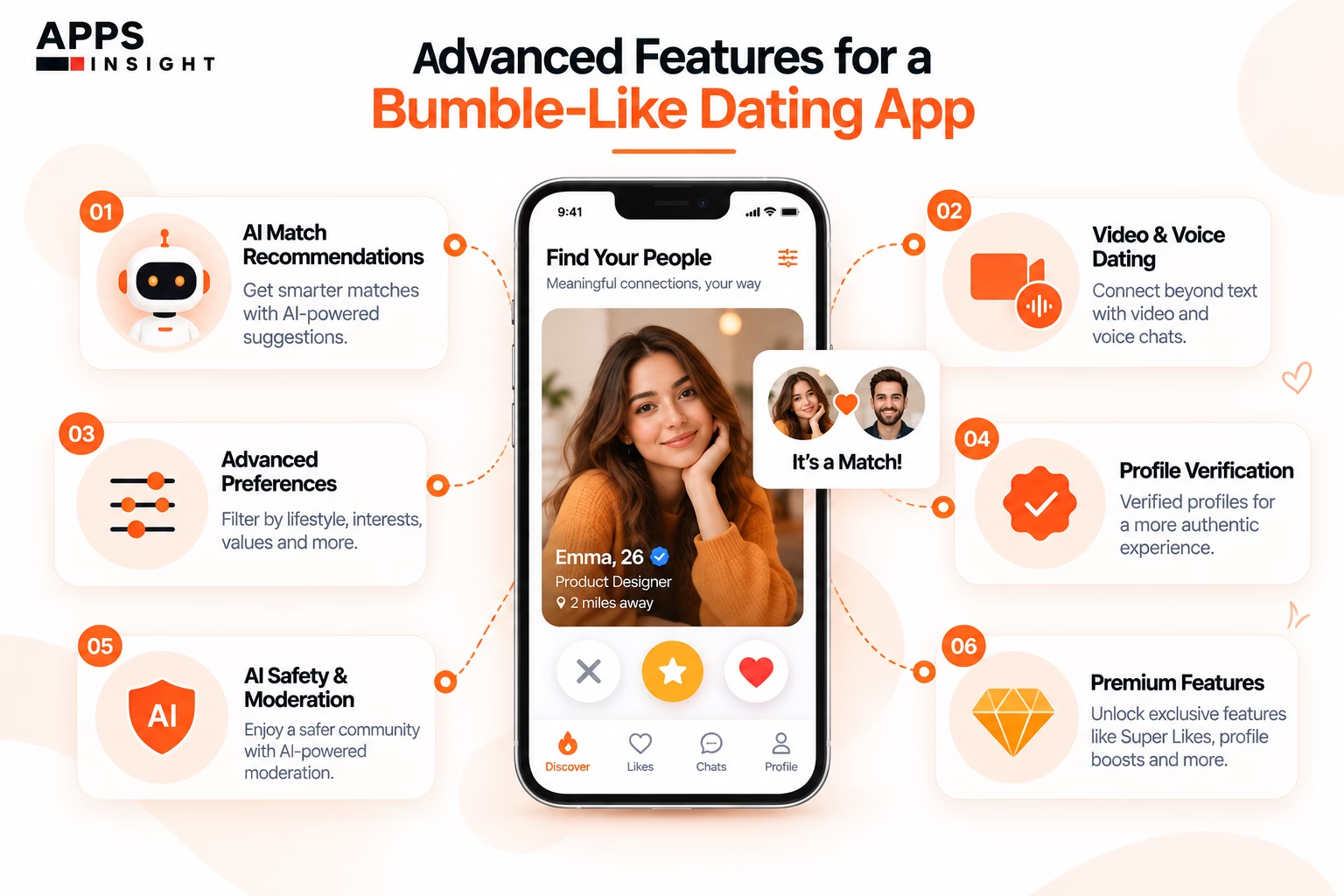
AI-Powered Match Recommendations
AI can analyze profile information, preferences, interaction history, and engagement patterns to make more relevant match recommendations. Instead of relying only on fixed filters, an intelligent recommendation system can continuously learn from user behavior.
For example, if a user consistently interacts with profiles sharing particular interests or characteristics, the recommendation engine can use those signals to refine future suggestions.
For businesses developing a dating app in 2026, AI matchmaking can become a significant differentiator, but it should be implemented carefully with appropriate privacy, transparency, and data-management practices.
Video and Voice Dating
Video and voice features can give users additional ways to connect before meeting in person. In-app video calls can help users determine whether they feel comfortable communicating with a potential match without immediately exchanging personal contact information.
A video dating feature may include:
- One-to-one video calls
- Voice calls
- Call controls
- In-app notifications
- User blocking and reporting
- Privacy and permission controls
These capabilities require additional development across real-time communication, media infrastructure, security, and moderation.
Advanced Search and Dating Preferences
As your user base grows, users may want greater control over who appears in their recommendations. Advanced preferences can allow them to refine their discovery experience based on interests, lifestyle preferences, location, relationship goals, and other relevant criteria.
The key is to provide useful personalization without making the onboarding process unnecessarily complicated.
Profile Verification
Profile verification can help increase trust by giving users additional signals that an account belongs to a real person. Depending on the product strategy, verification can involve phone authentication, photo verification, identity checks, or other methods.
For a dating platform, verification should work alongside reporting and moderation systems rather than being treated as a standalone safety feature.
AI-Powered Safety and Moderation
As dating platforms grow, manually reviewing every profile, message, image, and report becomes increasingly difficult. AI-assisted moderation can help identify potentially harmful or inappropriate content and prioritize cases that require human review.
A responsible moderation architecture should combine automated detection with human oversight, clear reporting mechanisms, appeals, and appropriate privacy protections.
Premium Dating Features
Once the core product has established user engagement, premium functionality can expand the application’s monetization opportunities. Features may include enhanced discovery, additional interactions, greater profile visibility, advanced preferences, or other tools that provide genuine value to paying users.
The most important principle is to make premium functionality complementary to the core experience rather than making the free product unusable.
Looking for? Proven App Monetization Strategies to Maximize Your ROI
Features of a Dating App Admin Panel
The features of a dating app admin panel can vary depending on the platform’s business model, target audience, security requirements, and development scope. For businesses planning to build a dating app similar to Bumble, the admin panel should provide centralized control over users, content, communication, reports, and app performance. Below are some of the essential features commonly included in a dating app admin panel:
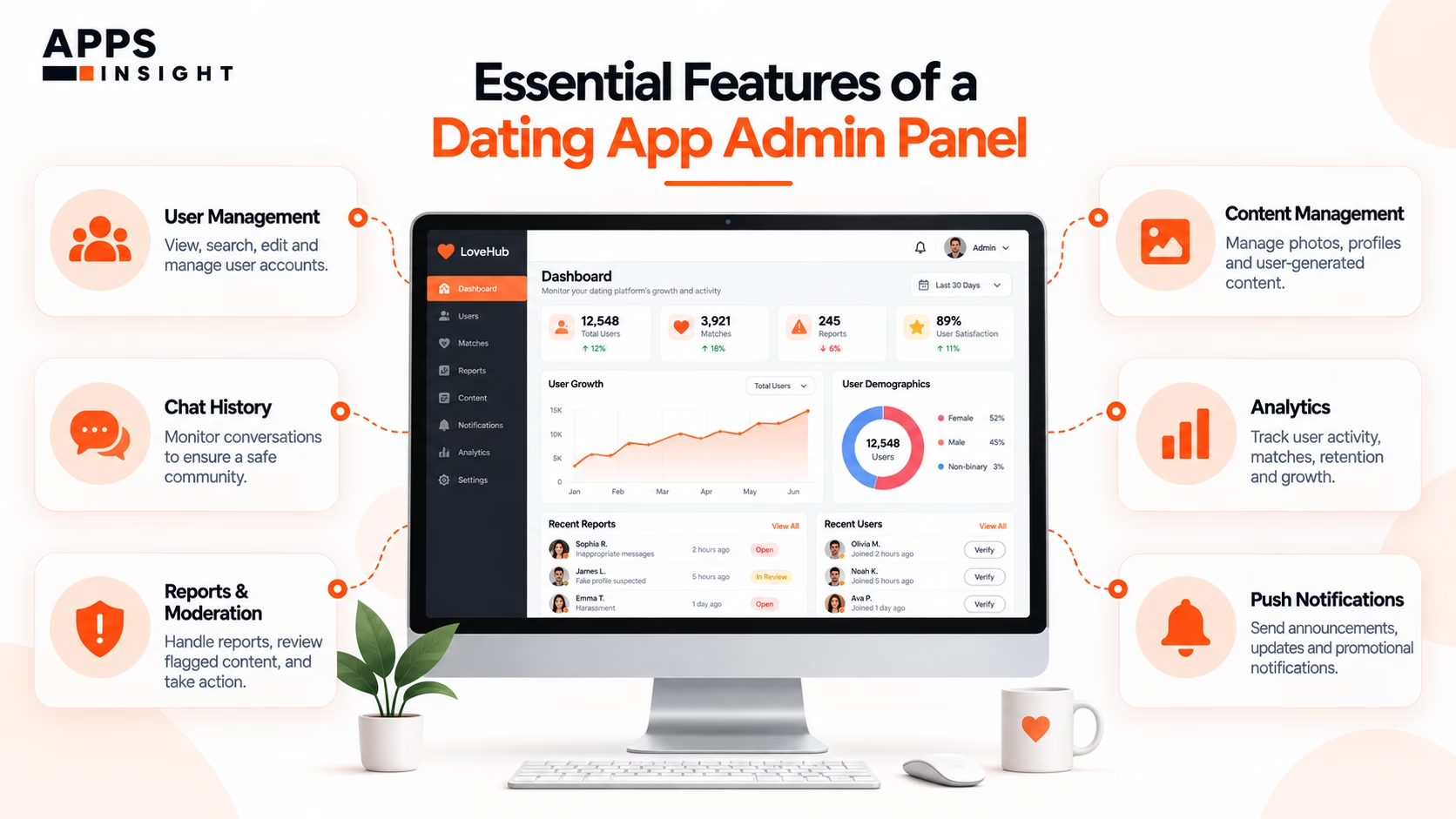
User Management
User management allows administrators to oversee registered users from a centralized dashboard. Admins can view user profiles, account activity, reports, and other relevant information. They can also manage account status, investigate suspicious activity, and take appropriate action when necessary.
Chat History Management
A chat management feature enables administrators to review communication activity when required for moderation, safety, or dispute resolution. Depending on the app’s privacy policies and applicable regulations, admins can access relevant chat records and investigate potential violations.
User Reports and Moderation
Dating apps need an effective reporting system to maintain a safe user environment. The admin panel can display reported accounts, report reasons, supporting information, and moderation status. Administrators can investigate complaints and take actions such as issuing warnings, restricting accounts, or removing users who violate platform policies.
Content Management
Content management gives administrators control over user-generated content across the dating platform. Admins can review profiles, photos, descriptions, and other content to identify spam, inappropriate material, or policy violations. They can remove content, suspend accounts, or ban users when necessary.
Analytics and Reporting
An analytics dashboard helps administrators understand how users interact with the dating app. Integration with tools such as Firebase Analytics can provide insights into user activity, engagement, retention, sessions, and other important performance metrics. These insights can help businesses make data-driven decisions and identify areas for improvement.
Push Notifications
The notification management feature allows administrators to send targeted push notifications to users. Notifications can be used for new matches, messages, promotional campaigns, feature announcements, reminders, system updates, and other important events. A well-designed notification system can improve user engagement while avoiding unnecessary communication.

Total Estimated Cost to Develop a Dating App Like Hinge
If you’re planning to develop a dating app like OnlyFans with essential features plus advanced or premium functionality, understanding the potential development cost is an important first step. The overall investment depends on the app’s feature set, UI/UX complexity, technology stack, AI capabilities, integrations, development team, and post-launch requirements.
For a dating app with a combination of core and premium features, the estimated development cost can generally fall into these ranges:
- Basic MVP with core features: $40,000–$60,000
- Intermediate dating app with scalable features: $70,000–$90,000
- Full-featured dating app with AI matching and monetization: Starts at around $100,000 and can exceed $150,000
These figures are general estimates. The actual cost to develop a dating app like Hinge can vary significantly depending on the product requirements, development location, number of platforms, third-party integrations, and level of customization.
Read once! Fansly Vs OnlyFans: Best For Adult Content Creators?
Dating App Development Cost by Development Stage
The total cost is also influenced by the individual stages involved in building and launching the dating application. Each stage requires different technical and creative resources, from initial market research to ongoing maintenance.
| Development Stage | What’s Included | Estimated Cost |
|---|---|---|
| Discovery & Planning | Market research, competitor analysis, feature planning, technical architecture, and project roadmap | $3,000–$7,000 |
| UI/UX Design | User flows, wireframes, prototypes, custom interface design, and design system | $5,000–$12,000 |
| Frontend & Backend Development | User accounts, profiles, matching, real-time chat, video calling, payments, notifications, AI features, and backend infrastructure | $25,000–$60,000+ |
| QA & Testing | Manual and automated testing, performance testing, security checks, and bug fixing | $4,000–$8,000 |
| Deployment & Launch | App Store and Google Play submission, beta testing, deployment configuration, and launch preparation | $2,000–$5,000 |
| Post-Launch Maintenance | Bug fixes, security updates, OS compatibility, server management, performance optimization, and scaling | $9,000–$30,000/month |
The development stage estimates should be treated as planning ranges rather than fixed quotes. A dating app that includes sophisticated AI matching, real-time communication, video features, location-based discovery, subscription plans, or advanced moderation will typically require a larger budget than a basic MVP.
For businesses entering the dating market, starting with a focused MVP can be a practical approach. It allows the product team to validate the concept, understand user behavior, and prioritize additional features before making a larger investment in the full-scale application.
We have listed! Best Online Speed Dating Sites & Games
Final Thoughts
The dating app market continues to grow, with millions of users and strong revenue potential. However, established platforms like Tinder, Bumble, and Hinge make competition intense. For a new dating app, success depends on having a clear niche and a strong reason for users to choose your platform.
Building an app like Hinge is not just about copying its features. You need robust safety measures, an effective user retention strategy, a user-friendly experience, and scalable technology. For startups, launching with a focused MVP is often a smarter approach. It allows you to test your idea, collect user feedback, and make data-driven improvements before investing heavily in the full product.
Partnering with an experienced dating app development company can also help you choose the right technology, avoid costly mistakes, and build a scalable product.
Ultimately, a successful dating app needs more than attractive features. It needs to create trust, meaningful connections, engagement, and consistency. With the right product strategy and development approach, your app can stand out in a crowded market and grow into a sustainable platform.
- Best Friendship Apps To Make Friends
- Best Free Cheateye Alternative
- Hookup Sites and Apps for Casual Encounters
- European Dating Sites To Find Your Perfect
- Spicychat AI Alternatives You Should Try
- Websites Like Bedpage For Hookups
- Snapchat Friend Finder Apps You Must Try
- Sites Like Ashley Madison For Confidential Dating
- Cheaterbuster AI to Catch Cheaters on Tinder