

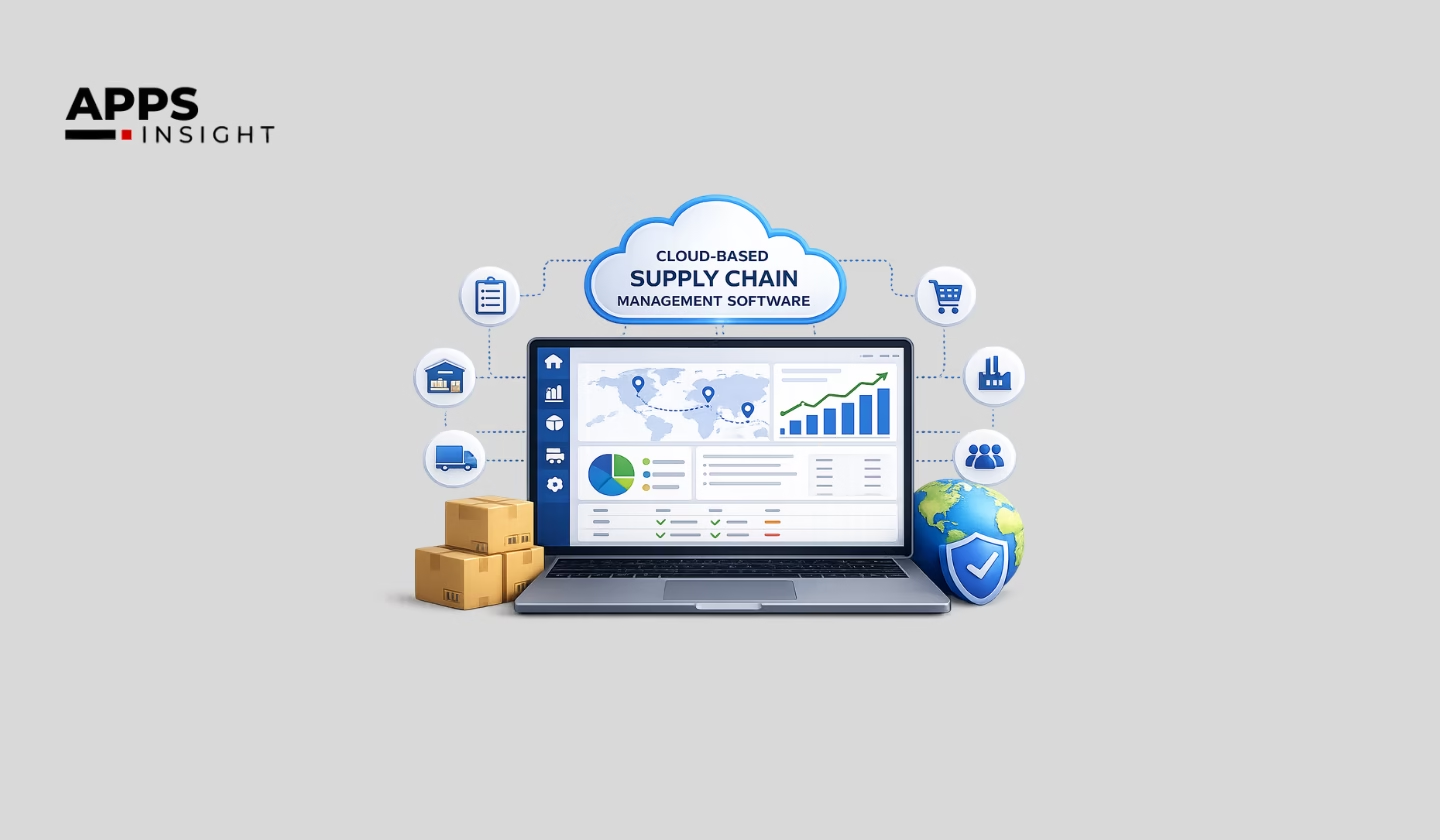
Managing suppliers, inventory, warehouses, transportation, and customer demand has become more complex than ever. This is why many organizations are moving toward Cloud-based Supply Chain Management Software to improve visibility, coordination, and decision-making across their operations.
A cloud-based solution allows businesses to access supply chain data from anywhere through the internet. Instead of maintaining expensive on-premise systems, companies can use software hosted by the provider while receiving updates, security improvements, and new features automatically. This helps businesses track inventory, monitor shipments, forecast demand, and improve collaboration with suppliers in real time.
Whether you operate a manufacturing company, distribution business, retail operation, or logistics network, choosing the right software can help reduce delays, improve planning accuracy, and support business growth. In this guide, we will examine seven leading solutions and explain what makes them suitable for different business needs.
Related Queries
What is Cloud-based Supply Chain Management Software?
Cloud-based Supply Chain Management Software is a digital platform hosted on the cloud that helps businesses manage procurement, inventory, warehousing, transportation, and order fulfillment from a centralized system. Users can access data in real time through the internet without maintaining on-premise infrastructure.
What are the benefits of using cloud-based supply chain software?
Cloud-based supply chain software provides real-time visibility, easier collaboration with suppliers, automated updates, scalability, and improved decision-making. It also helps businesses track inventory, monitor shipments, and respond more quickly to supply chain disruptions.
Which industries use supply chain management software?
Supply chain management software is commonly used in manufacturing, retail, e-commerce, healthcare, logistics, distribution, automotive, and consumer goods industries. Any business that manages inventory, suppliers, or product movement can benefit from these solutions.
How much does supply chain management software cost?
The cost varies depending on business size, number of users, required features, and implementation complexity. Small businesses may pay monthly subscription fees, while large enterprises often invest in customized solutions that include integration, training, and support services.
How do I choose the right supply chain management software for my business?
Start by identifying your business needs, such as inventory management, demand forecasting, warehouse operations, or transportation planning. Then compare software based on scalability, integration capabilities, reporting tools, user experience, and total cost of ownership to find the best fit for your operations.
Why Businesses Are Moving to Cloud-Based Supply Chain Platforms
Traditional supply chain systems often operate in separate departments. Procurement, inventory, warehousing, transportation, and customer service may all use different tools. This can create information gaps and slow decision-making.
Cloud platforms help address these challenges by connecting supply chain functions within a centralized environment. Teams can access the same information and respond more quickly to changing market conditions.
Some common advantages include:
- Real-time visibility across operations
- Easier collaboration with suppliers and partners
- Faster software updates
- Reduced infrastructure requirements
- Improved scalability as businesses grow
- Better reporting and analytics capabilities
As global supply chains become more connected, businesses increasingly rely on digital tools to manage complexity and reduce operational risks.
Key Features to Look for in a Supply Chain Solution
Before selecting a platform, it is important to understand the capabilities that support daily operations.
Some of the best supply chain software features include:
- Demand forecasting
- Inventory tracking
- Warehouse management
- Transportation planning
- Supplier collaboration tools
- Analytics and reporting dashboards
- Order management
- Automation workflows
- Mobile accessibility
- Integration with ERP systems
Many organizations also look for advanced technologies that support predictive planning and operational optimization.
1. Oracle SCM Cloud: Best Cloud-based Supply Chain Management Software
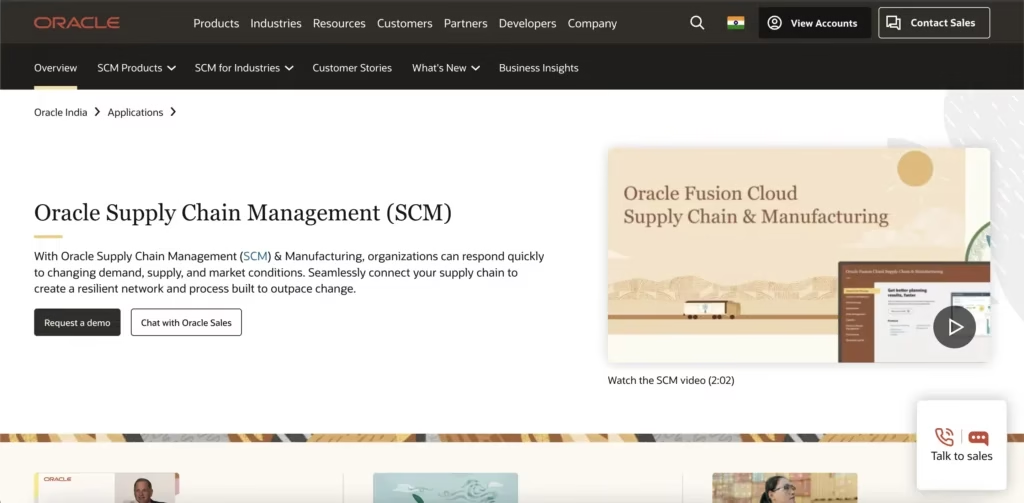
Oracle SCM Cloud is widely used by medium-sized and large enterprises that require end-to-end supply chain visibility.
The platform covers procurement, manufacturing, logistics, inventory management, and order fulfillment within a unified environment. Oracle also provides advanced analytics and automation capabilities that help businesses monitor performance and identify potential disruptions.
One of its strengths is the ability to connect planning and execution activities. For example, inventory shortages can be identified early, allowing teams to adjust procurement or production schedules before customer orders are affected.
Organizations operating across multiple regions often choose Oracle because of its strong global support and enterprise-level capabilities.
Best For
- Large enterprises
- Manufacturing organizations
- Global supply chains
- Complex procurement networks
2. SAP Supply Chain Management (SCM)
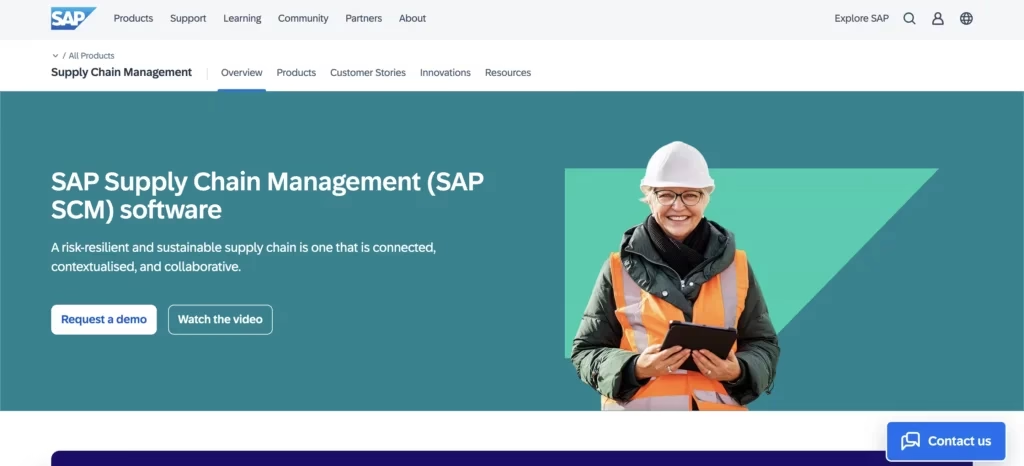
SAP has long been a recognized provider of enterprise business software. SAP Supply Chain Management offers tools for planning, manufacturing, logistics, and supplier collaboration.
The platform helps organizations coordinate activities across different departments while maintaining visibility into inventory and production processes.
SAP’s planning capabilities are particularly useful for businesses with extensive manufacturing operations. Demand forecasts can be aligned with production schedules to reduce inefficiencies and improve resource utilization.
Many companies already using SAP ERP systems find integration relatively straightforward, creating a connected business environment.
Best For
- Manufacturing companies
- Enterprise organizations
- Businesses already using SAP solutions
- Multi-location operations
3. Blue Yonder
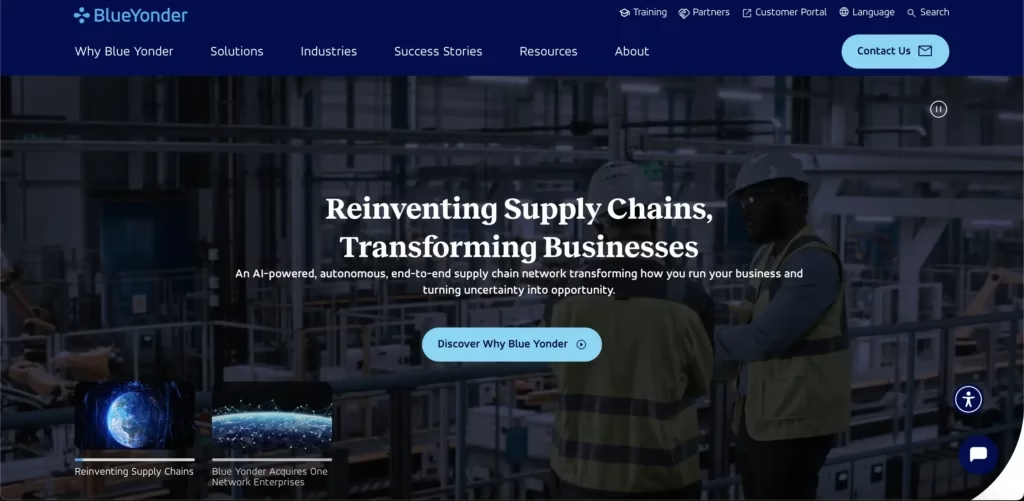
Blue Yonder focuses on planning, forecasting, fulfillment, and logistics optimization.
The platform uses advanced analytics and machine learning models to help organizations anticipate demand changes and improve inventory decisions. As an example of AI-powered supply chain software, Blue Yonder helps businesses analyze large amounts of operational data to identify patterns that may influence future demand.
Retailers often use Blue Yonder to manage seasonal demand fluctuations and improve product availability while minimizing excess inventory.
The solution also supports transportation and warehouse optimization, helping organizations improve operational efficiency throughout the supply chain.
Best For
- Retail businesses
- Consumer goods companies
- Distribution networks
- Businesses requiring advanced forecasting
4. Microsoft Dynamics 365 Supply Chain Management
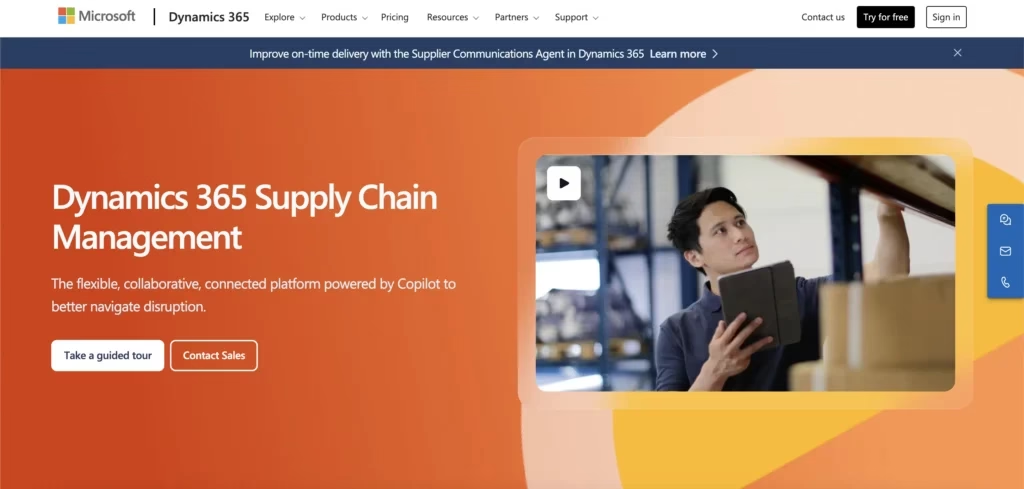
Microsoft Dynamics 365 Supply Chain Management combines supply chain operations with broader business applications.
The platform provides capabilities for production planning, inventory control, procurement, asset management, and logistics coordination.
A major advantage is its integration with Microsoft products such as Excel, Power BI, and Teams. This can improve collaboration and simplify reporting for employees already familiar with Microsoft’s ecosystem.
Businesses can use real-time dashboards to monitor inventory levels, production performance, and supplier activities from a single interface.
Best For
- Mid-sized businesses
- Organizations using Microsoft products
- Manufacturing companies
- Growing enterprises
5. Kinaxis Maestro
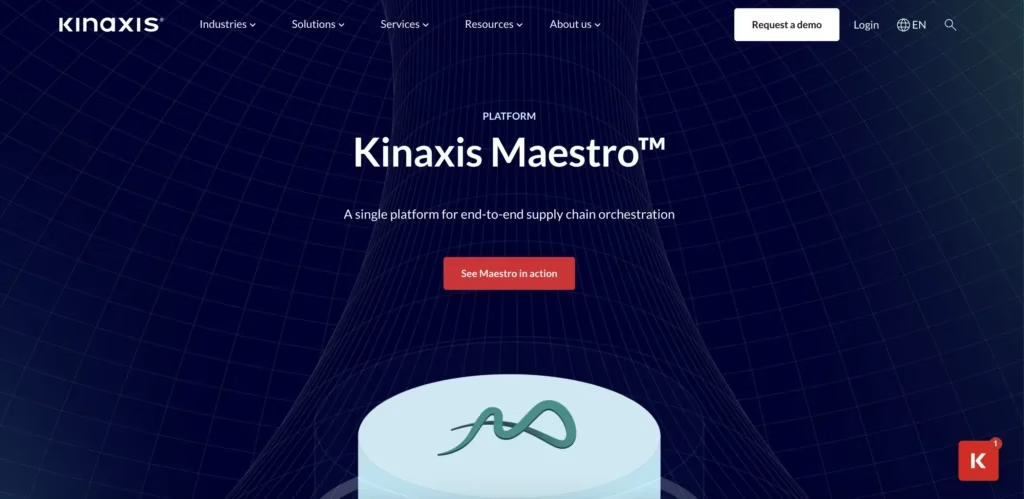
Kinaxis Maestro is designed to support rapid supply chain planning and decision-making.
The platform is known for its concurrent planning approach, allowing organizations to evaluate the impact of changes across the supply chain quickly. If a supplier delay occurs, businesses can immediately assess how inventory, production, and customer orders may be affected.
This capability helps organizations respond more effectively to disruptions and changing demand conditions.
Companies operating in industries with frequent market fluctuations often value Kinaxis for its speed and planning flexibility.
Best For
- Fast-moving industries
- Electronics manufacturers
- Automotive companies
- Businesses requiring scenario planning
6. Infor CloudSuite SCM
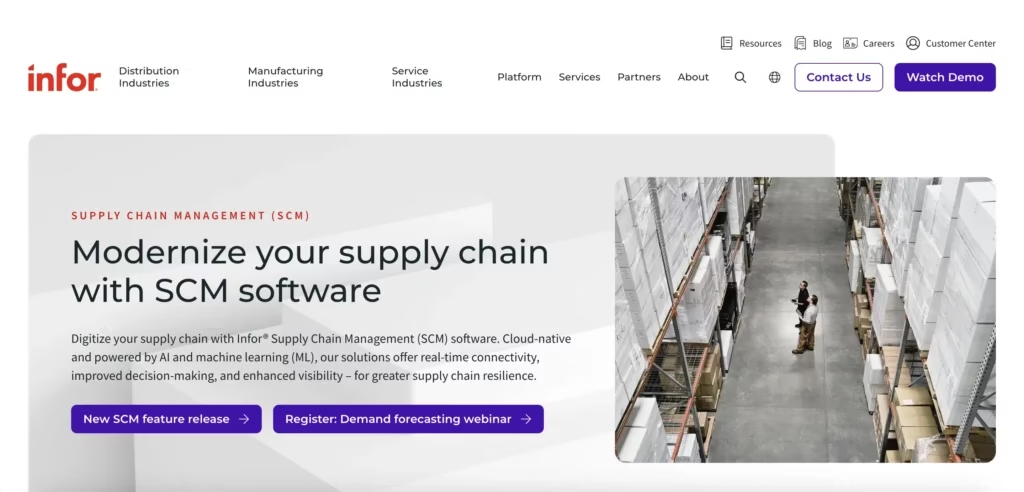
Infor CloudSuite SCM provides tools for procurement, inventory management, warehouse operations, transportation, and demand planning.
The platform is designed to support industry-specific requirements, making it useful for manufacturers, healthcare providers, distributors, and retail businesses.
Infor emphasizes operational visibility and process automation. By centralizing information, organizations can improve coordination between suppliers, warehouses, and transportation partners.
The software also includes reporting capabilities that help managers identify inefficiencies and improve performance.
Best For
- Distribution businesses
- Manufacturing organizations
- Healthcare supply chains
- Industry-specific operations
7. Manhattan Associates SCM
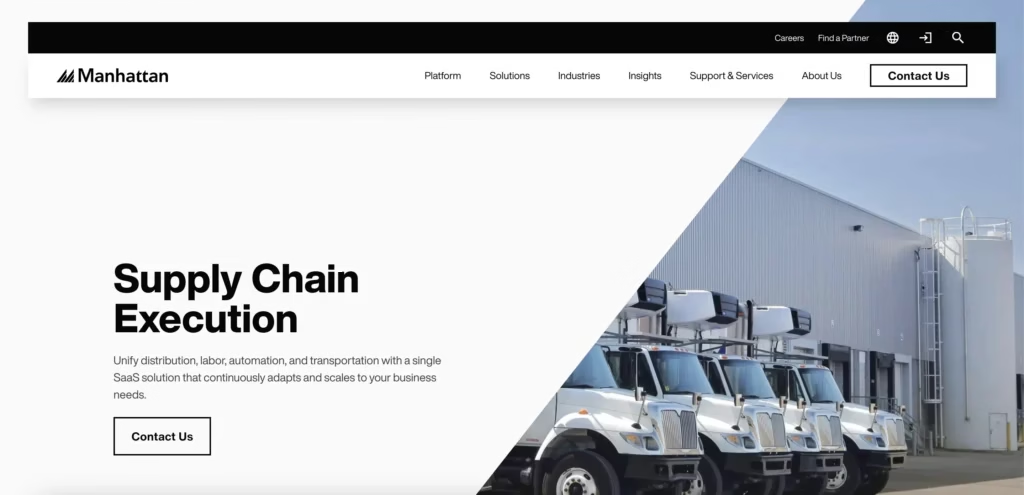
Manhattan Associates SCM focuses heavily on logistics, warehouse operations, and fulfillment processes.
The platform supports businesses that manage complex distribution networks and high order volumes. Its warehouse management capabilities help organizations improve inventory accuracy and optimize storage space.
Transportation management features also assist with route planning and shipment tracking.
For businesses that depend on efficient fulfillment operations, Manhattan Associates provides tools that support both operational visibility and execution.
Best For
- Logistics providers
- Retail distribution networks
- E-commerce businesses
- Large warehouse operations
Other Supply Chain Platforms Worth Exploring
While the seven solutions above are among the most commonly considered options, businesses may also evaluate:
- Epicor SCM
- Descartes SCM
- Logility Supply Chain Platform
These platforms offer specialized capabilities that may align with specific operational requirements, industry needs, or business sizes.
How to Choose the Right Software for Your Business
The best solution depends on your organization’s size, industry, operational complexity, and growth plans.
Consider the following factors during evaluation:
1) Business Requirements
Identify the challenges you want to solve. Some businesses focus on inventory visibility, while others prioritize logistics optimization or supplier collaboration.
2) Integration Capabilities
The software should work with existing ERP, accounting, warehouse, and business systems.
3) Scalability
Choose a platform that can support future growth without requiring major system changes.
4) User Experience
Employees should be able to learn and use the platform effectively without extensive technical expertise.
5) Reporting and Analytics
Strong analytics capabilities help decision-makers identify trends, monitor performance, and improve planning accuracy.
Understanding Cost Considerations
Budget is often a major factor when evaluating solutions.
The overall supply chain management software cost varies based on:
- Number of users
- Business size
- Required modules
- Integration complexity
- Support requirements
- Data storage needs
Organizations should also consider the supply chain software implementation cost, which may include consulting services, training, system configuration, and data migration.
A lower subscription fee does not always result in a lower total investment. Long-term operational benefits should be evaluated alongside upfront costs.
The Role of Technology in Modern Supply Chains
The growing importance of Technology in Supply Chain Management has changed how businesses monitor and optimize operations.
Cloud computing, automation, analytics, machine learning, and connected devices now provide greater visibility than traditional systems.
Many organizations combine supply chain platforms with:
- Inventory Management Software
- Logistics Management Software
- Supplier portals
- Transportation management systems
- Warehouse management solutions
These technologies work together to improve planning accuracy and operational efficiency.
Common Challenges During Adoption
Although cloud solutions offer many advantages, implementation requires careful planning.
Common challenges include:
- Data migration issues
- Employee training requirements
- Integration with legacy systems
- Process standardization
- Change management concerns
A structured implementation plan can help reduce disruptions and improve adoption across departments.
Businesses often work with experienced consultants or Supply Chain Software Development Companies when customizing integrations or expanding functionality.
Additional Considerations
Some organizations may also explore complementary tools such as Free Yard Management Software Solutions to improve truck scheduling and yard visibility. These tools can support warehouse and transportation operations alongside a broader supply chain platform.
Businesses searching for the Best Cloud-based Supply Chain Management Software should evaluate functionality, industry fit, scalability, and long-term support rather than focusing solely on popularity.
Similarly, organizations comparing the best SaaS Supply Chain Management Software options should prioritize operational requirements and integration capabilities to ensure the solution aligns with business objectives.
Final Say
Selecting the right Cloud-based Supply Chain Management Software can help businesses improve visibility, planning accuracy, inventory control, and operational coordination. The ideal solution depends on your organization’s goals, industry requirements, and supply chain complexity.
Oracle SCM Cloud, SAP Supply Chain Management, Blue Yonder, Microsoft Dynamics 365 Supply Chain Management, Kinaxis Maestro, Infor CloudSuite SCM, and Manhattan Associates SCM each offer distinct strengths that support different business needs.
Before making a decision, evaluate current challenges, future growth plans, integration requirements, and total ownership costs. A well-planned implementation can help organizations create more efficient and responsive supply chain operations while supporting long-term business success.
For more technology comparisons, software insights, and industry-focused guides, readers can explore additional resources on AppsInsight.
Related FAQs
What is the difference between ERP software and supply chain management software?
ERP software manages core business functions such as finance, human resources, and accounting, while supply chain management software focuses on procurement, inventory, production, logistics, and order fulfillment. Many businesses integrate both systems to create a connected workflow across departments.
Can small businesses benefit from cloud-based supply chain management software?
Small businesses can use cloud-based supply chain solutions to improve inventory tracking, automate manual processes, manage suppliers more effectively, and gain better visibility into operations without investing in expensive on-premise infrastructure.
How long does it take to implement supply chain management software?
Implementation timelines vary based on company size and system complexity. Small businesses may complete deployment in a few weeks, while larger organizations with multiple locations and integrations can take several months to fully implement the software.
Does supply chain management software improve inventory accuracy?
Most modern supply chain platforms provide real-time inventory tracking, automated stock updates, and demand forecasting tools. These features help reduce stockouts, overstocking, and manual data-entry errors, leading to more accurate inventory management.
What features should I prioritize when comparing supply chain management software?
Businesses should prioritize features such as inventory management, demand forecasting, warehouse management, supplier collaboration, transportation tracking, analytics dashboards, automation tools, and integration capabilities with existing business systems. The most important features depend on your operational needs and industry requirements.