How Much Does Supply Chain Management Software Cost in 2026?
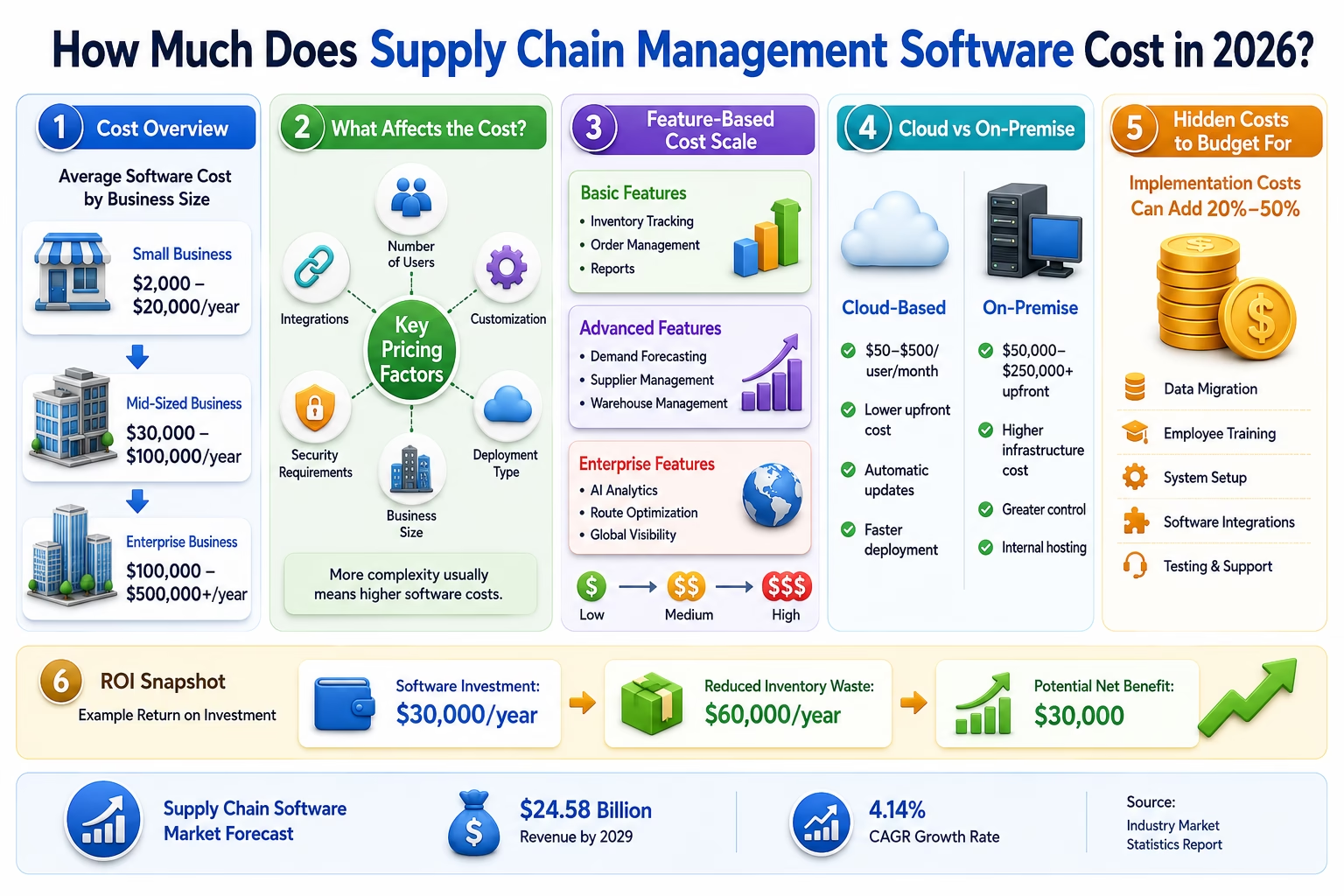
Managing suppliers, inventory, transportation, and customer deliveries has become more complex than ever. This is why many businesses are investing in Supply Chain Management Software to improve visibility, reduce delays, and make better operational decisions. In 2026, the Supply Chain Management Software Cost typically ranges from $50 per user per month for small businesses to more than $500,000 for large enterprise implementations. The final price depends on business size, features, integrations, deployment type, and customization requirements.
As supply chains continue to grow in complexity, software has become an important tool for companies that want better control over inventory, logistics, purchasing, and forecasting. Understanding pricing before investing helps businesses choose the right solution without overspending.
According to industry reports, the global supply chain management software market is expected to generate approximately $24.58 billion in revenue by 2029, growing steadily over the coming years.
This growth reflects increasing demand from businesses looking to improve operational efficiency and reduce supply chain risks.
What Is Supply Chain Management Software?
Supply chain software helps businesses manage the movement of products from suppliers to customers. It connects different processes into a single system, allowing companies to monitor inventory levels, track shipments, manage orders, and improve planning.
A typical system may include:
- Inventory tracking
- Procurement management
- Warehouse operations
- Transportation planning
- Demand forecasting
- Supplier management
- Analytics and reporting
Instead of using multiple disconnected tools, businesses can manage operations through one platform and gain better visibility across the supply chain.
Average Supply Chain Management Software Cost in 2026
The Supply Chain Management Software Cost varies significantly depending on company size and software complexity.
| Business Type | Estimated Cost |
|---|---|
| Small Business | $50 to $500 per user/month |
| Mid-Sized Business | $10,000 to $100,000 annually |
| Enterprise Organizations | $100,000 to $500,000+ annually |
| Custom-Built Solutions | $50,000 to $500,000+ |
For startups and smaller businesses, subscription-based platforms are usually the most affordable option. Larger organizations often require advanced customization, integrations, and analytics capabilities, increasing overall expenses.
Pricing Models Used by Software Providers for Supply Chain Management Software Cost
Software vendors generally use one of several pricing structures.
1) Subscription-Based Pricing
This model charges businesses monthly or annually based on the number of users or usage levels.
Examples include:
- $50 per user/month
- $100 per user/month
- $500 per user/month for advanced plans
This approach is popular because businesses avoid large upfront investments.
2) Tier-Based Pricing
Providers offer different packages based on functionality.
Typical tiers include:
- Basic Plan
- Professional Plan
- Enterprise Plan
Higher tiers provide more advanced features, integrations, and reporting tools.
3) Custom Enterprise Pricing
Large companies often receive custom quotes based on:
- Number of users
- Locations
- Warehouses
- Integrations
- Data volume
Enterprise pricing usually starts around $100,000 annually and can exceed several hundred thousand dollars.
Key Factors That Influence Supply Chain Management Software Cost
Several elements directly affect software pricing.
1) Number of Users
Most vendors charge based on user count. More employees accessing the platform typically means higher subscription fees.
2) Business Size
A company managing thousands of products and multiple warehouses requires more functionality than a small retailer.
3) Customization Requirements
Standard software is generally cheaper. Costs increase when businesses request custom workflows, dashboards, or reporting systems.
4) Integration Needs
Connecting the software with existing systems such as ERP platforms, accounting tools, or eCommerce platforms adds development and maintenance expenses.
5) Deployment Method
Cloud solutions usually have lower upfront costs, while on-premise installations require servers, infrastructure, and IT resources.
Security Requirements
Industries with strict compliance standards often require additional security measures, which can increase implementation costs.
Supply Chain Management Software Cost Breakdown by Business Size
1) Small Businesses
Small companies typically focus on inventory tracking, purchasing, and order management.
Estimated costs:
- Software subscription: $50 to $500 per user/month
- Setup fees: $500 to $5,000
- Training: $1,000 to $3,000
Annual investment often ranges from $2,000 to $20,000.
2) Mid-Sized Businesses
Growing companies usually require advanced forecasting, supplier management, and warehouse functionality.
Estimated costs:
- Software license: $10,000 to $50,000 annually
- Implementation: $5,000 to $25,000
- Integrations: $3,000 to $20,000
Total first-year expenses may reach $30,000 to $100,000.
3) Enterprise Businesses
Large organizations manage complex global supply chains.
Estimated costs:
- Software licensing: $100,000 to $300,000+
- Customization: $50,000 to $200,000+
- Integration projects: $20,000 to $100,000+
- Training and support: $10,000 to $50,000+
Total investment can exceed $500,000.
Feature-Based Supply Chain Management Software Cost Analysis
The functionality included in the platform heavily impacts pricing.
Basic systems typically include:
- Order management
- Inventory tracking
- Reporting
- Supplier records
Advanced platforms may include:
- Real-time analytics
- Demand forecasting
- Route optimization
- Warehouse automation
- Multi-location management
Many businesses evaluate the best supply chain software features before making a purchase because advanced capabilities often provide greater operational visibility and efficiency.
Companies looking for stronger stock control often seek systems that combine supply chain capabilities with Inventory Management Software functions. These additional modules generally increase subscription costs but improve inventory accuracy.
Similarly, businesses managing transportation operations may require Logistics Management Software capabilities, which can add further expenses depending on complexity.
Cloud-Based vs On-Premise Software Cost
Deployment choice significantly affects spending.
Cloud-Based Software
Advantages:
- Lower upfront investment
- Faster deployment
- Automatic updates
- Reduced IT requirements
Typical costs:
- $50 to $500 per user/month
Many organizations find cloud solutions easier to manage and scale.
On-Premise Software
Advantages:
- Greater infrastructure control
- Internal data management
- Custom security configurations
Typical costs:
- $50,000 to $250,000+ upfront
- Ongoing maintenance expenses
Businesses asking whether cloud solutions are cheaper generally find that cloud deployment reduces initial investment while providing predictable monthly expenses.
Implementation and Additional Expenses
Many businesses focus only on subscription fees and overlook implementation costs.
The supply chain software implementation cost may include:
- System configuration
- Data migration
- User training
- Testing
- Process redesign
- Integration development
Implementation often represents 20% to 50% of the overall project budget.
For example, a company purchasing a $40,000 annual platform may spend an additional $10,000 to $20,000 during deployment.
Custom Development Cost vs Ready-Made Solutions
Some businesses choose existing software, while others invest in custom development.
Custom software development generally ranges from $50,000 to $500,000 or more, depending on project scope.
Basic systems usually include:
- Inventory tracking
- Order management
- Reporting
- User administration
Advanced solutions may include:
- AI forecasting
- Supplier collaboration portals
- Automated procurement workflows
- Transportation optimization
Many organizations work with specialized Supply Chain Software Development Companies when off-the-shelf products cannot support their unique processes.
Although custom development requires a larger investment, it may provide greater flexibility and control over business operations.
How AI Is Affecting Supply Chain Software Pricing
Artificial intelligence is becoming more common across supply chain platforms.
Modern AI-powered supply chain software can help businesses:
- Forecast demand
- Predict inventory shortages
- Detect supply disruptions
- Optimize transportation routes
These capabilities often increase subscription fees but can improve operational efficiency and planning accuracy.
The growing role of Technology in Supply Chain Management has encouraged software providers to expand automation and analytics capabilities, making advanced tools more accessible than in previous years.
Top Ways Businesses Can Reduce Software Expenses
Organizations can control costs by following several practical strategies.
Start with Essential Features
Avoid paying for modules that are not immediately necessary.
Choose Scalable Solutions
Select software that can grow alongside business requirements.
Compare Multiple Vendors
Review pricing structures carefully before signing long-term contracts.
Train Employees Properly
Well-trained teams reduce implementation delays and improve software adoption.
Use Cloud Deployment
Cloud-based solutions often lower infrastructure and maintenance costs.
Evaluate Free Tools
Some businesses explore Free Yard Management Software Solutions and other entry-level tools for specific operational needs before investing in larger platforms.
Is Supply Chain Management Software Worth the Investment?
For many businesses, the answer is yes.
Benefits may include:
- Improved inventory accuracy
- Better shipment visibility
- Faster order processing
- Reduced operational costs
- Improved supplier communication
- Better forecasting accuracy
The overall Supply Chain Management Software Cost should be evaluated against potential savings and efficiency improvements.
For example, if a company spends $30,000 annually on software but reduces inventory waste by $60,000, the investment provides measurable value.
Organizations evaluating the best SaaS Supply Chain Management Software often focus on long-term operational benefits rather than subscription costs alone.
Sum up
The Supply Chain Management Software Cost in 2026 can range from a few thousand dollars annually for small businesses to more than $500,000 for large enterprise deployments. Pricing depends on user count, features, integrations, deployment type, customization, and implementation requirements.
Businesses should assess their operational goals, supply chain complexity, and future growth plans before selecting a solution. While advanced systems require a larger investment, they can help improve visibility, inventory control, forecasting, and operational efficiency.
Before making a final decision, compare vendors carefully, evaluate total ownership costs, and focus on features that directly support business objectives.
For more technology guides, software comparisons, and business software insights, readers can explore related resources on AppsInsight.
FAQs
Why is supply chain management software so expensive?
Supply chain software often manages inventory, procurement, logistics, forecasting, supplier relationships, and analytics in one platform. Development, customization, integration, security, and ongoing support contribute to higher costs.
What factors affect supply chain software pricing?
Key factors include business size, number of users, deployment method, customization requirements, integrations, implementation complexity, and advanced feature requirements.
Is cloud-based supply chain software cheaper?
In most cases, cloud-based software has lower upfront costs because businesses pay monthly or annual subscriptions instead of purchasing infrastructure and servers.
How much do small businesses pay for supply chain software?
Small businesses typically spend between $50 and $500 per user per month, with annual costs often ranging from $2,000 to $20,000 depending on features and user count.
What is the ROI of supply chain management software?
ROI varies by company but may come from reduced inventory waste, better forecasting, lower transportation costs, improved productivity, and fewer operational errors.
Are there free supply chain management software solutions?
Yes. Some providers offer free versions, open-source tools, or limited-feature platforms. These solutions can support smaller operations but may lack advanced reporting, automation, and integration capabilities.